
Category: Parkinson's Disease: Disease mechanisms
Objective: To investigate the mechanisms by which sleep disturbance exacerbates motor and cognitive deficits in Parkinson’s disease (PD), and to determine how alterations in the circadian regulator REV-ERBα contribute to microglial lipid metabolic dysregulation.
Background: Sleep and circadian rhythm disturbances are common non-motor symptoms of PD and are associated with accelerated cognitive decline. Although circadian rhythm alterations have been reported in PD, the role of specific circadian regulators in disease progression remains poorly understood. Increasing evidence suggests that metabolic reprogramming of microglia contributes to neuroinflammation in neurodegenerative diseases.
Method: Chronic sleep deprivation was applied to A53T transgenic mice to model sleep disturbance in PD. Motor and cognitive performance were evaluated using behavioral assays. Microglia were isolated by fluorescence-activated cell sorting (FACS). Immunofluorescence, lipid staining, and transmission electron microscopy were performed to assess microglial lipid droplet accumulation and inflammatory activation in the hippocampus and substantia nigra. RNA sequencing combined with CUT&Tag analysis was used to identify downstream targets of REV-ERBα. Functional studies were conducted in BV2 microglia using gene knockdown and rescue approaches.
Results: Sleep deprivation significantly exacerbated motor and cognitive deficits in A53T mice. Prominent lipid droplet accumulation was observed in hippocampal microglia, whereas only modest changes were detected in the substantia nigra. Multi-omics analyses identified the lipid metabolic enzyme GPAT3 as a downstream target of REV-ERBα. Loss of REV-ERBα increased GPAT3 expression and promoted lipid droplet formation and inflammatory cytokine production in microglia, whereas silencing GPAT3 attenuated these effects.
Conclusion: Together,our findings suggest that the REV-ERBα–GPAT3 axis linking sleep disturbance to microglial lipid metabolic reprogramming and neuroinflammation in PD. Targeting circadian–metabolic pathways in microglia may represent a potential therapeutic strategy for PD-associated cognitive impairment.
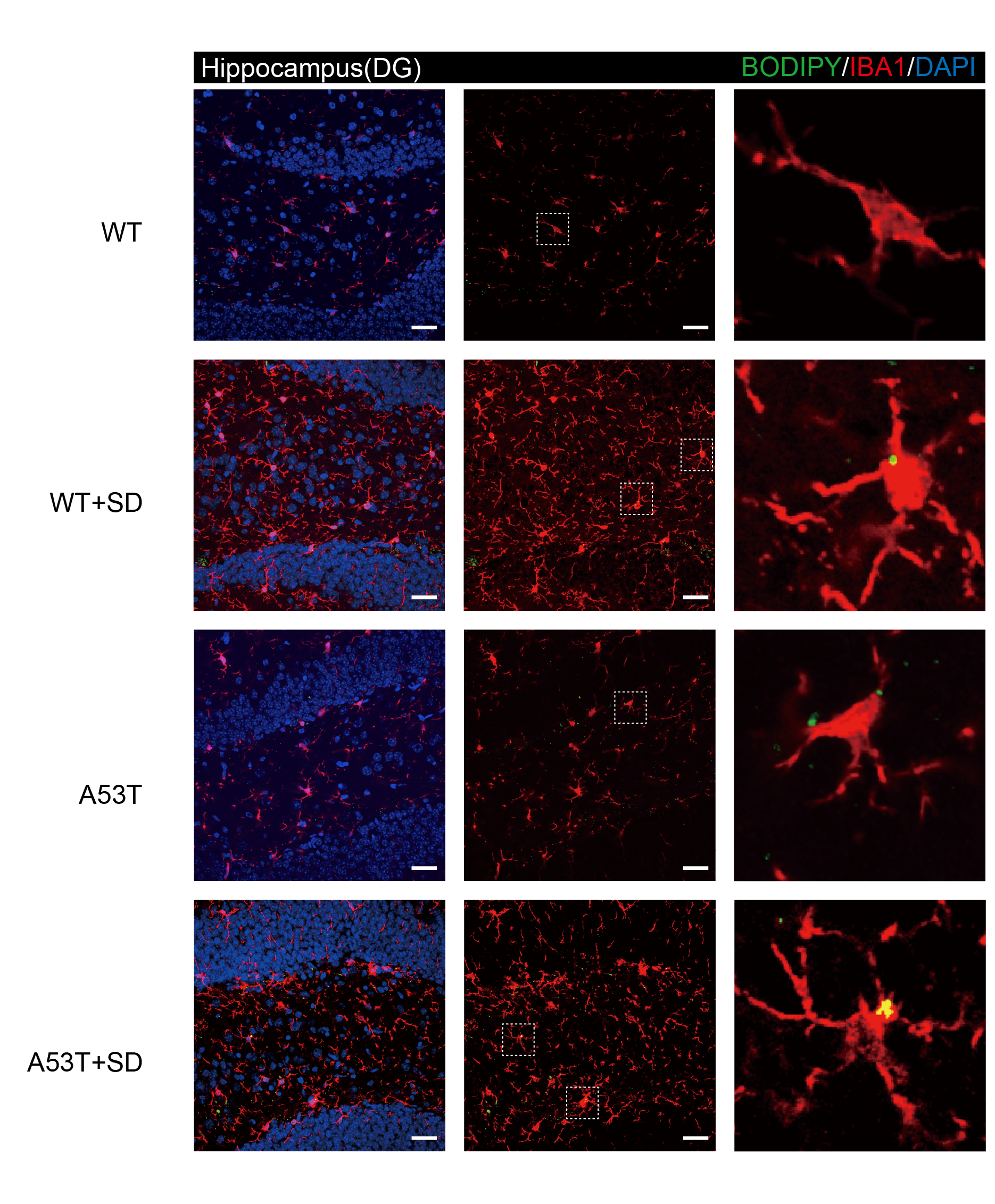
Figure 1
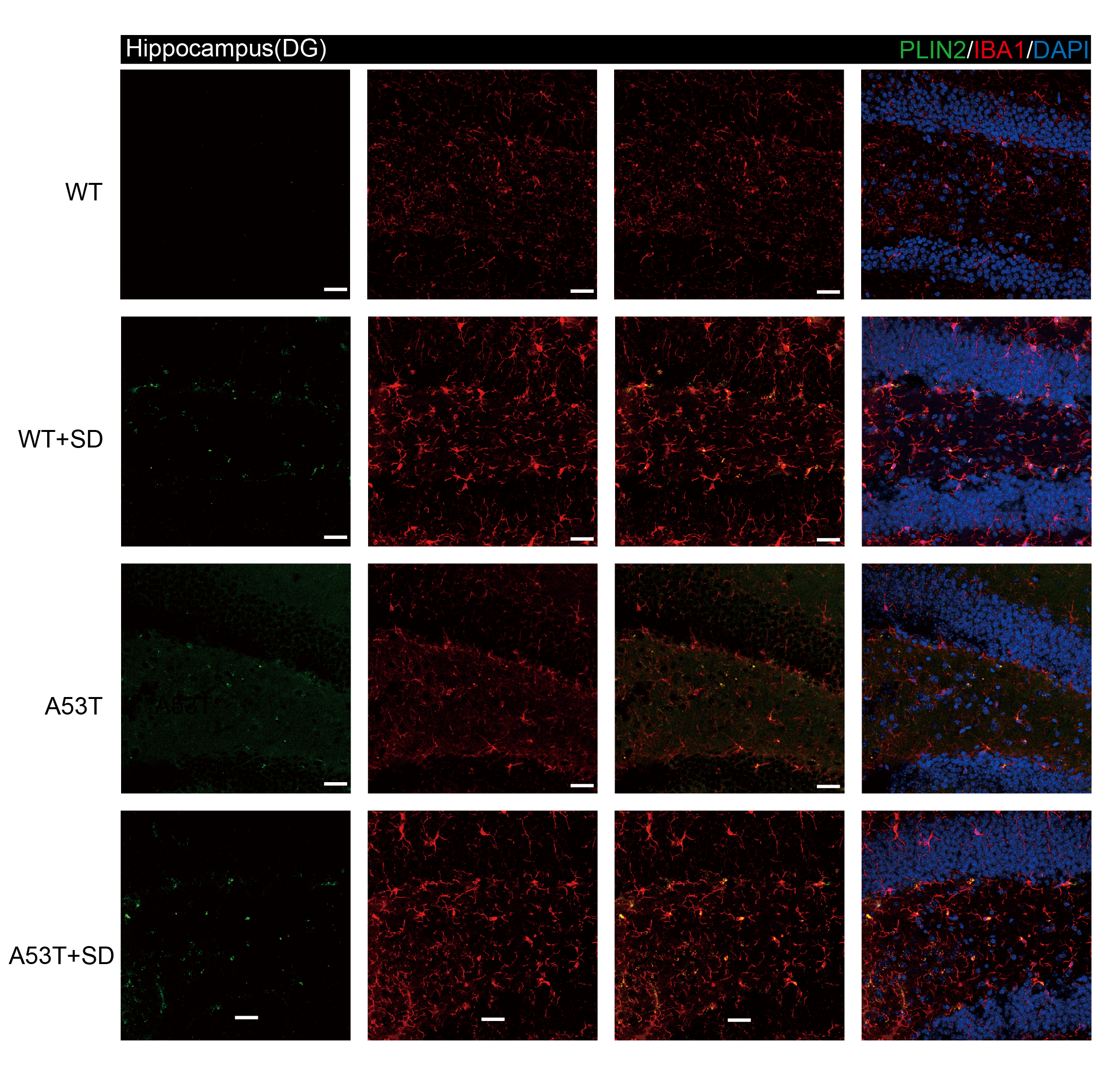
Figure 2.
To cite this abstract in AMA style:
T. Deng. Circadian Regulator REV-ERBα Drives Microglial Lipid Metabolic Reprogramming and Cognitive Impairment in Parkinson‘s Disease [abstract]. Mov Disord. 2026; 41 (suppl 1). https://www.mdsabstracts.org/abstract/circadian-regulator-rev-erb%ce%b1-drives-microglial-lipid-metabolic-reprogramming-and-cognitive-impairment-in-parkinsons-disease/. Accessed October 1, 2026.« Back to 2026 International Congress
MDS Abstracts - https://www.mdsabstracts.org/abstract/circadian-regulator-rev-erb%ce%b1-drives-microglial-lipid-metabolic-reprogramming-and-cognitive-impairment-in-parkinsons-disease/