
Category: Autoimmune Movement Disorders
Objective: To describe the clinical features, electrophysiological findings, and treatment outcomes of patients with Stiff Person Spectrum Disorder (SPSD) evaluated at a tertiary neurology centre.
Background: SPSD comprises rare autoimmune neurological disorders characterized by progressive muscle stiffness and stimulus-sensitive spasms. Due to its rarity and heterogeneous presentation, SPSD is often underrecognized and diagnosis delayed.
Method: We performed a retrospective review of patients diagnosed with SPSD at our institution between 2008 and 2025. Demographic details, clinical features, antibody status, electrophysiological findings, treatment, and outcomes were analysed. Diagnostic classification was based on criteria proposed by Nicholas H. Chia and colleagues. Follow-up ranged from diagnosis to a maximum of 13 years.
Results: Four patients (three males, one female) with a mean age of 46.5 years (range 32–75) were identified. During this period, 9,501 patients with movement disorders attended the clinic; SPSD accounted for 0.042% of referrals. The interval between symptom onset and diagnosis ranged from 6 months to 6 years. Three patients had axial and proximal limb stiffness consistent with the classical phenotype, while one presented with focal stiffness of the right lower limb (stiff leg syndrome). Stimulus-sensitive spasms were reported in most patients. Electromyography showed continuous motor unit activity in three patients (75%) and was normal in one. Anti-glutamic acid decarboxylase antibodies were detected in two patients (50%). In seronegative patients, other antibodies tested at that time were negative (Table 1).
Symptomatic therapy included benzodiazepines, baclofen, tolperisone, levetiracetam, and levodopa, with partial improvement in most receiving benzodiazepines or baclofen. Immunotherapies included corticosteroids, intravenous methylprednisolone, plasma exchange, intravenous immunoglobulin, rituximab, and azathioprine. Patients receiving immunotherapy showed partial to substantial improvement, particularly after plasma exchange and intravenous immunoglobulin..
Conclusion: SPSD is an extremely rare and heterogeneous disorder often associated with delayed diagnosis. Responses to symptomatic treatment and immunotherapy are frequently partial, resulting in persistent disability. Early recognition and timely immunotherapy may improve outcomes and quality of life.
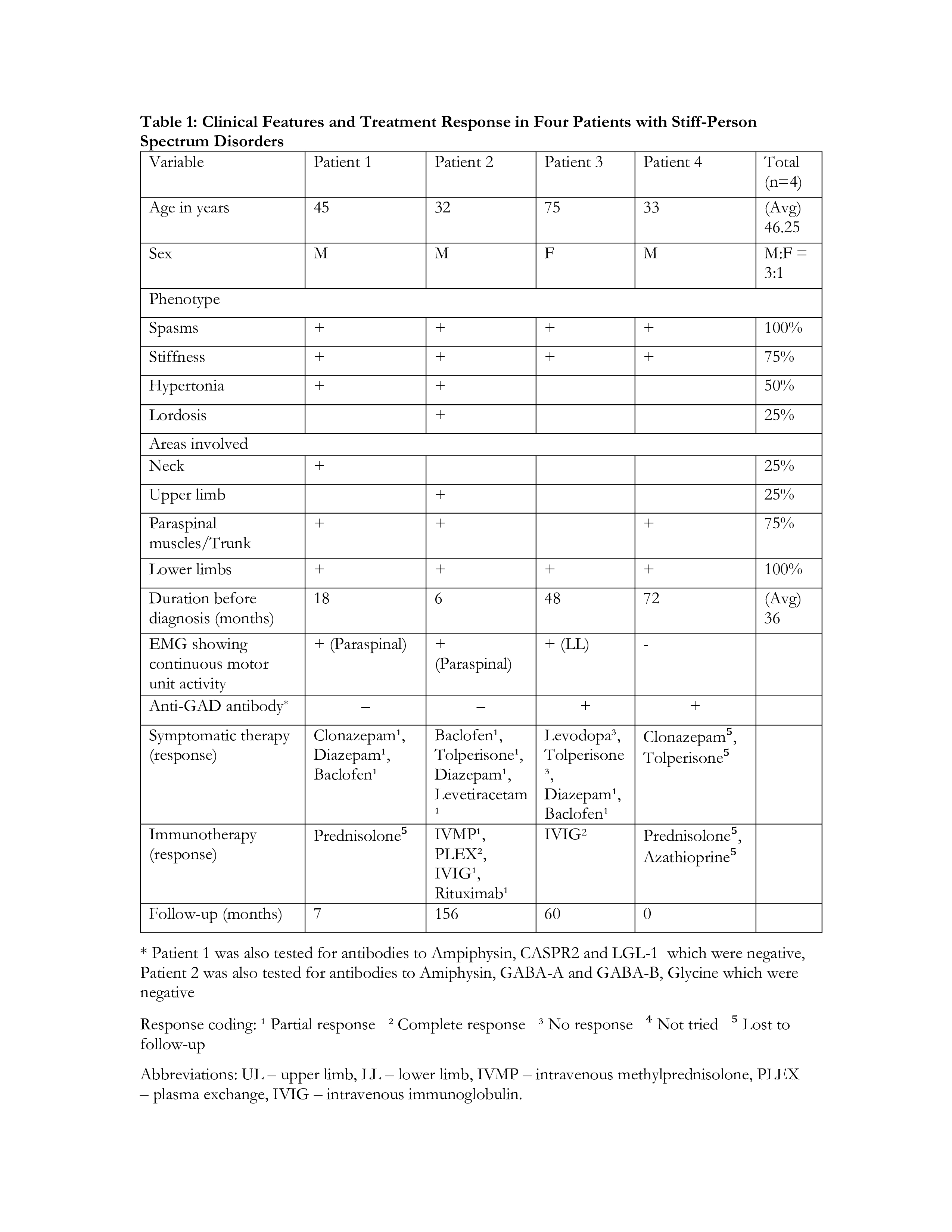
Table 1
References: 1. Chia NH, McKeon A, Dalakas MC, Flanagan EP, Bower JH, Klassen BT, Dubey D, Zalewski NL, Duffy D, Pittock SJ, Zekeridou A. Stiff person spectrum disorder diagnosis, misdiagnosis, and suggested diagnostic criteria. Annals of Clinical and Translational Neurology. 2023 Jul;10(7):1083-94.
To cite this abstract in AMA style:
A. Oommen, P. Wadia. Clinical Features and Treatment Response in Stiff Person Spectrum Disorder: A Case Series from a Tertiary Neurology Centre [abstract]. Mov Disord. 2026; 41 (suppl 1). https://www.mdsabstracts.org/abstract/clinical-features-and-treatment-response-in-stiff-person-spectrum-disorder-a-case-series-from-a-tertiary-neurology-centre/. Accessed October 1, 2026.« Back to 2026 International Congress
MDS Abstracts - https://www.mdsabstracts.org/abstract/clinical-features-and-treatment-response-in-stiff-person-spectrum-disorder-a-case-series-from-a-tertiary-neurology-centre/