
Objective: To validate the performance of a previously established multimodality digital biomarker model, which contained finger tapping, gait, and voice features, for screening early Parkinson’s disease (PD) and explore the correlation between risk based on digital biomarkers and prodromal symptoms within a general elderly population.
Background: Early diagnosis of PD remains a significant challenge. We previously developed a multimodality model based on the National Taiwan University Hospital (NTUH) PD cohort, which demonstrated robust performance in differentiating PD stages (AUROC=0.85). However, its efficacy as a screening tool in the general community requires further validation.
Method: A total of 161 participants (enrolled until January 2026) were recruited from the Taiwan Precision Medicine Initiative on Cognitive Impairment and Dementia (TPMIC) at Far-Eastern Memorial Hospital (FEMH) and geriatric cohorts at NTUH. Digital data, including tapping, gait, and voice, were recorded via iPad. The risk were processed by the model. Participants were also assessed for prodromal symptoms using the Movement Disorder Society (MDS) criteria to calculate the Probability of Prodromal PD (PPPD). “High-risk” individuals were defined as those exhibiting abnormalities across all digital features and the full model, and were subsequently referred to neurologists for clinical confirmation.
Results: The cohort’s mean age was 71.46 ± 0.51, and 48.07% were male. The model identified 8 high-risk participants; of these, 6 underwent clinical evaluation. Including additional screening data, 4 out of 6 high-risk subjects were confirmed to have PD, yielding a Positive Predictive Value (PPV) of 66.6%. Compared to the low-risk group, the high-risk population reported higher rates of prodromal symptoms, including REM sleep behavior disorder (25.00% vs. 13.58%), daytime sleepiness (37.05% vs. 27.16%), and dysuria (62.50% vs. 35.80%). Unsupervised K-means clustering further identified a high-risk cluster (n=20) with abnormality in all digital features, as well as higher PPPD scores compared to the low-risk cluster.
Conclusion: Our multimodality digital biomarker model demonstrates potential for identifying early-stage PD and selecting prodromal patients within the general elderly population, offering a possible tool for early intervention.
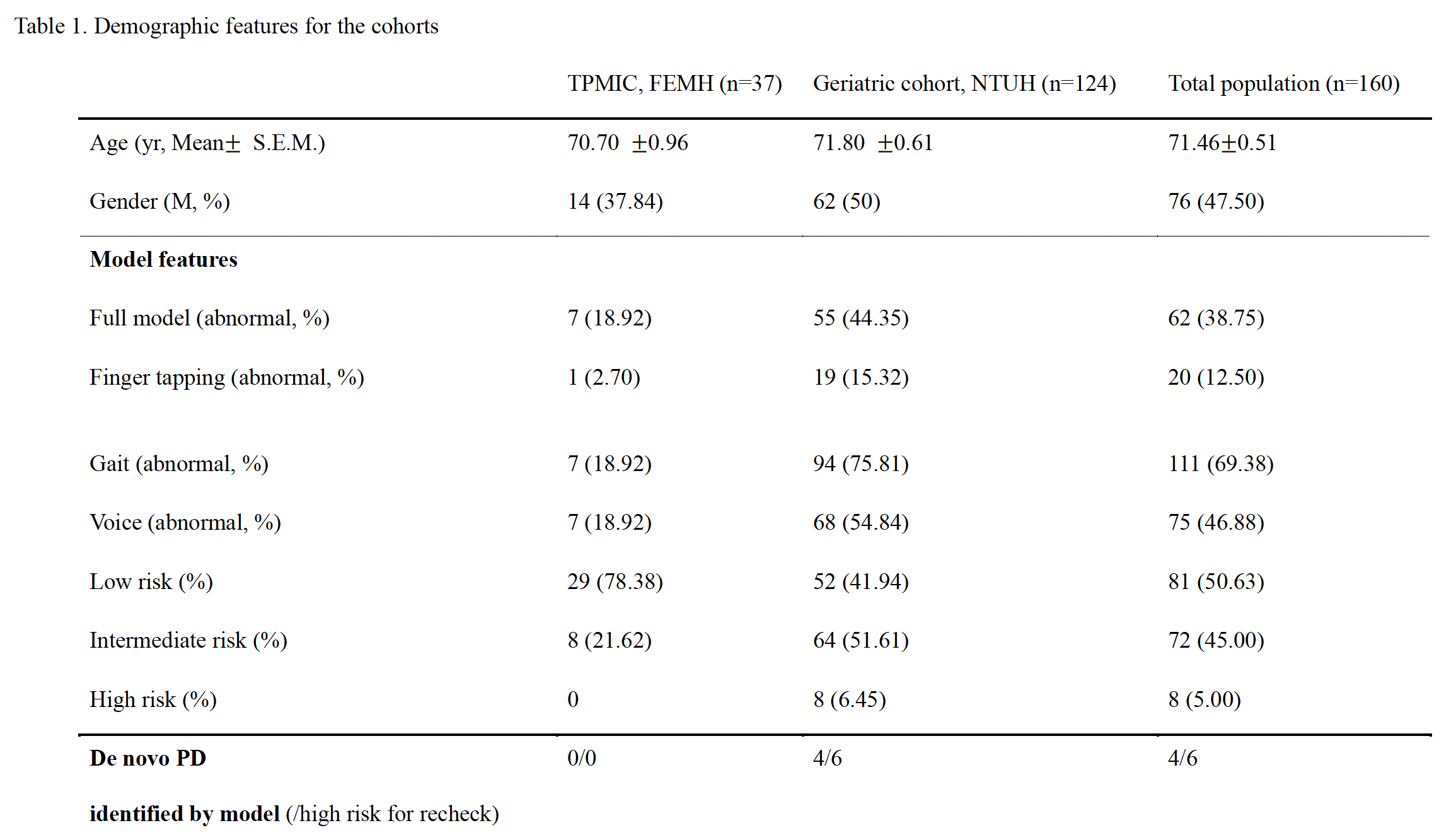
Demographic features for study cohorts
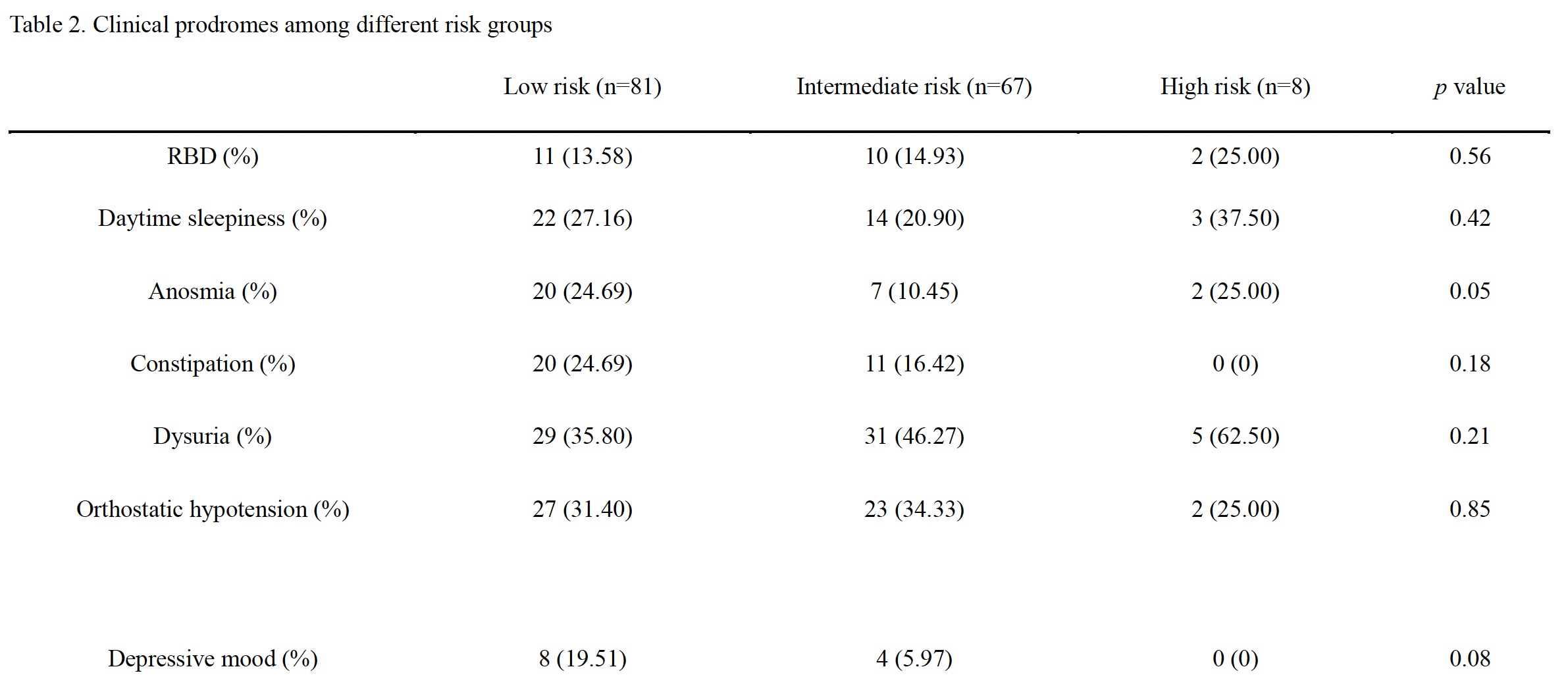
Clinical prodromes among different risk groups
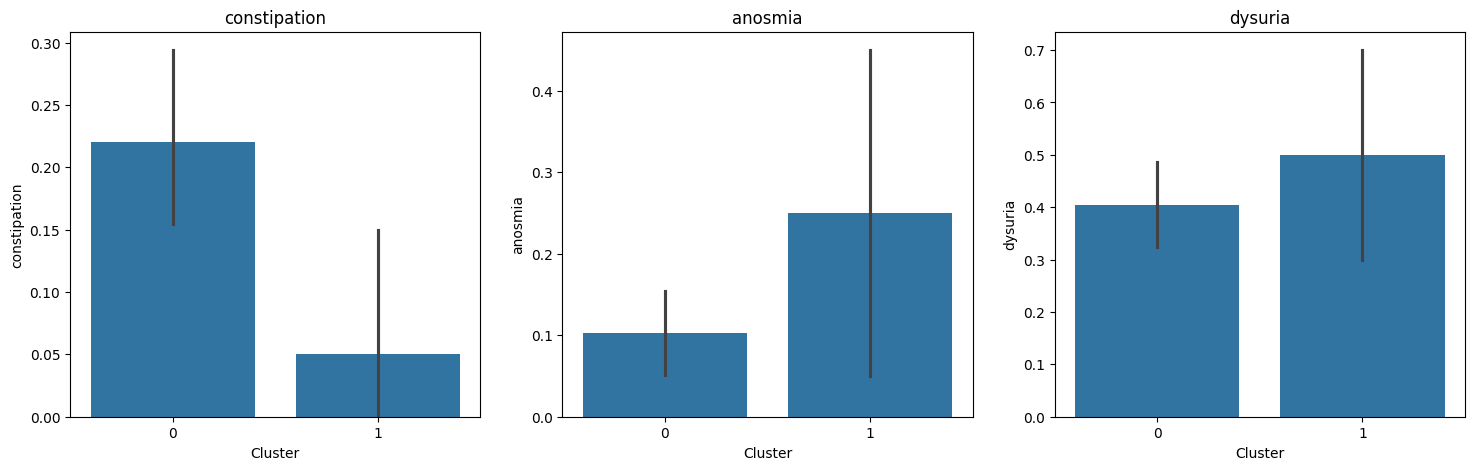
Clinical prodromal features among clusters-2
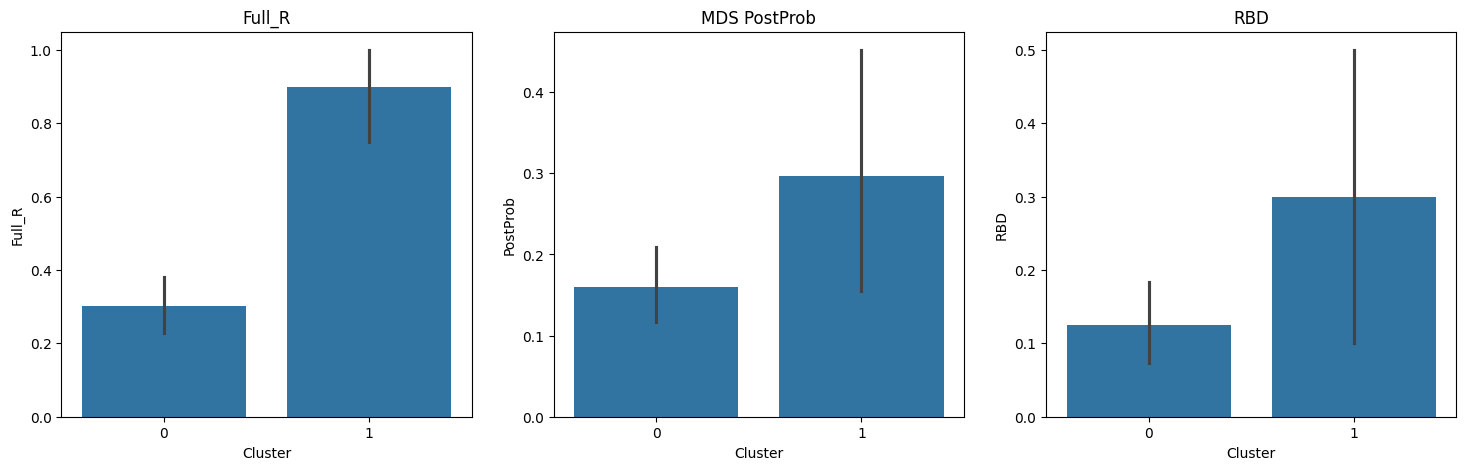
Clinical prodromal features among clusters-1
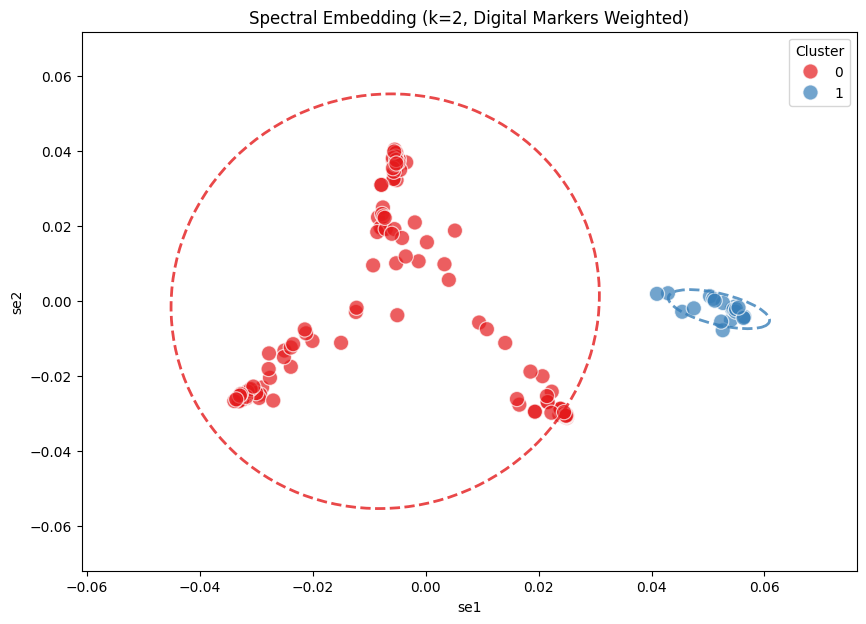
Digital biomarker weighted spectral embedding
To cite this abstract in AMA style:
SP. Fan, WS. Lim, KP. Lin, YL. Chiu, CH. Lin. Detecting Early and Prodromal Parkinson’s Disease in the Elderly Using Multimodality Digital Biomarkers: A Pilot Study [abstract]. Mov Disord. 2026; 41 (suppl 1). https://www.mdsabstracts.org/abstract/detecting-early-and-prodromal-parkinsons-disease-in-the-elderly-using-multimodality-digital-biomarkers-a-pilot-study/. Accessed October 1, 2026.« Back to 2026 International Congress
MDS Abstracts - https://www.mdsabstracts.org/abstract/detecting-early-and-prodromal-parkinsons-disease-in-the-elderly-using-multimodality-digital-biomarkers-a-pilot-study/