
Category: Parkinson's Disease: Genetics
Objective: To investigate the longitudinal impact of MAOIs on motor progression among Parkinson’s disease (PD) patients carrying GBA1 mutations, with an emphasis on sex-stratified clinical outcomes.
Background: Mutations in the glucocerebrosidase gene (GBA1) are the most predominant genetic risk factor for PD, usually associated with a steep course leading to an early demented state. Monoamine oxidase-B inhibitors (MAOIs) were postulated to have a disease-modifying effect in some studies, but this was contradicted by others. While biological sex modulates PD progression and oxidative stress resilience, its effect on the response to MAOIs in GBA1 carriers remains unclear.
Method: A total of 259 PD patients (106 women, 153 men; 948 assessments) from Shaare Zedek Medical Center were included. Sixty-six (25.5%) were identified as GBA1 mutation carriers (30 women, 36 men), including 8 biallelic (Gaucher disease) subjects. Motor progression was evaluated using the MDS-UPDRS-III total and sub-domain scores. Longitudinal decline rates were calculated via Generalized Estimating Equations (GEE), adjusted for age at diagnosis. Statistical analysis was performed in Python (v3.12) with AI assistance (Gemini 3) for language editing.
Results: Over a mean clinical follow-up period of 1.68 ± 1.72 yrs (range: 0-5.47 yrs), MAOI use in the overall PD cohort was associated with a significantly slower annual rate of motor decline (Slope Difference: -0.95; P=0.031) [Table 1], with no sex-related difference in treatment response (P=0.414). Among GBA1 carriers, a sex-specific effect emerged: female carriers treated with MAOIs exhibited a notable trend toward slower motor progression, with a ~1 point/yr slower rate of MDS-UPDRS-III progression (Slope Difference: -0.971; P=0.078) [Table 2, figure 1&2]. Conversely, no protective effect was observed in male GBA1 carriers (Slope Difference: -0.070; P=0.919). Baseline motor severity and age were comparable between sexes in the GBA1 subgroup [Table 3].
Conclusion: Our findings suggest a potential sex-specific therapeutic window for MAOIs in GBA1-associated PD. Enhanced antioxidant capacity and dopaminergic compensation in women may interact with MAOIs to slow GBA1-driven neurodegeneration. These results highlight the importance of sex-stratified analyses in clinical trials and support further research into personalized therapeutic approaches for genetic variants of Parkinson’s disease.
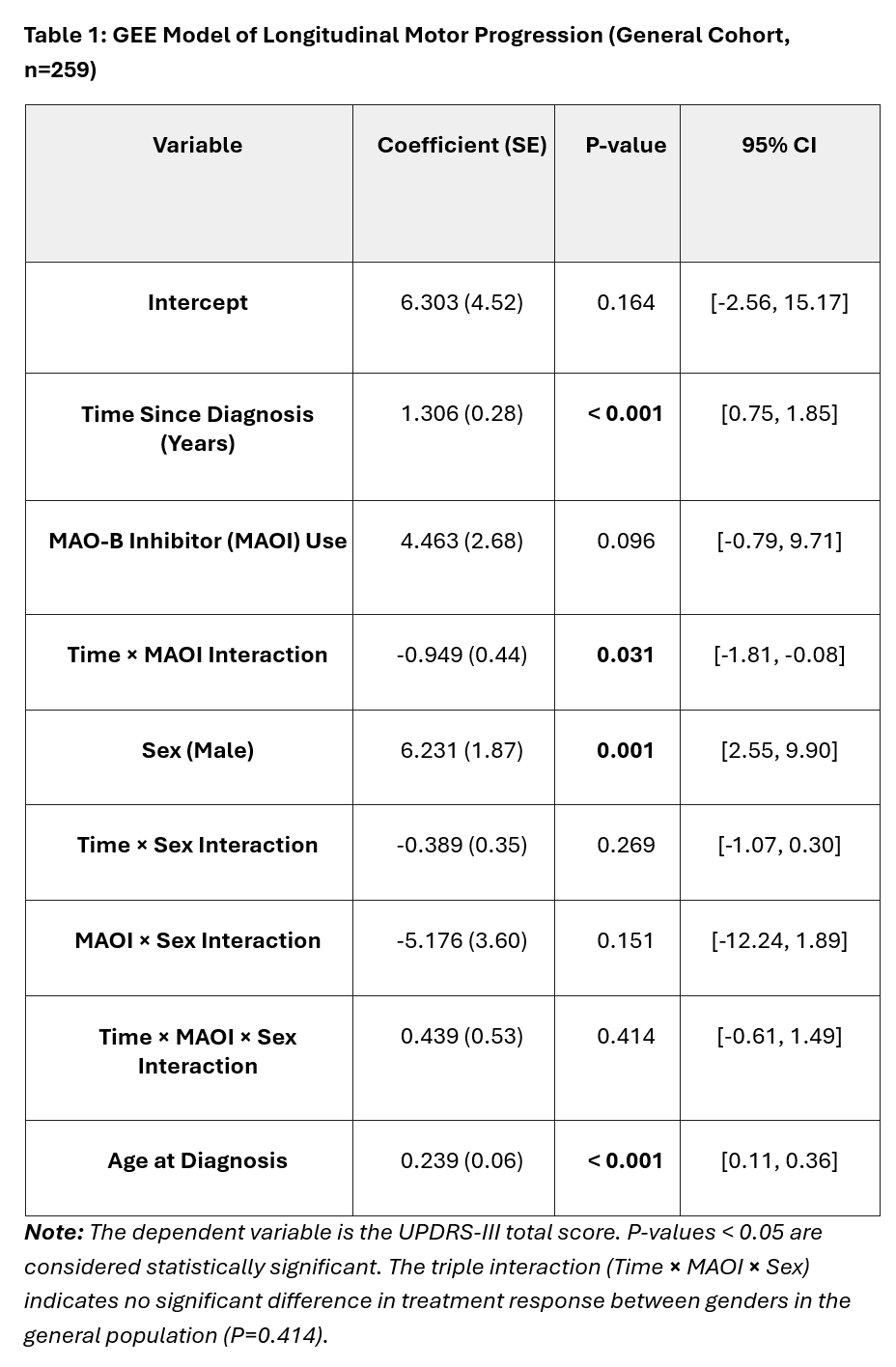
Table 1
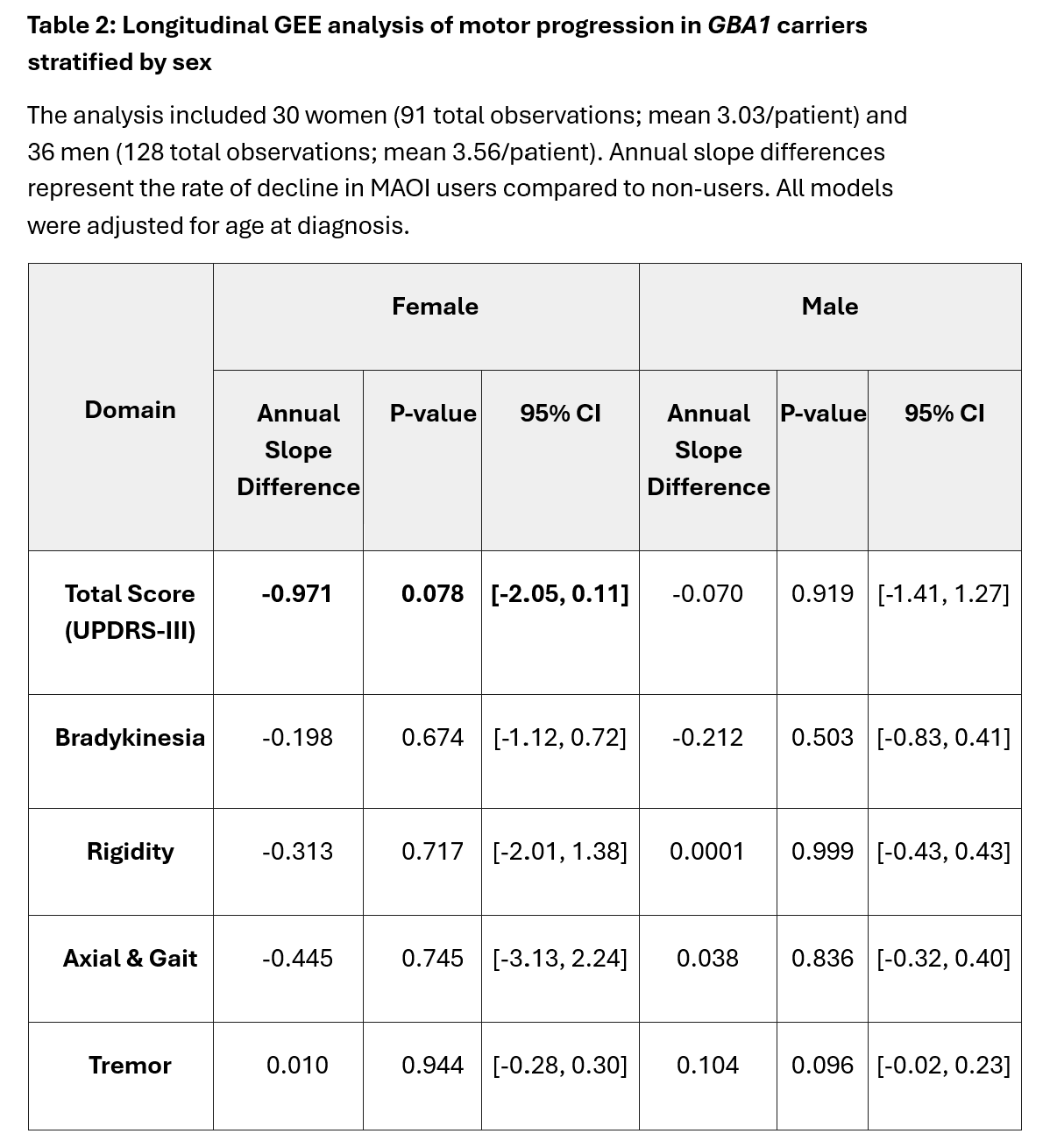
Table 2
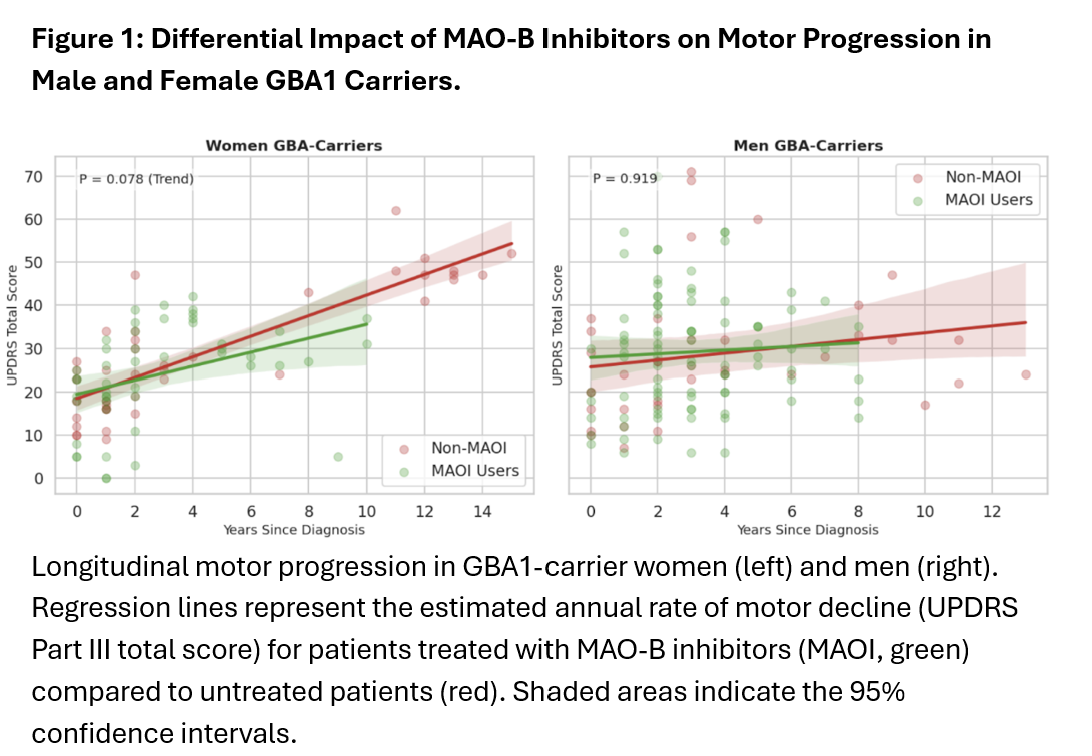
Figure 1
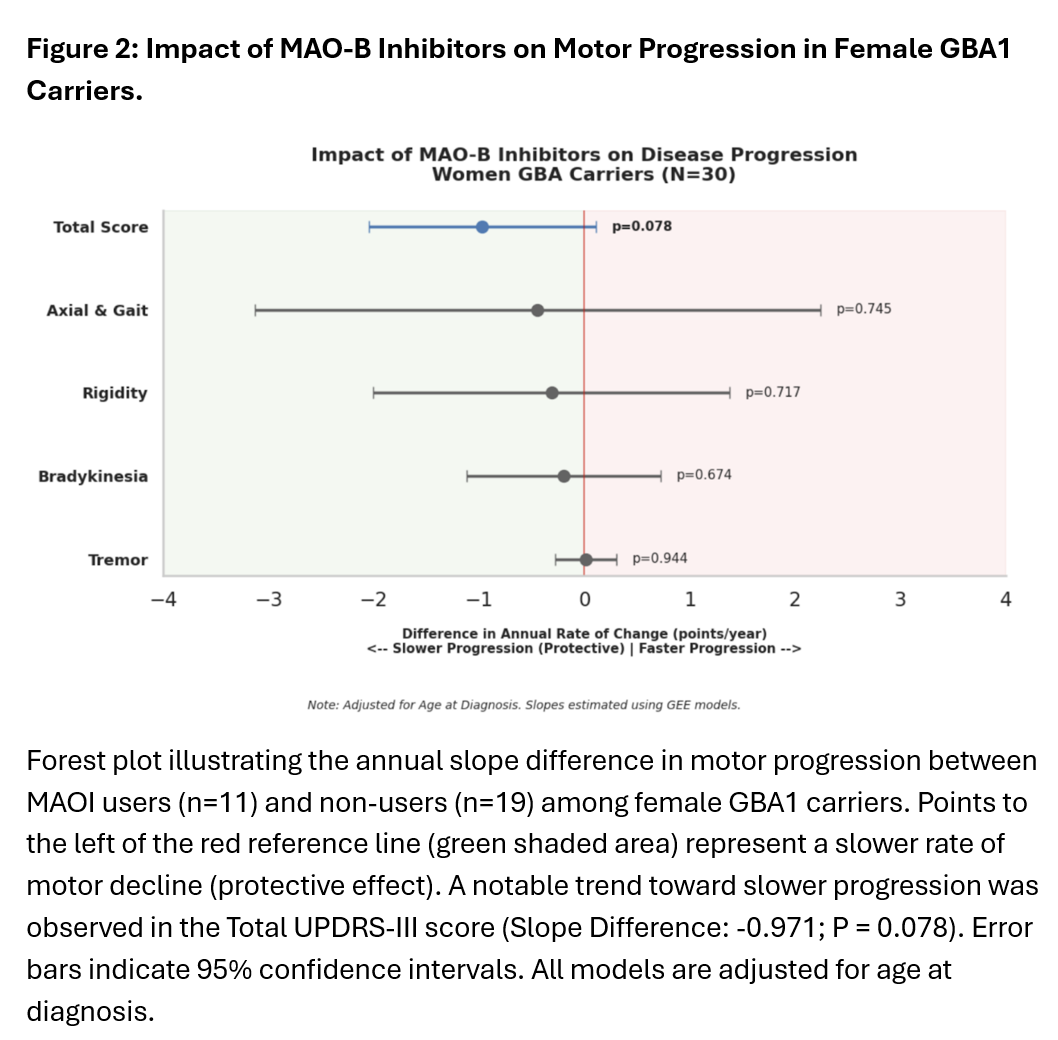
Figure 2
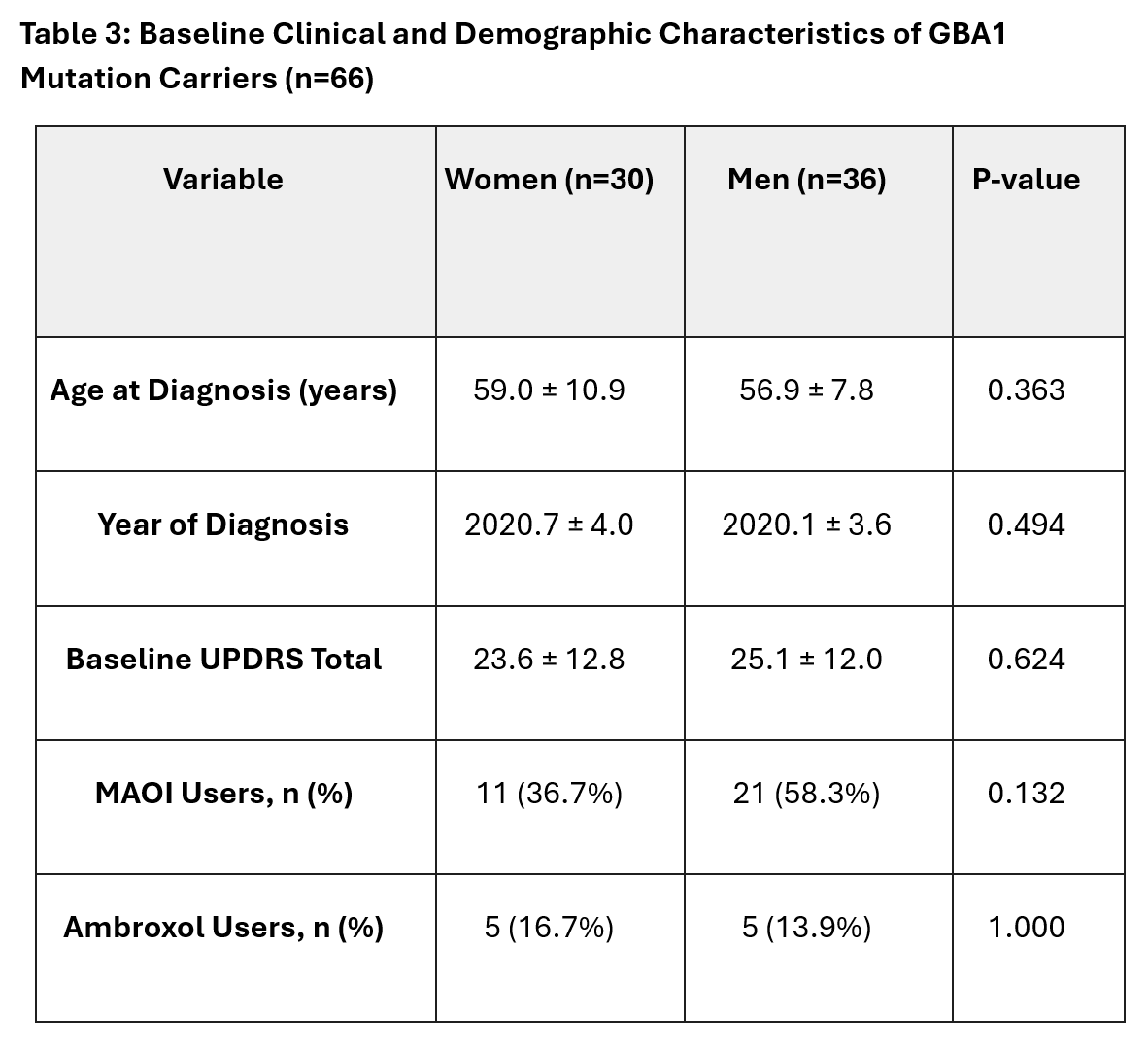
Table 3
References: 1. Menozzi E, Toffoli M, Schapira AHV. Targeting the GBA1 pathway to slow Parkinson disease: Insights into clinical aspects, pathogenic mechanisms and new therapeutic avenues. Pharmacol Ther. 2023 Jun;246:108419. doi: 10.1016/j.pharmthera.2023.108419. Epub 2023 Apr 19. PMID: 37080432.
2. Maple-Grødem J, Dalen I, Tysnes OB, Macleod AD, Forsgren L, Counsell CE, Alves G. Association of GBA Genotype With Motor and Functional Decline in Patients With Newly Diagnosed Parkinson Disease. Neurology. 2021 Feb 16;96(7):e1036-e1044. doi: 10.1212/WNL.0000000000011411. Epub 2020 Dec 21. PMID: 33443131; PMCID: PMC8055329.
3. Oeda T, Umemura A, Mori Y, Tomita S, Kohsaka M, Park K, Inoue K, Fujimura H, Hasegawa H, Sugiyama H, Sawada H. Impact of glucocerebrosidase mutations on motor and nonmotor complications in Parkinson’s disease. Neurobiol Aging. 2015 Dec;36(12):3306-3313. doi: 10.1016/j.neurobiolaging.2015.08.027. Epub 2015 Sep 7. PMID: 26422360.
4. Ortega RA, Bressman SB, Raymond D, Ozelius LJ, Katsnelson V, Leaver K, Swan MC, Shanker V, Miravite J, Wang C, Bennett SAL, Saunders-Pullman R. Differences in Sex-Specific Frequency of Glucocerebrosidase Variant Carriers and Familial Parkinsonism. Mov Disord. 2022 Nov;37(11):2217-2225. doi: 10.1002/mds.29197. Epub 2022 Aug 27. PMID: 36054306; PMCID: PMC9669136.
5. Miletić J, Drakulić D, Pejić S, Petković M, Ilić TV, Miljković M, Stefanović A, Prostran M, Stojanov M. Prooxidant-antioxidant balance, advanced oxidation protein products and lipid peroxidation in Serbian patients with Parkinson’s disease. Int J Neurosci. 2018 Jul;128(7):600-607. doi: 10.1080/00207454.2017.1403916. Epub 2017 Dec 4. PMID: 29148896.
6. Meoni G, Tenori L, Schade S, Licari C, Pirazzini C, Bacalini MG, Garagnani P, Turano P; PROPAG-AGEING Consortium; Trenkwalder C, Franceschi C, Mollenhauer B, Luchinat C. Metabolite and lipoprotein profiles reveal sex-related oxidative stress imbalance in de novo drug-naive Parkinson’s disease patients. NPJ Parkinsons Dis. 2022 Feb 8;8(1):14. doi: 10.1038/s41531-021-00274-8. PMID: 35136088; PMCID: PMC8826921.
7. Boccalini C, Carli G, Pilotto A, Padovani A, Perani D. Gender differences in dopaminergic system dysfunction in de novo Parkinson’s disease clinical subtypes. Neurobiol Dis. 2022 Jun 1;167:105668. doi: 10.1016/j.nbd.2022.105668. Epub 2022 Feb 24. PMID: 35219854.
8. Naoi M, Maruyama W, Shamoto-Nagai M. Rasagiline and selegiline modulate mitochondrial homeostasis, intervene apoptosis system and mitigate α-synuclein cytotoxicity in disease-modifying therapy for Parkinson’s disease. J Neural Transm (Vienna). 2020 Feb;127(2):131-147. doi: 10.1007/s00702-020-02150-w. Epub 2020 Jan 28. PMID: 31993732.
9. Fabbrini G, Abbruzzese G, Marconi S, Zappia M. Selegiline: a reappraisal of its role in Parkinson disease. Clin Neuropharmacol. 2012 May-Jun;35(3):134-40. doi: 10.1097/WNF.0b013e318255838b. PMID: 22592509.
10. Olanow CW, Rascol O, Hauser R, Feigin PD, Jankovic J, Lang A, Langston W, Melamed E, Poewe W, Stocchi F, Tolosa E; ADAGIO Study Investigators. A double-blind, delayed-start trial of rasagiline in Parkinson’s disease. N Engl J Med. 2009 Sep 24;361(13):1268-78. doi: 10.1056/NEJMoa0809335. Erratum in: N Engl J Med. 2011 May 12;364(19):1882. PMID: 19776408.
11. Barkhuizen M, Anderson DG, Grobler AF. Advances in GBA-associated Parkinson’s disease–Pathology, presentation and therapies. Neurochem Int. 2016 Feb;93:6-25. doi: 10.1016/j.neuint.2015.12.004. Epub 2015 Dec 30. PMID: 26743617.
12. de la Fuente C, Burke DG, Eaton S, Heales SJR. Inhibition of neuronal mitochondrial complex I or lysosomal glucocerebrosidase is associated with increased dopamine and serotonin turnover. Neurochem Int. 2017 Oct;109:94-100. doi: 10.1016/j.neuint.2017.02.013. Epub 2017 Feb 24. PMID: 28242245.
To cite this abstract in AMA style:
H. Saragani, R. Henner, M. Cohen, S. Vilk, A. Zimran, I. Harari, R. Eichel, G. Yahalom, M. Cohen. Differential Effect of MAO-B Inhibitors in GBA1 Carriers with Parkinson’s Disease Women vs Men [abstract]. Mov Disord. 2026; 41 (suppl 1). https://www.mdsabstracts.org/abstract/differential-effect-of-mao-b-inhibitors-in-gba1-carriers-with-parkinsons-disease-women-vs-men/. Accessed October 1, 2026.« Back to 2026 International Congress
MDS Abstracts - https://www.mdsabstracts.org/abstract/differential-effect-of-mao-b-inhibitors-in-gba1-carriers-with-parkinsons-disease-women-vs-men/