
Category: MSA, PSP, CBS: Disease Mechanisms
Objective: To evaluate glymphatic function and FW pathology in PD and MSA, and to develop an integrated biomarker panel for differential diagnosis.
Background: Parkinson’s disease (PD) and multiple system atrophy (MSA) show overlapping clinical features, posing diagnostic challenges. This study investigates whether distinct patterns of glymphatic dysfunction and free water (FW) accumulation can differentiate their underlying mechanisms and serve as discriminatory biomarkers.
Method: We conducted a cross-sectional and longitudinal neuroimaging study involving 231 participants: 74 healthy controls (HC), 79 PD patients, and 78 MSA patients. Glymphatic function (DTI-ALPS index and choroid plexus volume [CPV]) and FW distribution were derived from MRI. Diagnostic performance was evaluated using receiver operating characteristic (ROC) curves. Mediation analyses explored relationships among glymphatic impairment, FW accumulation, and clinical symptoms.
Results: Both PD and MSA showed reduced DTI-ALPS and enlarged CPV versus HC. FW accumulation exhibited disease-specific patterns: cortical/midline in PD and cerebellar in MSA. Longitudinal analysis confirmed progressive FW accumulation in these regions. Spatial coupling between glymphatic dysfunction and FW was strong in PD but absent in MSA. FW mediated the relationship between glymphatic impairment and motor/autonomic symptoms in PD but not MSA. The integrated model combining neuroimaging and clinical metrics showed excellent discriminatory power for PD and MSA (AUC = 0.994).
Conclusion: PD and MSA exhibit distinct glymphatic-free water pathological profiles. The coupled mechanism in PD contrasts with the uncoupled pathology in MSA, reflecting divergent pathogenesis. Multimodal imaging biomarkers demonstrate high diagnostic accuracy, showing strong potential for differential diagnosis in clinical practice.
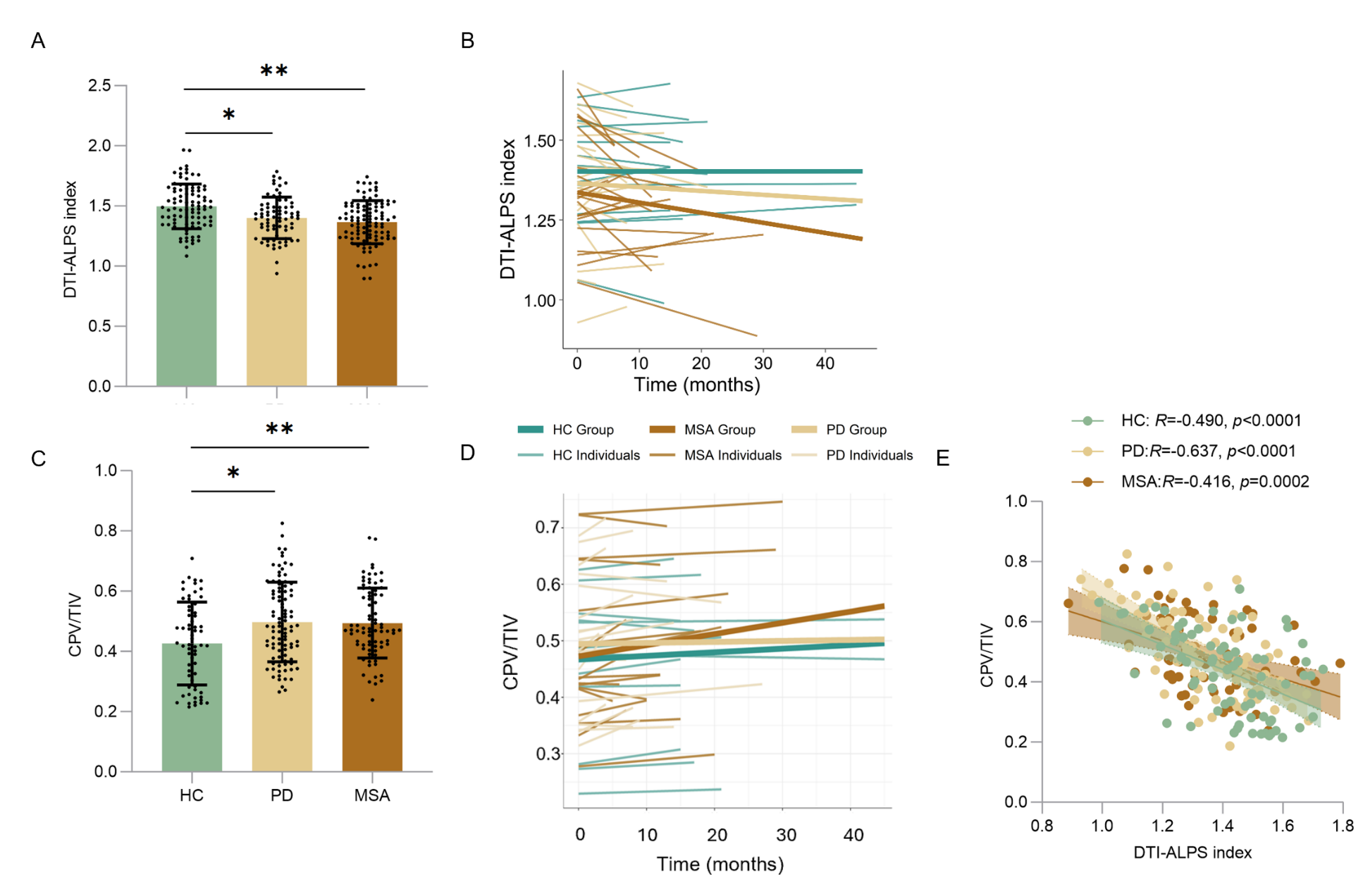
Figure 1
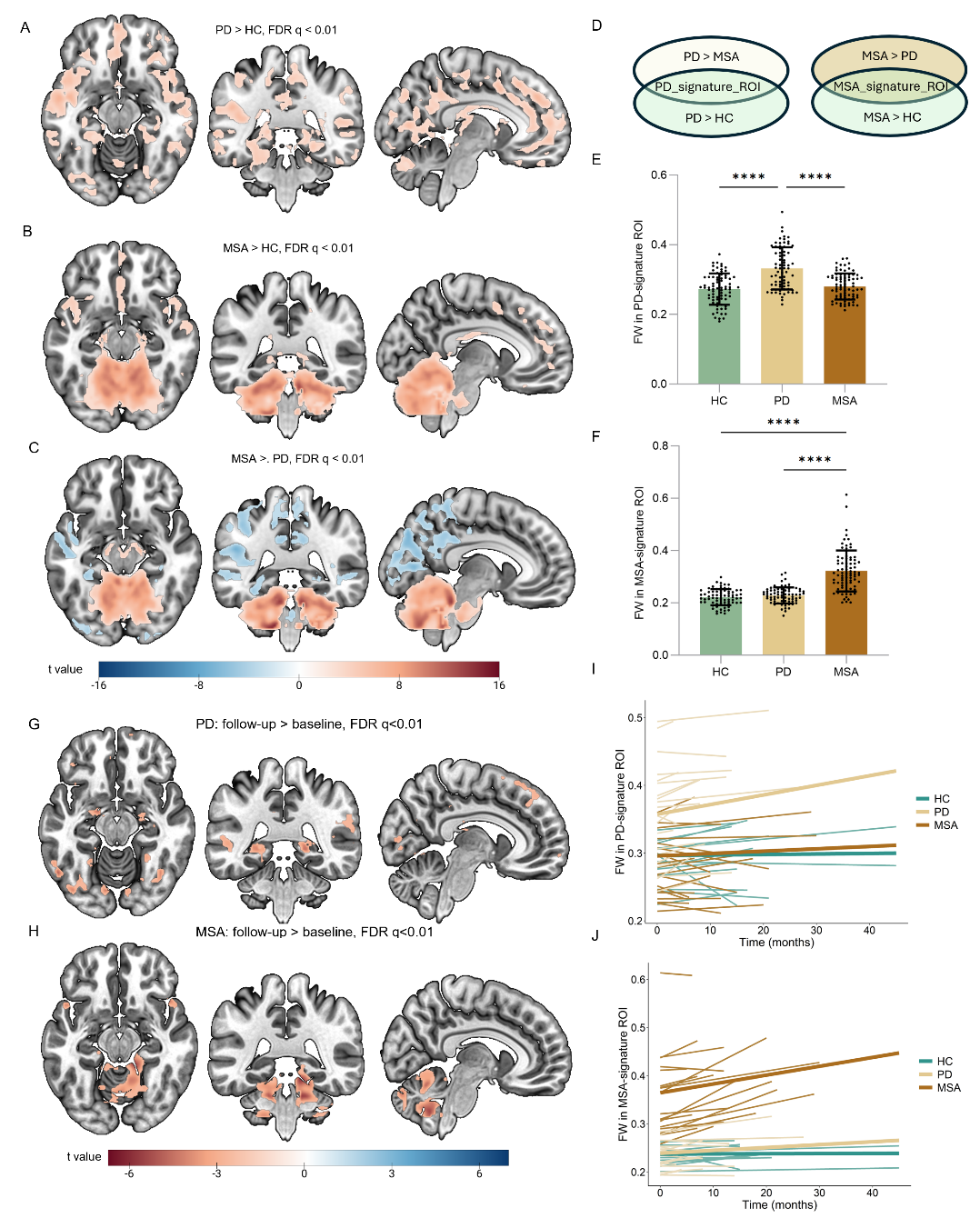
Figure 2
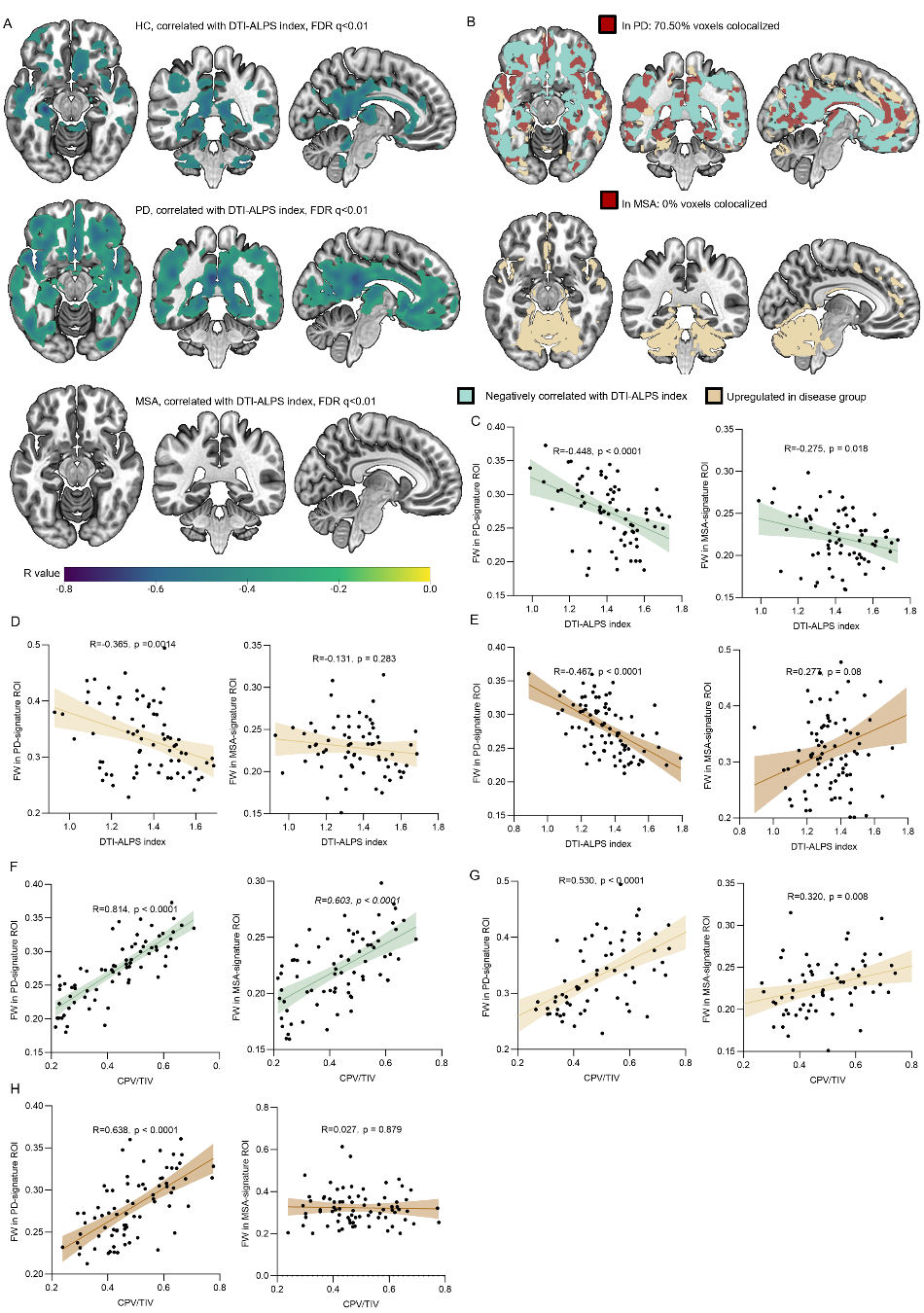
Figure 3
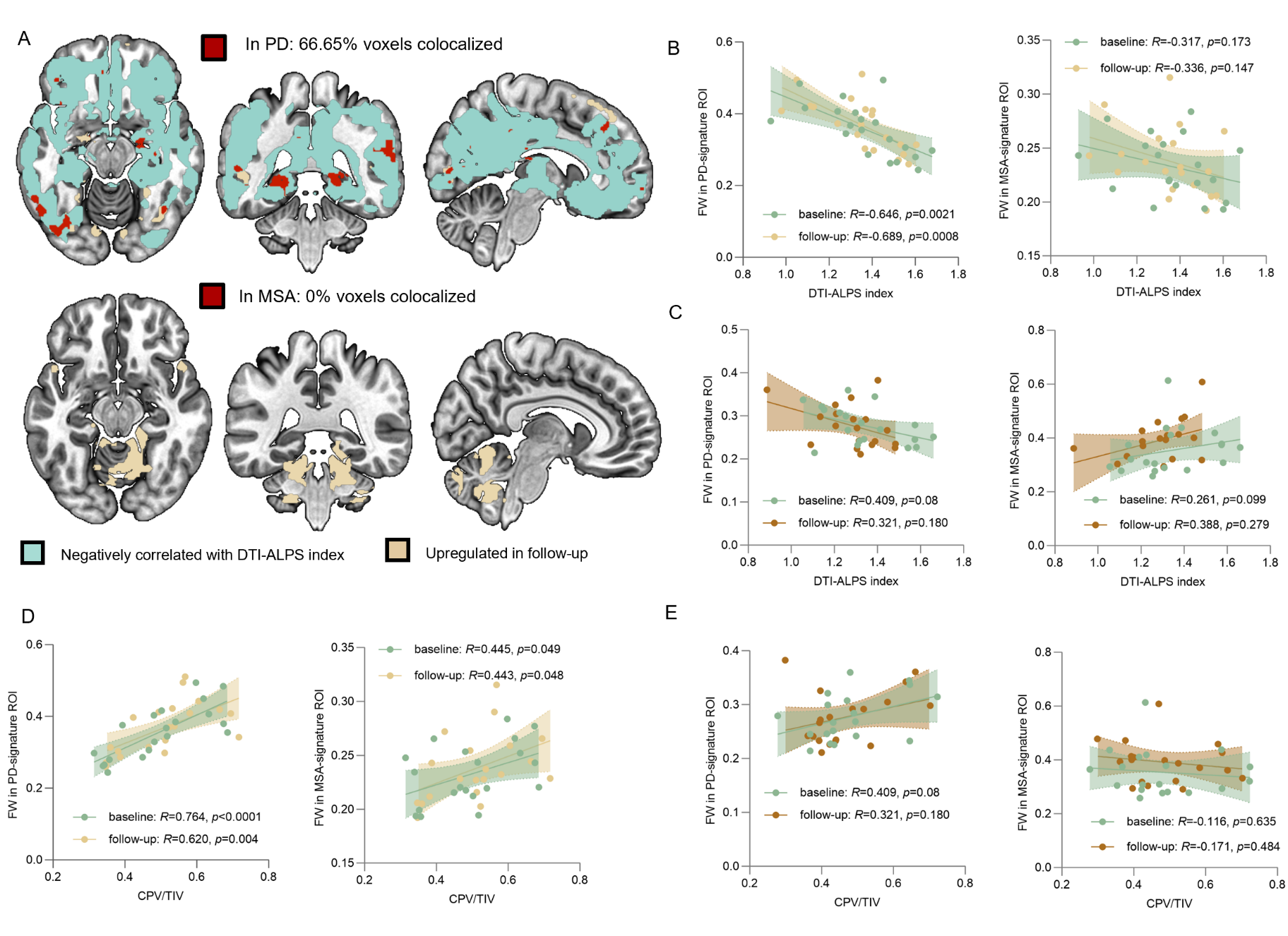
Figure 4
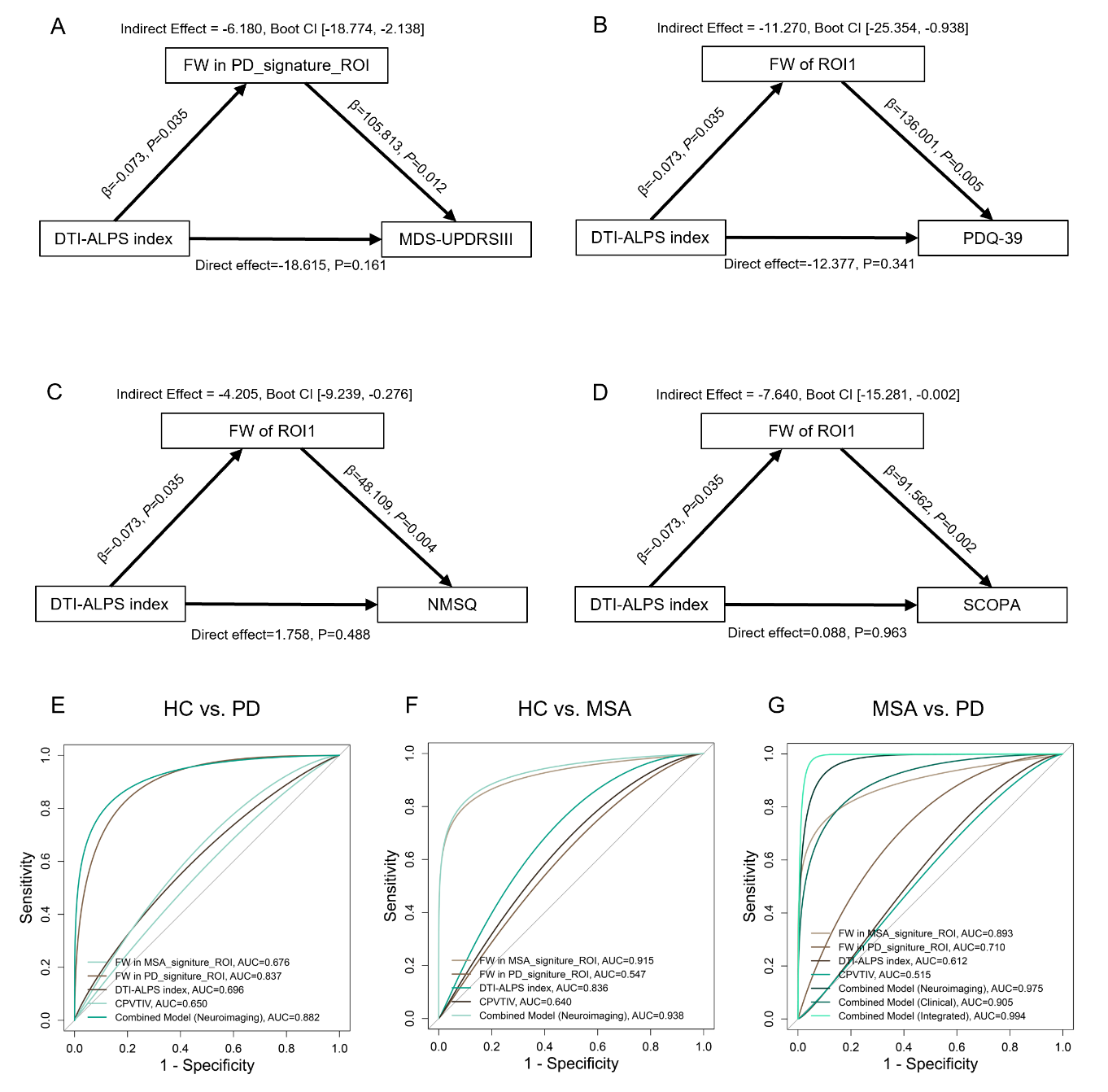
Figure 5
To cite this abstract in AMA style:
RNS. Shen, LCZ. Zhou, JL. Liu. Divergent Glymphatic Dysfunction and Free Water Pathology Underpin Distinct Mechanisms and Enable Differential Diagnosis in Parkinson’s Disease and Multiple System Atrophy [abstract]. Mov Disord. 2026; 41 (suppl 1). https://www.mdsabstracts.org/abstract/divergent-glymphatic-dysfunction-and-free-water-pathology-underpin-distinct-mechanisms-and-enable-differential-diagnosis-in-parkinsons-disease-and-multiple-system-atrophy/. Accessed October 1, 2026.« Back to 2026 International Congress
MDS Abstracts - https://www.mdsabstracts.org/abstract/divergent-glymphatic-dysfunction-and-free-water-pathology-underpin-distinct-mechanisms-and-enable-differential-diagnosis-in-parkinsons-disease-and-multiple-system-atrophy/