
Objective: To investigate the role of the CXCL8/CXCL2–CXCR2 axis in intestinal macrophage-mediated clearance of α-syn in PD.
Background: PD is characterized by the misfolding, aggregation, and propagation of α-syn. Intestinal macrophages are key effector cells in mucosal immune surveillance and may contribute to the clearance of abnormal α-syn. CXCL8 and its murine functional homologs CXCL1/CXCL2 signal through CXCR2 and regulate myeloid cell migration and effector functions. However, whether disruption of the CXCL8/CXCL2–CXCR2 axis contributes to impaired intestinal α-syn clearance in PD remains unclear.
Method: Clinical samples, in vitro experiments, and in vivo mouse models were integrated in this study. Intestinal tissues from patients with PD and healthy controls were analyzed using single-cell RNA sequencing, bulk RNA sequencing, immunohistochemistry, immunofluorescence, and WB to assess alterations in the CXCL8–CXCR2 axis. THP-1-derived macrophages and bone marrow-derived macrophages were used to evaluate the effects of exogenous CXCL8/CXCL2 stimulation, CXCR2 blockade, or CXCR2 knockdown on migration, phagocytosis, polarization, senescence, and injury-related phenotypes. An enteric nervous system conditioned-medium model under chronic α-syn exposure was established to assess α-syn phagocytic clearance. In vivo, a mouse model with local duodenal injection of α-syn preformed fibrils, with or without CXCR2 antagonist treatment, was used to examine intestinal α-syn burden and macrophage infiltration.
Results: CXCL8 was reduced in PD intestinal tissue at both transcript and protein levels, with lower plasma CXCL8 also observed in an external cohort. CXCL8 was mainly enriched in myeloid/macrophage populations and decreased in PD. CXCR2 inhibition impaired macrophage migration, phagocytosis, morphology, and polarization, and promoted senescence/injury under chronic α-syn exposure, whereas exogenous CXCL8/CXCL2 enhanced these functions. In vivo, CXCR2 blockade reduced intestinal macrophage infiltration and macrophage–α-syn colocalization, while increasing local α-syn pathology.
Conclusion: The intestinal CXCL8/CXCL2–CXCR2 axis is downregulated in PD and is associated with impaired macrophage recruitment and α-syn clearance. These findings support a role for the CXCL8/CXCL2–CXCR2 network in intestinal immune dysfunction and persistent α-syn accumulation in PD.
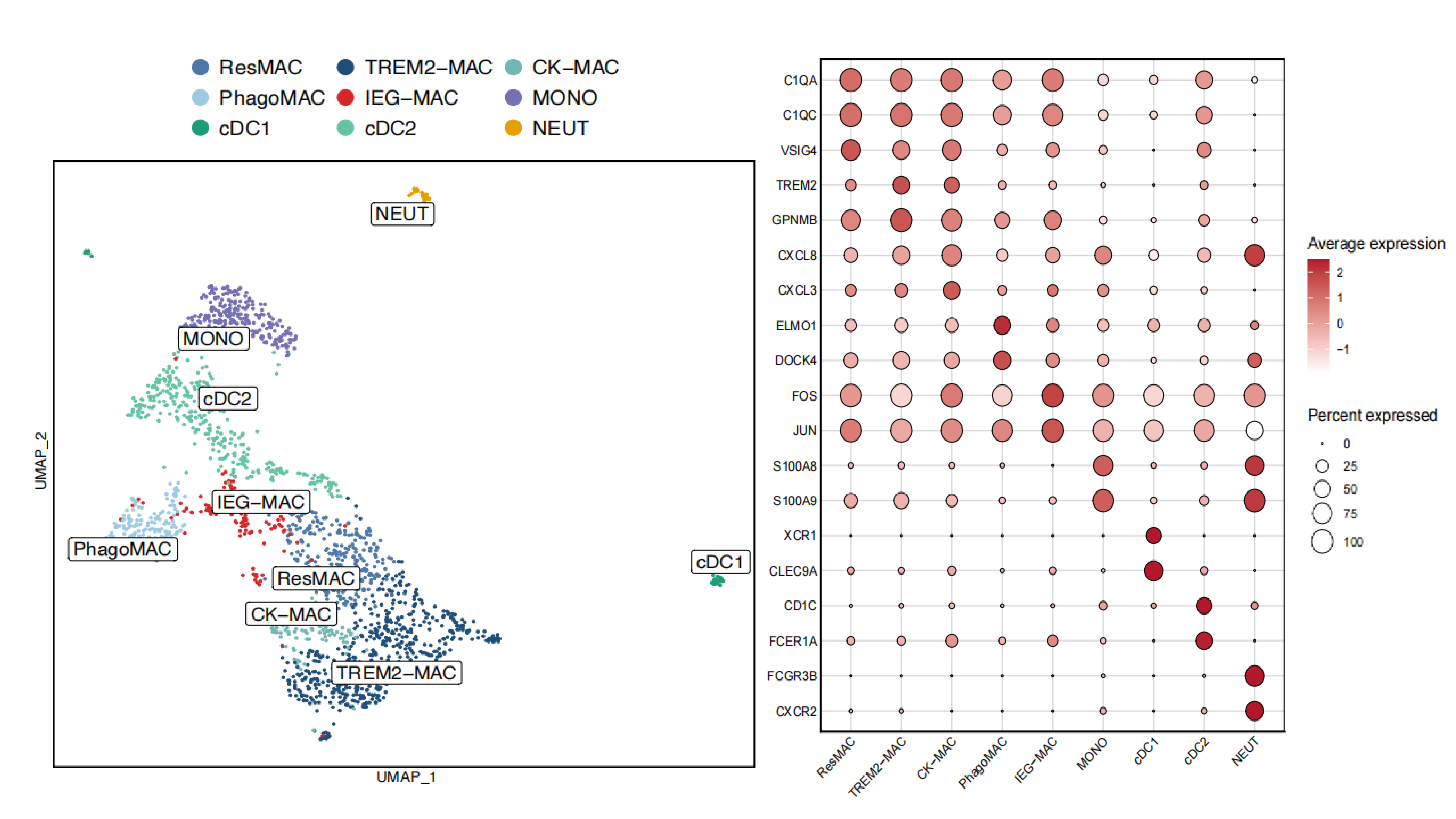
Single-Cell Sequencing of Myeloid Cells
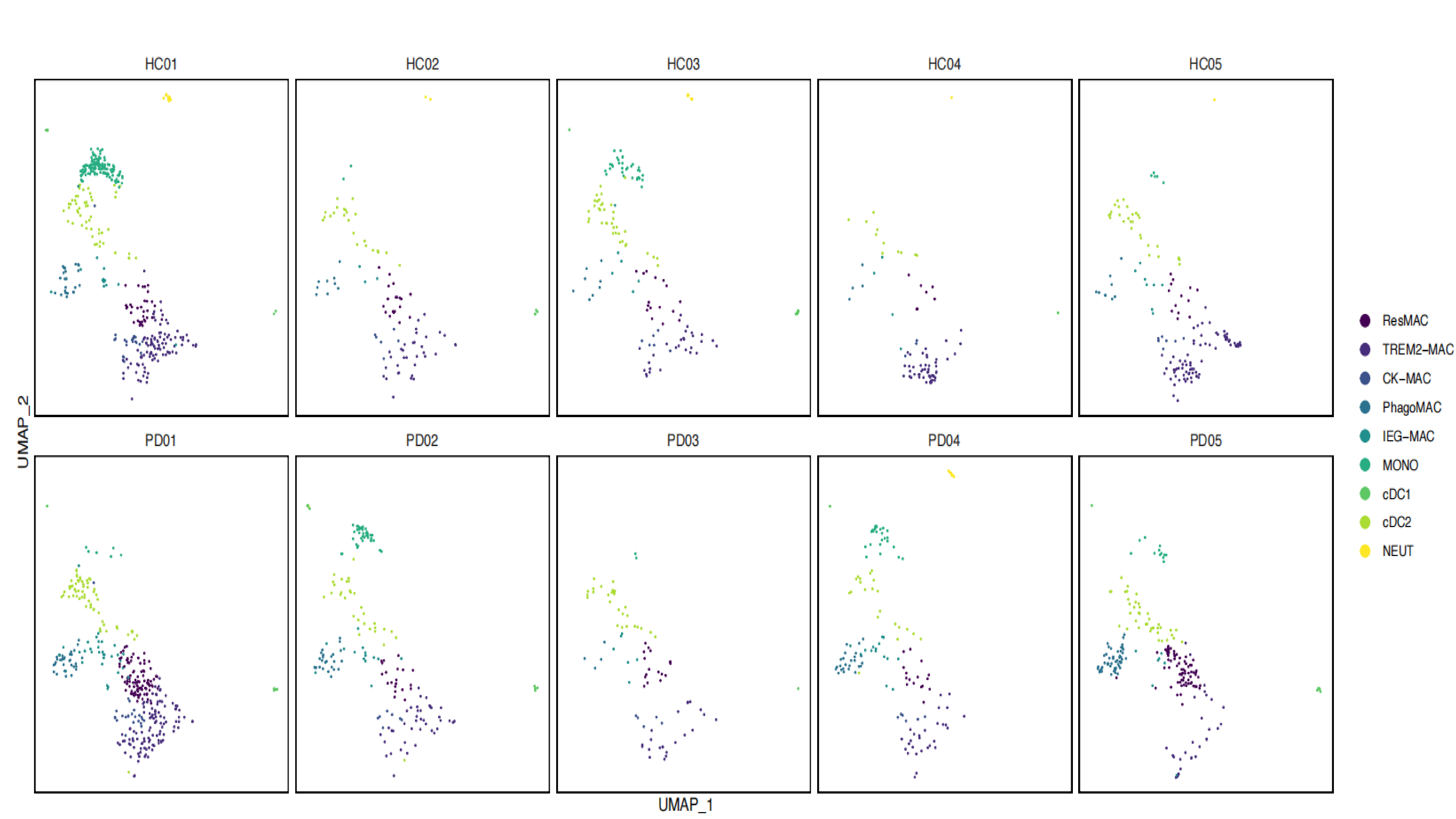
Myeloid Cell Single-Cell Sequencing (by Sample)
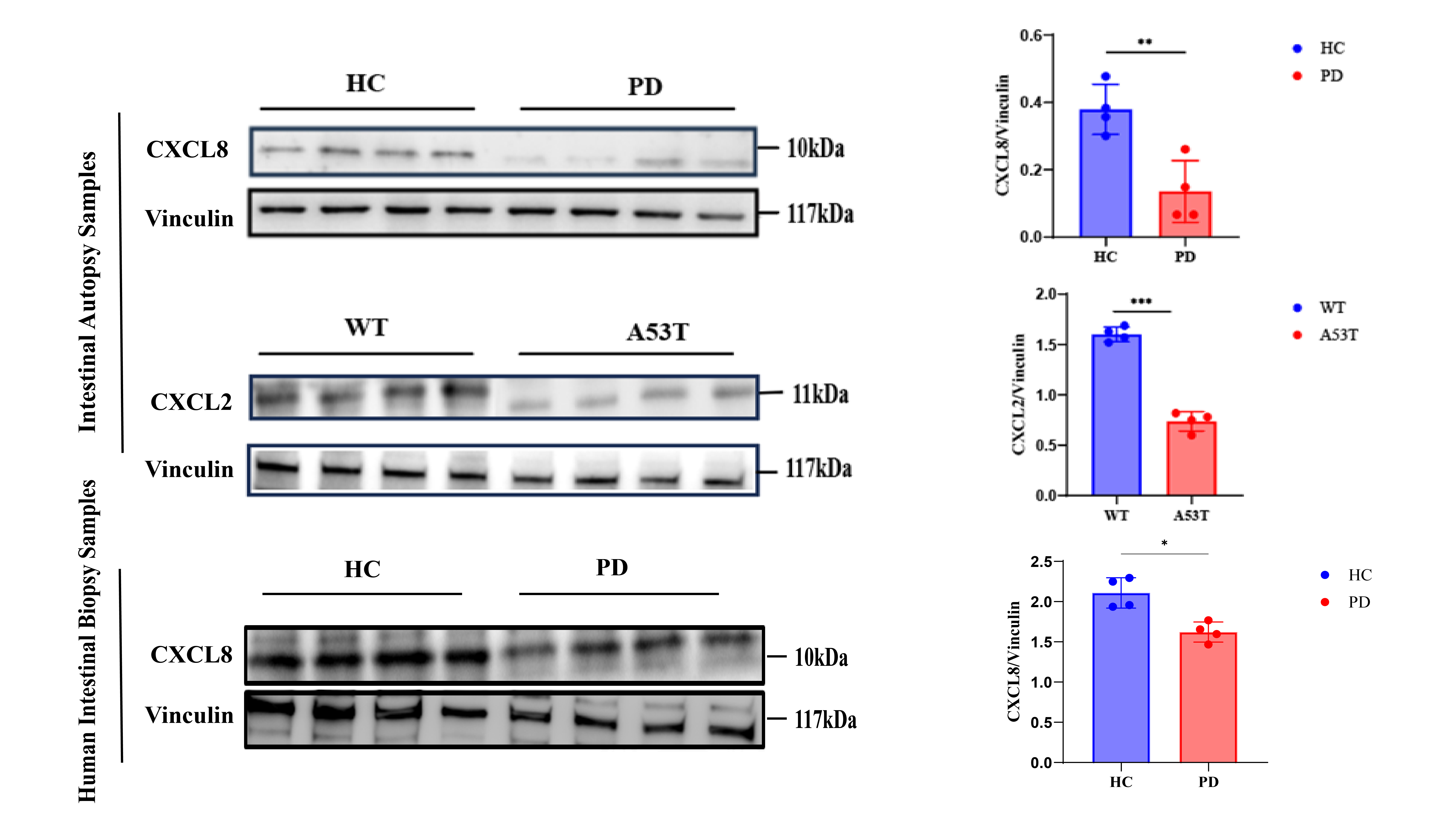
CXCL8 Protein Levels in Intestinal Samples
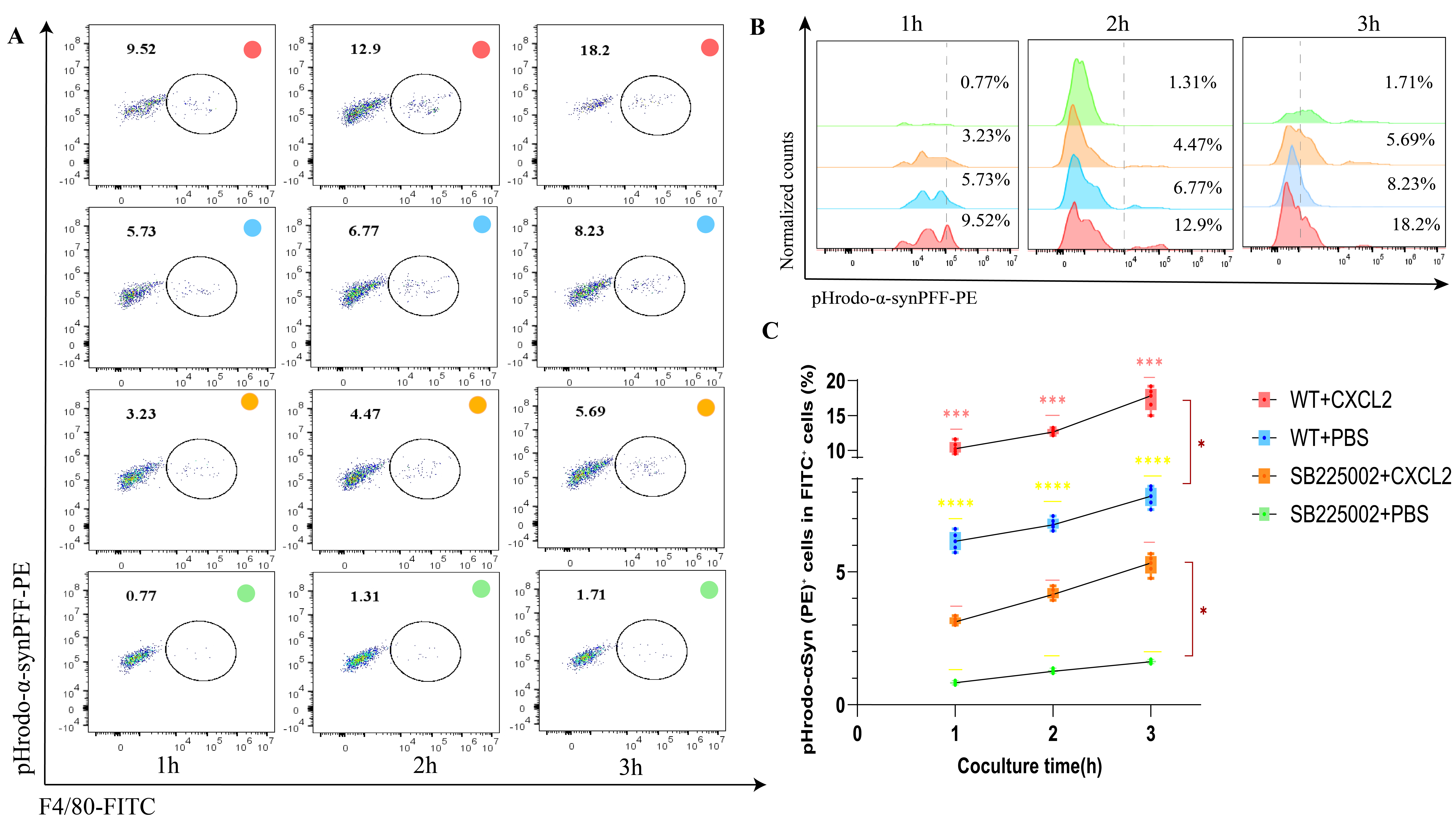
FC Results of α-syn Phagocytosis by BMDMs
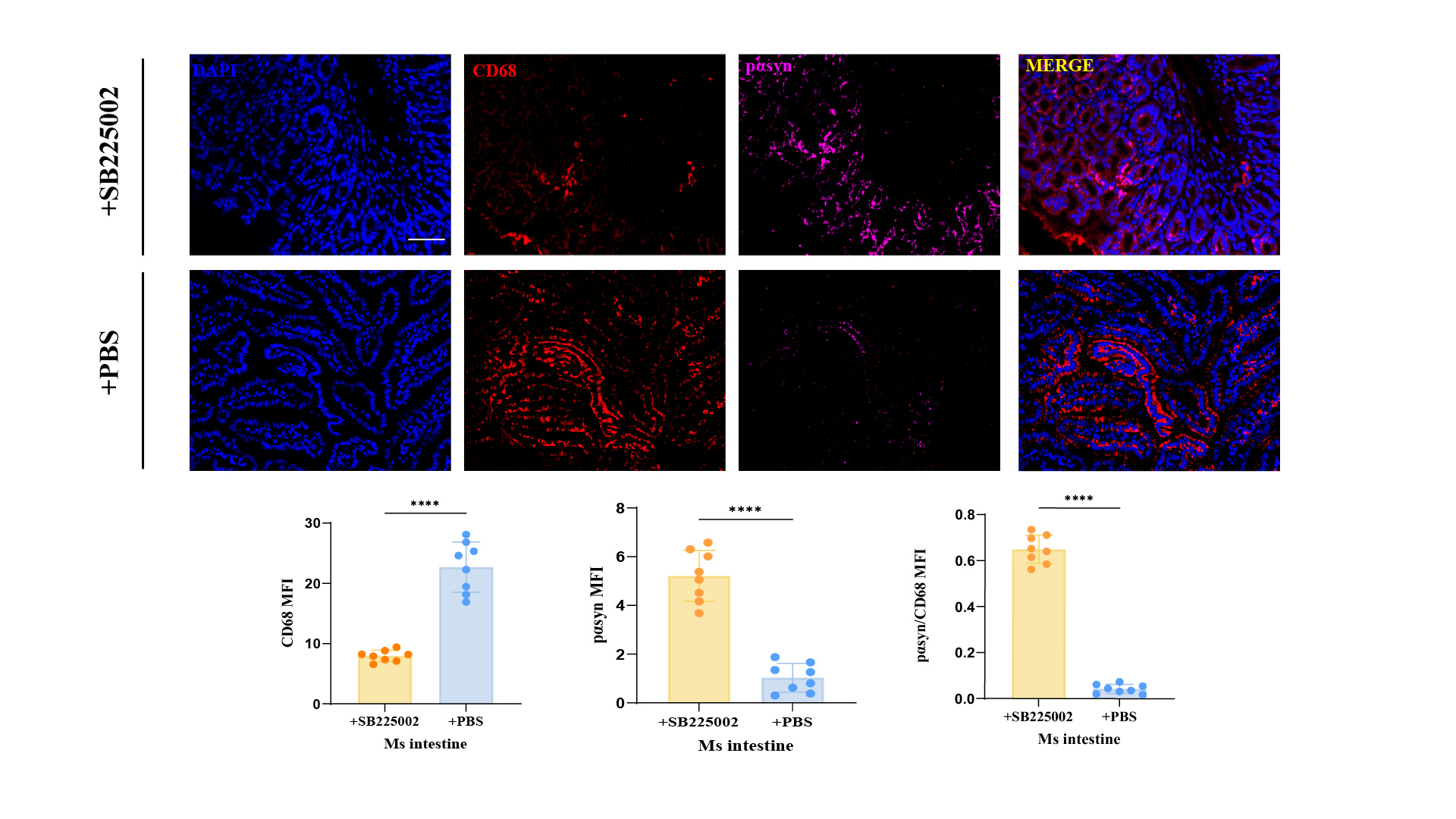
In Vivo Gut Macrophage Uptake of α-syn
To cite this abstract in AMA style:
H. Hu, T. Tang, W. Wang. Dysregulation of the Intestinal Macrophage CXCL8/CXCR2 Axis and Its Role in α-Synuclein Clearance [abstract]. Mov Disord. 2026; 41 (suppl 1). https://www.mdsabstracts.org/abstract/dysregulation-of-the-intestinal-macrophage-cxcl8-cxcr2-axis-and-its-role-in-%ce%b1-synuclein-clearance/. Accessed October 1, 2026.« Back to 2026 International Congress
MDS Abstracts - https://www.mdsabstracts.org/abstract/dysregulation-of-the-intestinal-macrophage-cxcl8-cxcr2-axis-and-its-role-in-%ce%b1-synuclein-clearance/