
Category: Parkinson’s Disease: Clinical Trials
Objective: To evaluate the efficacy and safety of acupuncture for PD-MCI, and improve the credibility of acupuncture research evidence through employing a sham acupuncture device as a control.
Background: Parkinson’s disease with mild cognitive impairment (PD-MCI) is one of the primary non-motor symptoms of PD. PD-MCI represents an early stage of cognitive impairment in PD. Treatment of mild cognitive impairment in PD remains limited. Acupuncture exhibits superior therapeutic outcomes to pharmacotherapy for mild cognitive impairment.
Method: This is a prospective, sham-controlled, assessor-blinded trial, which conducted in China. A total of 72 eligible PD-MCI volunteers were randomized using a simple randomization method in a 1:1 ratio into the acupuncture group (RA) and the placebo acupuncture group (PA) to receive either acupuncture or placebo acupuncture for 20 sessions over a succession of 5 weeks. The primary outcome measure was the MoCA score. The secondary outcome measures were the scores of MMSE, UPDRSIII and the serum level of neurofilament light polypeptide (NfL) and glial cell-derived neurotrophic factor (GDNF).
Results: The MCID of MoCA is 1.22. The RA group had a mean increase of 4 (P < 0.001) points in the MoCA score from baseline. The MCID of MMSE is 1.6. At the end of treatment and follow-up, the RA group had 3 points increase in the MMSE score from baseline, while the differences of the PA group were not statistically significant. The RA group had a mean decrease of 6 (18.00(12.50,23.00), P<0.001) points in the UPDRSIII score from baseline at the end of treatment. Participants in the PA group had a significant reduction of 5.5 (19.50(12.00,27.75), P≤0.05) points. After follow-up, the UPDRSIII score of the RA group (19.00(14.50,23.00), P≤0.05) was significantly lower than the score of the PA group (24.00(18.25,27.50), P≤0.05). Level of serum NfL reduced 13.16ng/L (P≤0.05) from baseline in the RA group, while the level of serum NfL in the PA group increased 2.9 ng/L.
Conclusion: We found that the efficacy of acupuncture for MCI in PD was better than that of the placebo acupuncture. Acupuncture could improve cognitive function based on regular PD medication. Acupuncture can reduce the serum NfL concentration of PD-MCI patients. This study confirms the clinical efficacy and safety of acupuncture in treating PD-MCI.
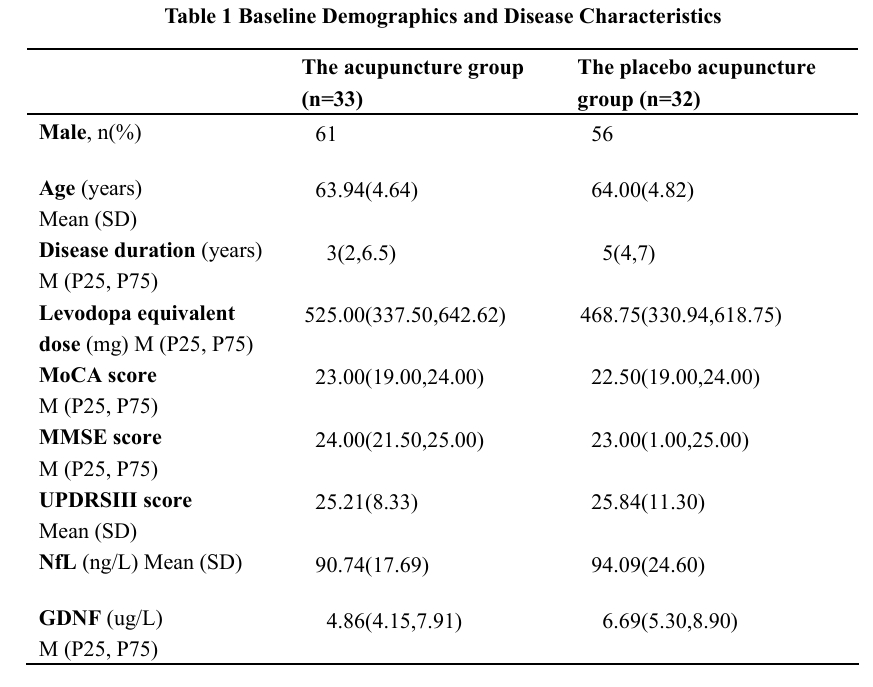
Table 1 Baseline
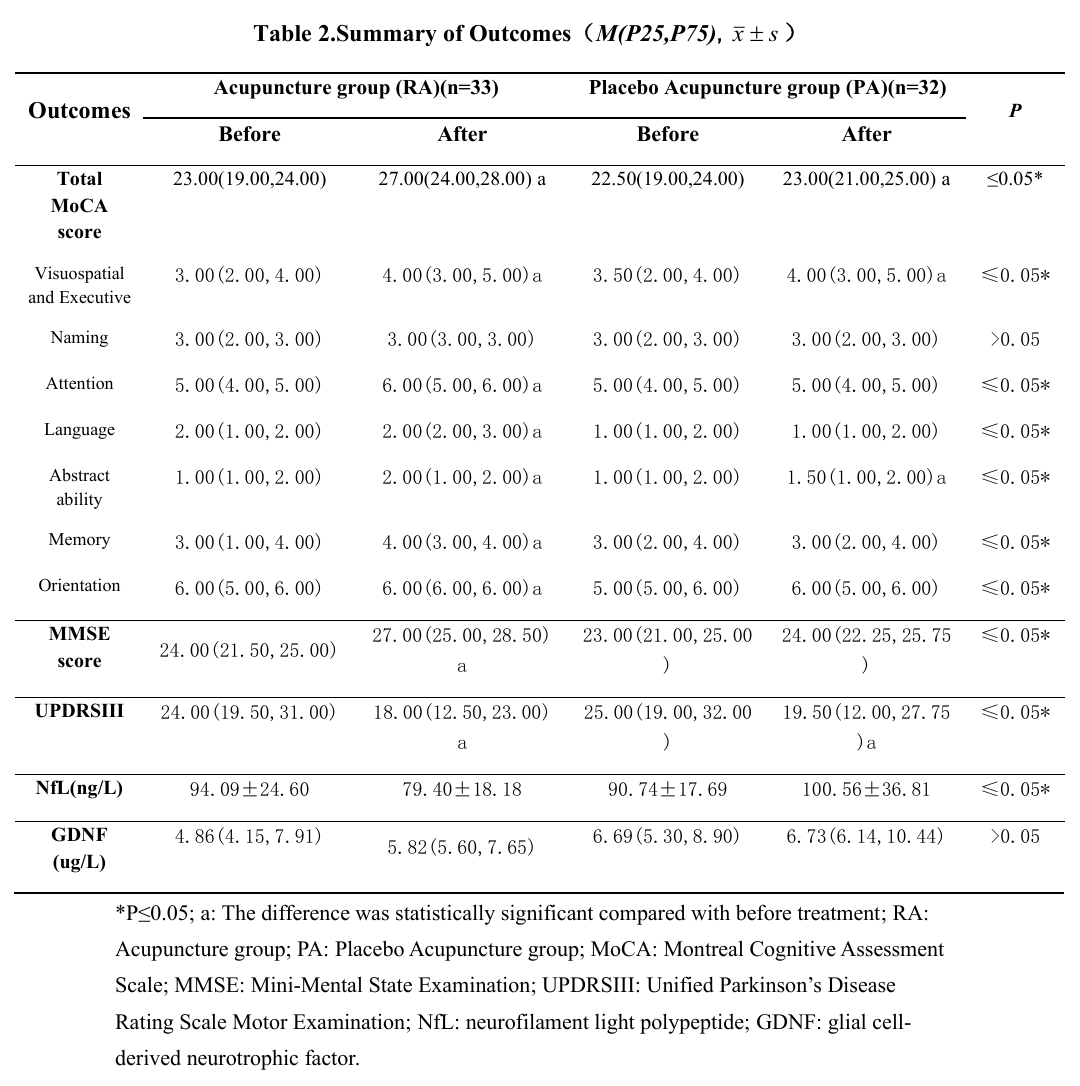
Table 2.Summary of Outcomes
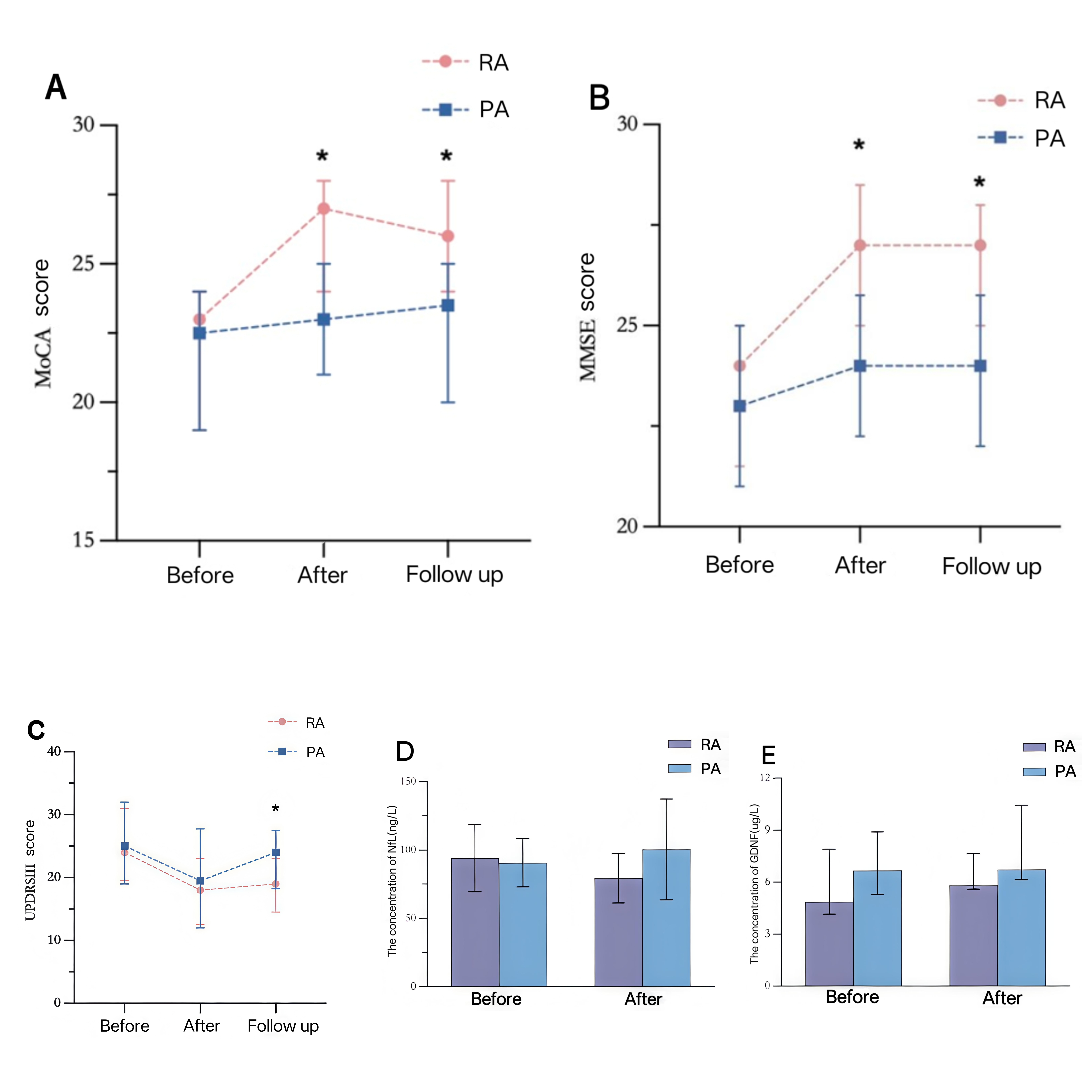
Figure 1. Therapeutic Effects of Acupuncture
To cite this abstract in AMA style:
II. Leong, SN. Wu, JQ. Fan, LX. Zhuang. Effectiveness of Acupuncture for Parkinson’s Disease with Mild Cognitive Impairment A Randomized Clinical Trial [abstract]. Mov Disord. 2026; 41 (suppl 1). https://www.mdsabstracts.org/abstract/effectiveness-of-acupuncture-for-parkinsons-disease-with-mild-cognitive-impairment-a-randomized-clinical-trial/. Accessed October 1, 2026.« Back to 2026 International Congress
MDS Abstracts - https://www.mdsabstracts.org/abstract/effectiveness-of-acupuncture-for-parkinsons-disease-with-mild-cognitive-impairment-a-randomized-clinical-trial/