
Category: Parkinson's Disease (Other)
Objective: This study aimed to investigate the effects of deep repetitive transcranial magnetic stimulation (dTMS) using an H-coil on cerebral perfusion and motor function in patients with PD.
Background: Pharmacological therapy provides effective symptomatic relief during the early stages of Parkinson’s disease (PD). However, as the disease progresses, symptoms often become increasingly complex and refractory to medication, necessitating alternative treatment strategies. Repetitive transcranial magnetic stimulation (rTMS) is a noninvasive brain stimulation technique proposed as a potential therapeutic tool for various neurological and psychiatric disorders.
Method: Five patients with PD underwent high-frequency dTMS over the supplementary motor area (SMA) for two weeks. Clinical assessments, including the Unified Parkinson’s Disease Rating Scale (UPDRS), Hoehn–Yahr scale, and Timed Up and Go (TUG) test, were conducted at baseline and three months after dTMS. Cerebral perfusion was evaluated using single-photon emission computed tomography (SPECT) and analyzed with statistical parametric mapping (SPM).
Results: No statistically significant changes were observed in the Hoehn–Yahr scale, TUG test, or UPDRS motor scores after dTMS (table 1). However, SPECT analysis revealed a significant increase in regional cerebral blood flow (rCBF) in the right cerebellum (figure 1).
Conclusion: Although dTMS did not result in significant clinical improvements in motor symptoms, it was associated with increased cerebellar perfusion, suggesting possible neuromodulatory effects. We cautiously suggest that rTMS may serve as a potential therapeutic option for PD. Further studies are needed to investigate the relationship between changes in rCBF and motor function after rTMS.
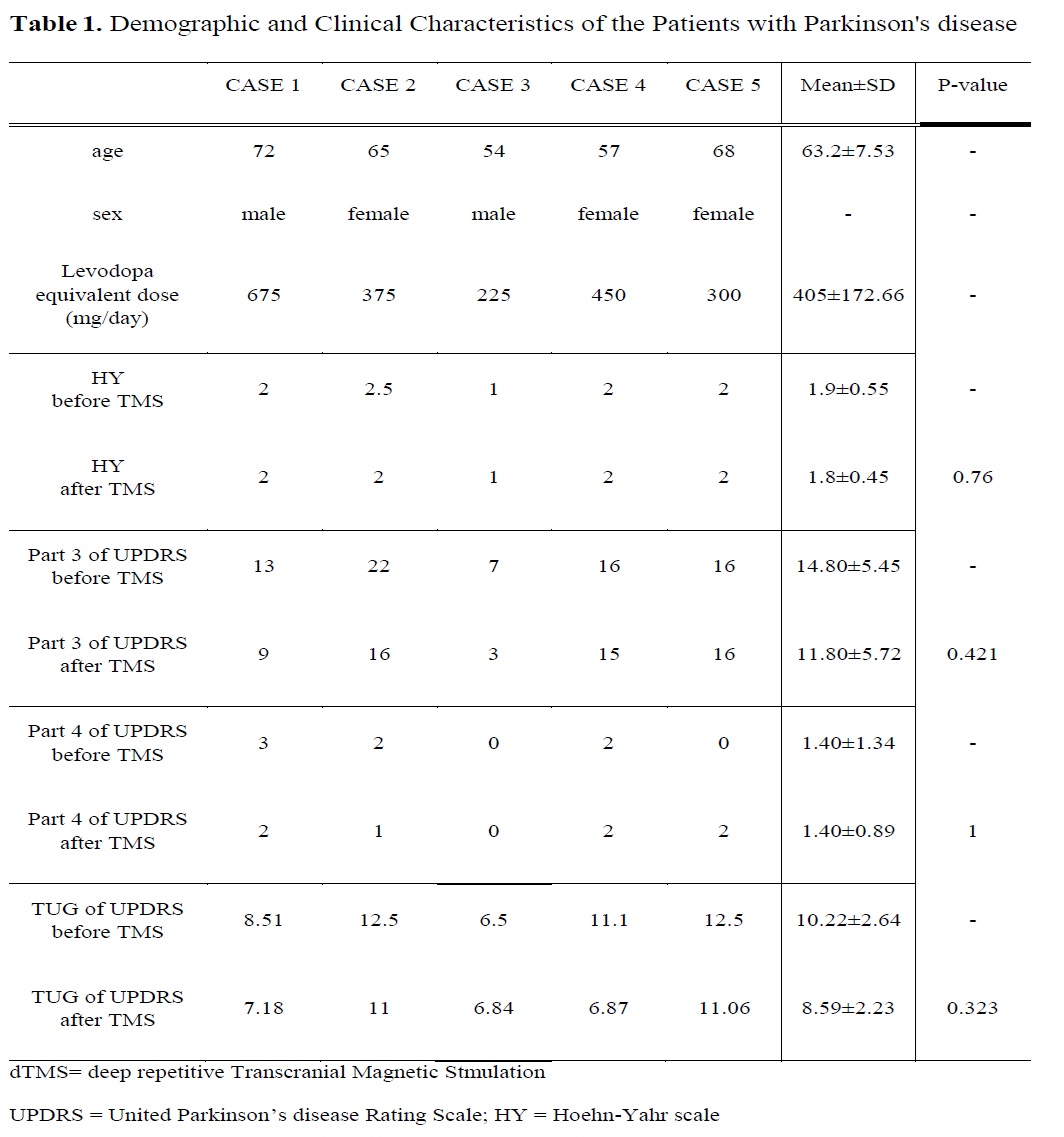
Table 1.
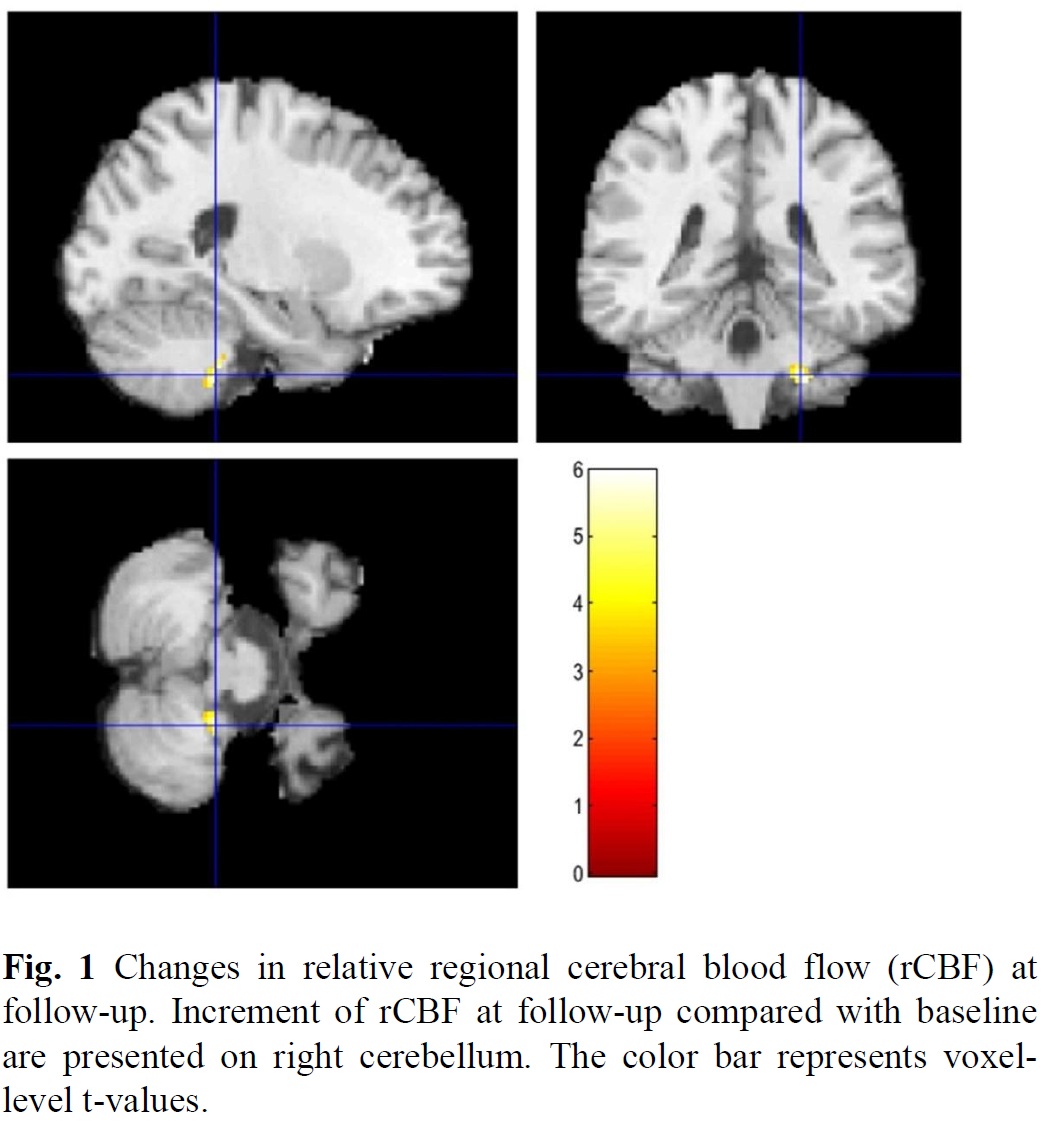
Figure 1.
To cite this abstract in AMA style:
B. Kim, M. Chang, I. Song. Effects of Repetitive Deep TMS on Motor Function and Cerebral Perfusion in Parkinson’s Disease [abstract]. Mov Disord. 2026; 41 (suppl 1). https://www.mdsabstracts.org/abstract/effects-of-repetitive-deep-tms-on-motor-function-and-cerebral-perfusion-in-parkinsons-disease/. Accessed October 1, 2026.« Back to 2026 International Congress
MDS Abstracts - https://www.mdsabstracts.org/abstract/effects-of-repetitive-deep-tms-on-motor-function-and-cerebral-perfusion-in-parkinsons-disease/