
Objective: To evaluate the efficacy of high-frequency repetitive transcranial magnetic stimulation (HF-rTMS) in reducing pain intensity and pain interference in patients with Parkinson’s disease (PD).
Background: Chronic pain affects up to 75% of PD patients, significantly impairing quality of life. Pathophysiology involves dopaminergic deficiency, neuroinflammation (elevated IL-6, TNF-α), and maladaptive central pain processing. While pharmacological options are limited, HF-rTMS targeting the primary motor cortex (M1) or insula offers a non-invasive neuromodulatory approach to activate descending inhibitory pathways and modulate neuroinflammation.
Method: A systematic search of PubMed, EMBASE, and Cochrane databases was conducted for controlled clinical trials investigating rTMS for PD pain up to March, 2026. Data from 126 patients across three primary studies were analyzed. Primary outcomes were standardized mean differences (SMD) in pain intensity (NRS/VAS) and pain interference (BPI/KPPS) using a random-effects model.
Results: HF-rTMS largely reduced immediate pain intensity compared to sham/control (SMD = -2.38; 95% CI [-5.69, 0.93]), though high heterogeneity was observed (I^2 = 96.1%). Subgroup analysis by brain target showed a more pronounced effect on pain intensity when targeting M1 (SMD = -3.53; 95% CI [-7.84, 0.79]) compared to the insula (SMD = -0.14). Pain interference demonstrated a similar trend toward improvement when targeting M1 (SMD = -1.71; 95% CI [-2.38, -1.04]). Furthermore, higher frequency (20 Hz) rTMS showed a significantly greater effect on pain reduction (SMD = -5.92; 95% CI [-7.28, -4.57]) compared to 10 Hz (SMD = -0.51) at the 4-week follow-up. These findings suggest a possible sustained analgesic effect in specific cohorts. No serious adverse events were reported.
Conclusion: HF-rTMS is a safe and potentially effective intervention for PD-related pain. Our findings suggest that targeting the M1 and utilizing higher frequencies (20 Hz) may yield superior outcomes in both pain intensity and functional interference. However, the high heterogeneity across current trials underscores the need for standardized stimulation protocols and larger, multicenter randomized controlled trials to confirm these exploratory findings and establish long-term clinical guidelines.
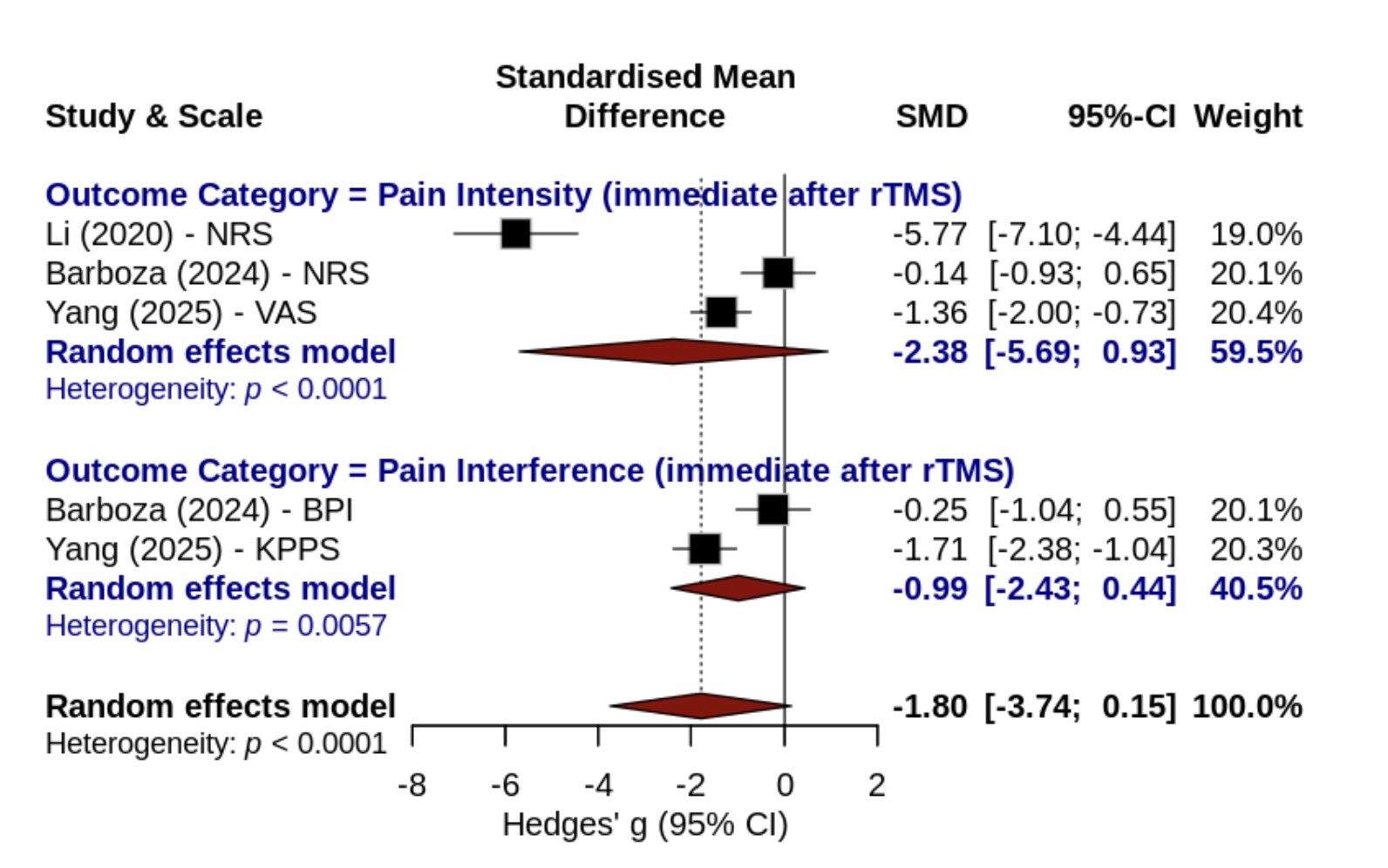
Immediate Pain Intensity Following rTMS
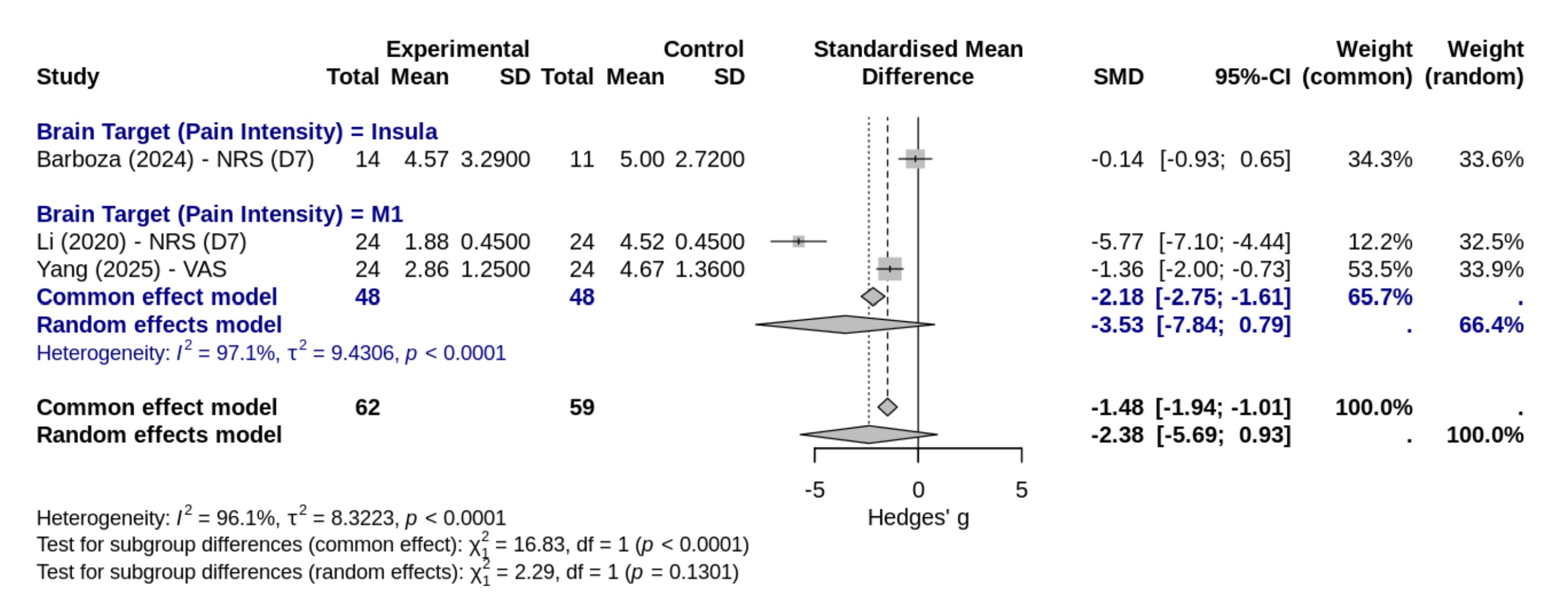
Pain Intensity by Brain Target
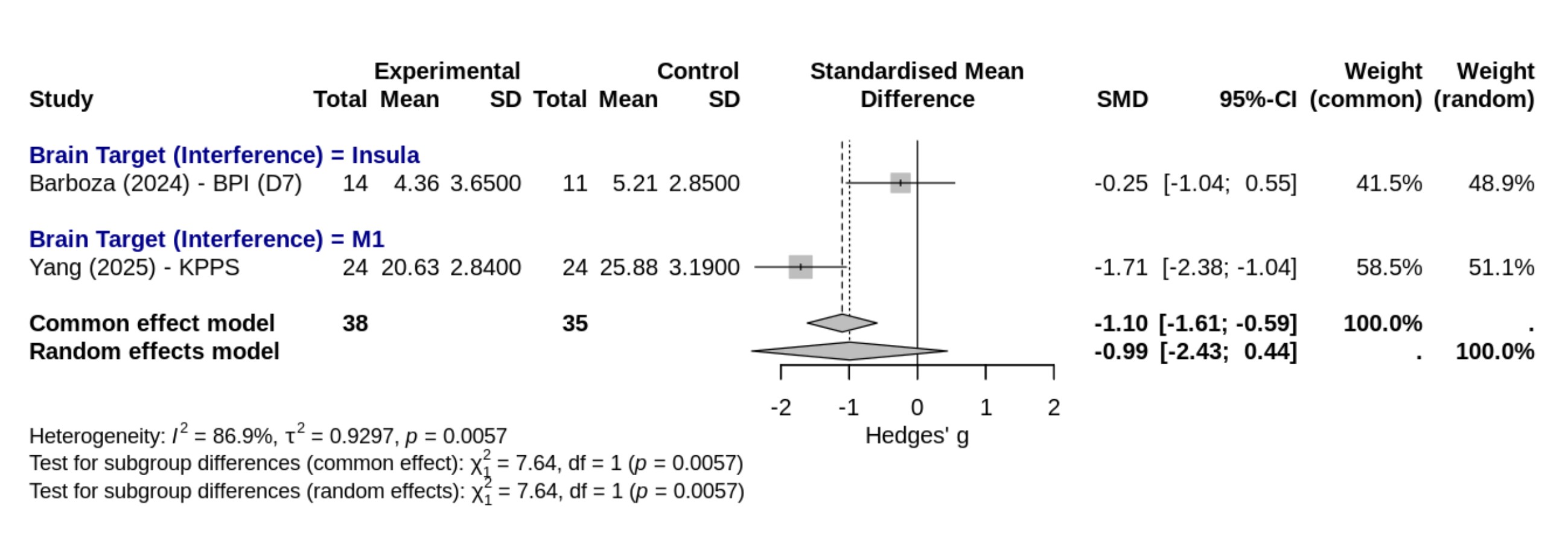
Pain Interference by Brain Target
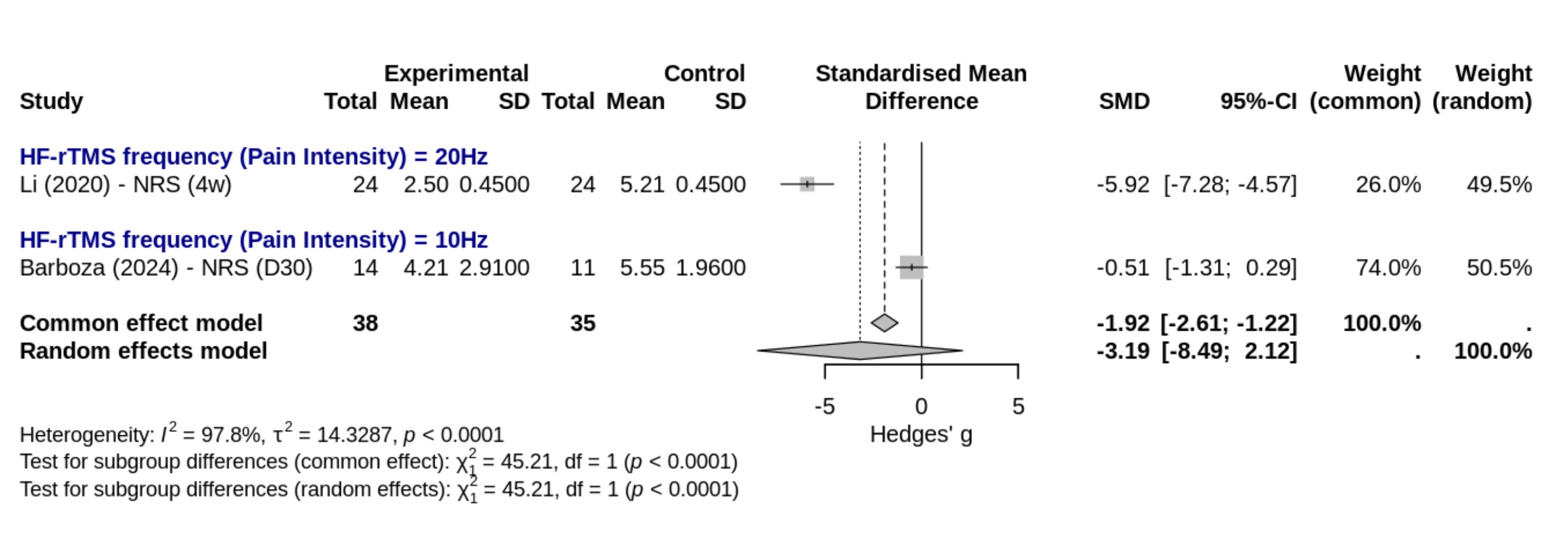
Efficacy by Stimulation Frequency
To cite this abstract in AMA style:
Y-H. Wu. Efficacy of High-Frequency Repetitive Transcranial Magnetic Stimulation (HF-rTMS) for Pain Management in Parkinson’s Disease: A Systematic Review and Meta-Analysis [abstract]. Mov Disord. 2026; 41 (suppl 1). https://www.mdsabstracts.org/abstract/efficacy-of-high-frequency-repetitive-transcranial-magnetic-stimulation-hf-rtms-for-pain-management-in-parkinsons-disease-a-systematic-review-and-meta-analysis/. Accessed October 1, 2026.« Back to 2026 International Congress
MDS Abstracts - https://www.mdsabstracts.org/abstract/efficacy-of-high-frequency-repetitive-transcranial-magnetic-stimulation-hf-rtms-for-pain-management-in-parkinsons-disease-a-systematic-review-and-meta-analysis/