
Category: Telemedicine
Objective: To evaluate the use, barriers, outcomes, and clinician perspectives of specialist telehealth for Parkinson’s disease (PD) care in residential aged care facilities.
Background: Specialist PD care in residential aged care is challenging; telehealth may improve access, but evidence is limited.
Method: A prospective review of 20 specialist telehealth consultations (Feb–May 2025) and a survey of 10 clinicians was conducted. Structured proformas captured consultation characteristics, referral reasons, challenges, and outcomes. Data were analysed descriptively, with thematic analysis of free-text responses.
Results: Twenty consultations were completed for 17 residents (median age 76); 76% had advanced PD (Hoehn–Yahr stage 5) and 88% prior neurology involvement. Common consultation indications were falls (55%), medication review (50%), and neuropsychiatric symptoms (45%) [table1].
Median time to consultation was 33.5 days, median duration 45 minutes, with an estimated 79.5 minutes travel saved per consultation. Barriers were frequent, with connectivity issues in 85%, including four audio-only consultations [figure2].
Medication changes occurred in 65% of consultations, commonly dose reductions, addressing non-motor symptoms, delirium, falls, and polypharmacy. Physical examination was feasible in 50%. Geriatrician-led care was recommended in 90%, with neurology input reserved for complex motor symptoms or device-based therapies.
Among clinicians surveyed, 60% had used the service; confidence in diagnosing and managing PD was moderate, while satisfaction was high (90% rated 5/5) [table2]. Consultations spanned a wide regional catchment, highlighting accessibility benefits [figure1].
Conclusion: Telehealth supports medication optimisation in PD nursing home care, with geriatrician-led models and targeted neurology input best meeting patient needs.
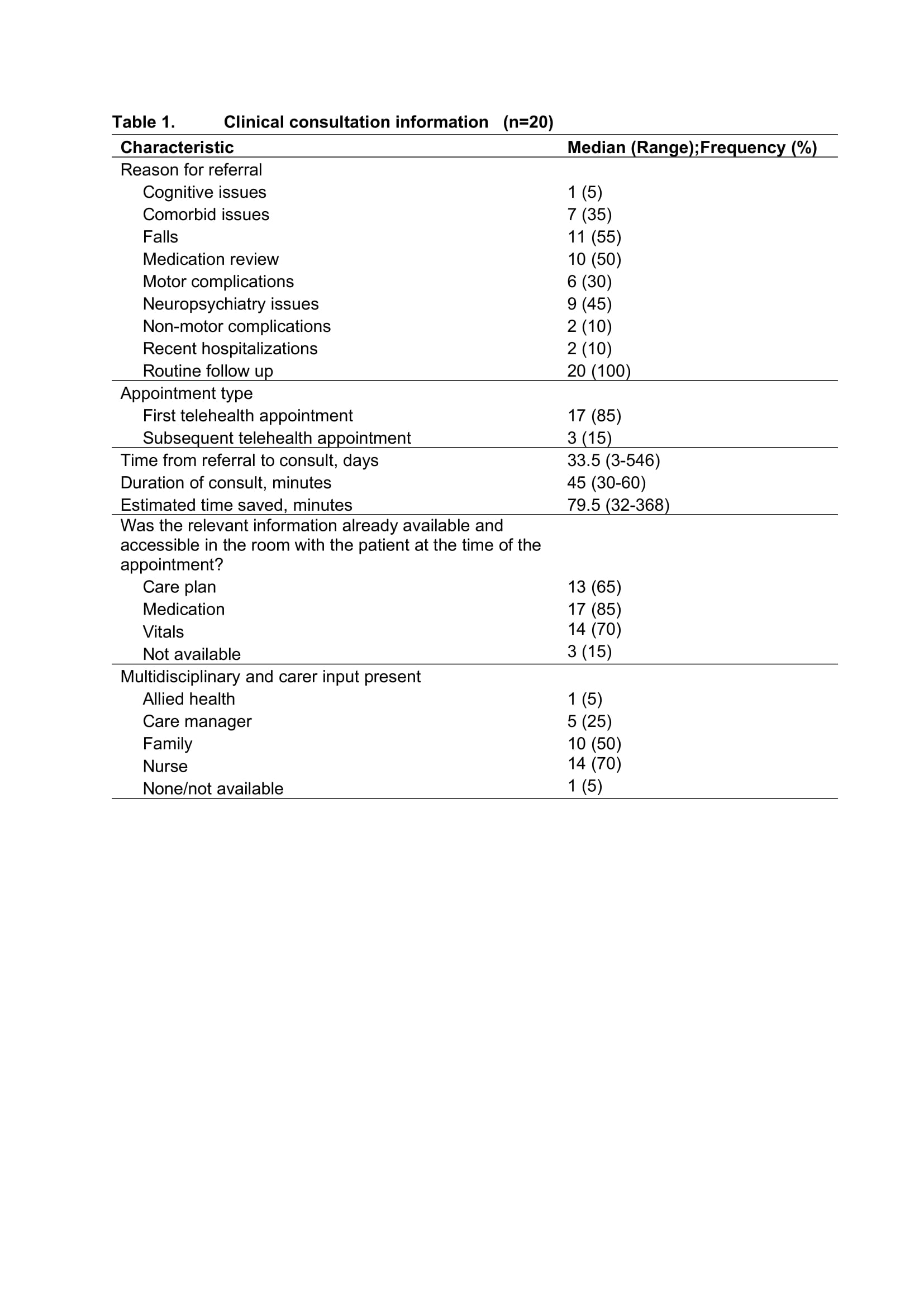
PD telehealth consultation characteristics
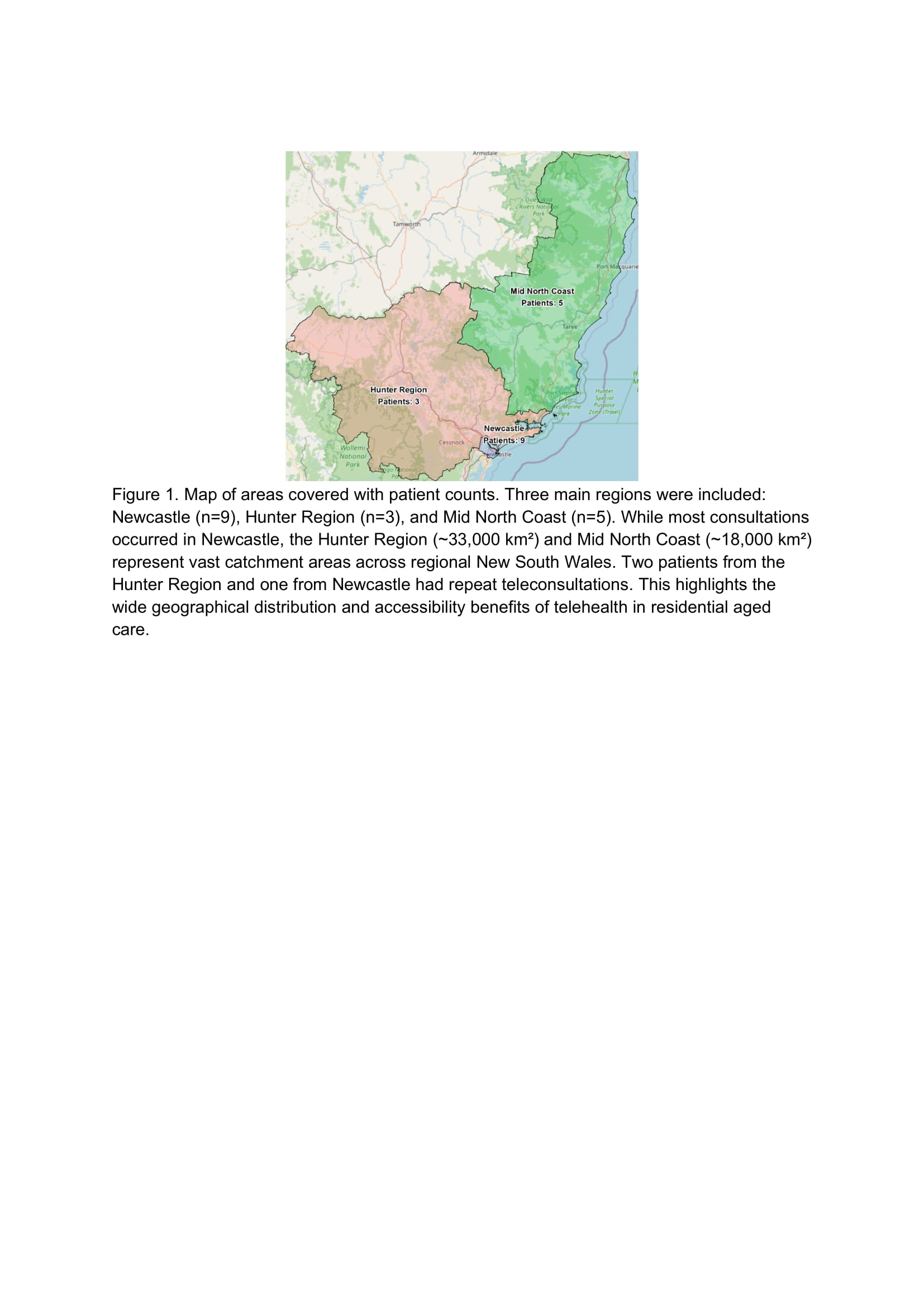
Geographic distribution of consultations
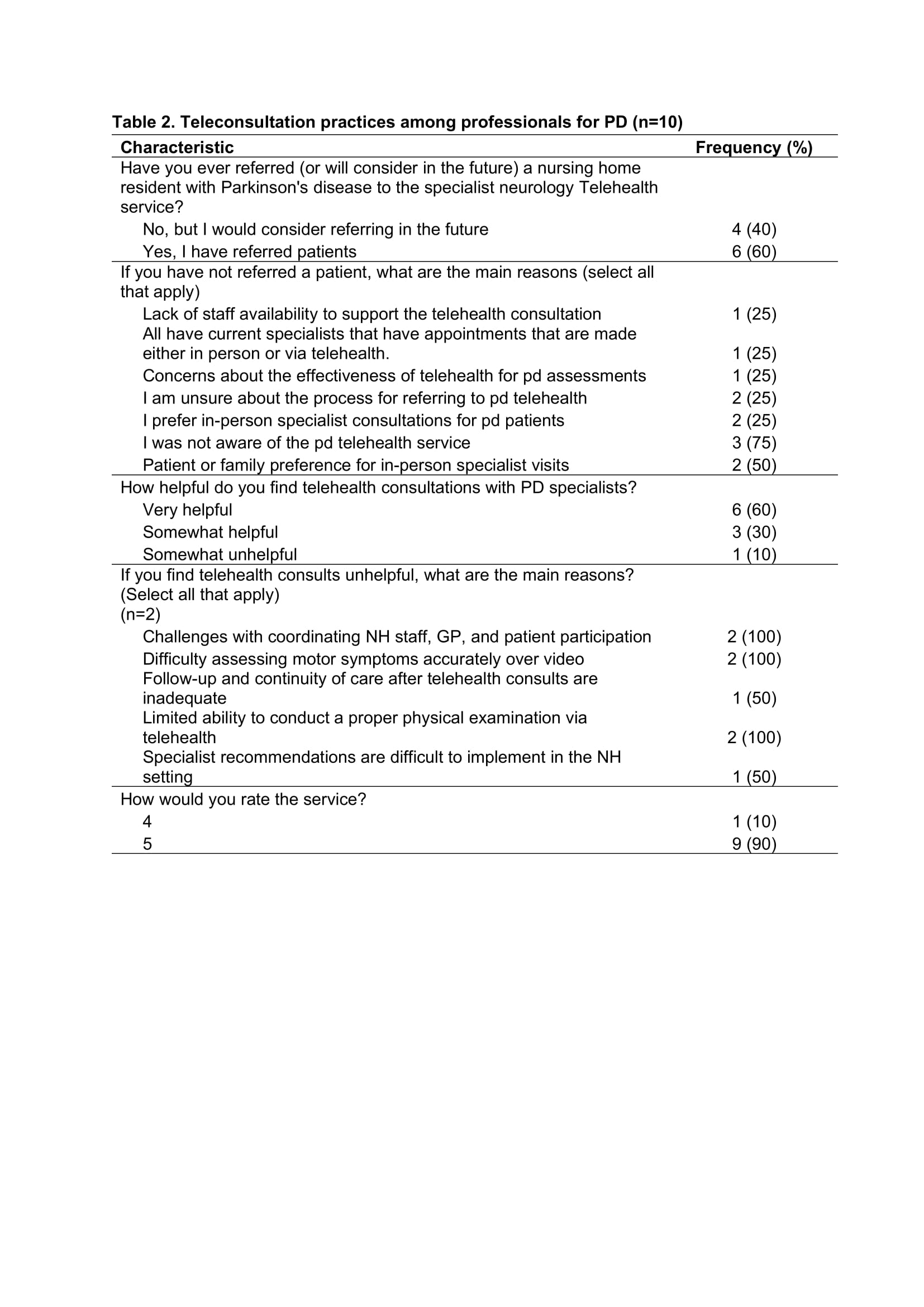
Clinician views on PD telehealth
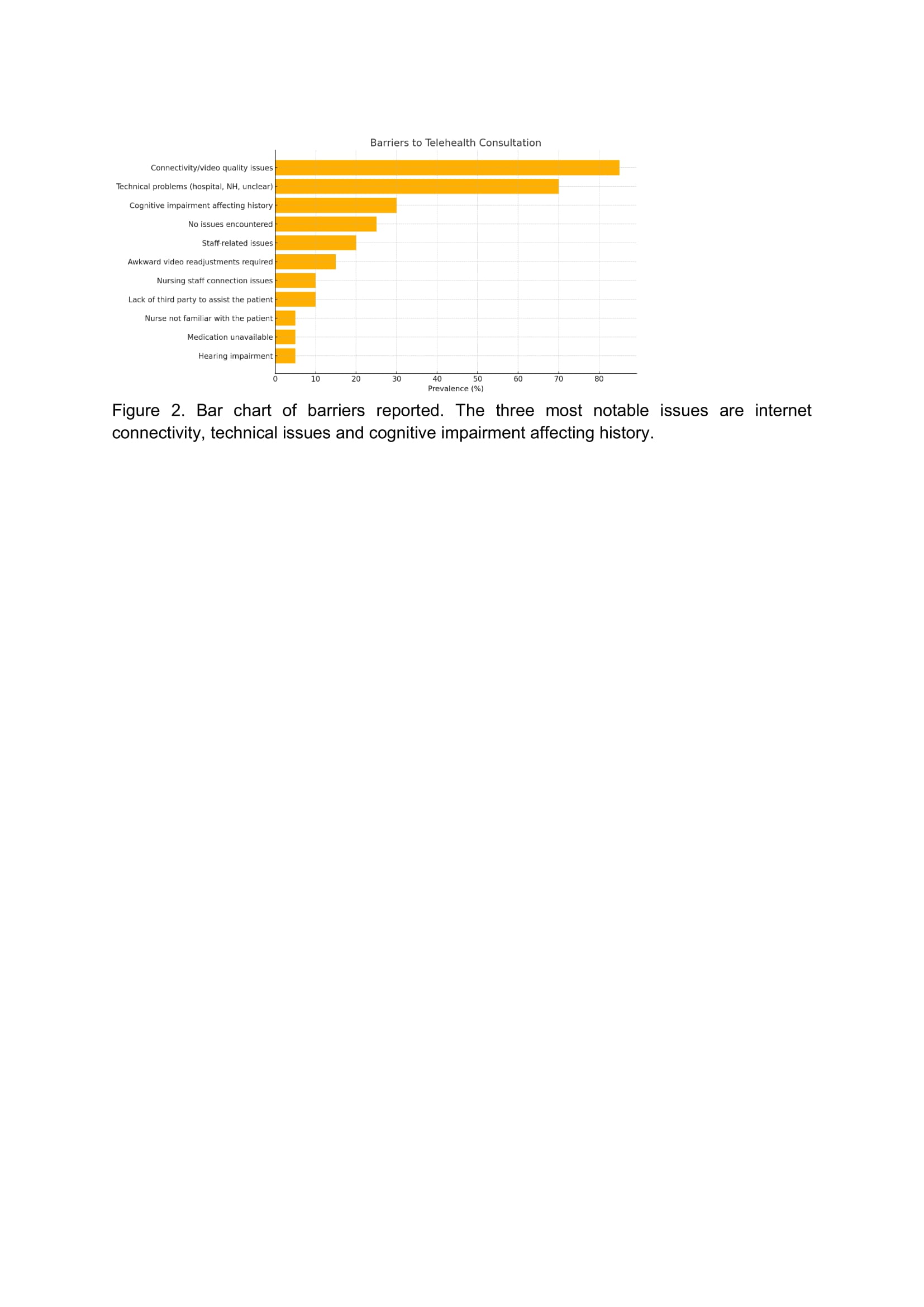
Barriers to PD telehealth consultations
To cite this abstract in AMA style:
J. Ponce, E. Pepper, E. Collins. Evaluating Parkinson’s Disease Telehealth in Residential Aged Care [abstract]. Mov Disord. 2026; 41 (suppl 1). https://www.mdsabstracts.org/abstract/evaluating-parkinsons-disease-telehealth-in-residential-aged-care/. Accessed October 1, 2026.« Back to 2026 International Congress
MDS Abstracts - https://www.mdsabstracts.org/abstract/evaluating-parkinsons-disease-telehealth-in-residential-aged-care/