
Category: Parkinson's Disease: Genetics
Objective: To investigate the influencing factors of the decision to participate in a genetic study in PD and explore the different perspectives between patients and physicians.
Background: Genetic counseling is an essential process for participation in a genetic study of Parkinson’s disease (PD). Multiple factors, including knowledge gaps, personal beliefs, disease-related concerns, and social influence, significantly affect individuals’ perceptions of the risks and benefits of participating in genetic studies. Cultural context across regions may further influence decision-making. Addressing these determinants would enhance our understanding of patients’ and neurologists’ perspectives towards genetic counselling in Thailand.
Method: A 10-item questionnaire was developed based on established factors influencing participation in genetic studies, encompassing knowledge and beliefs regarding genetic etiology and disease prognosis, concerns regarding privacy and family planning, and psychological stress. Each item was rated on a 5-point Likert scale reflecting the degree of agreement. It comprised five items highlighting potential benefits (positive aspects) and five items addressing potential barriers (negative aspects) of genetic testing in PD (Figure 1 and Table 1). Between-group differences in each domain were compared between physicians and patients using the Mann-Whitney U test.
Results: A total of 10 physicians and 20 patients were enrolled in this preliminary cohort. No statistically significant differences were observed between groups across any domain. Perceived benefit items demonstrated strong intergroup agreement, whereas perceived barrier items showed comparatively lower agreement rates. Patients expressed lower concern regarding genetic testing costs and results-related psychological stress than physicians.
Conclusion: Our preliminary findings revealed strong concordance between patients and healthcare providers on the perceived benefits of genetic testing for PD in Thailand. Direct physician communication that addresses both the benefits and barriers of genetic testing may substantially enhance individual participation, highlighting honesty and trust as fundamental principles of the informed consent process.
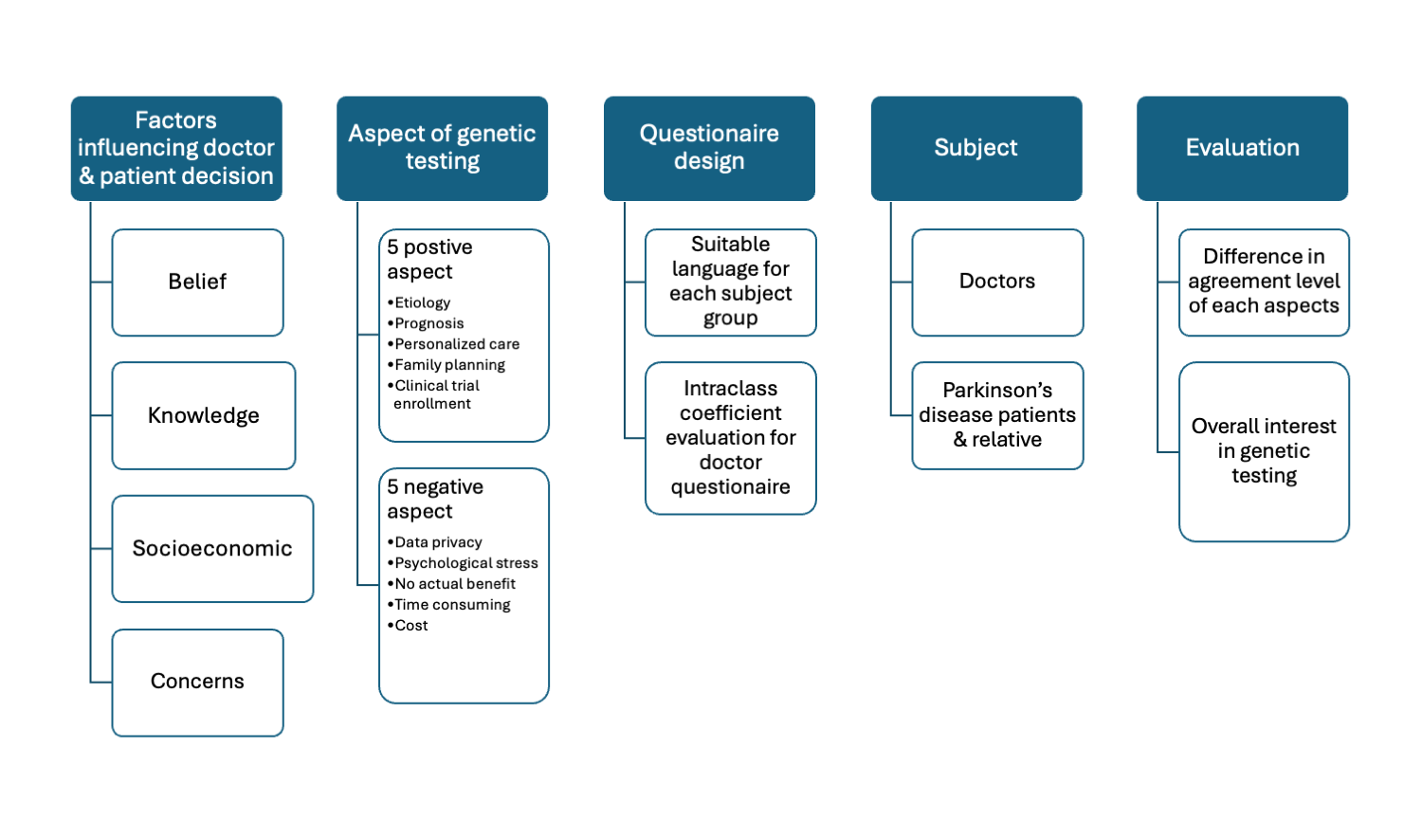
Figure 1: Conceptual framework
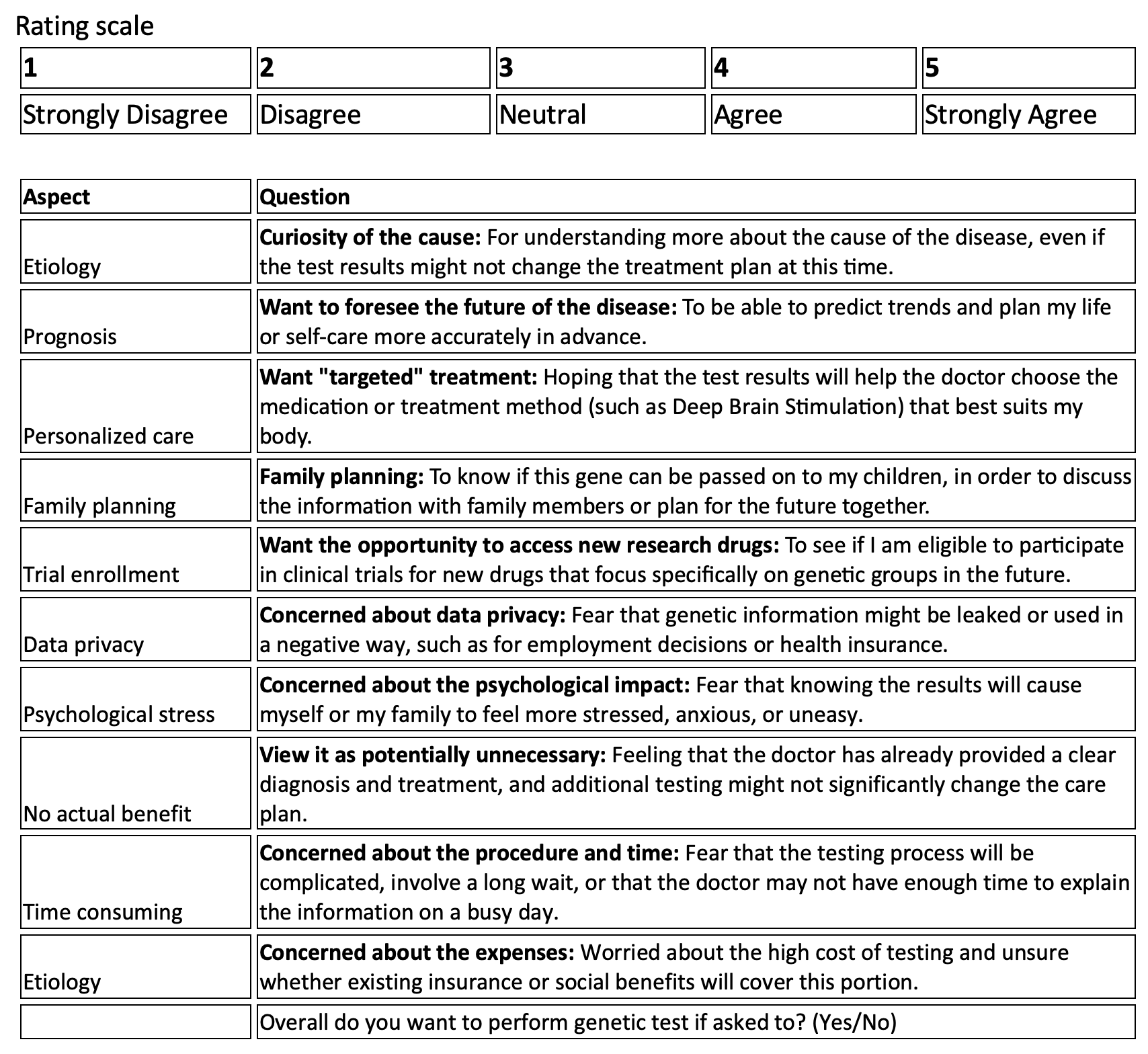
Table 1: A detailed 10-item questionnaire
References: Kamath SD, Holla VV, Kamble N, Yadav R, Pal PK. Genetic literacy and attitude towards genetic testing in patients with Parkinson’s disease and their caregivers: A review of literature. Parkinsonism & Related Disorders. 2023;117:105853.
To cite this abstract in AMA style:
R. Seeluangsawat, K. Horaruengdecha, J. Sringean, R. Bhidayasiri, P. Panyakaew. Factors Influencing Participation in Genetic Testing in Parkinson’s Disease Genetic Cohort in Thailand: Patients and Neurologists Perspective [abstract]. Mov Disord. 2026; 41 (suppl 1). https://www.mdsabstracts.org/abstract/factors-influencing-participation-in-genetic-testing-in-parkinsons-disease-genetic-cohort-in-thailand-patients-and-neurologists-perspective/. Accessed October 1, 2026.« Back to 2026 International Congress
MDS Abstracts - https://www.mdsabstracts.org/abstract/factors-influencing-participation-in-genetic-testing-in-parkinsons-disease-genetic-cohort-in-thailand-patients-and-neurologists-perspective/