Objective: . This study investigates fatigue severity, demographic/clinical correlates, and gender differences in Parkinson’s Disease(PD) patients compared to age- and gender-matched controls in a rural Indian population.
Background: Fatigue is a debilitating non-motor symptom in PD, yet its epidemiology and correlates remain understudied in resource-limited settings.
Method: A case-control cross-sectional study was conducted at a rural medical teaching hospital in western India. PD patients (n=112) and controls (n=100) underwent standardized assessments, including a 9-item fatigue questionnaire, motor symptom scoring (UPDRS), and psychiatric evaluations. Statistical comparisons (t-tests, regression analysis) were performed to evaluate fatigue differences between groups, adjusted for age and sex. Correlation analyses explored associations between fatigue, motor symptoms, and psychiatric comorbidities
Results: PD patients exhibited significantly higher fatigue scores (mean ± SD: 36.5 ± SD vs. 26.3 ± SD in controls; t=13.84, p<0.001, Cohen’s d=1.93 [large effect size]). Age-adjusted regression confirmed PD status as an independent predictor of fatigue (β=9.40, p<0.001), alongside age (β=0.22, p<0.001). Fatigue correlated strongly with motor severity (UPDRS: r=0.73) and moderately with depression (r=0.55) and anxiety (r=0.25). While fatigue severity increased with age (r=0.58), no significant sex differences were observed (p=0.058).
Conclusion: Fatigue is a highly prevalent and severe symptom in PD patients, independently associated with disease status and age. Strong correlations with motor and psychological symptoms highlight the multi-factorial nature of fatigue in PD. These findings underscore the need for routine fatigue screening, age-tailored interventions, and holistic management addressing motor and non-motor contributors. Future longitudinal studies and targeted therapeutic trials are warranted to mitigate fatigue burden in PD.
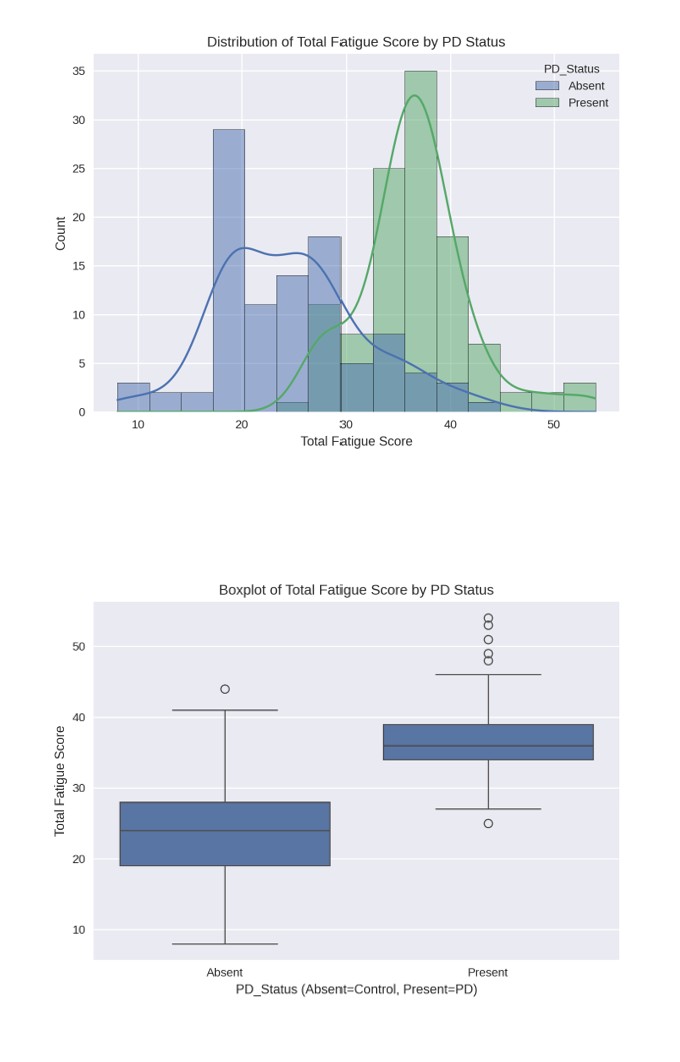
Distribution of Total Fatigue Score by PD status
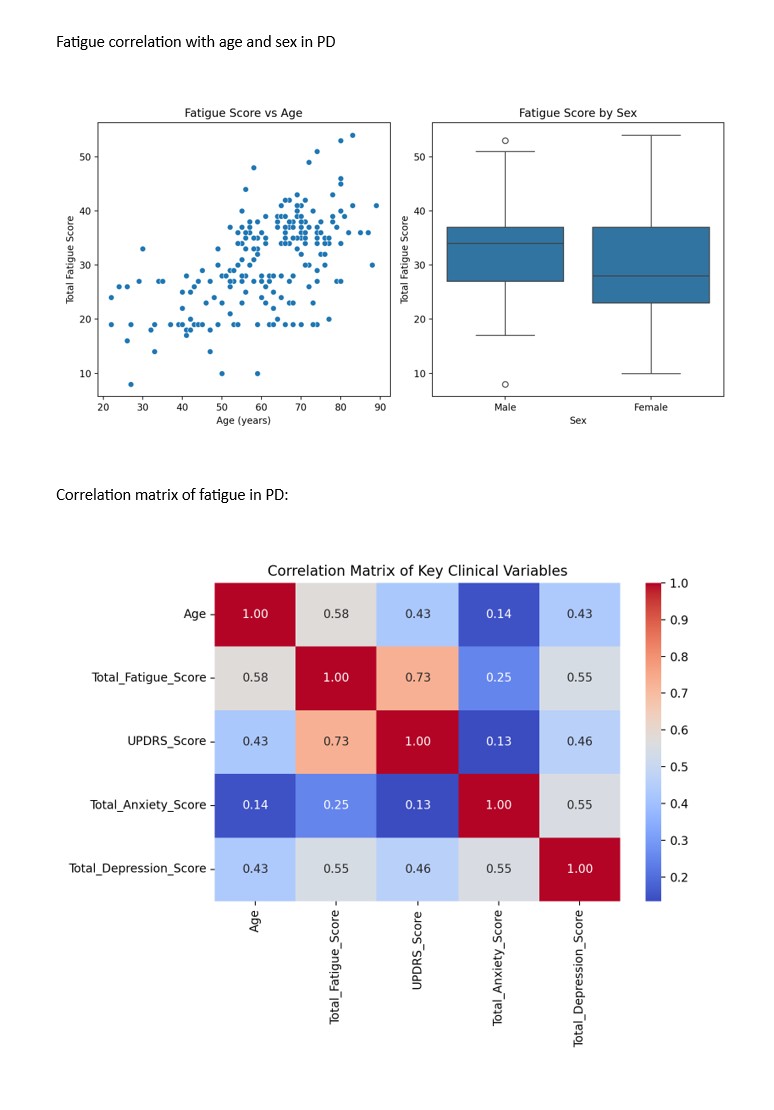
Correlation matrix of Fatigue in PD
To cite this abstract in AMA style:
D. Desai, S. Desai. Fatigue in Parkinson’s Disease: A Case-Control Cross-Sectional Study in a Rural Indian teaching hospital [abstract]. Mov Disord. 2025; 40 (suppl 1). https://www.mdsabstracts.org/abstract/fatigue-in-parkinsons-disease-a-case-control-cross-sectional-study-in-a-rural-indian-teaching-hospital/. Accessed October 22, 2026.« Back to 2025 International Congress
MDS Abstracts - https://www.mdsabstracts.org/abstract/fatigue-in-parkinsons-disease-a-case-control-cross-sectional-study-in-a-rural-indian-teaching-hospital/