
Objective: To estimate the prevalence, characterize the phenotypic spectrum, identify discriminative features of genetically determined SLOCA and implement a machine learning model for rationalizing SLOCA molecular diagnostic framework.
Background: Sporadic late-onset cerebellar ataxias (SLOCA) have long resisted molecular diagnosis. Over the last few years, new highly prevalent genetic entities have been described, which may account for a substantial proportion of SLOCA missing heritability.
Method: We included 315 consecutive patients in our tertiary referral medical centre from January 2014 to January 2024. All patients received exhaustive clinical, biochemical, genetic, electrophysiological, and imaging explorations. Multiple Factor Analysis was performed to isolate principal components and delineate phenotypic clusters through hierarchical clustering. A binary relevance ensemble model based on penalized logistic and multinomial regressions was built to guide genetic testing. Its performance was compared with experts’ assessments and evaluated in external validation cohorts.
Results: Genetic causes accounted for 29% (91/315) of patients, while clinically established and probable Multiple System Atrophy (MSA) represented 20% (62/315) of our cohort, while others acquired diagnosis represented 16% (52/315). Undiagnosed SLOCA (ILOCA) accounted for 27% (84/315). The most predictive features of a genetic cause included MRI findings, abnormal electroneuromyography (ENMG), long duration of ataxia evolution, a low SARA score, unexplained chronic cough, paroxystics symptoms, absence of dysautonomia and extrapyramidal syndrome. Hierarchical clustering revealed distinct subgroups, including specific cluster for CANVAS, PFBC/FXTAS, and overlapping groups with MSA, rare, idiopathic and SCA27b cases. Our binary relevance ensemble model outperformed experts with an overall accuracy of 73%; and reached a minimum accuracy of 83% on external validation cohorts.
Conclusion: SLOCA aetiology was determined by genetic causes in a substantial proportion of cases, underscoring the importance of considering both acquired and genetic aetiologies during first-line investigations. Our model supports clinicians in selecting the appropriate genetic testing strategy.
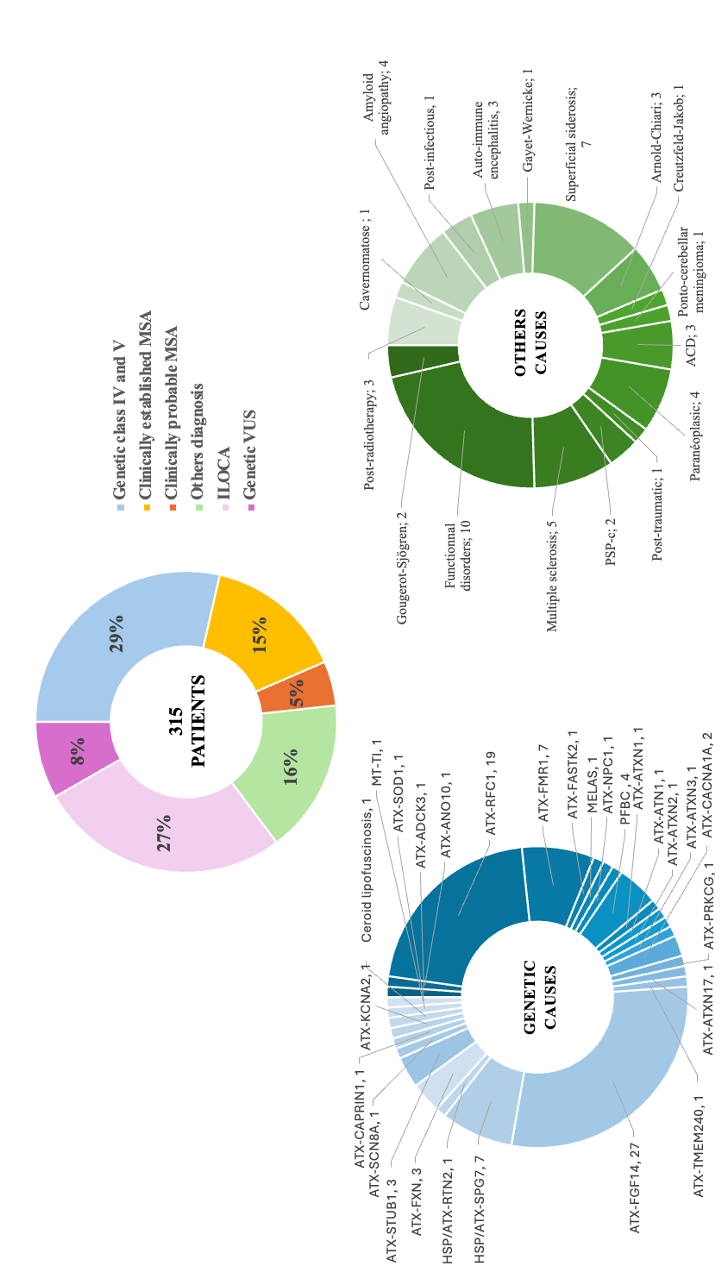
Diagnosis distribution
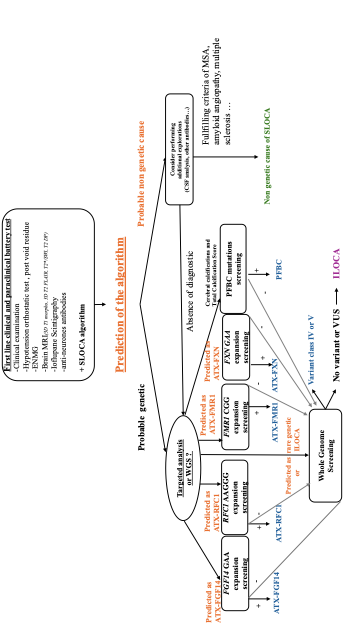
Diagnostic decision tree
To cite this abstract in AMA style:
M. Barrat, T. Wirth. Frequency and Phenotypic Characterization of Genetic Causes of Sporadic Late-Onset Cerebellar Ataxia: insights from a Cohort of 315 patients [abstract]. Mov Disord. 2026; 41 (suppl 1). https://www.mdsabstracts.org/abstract/frequency-and-phenotypic-characterization-of-genetic-causes-of-sporadic-late-onset-cerebellar-ataxia-insights-from-a-cohort-of-315-patients/. Accessed October 1, 2026.« Back to 2026 International Congress
MDS Abstracts - https://www.mdsabstracts.org/abstract/frequency-and-phenotypic-characterization-of-genetic-causes-of-sporadic-late-onset-cerebellar-ataxia-insights-from-a-cohort-of-315-patients/