
Category: Parkinson's Disease (Other)
Objective: To characterize geographical patterns in scholarly output on Parkinson’s Disease (PD) from 2021 to 2024.
Background: The burden of PD shows substantial geographic variation worldwide. Whether similar disparities exist in global PD research production remains unclear.
Method: We conducted a keyword-based search in Medline for English articles related to PD. Clinical original articles and systematic reviews were included. Relevant data including study design and primary focus were extracted. Articles were classified geographically based on the lead author’s affiliation, and countries were grouped according to the World Bank income classification. The number of articles from each country was standardized to the age-adjusted PD prevalence rate estimated by the Global Burden of Disease study [1].
Results: A total of 2,092 articles met the inclusion criteria; 84.8% were from high-income countries. The United States had the highest publication rate, followed by China. In contrast, scholarly activity in low- and lower-middle-income countries (LLMICs) was marginal (3.8%), with only six African countries contributing a total of 17 publications [Fig1]. Notably, research output from LLMICs showed more consistent growth between 2021 and 2024 compared to other income groups. Study designs varied significantly across income groups: upper-middle-income countries produced more systematic reviews and meta-analyses (SR/MA) than high-income countries (52.9% vs. 43.8%; P<0.05), while producing fewer observational studies than both high-income countries and LLMICs (15.1% vs. 27.0% and 27.5%, respectively; P<0.05; Fig2). Interestingly, studies focusing on device-assisted PD management (e.g., deep brain stimulation and infusion pumps) were more frequently published in both LLMICs and high-income countries compared to upper-middle-income countries (27.5% and 24.8% vs. 15.1%, respectively; P<0.05).
Conclusion: Global research on PD remains concentrated in high-income countries, despite steady growth in output from lower-income regions. The pronounced research gap in the African region underscores the need to strengthen equitable research capacity. Notably, researchers from LLMICs more frequently publish on topics that may not align with local healthcare contexts, potentially reflecting incentives to engage with research agendas prevalent in higher-income settings.
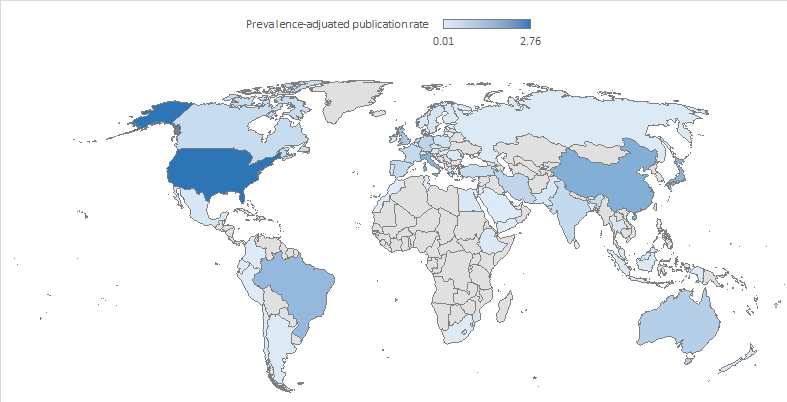
Fig1. Global PD research activity
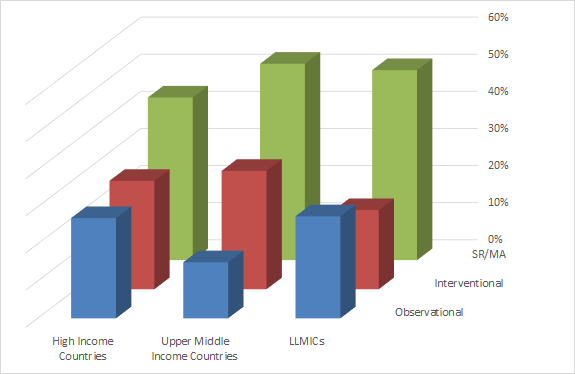
Fig2. Global Patterns of Study Designs in PD
References: [1] Luo, Y., Qiao, L., Li, M., Wen, X., Zhang, W., & Li, X. (2025). Global, regional, national epidemiology and trends of Parkinson’s disease from 1990 to 2021: findings from the Global Burden of Disease Study 2021. Frontiers in aging neuroscience, 16, 1498756. https://doi.org/10.3389/fnagi.2024.1498756
To cite this abstract in AMA style:
R. Mansour, F. Namnom, A. Ali, I. Hanafi. Global Trends in Parkinson’s Disease Research: A Bibliometric Snapshot (2021–2024) [abstract]. Mov Disord. 2026; 41 (suppl 1). https://www.mdsabstracts.org/abstract/global-trends-in-parkinsons-disease-research-a-bibliometric-snapshot-2021-2024/. Accessed October 1, 2026.« Back to 2026 International Congress
MDS Abstracts - https://www.mdsabstracts.org/abstract/global-trends-in-parkinsons-disease-research-a-bibliometric-snapshot-2021-2024/