
Objective: To determine the incidence and risk factors of neuropsychiatric adverse events (AEs) in patients with Parkinson’s disease (PD) treated with foslevodopa/foscarbidopa continuous subcutaneous infusion (LDp/CDp CSI) in real-world clinical practice.
Background: LDp/CDp CSI has emerged as an effective and well-tolerated therapy for advanced PD, reducing OFF time and increasing non-troublesome ON. While neuropsychiatric AEs were relatively uncommon in clinical trials, real-world data suggest higher rates, particularly in patients with pre-existing hallucinations or cognitive impairment. Clarifying the neuropsychiatric risk profile of this therapy in routine practice is therefore essential.
Method: Data were analyzed from the DATs-PD GETM Spanish Registry, an observational, prospective, multicenter, open-label study. Patients with advanced PD treated with LDp/CDp CSI were included. Baseline neuropsychiatric features and the occurrence of neuropsychiatric AEs during follow-up were recorded. Risk factors were explored using adjusted Cox proportional hazards models.
Results: A total of 214 patients were included (median age 69 years; median disease duration 12 years). At baseline, 35% had cognitive impairment, 25.7% hallucinations or psychosis, and 26.2% impulse control disorders (ICDs). During follow-up, 19.2% developed at least one neuropsychiatric AE, mostly mild to moderate; device removal was required in only 2.3% of cases. Most events occurred more than one month after treatment initiation. In adjusted analyses, no baseline variables were associated with the development of hallucinations, psychosis or confusion. However, baseline ICD was associated with a higher risk of ICD-related AEs.
Conclusion: LDp/CDp CSI was associated with a moderate incidence of neuropsychiatric AEs, which were generally mild, well tolerated and rarely led to treatment discontinuation. Except for baseline ICD, cognitive impairment and other neuropsychiatric features did not increase the risk of AEs. These findings support the favorable neuropsychiatric safety profile of LDp/CDp CSI and suggest that individualized monitoring may be more appropriate than restrictive patient selection.
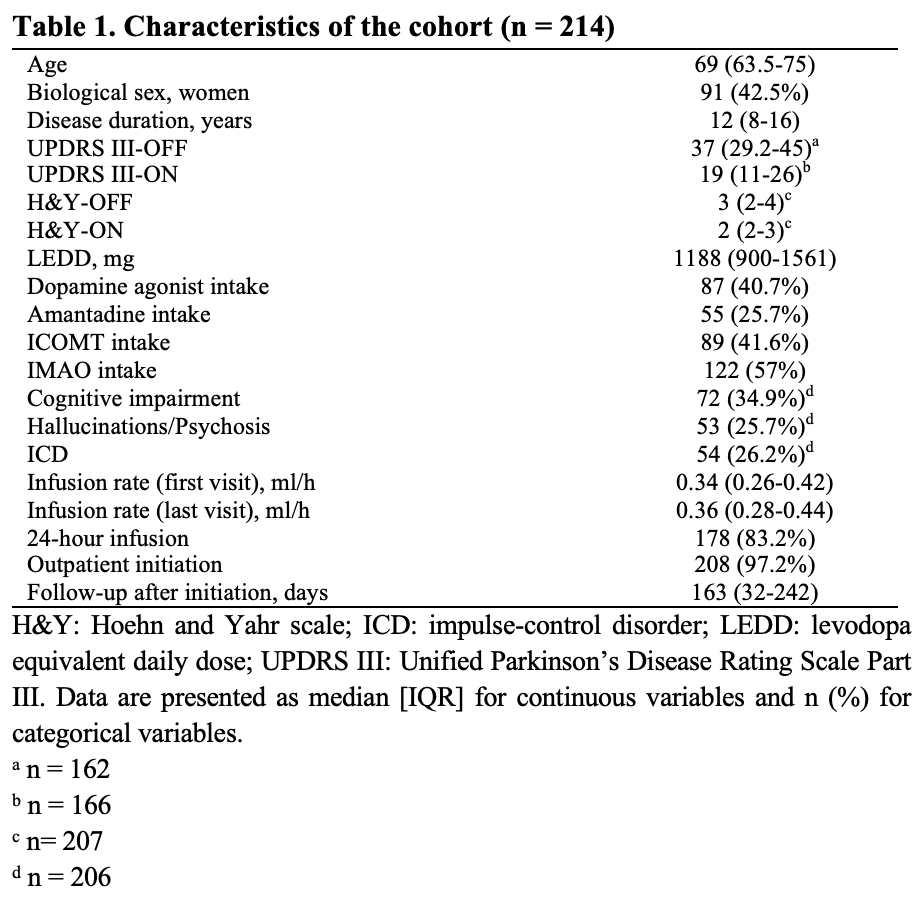
Table 1
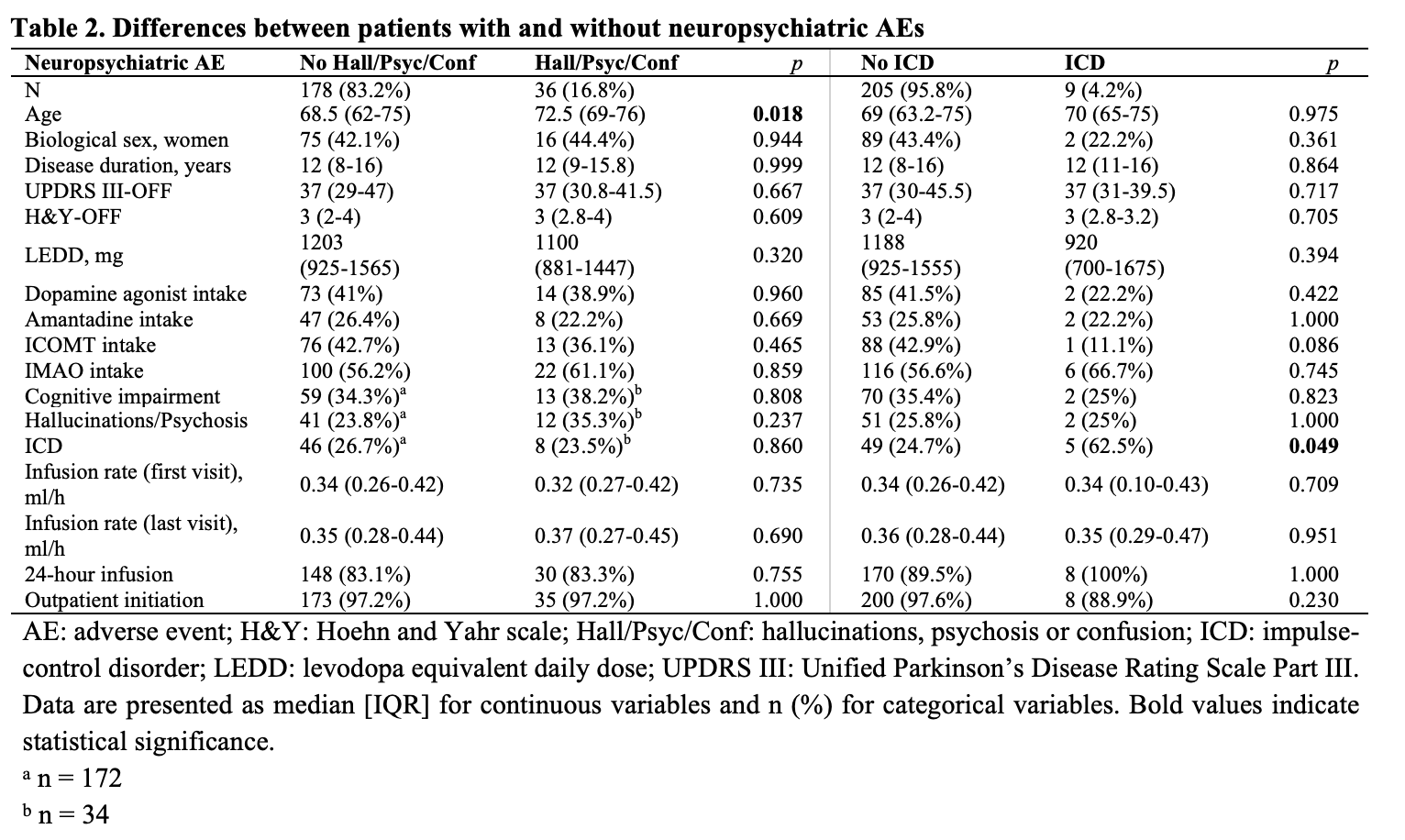
Table 2
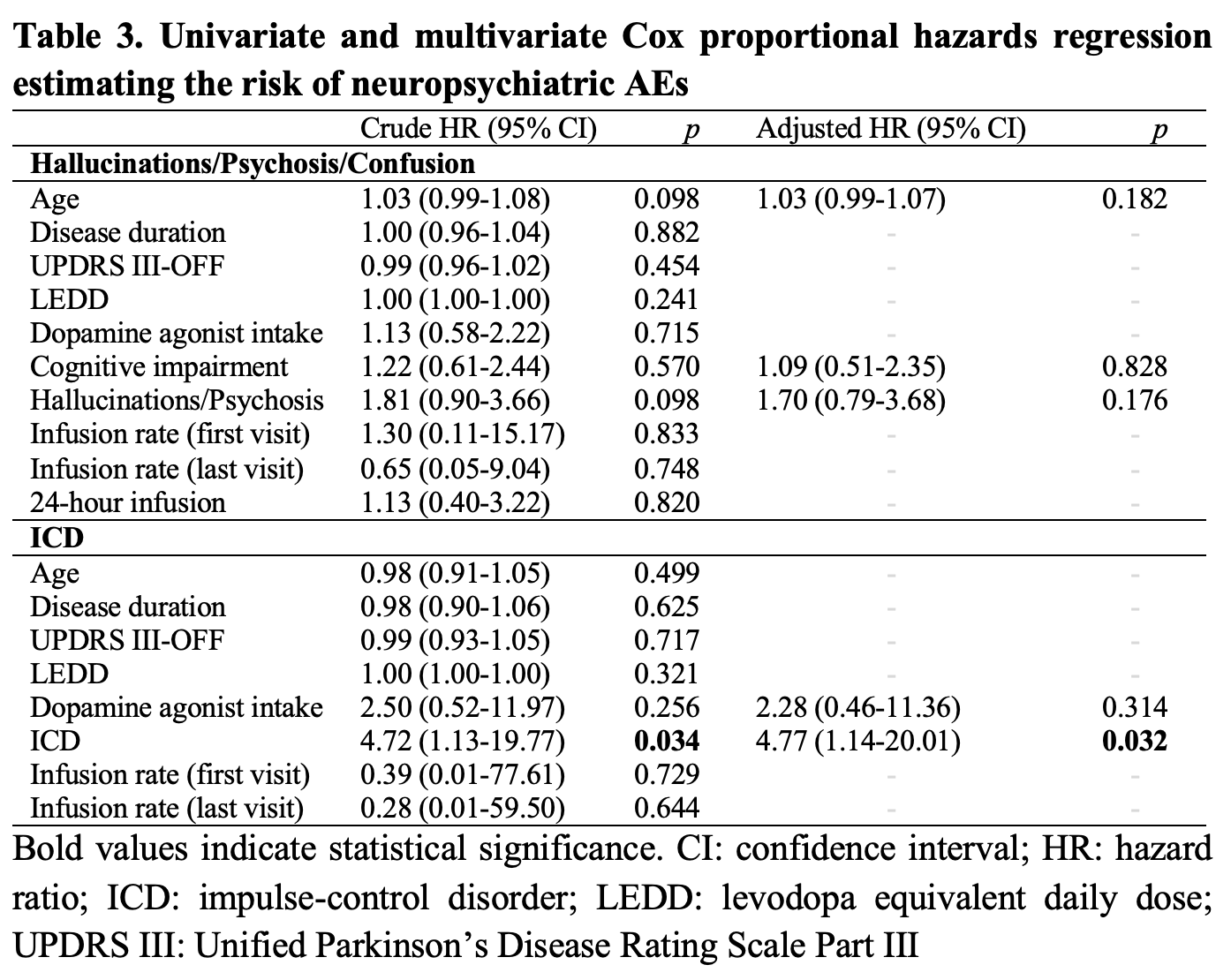
Table 3
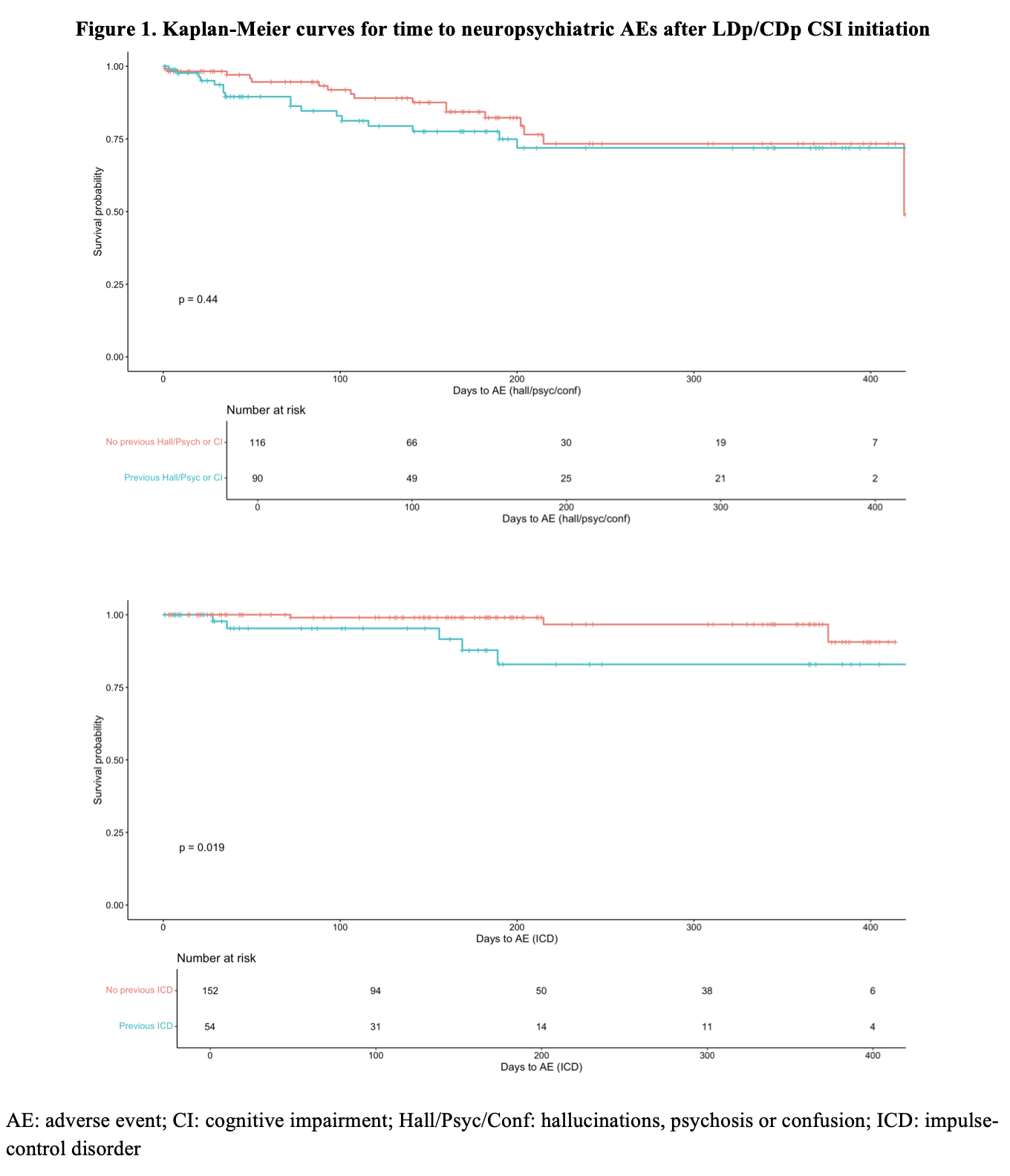
Figure 1
To cite this abstract in AMA style:
D. Campo-Caballero, J. Rodríguez-Antigüedad, A. Puig-Davi, J. Ruiz-Martinez, A. Vinagre-Aragón, E. Mondragón, L. Pardina, G. González-Ortega, D. Santos-García. Impact of Foslevodopa/Foscarbidopa Continuous Subcutaneous Infusion on Neuropsychiatric Symptoms in Clinical Practice: A Multicenter Study [abstract]. Mov Disord. 2026; 41 (suppl 1). https://www.mdsabstracts.org/abstract/impact-of-foslevodopa-foscarbidopa-continuous-subcutaneous-infusion-on-neuropsychiatric-symptoms-in-clinical-practice-a-multicenter-study/. Accessed October 1, 2026.« Back to 2026 International Congress
MDS Abstracts - https://www.mdsabstracts.org/abstract/impact-of-foslevodopa-foscarbidopa-continuous-subcutaneous-infusion-on-neuropsychiatric-symptoms-in-clinical-practice-a-multicenter-study/