
Objective: To assess the impact of wearable-device objective metrics on neurologists’ perception and therapeutic decisions in a real-world cohort of patients with Parkinson’s disease (PD).
Background: Wearable devices can objectively quantify motor fluctuations in PD. However, prospective real-world evidence on how multi-day wearable recordings influence neurologists’ perception and treatment decisions is limited.
Method: 20 PD patients with motor fluctuations were referred by movement disorder neurologists for wearable monitoring. Before, neurologists completed a structured form with their clinical assessment and intention to prescribe advanced therapies (AT). Patients wore the devices at their wrists, ankles and waist in a daily-life environment for 4–6 days, and filled a satisfaction form at the end. Wearable reports were returned to neurologists, who completed another form with their final impression on patients’ fluctuations and any changes in treatment strategies.
Results: 20 patients were included (mean age 65y, mean disease duration 13y). Before monitoring, neurologists estimated a daily median of 1(1-3) OFF and 3 (2.5-6) dyskinesia hours. 35% were considered candidates for AT.
Patients found monitorization very easy (5%), easy (50%), mildly challenging (40%) and difficult (5%). They were very satisfied (10%), satisfied (55%) or neutral (35%) about monitorization process.
After reviewing reports, neurologists reclassified fluctuation severity in 65% of patients, mostly with initial minimal-mild severity. They newly identified unrecognized OFF periods (15%), freezing of gait (5%), and postural instability (10%). They would modify treatment in 80%, including adjustment of levodopa dosing (55%), and initiation of rescue (5%) or infusion therapies (5%). Their AT indication changed in 5 patients (3 no longer candidates, and 2 newly considered).
Neurologists estimated less daily OFF hours compared with wearables (p = 0.054), especially in older patients (p = 0.03). Daily dyskinesia hours were estimated higher by neurologists than by wearables (p = 0.044).
Conclusion: Multi-day wearable monitoring can reveal discrepancies between perceived and objective daily hours of OFF and dyskinesia, and may influence neurologists’ therapeutic decisions in patients with PD. Controlled studies are needed to define the role of wearable monitoring in clinical practice.
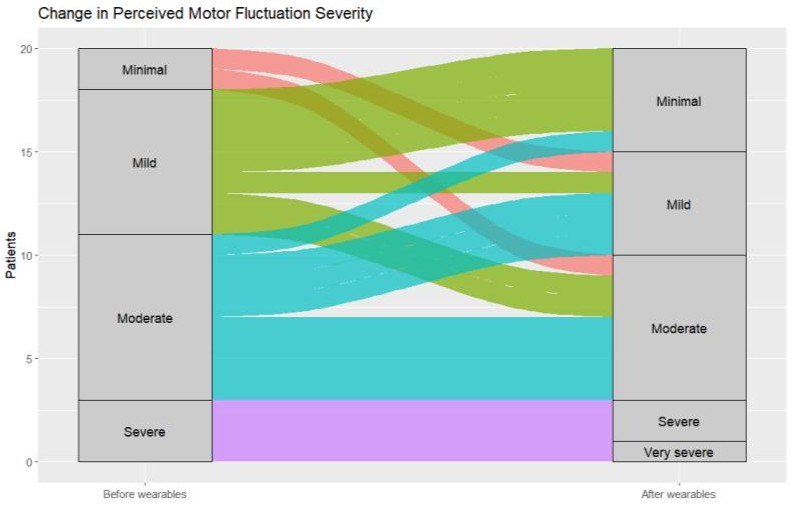
Reclassification of fluctuation severity
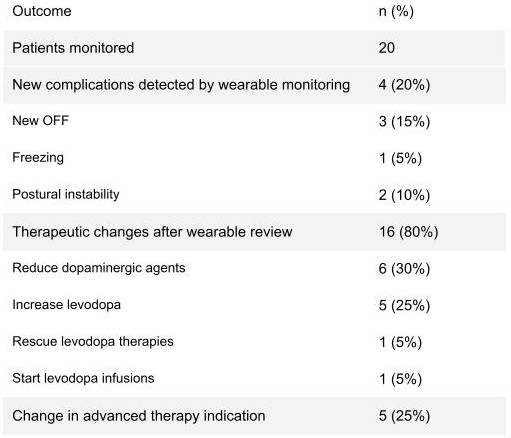
Changes in therapeutic strategy
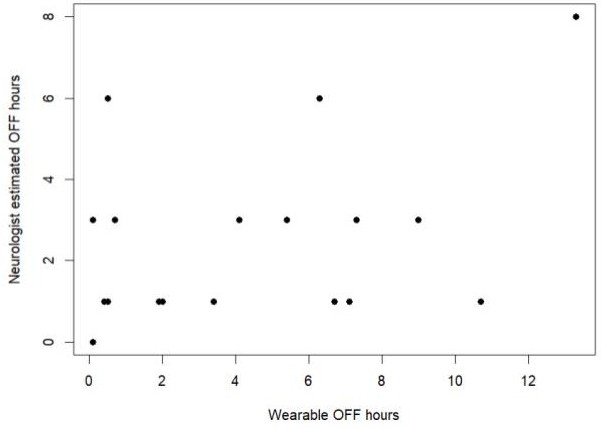
Clinician vs. wearable OFF hours
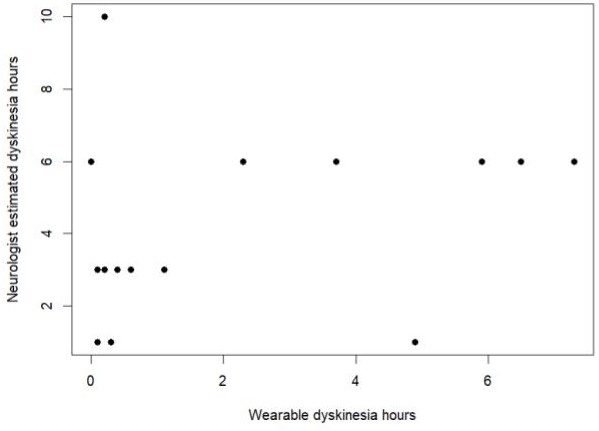
Clinician vs. wearable dyskinesia hours
To cite this abstract in AMA style:
M. Borrell-Pichot, L. Pérez-Carasol, A. Campolongo, B. Pascual-Sedano, R. Martínez-Fernández, JA. Aibar-Rodríguez, J. Kulisevsky, I. Aracli-Bolaños. Impact of Multi-day Wearable Monitoring on Neurologists’ Assessment of Motor Fluctuations and Treatment Strategies in Parkinson’s Disease: A Real-World Study [abstract]. Mov Disord. 2026; 41 (suppl 1). https://www.mdsabstracts.org/abstract/impact-of-multi-day-wearable-monitoring-on-neurologists-assessment-of-motor-fluctuations-and-treatment-strategies-in-parkinsons-disease-a-real-world-study/. Accessed October 1, 2026.« Back to 2026 International Congress
MDS Abstracts - https://www.mdsabstracts.org/abstract/impact-of-multi-day-wearable-monitoring-on-neurologists-assessment-of-motor-fluctuations-and-treatment-strategies-in-parkinsons-disease-a-real-world-study/