
Objective: To evaluate the effects of ketogenic diet (KD) interventions on motor outcomes and adverse events in Parkinson’s disease (PD).
Background: Metabolic therapies such as KD have been proposed to improve mitochondrial efficiency and reduce oxidative stress in PD, potentially improving motor symptoms; however, existing trials report variable results and lack consensus on clinical impact and safety.
Method: A meta-analysis of PubMed-indexed randomized controlled trials evaluating KD in PD was performed. Extracted data included MDS-UPDRS-III and MDS-UPDRS-II in the ON state, weight, metabolic biomarkers, and adverse event risks. Effect sizes were calculated as mean differences (MD) or relative risks (RR) using inverse-variance and Mantel-Haenszel methods, applying random-effects models when appropriate.
Results: Five trials involving 129 participants were analyzed. KD did not significantly improve MDS-UPDRS-III (MD 0.97, 95% CI −1.99 to 3.92) [Figure 1] or MDS-UPDRS-II (MD −1.45, 95% CI −3.12 to 0.23) [Figure 2]. No consistent effects were observed for weight (MD 0.19, 95% CI −1.34 to 1.72) [Figure 3], glucose (MD 0.54, 95% CI −0.02 to 1.10), or triglycerides (MD 0.15, 95% CI −0.24 to 0.55). A significant reduction in A1c (MD −0.33, 95% CI −0.61 to −0.05) and an increase in total cholesterol (MD 1.57, 95% CI 1.19 to 1.95) were observed. Adverse event rates were comparable between KD and control groups, with nonsignificant relative risks for constipation (RR 3.80, 95% CI 0.18–80.57), fatigue (RR 0.73, 95% CI 0.10–5.22), and dizziness (RR 0.88, 95% CI 0.14–5.60).
Conclusion: KD did not produce significant improvements in motor function. Metabolic effects were minimal, and adverse events were comparable to controls. Larger, longer-duration studies are needed to clarify the therapeutic role of KD in PD.
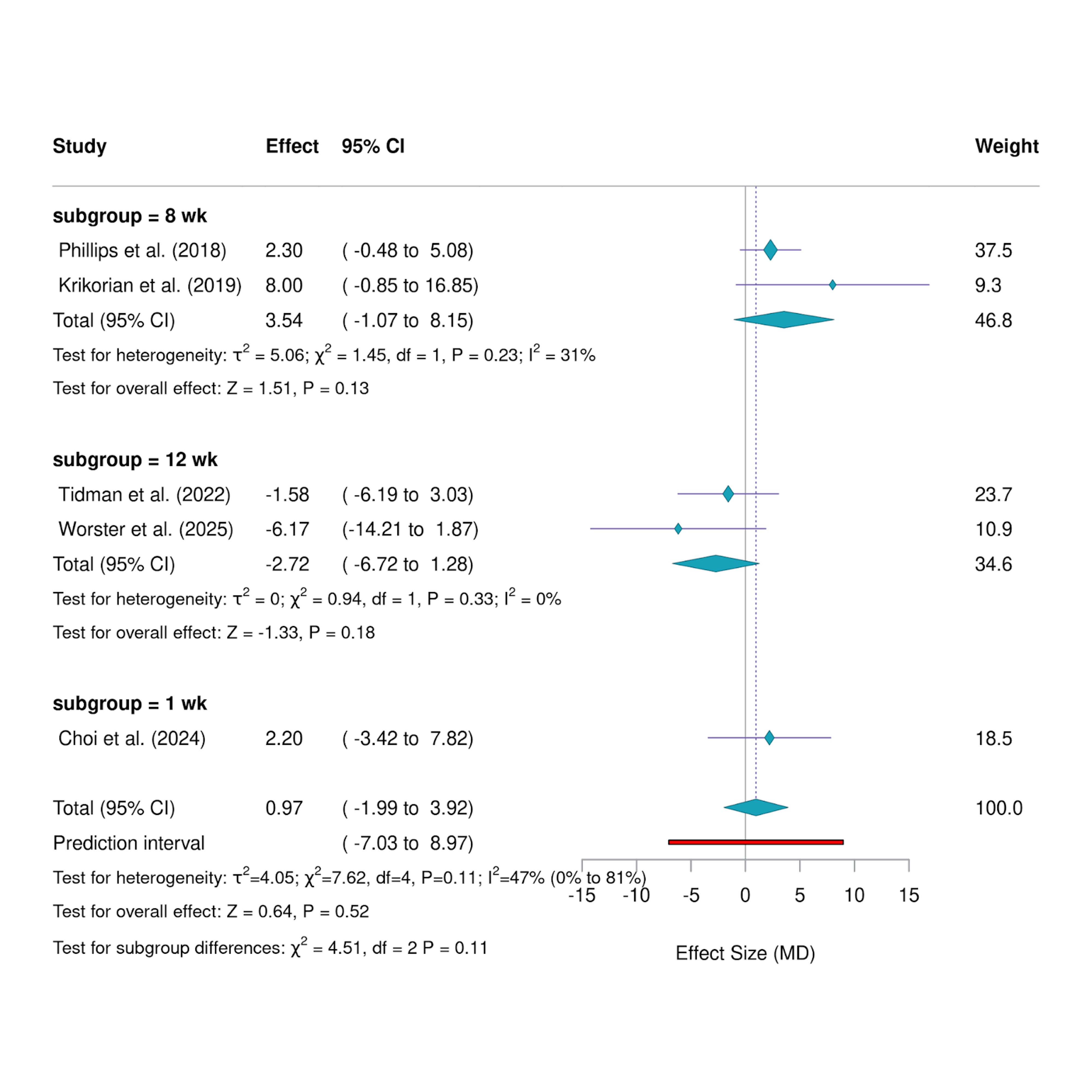
Figure 1. Pooled MD of motor outcomes.
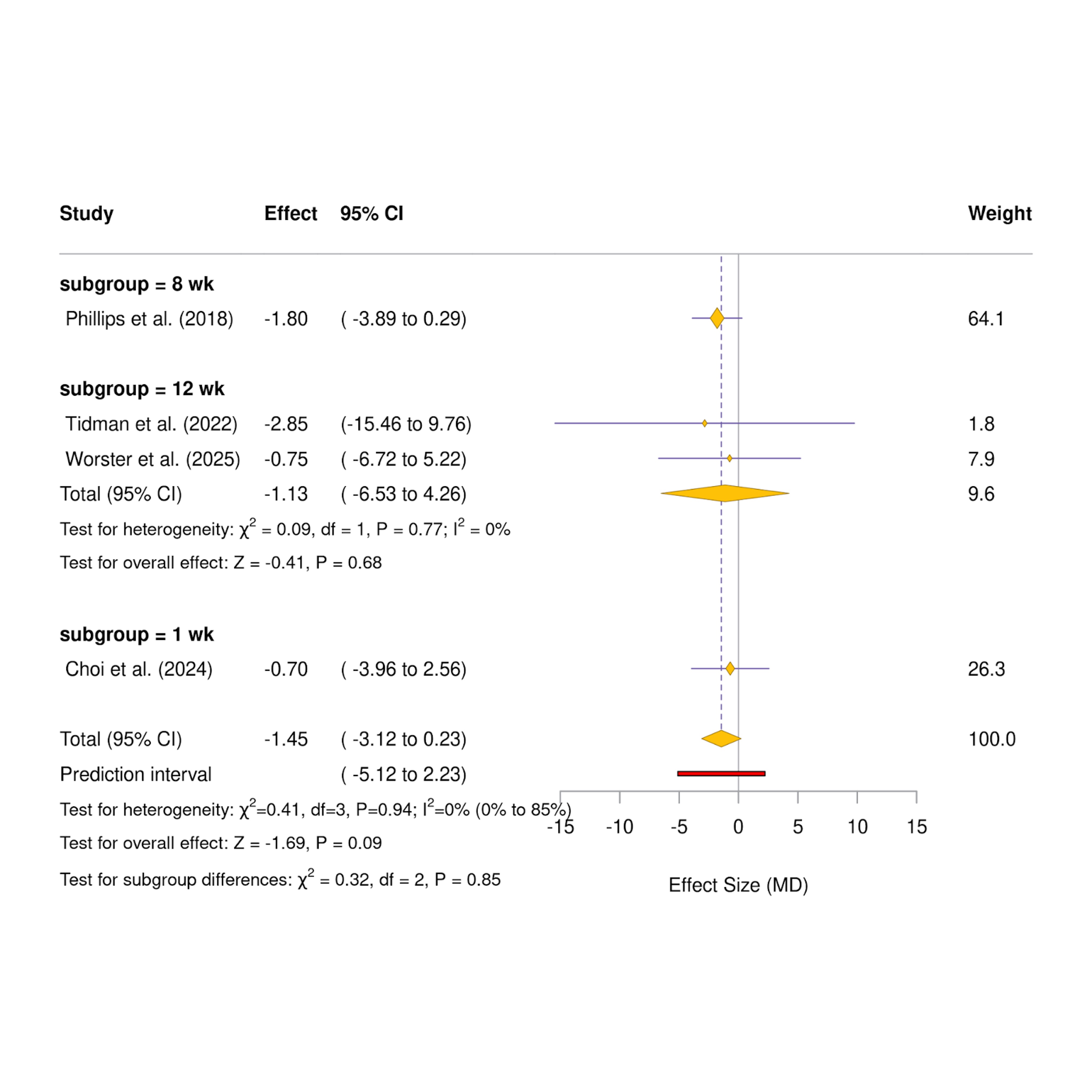
Figure 2. Pooled MD of UPDRS-II.
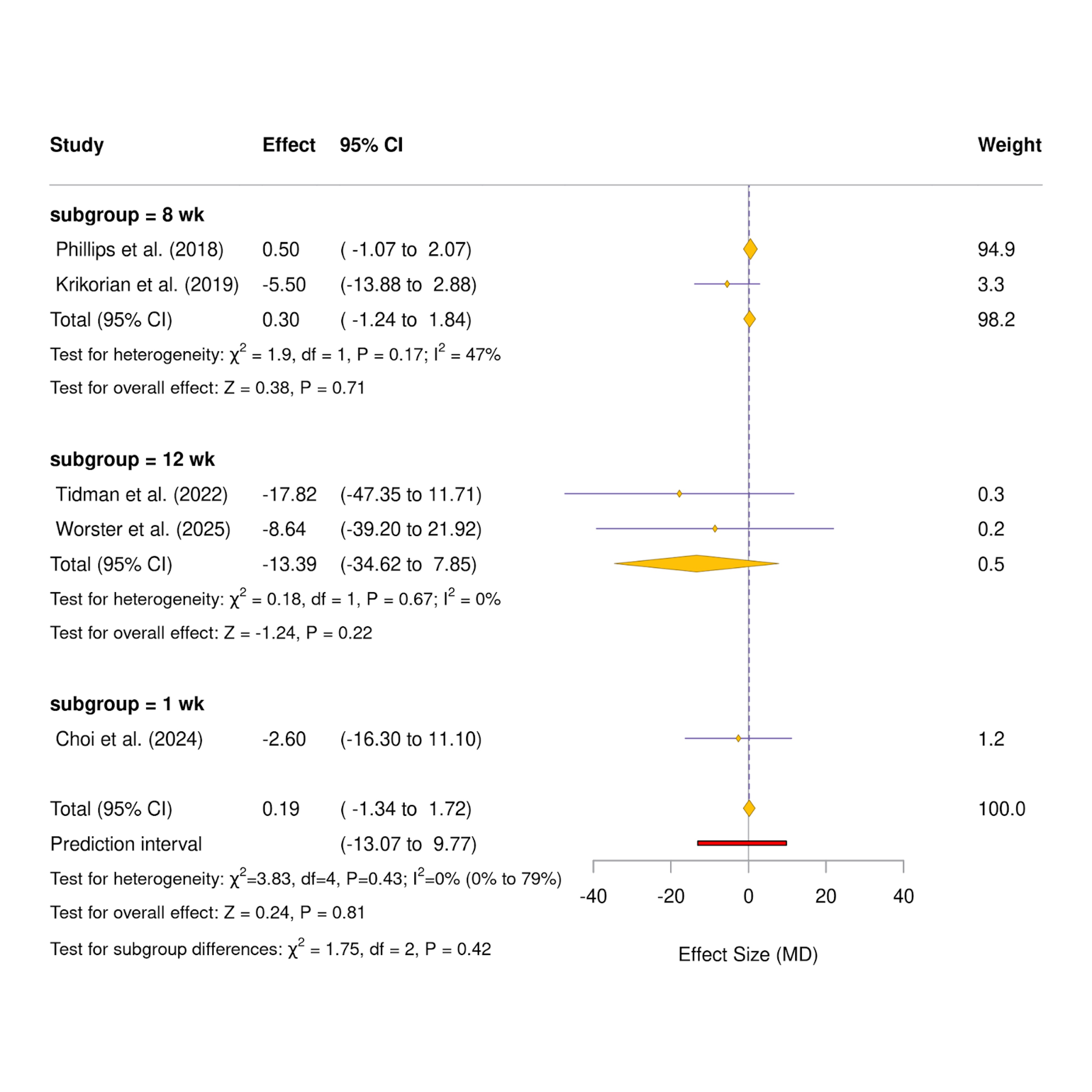
Figure 3. Pooled MD of weight change.
To cite this abstract in AMA style:
A. Fornari Caprara, J. Pitton Rissardo, J. Patino, A. Mcgarry, I. Walker. Ketogenic Diet and Motor Outcomes in Parkinson’s Disease: A Meta-analysis of Randomized Trials [abstract]. Mov Disord. 2026; 41 (suppl 1). https://www.mdsabstracts.org/abstract/ketogenic-diet-and-motor-outcomes-in-parkinsons-disease-a-meta-analysis-of-randomized-trials/. Accessed October 1, 2026.« Back to 2026 International Congress
MDS Abstracts - https://www.mdsabstracts.org/abstract/ketogenic-diet-and-motor-outcomes-in-parkinsons-disease-a-meta-analysis-of-randomized-trials/