
Objective: To determine the prevalence of Parkinson disease psychosis (PDP) as a function of several putative risk factors: PD duration, age, cognitive impairment, dopaminergic or anticholinergic medication, and motor impairment.
Background: PDP is a spectrum of phenomena that includes hallucinations, delusions, and illusions.1,2 Assumptions about PDP prevalence, risk factors, and natural history have propagated from influential publications but meta-analytic evidence is sparse.
Method: This systematic review and meta-analysis was pre-registered in PROSPERO (CRD42023393203). PubMed, Scopus, Web of Science, PsycINFO databases were queried to identify PD literature in which psychosis was measured by clinical interviews or validated scales. Three level random-effects models and meta-regression were used to estimate prevalence while accounting for within-study correlations.
Results: 197 studies comprising 46,410 participants reported PDP frequency (Figure 1). PDP frequency was 23.5% with heterogeneity (I2 = 95.9%) driven predominantly by within-study subgroup variation (τ2 = 0.75) rather than between-study differences (τ2 = 0.16) (Figure 2). Individual symptom frequencies were 21.1% for hallucinations, 20.1% for minor phenomena, and 9.2% for delusions. Partitioning the sample by risk factor quartiles indicated roughly linear relationships between PDP and each risk factor (Figure 3). PDP was associated with dopamine agonists (Odds ratio 1.43; 95% CI 1.21-1.69; I2 = 22.1%), but not anticholinergic medication (N=1958; OR 0.97; 95% CI 0.65-1.45; I2 = 0%). In meta-regression, PDP increased in prevalence on average by 3.0% per 100mg/day increase in levodopa equivalent daily dose (LEDD), by 14.6% per 5-year increase in PD duration, by 8.3% per 5-year increase in age, by 7.0% per 2-point decrease in MMSE score, and by 4.2% per 5-point increase in MDS-UPDRS-III motor score (Figure 4, Table 1). In multivariable meta-regression, age, LEDD, and MMSE score were independent correlates of PDP prevalence (Table 1).
Conclusion: Older age, cognitive impairment, and exogenous dopamine were independently associated with PDP, whereas disease duration and motor impairment were only significant as univariable correlates. Selective associations with cognition and age could implicate brain changes other than PD pathology associated with aging and its common co-morbidities (e.g., concomitant proteopathies) in PDP onset.
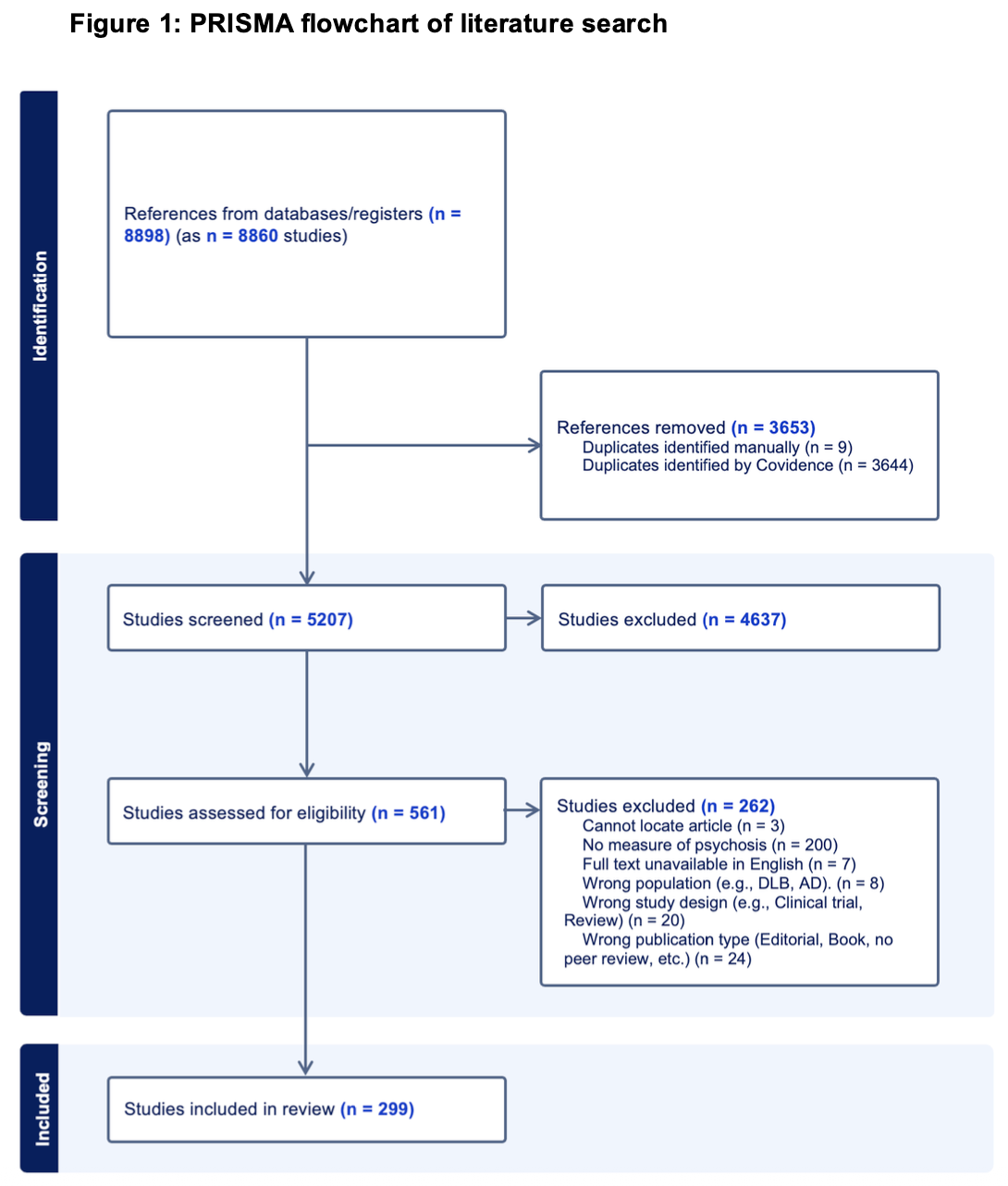
Figure 1
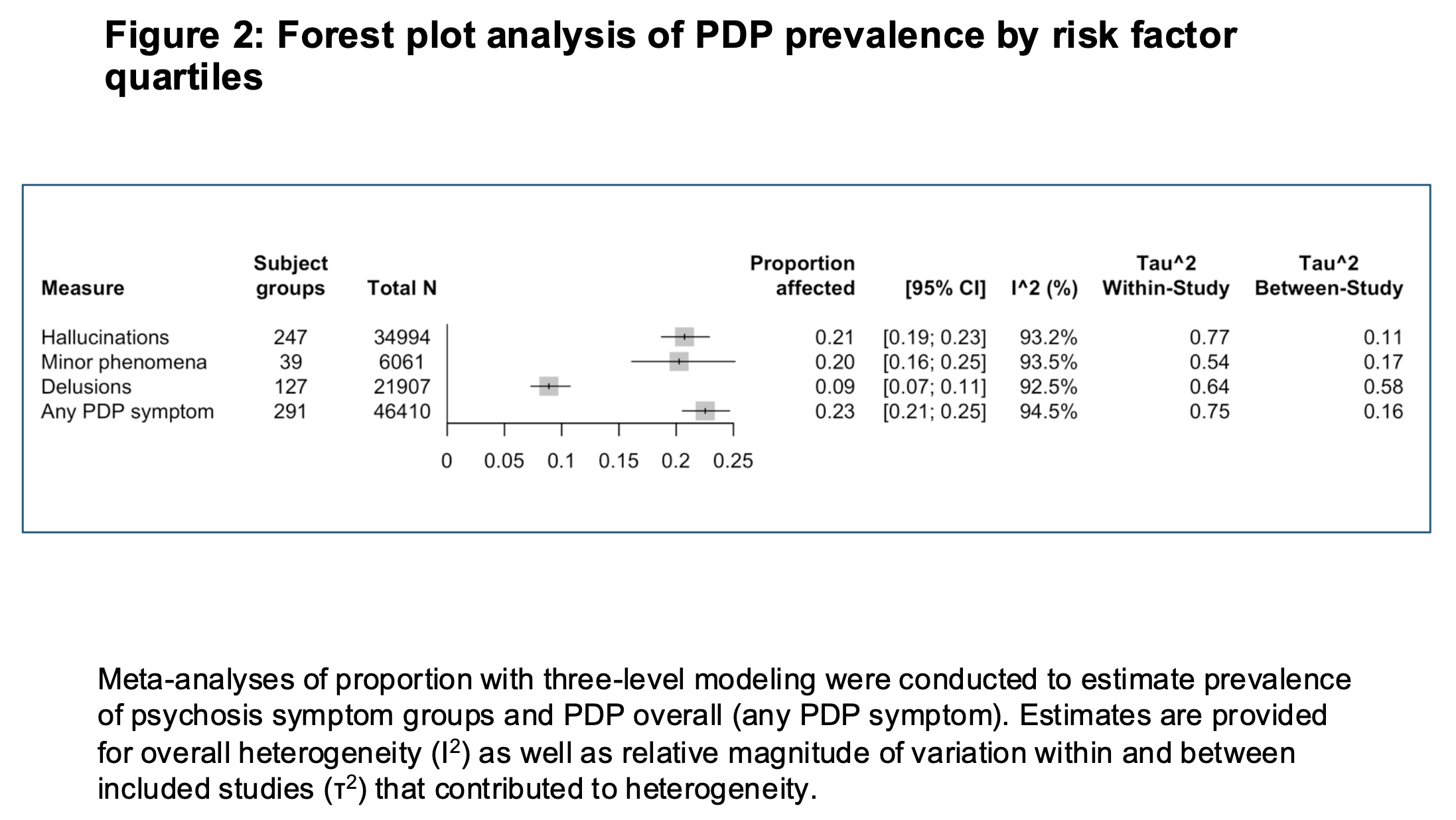
Figure 2
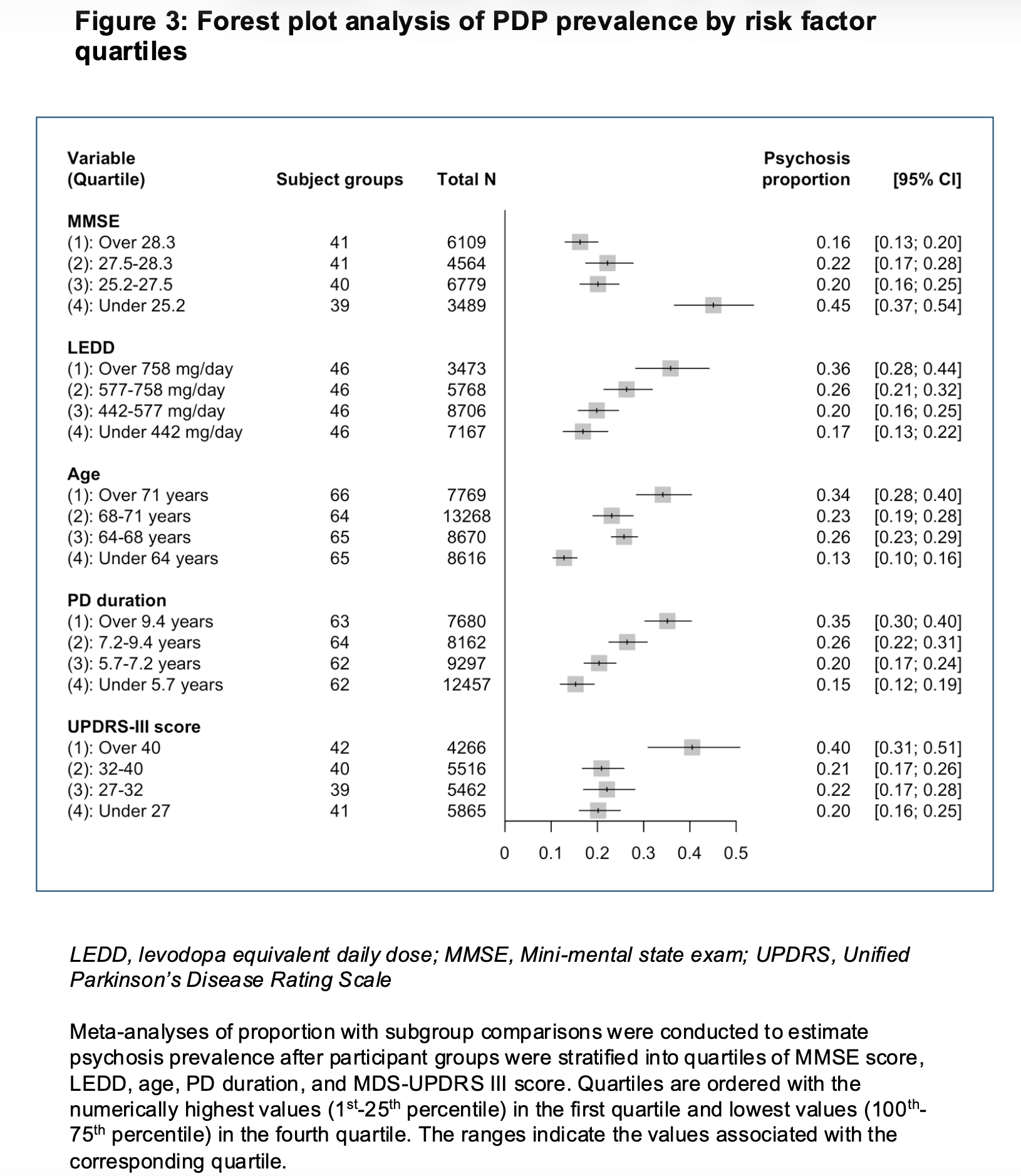
Figure 3
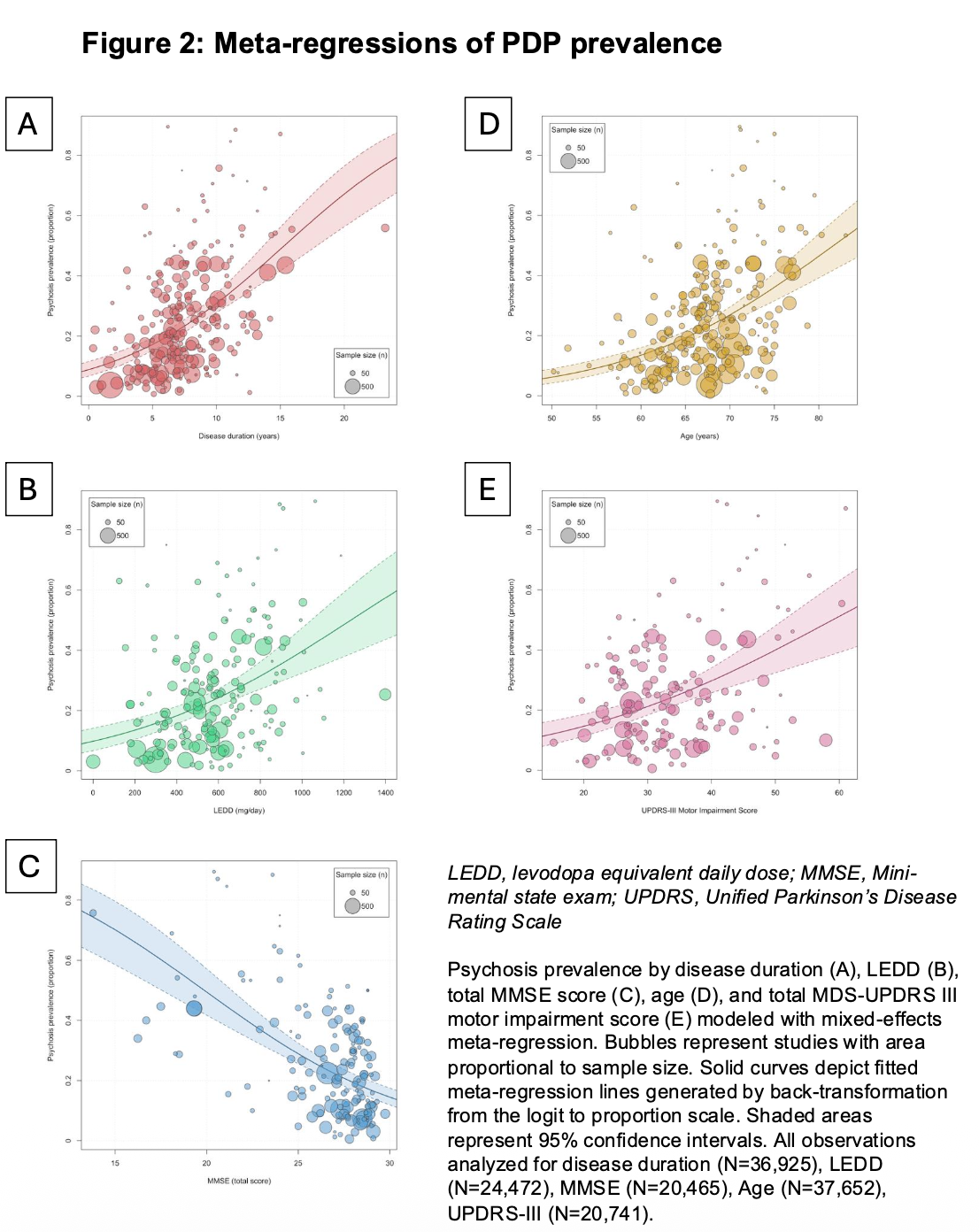
Figure 4
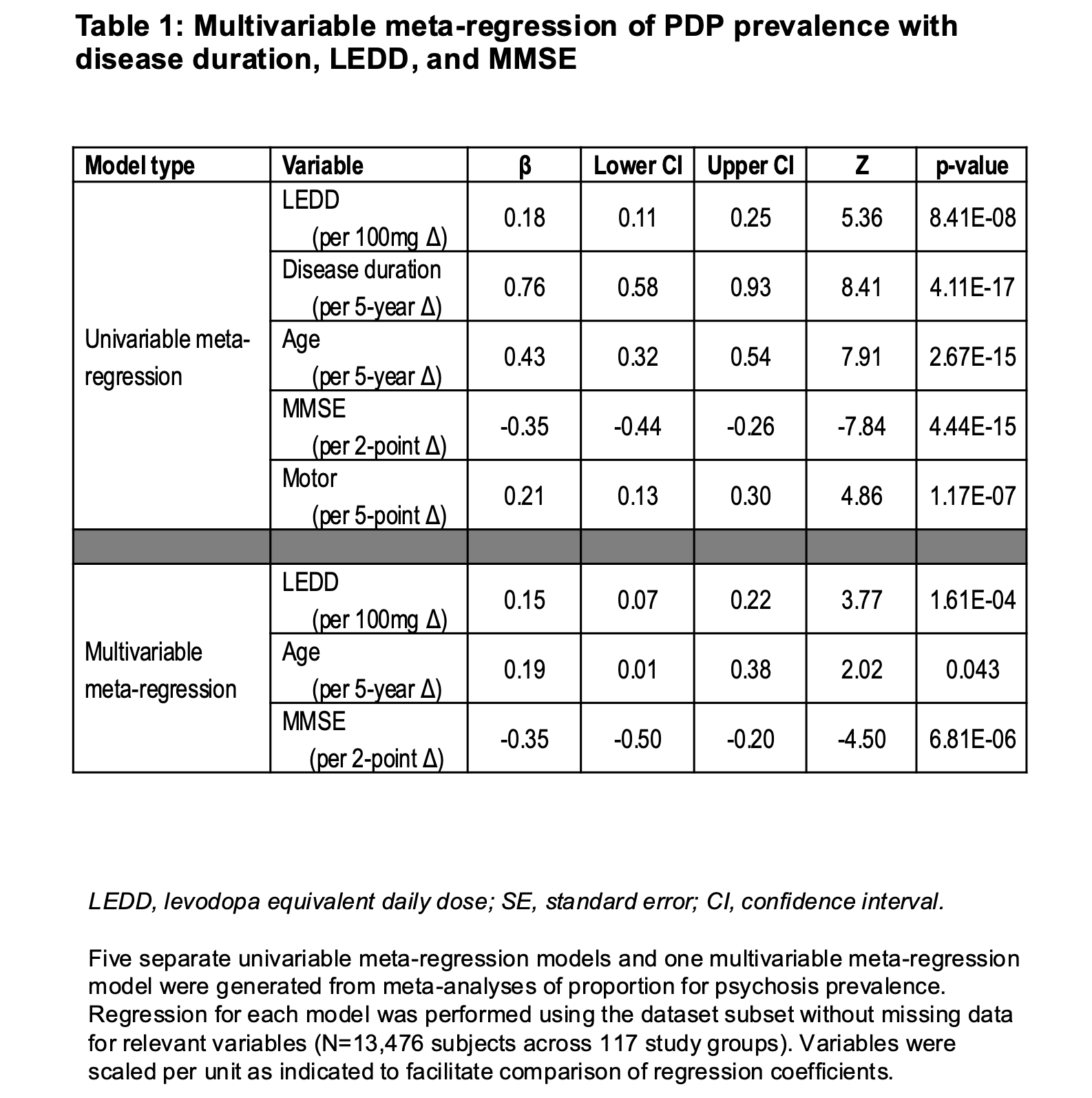
Table 1
References: 1. Pagonabarraga J, Bejr-Kasem H, Martinez-Horta S, Kulisevsky J. Parkinson disease psychosis: from phenomenology to neurobiological mechanisms. Nat Rev Neurol. 2024 Mar;20(3):135-150. doi: 10.1038/s41582-023-00918-8. Epub 2024 Jan 15. PMID: 38225264.
2. Ravina B, Marder K, Fernandez HH, Friedman JH, McDonald W, Murphy D, Aarsland D, Babcock D, Cummings J, Endicott J, Factor S, Galpern W, Lees A, Marsh L, Stacy M, Gwinn-Hardy K, Voon V, Goetz C. Diagnostic criteria for psychosis in Parkinson’s disease: report of an NINDS, NIMH work group. Mov Disord. 2007 Jun 15;22(8):1061-8. doi: 10.1002/mds.21382. PMID: 17266092.
To cite this abstract in AMA style:
J. Hinkle, J. Blackband, B. Garner, K. Perepezko, C. Morrow, A. Chowdhury, K. Mills, A. Mahajan, A. Martinez-Nunez, G. Pontone. Parkinson disease psychosis: A systematic review and meta-analysis [abstract]. Mov Disord. 2026; 41 (suppl 1). https://www.mdsabstracts.org/abstract/parkinson-disease-psychosis-a-systematic-review-and-meta-analysis/. Accessed October 1, 2026.« Back to 2026 International Congress
MDS Abstracts - https://www.mdsabstracts.org/abstract/parkinson-disease-psychosis-a-systematic-review-and-meta-analysis/