
Objective: To review evidence identifying clinical and neurophysiologic features that distinguish essential tremor from dystonic tremor and highlight patterns associated with diagnostic misclassification.
Background: Distinguishing essential tremor from tremor associated with dystonia remains a common challenge in movement-disorders practice. Misclassification is clinically important because it affects treatment selection, counseling, and eligibility for research studies. Essential tremor is frequently overdiagnosed, and dystonia represents one of the most common alternative diagnoses among patients initially labeled as having essential tremor.
Method: A structured qualitative review of published studies was conducted focusing on investigations comparing essential tremor with dystonic tremor phenotypes or describing distinguishing clinical features. Evidence from cohort studies, comparative clinical investigations, and neurophysiologic analyses was synthesized qualitatively because tremor phenotypes and outcome measures varied across studies.
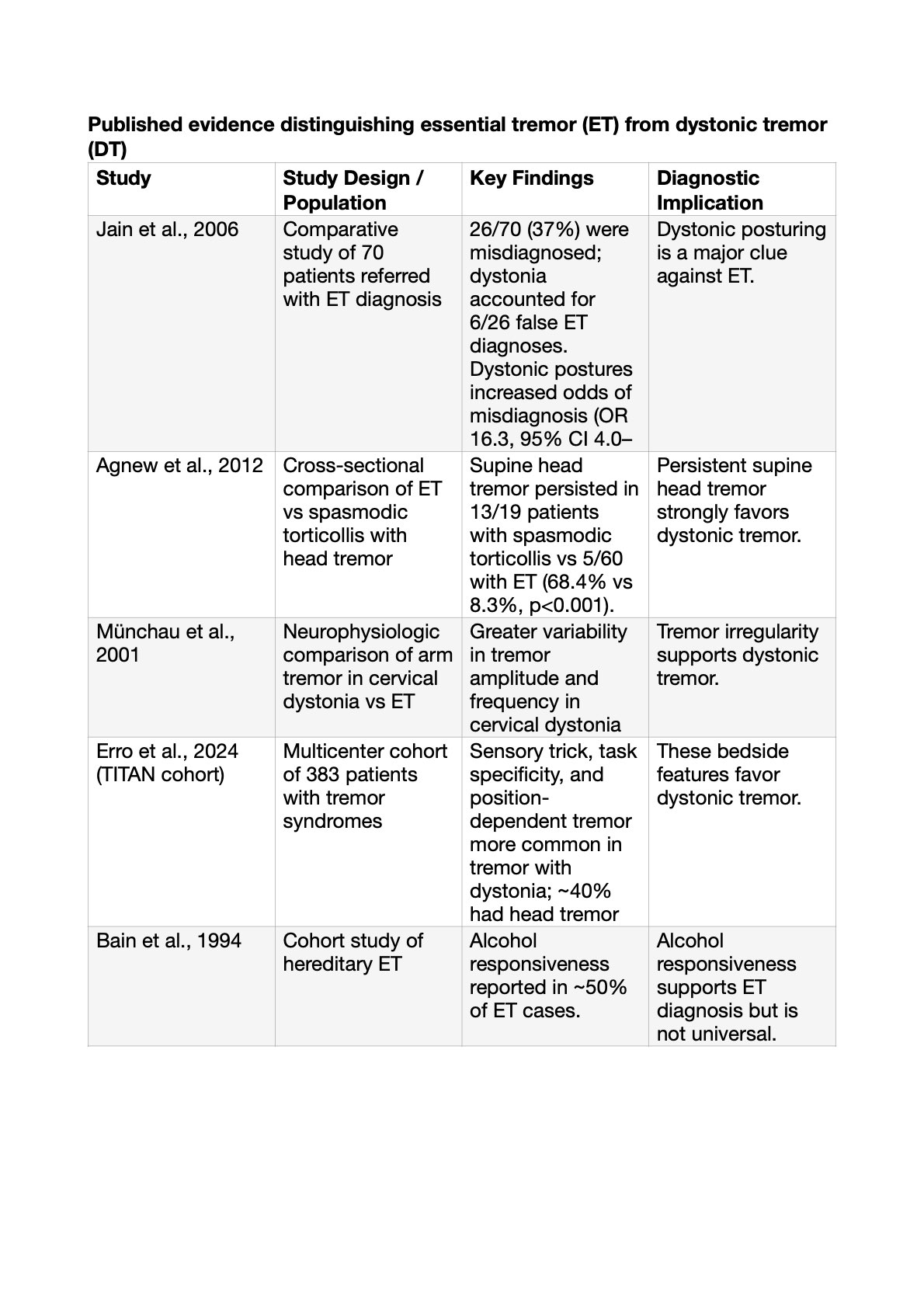
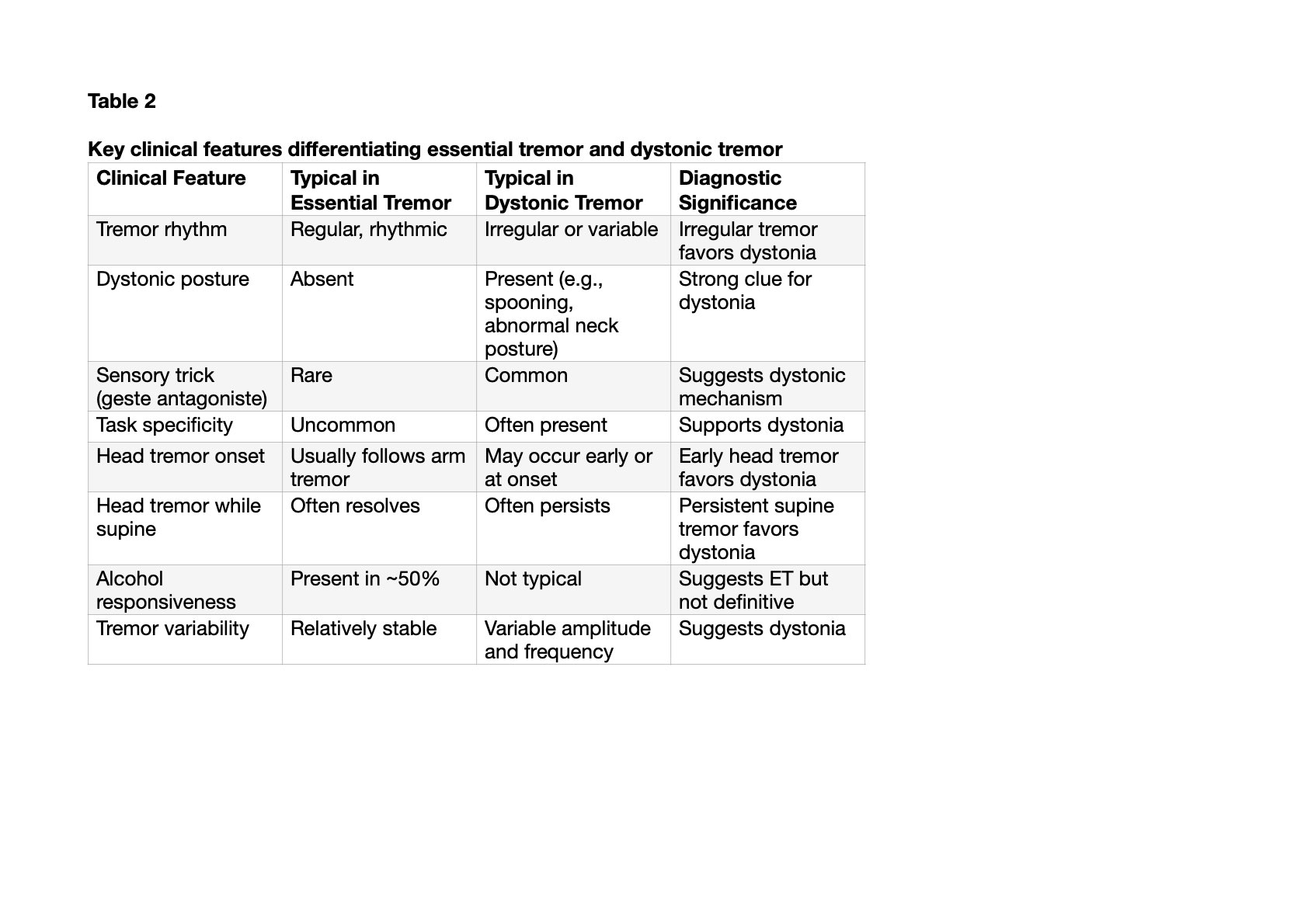
Results: Studies identify several distinguishing features. In a comparative cohort, Jain and colleagues reported that 26 of 70 patients (37%) referred with essential tremor were misdiagnosed; dystonia accounted for six cases, and dystonic hand postures markedly increased the odds of misclassification. Agnew and colleagues showed that head tremor persisted in the supine position in 68% of patients with spasmodic torticollis versus 8% with essential tremor, supporting supine examination as a practical discriminator. Neurophysiologic studies also demonstrate greater tremor variability in cervical dystonia. In the TITAN network cohort, sensory trick, task specificity, and position dependence were more common in tremor associated with dystonia, whereas essential tremor more often showed regularly rhythmic tremor and alcohol responsiveness.
Conclusion: Essential tremor and dystonic tremor show phenotypic overlap, but several bedside features aid differentiation. Irregular tremor, dystonic posturing, sensory tricks, task- or position-dependent tremor, and persistent supine head tremor favor dystonic tremor, whereas regularly rhythmic tremor and alcohol responsiveness favor essential tremor. Structured clinical assessment incorporating these features may reduce diagnostic misclassification.
MDS 1
MDS 2
To cite this abstract in AMA style:
S. Kakde, M. Kakde, S. Kakade. Phenotypic Overlap Between Essential Tremor and Dystonic Tremor: Diagnostic Features, Misclassification, and Clinical Implications :A Systematic Review [abstract]. Mov Disord. 2026; 41 (suppl 1). https://www.mdsabstracts.org/abstract/phenotypic-overlap-between-essential-tremor-and-dystonic-tremor-diagnostic-features-misclassification-and-clinical-implications-a-systematic-review/. Accessed October 1, 2026.« Back to 2026 International Congress
MDS Abstracts - https://www.mdsabstracts.org/abstract/phenotypic-overlap-between-essential-tremor-and-dystonic-tremor-diagnostic-features-misclassification-and-clinical-implications-a-systematic-review/