
Category: Education in Movement Disorders
Objective: To evaluate the perceived educational impact of a podcast focused on global perspectives in movement disorders.
Background: Podcasts are increasingly used as flexible educational tools in medical training. In neurology and movement disorders, podcasts may provide accessible opportunities to learn from international experts and gain insight into clinical practices across diverse healthcare systems. Despite their growing use, there is limited data evaluating the perceived educational value of podcast based learning in this subspecialty.
Method: An anonymous survey was distributed to listeners of Movement Disorders Around the World, an educational podcast featuring interviews with movement disorder specialists from different countries. The survey assessed listener demographics, podcast listening habits, motivations for listening, perceived effectiveness of podcast based learning, and valued educational features. Descriptive statistics were used to summarize responses.
Results: Twenty two respondents completed the survey. Participants included trainees across multiple stages of training, with PGY-3 (36.4%) and PGY-4 (27.3%) representing the largest groups. Most respondents reported listening to medical podcasts at least occasionally (36.4%) or rarely (36.4%), while 18.2% reported regular listening. Apple Podcasts (45.5%) and Spotify (27.3%) were the most commonly used platforms. The primary motivations for listening included residency education (63.6%), learning from global experts (36.4%), and exam preparation (36.4%). Podcast effectiveness for learning neurology concepts was generally rated as moderate to high (scores 3-4 by the majority of respondents). Key features valued by listeners included accessibility and flexibility (81.8%), storytelling or interview-based format (54.5%), and real world clinical examples (36.4%). Open ended responses highlighted the value of gaining perspectives on movement disorder care across different countries and healthcare systems.
Conclusion: Podcast based education represents a flexible and engaging modality for learning movement disorders. Exposure to international expert perspectives may broaden trainees understanding of global clinical practice and complement traditional neurology education. Podcasts may therefore represent a valuable tool for expanding educational opportunities within the movement disorders community.
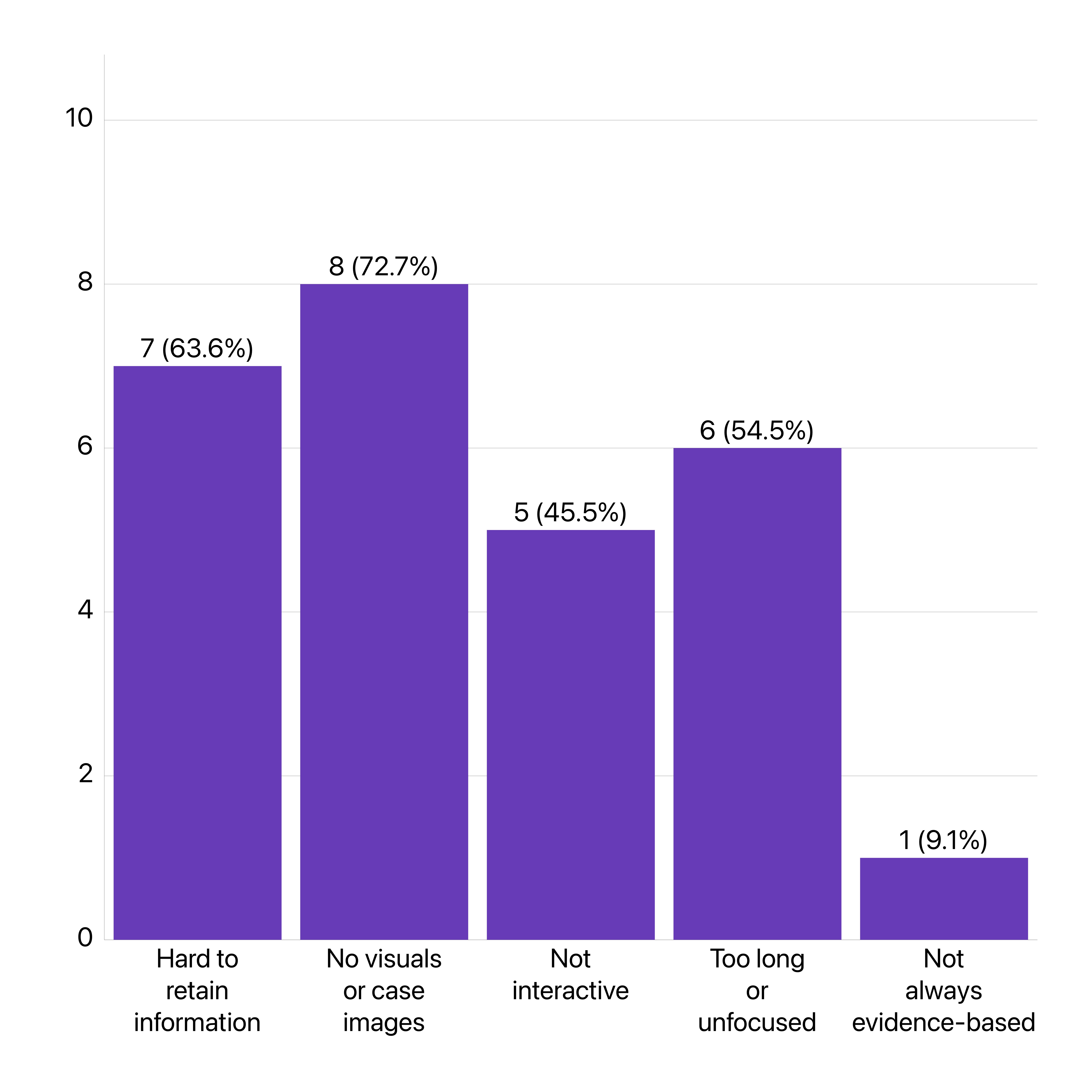
limitations faced when learning through podcasts
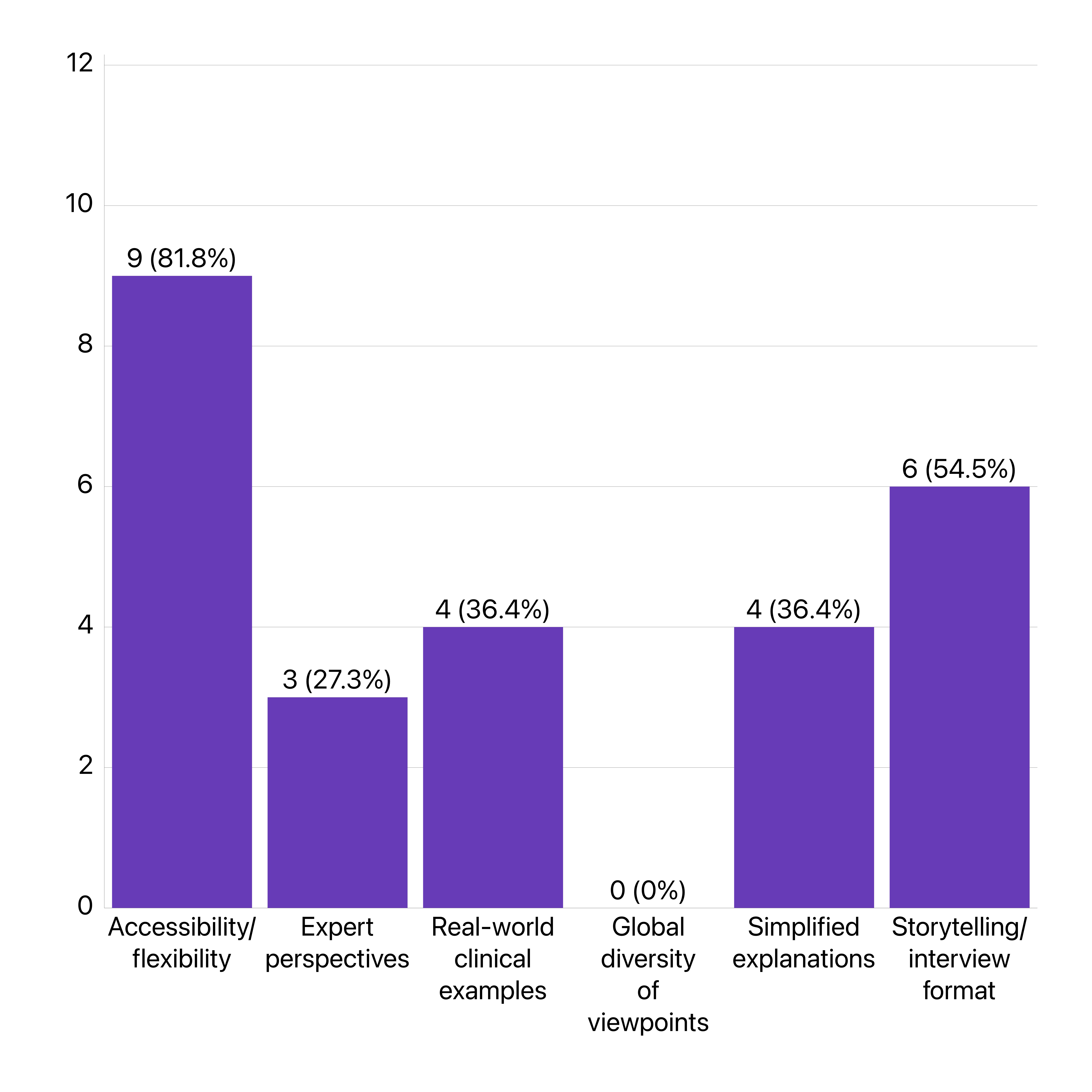
most valuable learning from podcast
To cite this abstract in AMA style:
N. Bujala. Podcast Based Learning in Movement Disorders: Educational Impact of the Podcast Movement Disorders Around the World [abstract]. Mov Disord. 2026; 41 (suppl 1). https://www.mdsabstracts.org/abstract/podcast-based-learning-in-movement-disorders-educational-impact-of-the-podcast-movement-disorders-around-the-world/. Accessed October 1, 2026.« Back to 2026 International Congress
MDS Abstracts - https://www.mdsabstracts.org/abstract/podcast-based-learning-in-movement-disorders-educational-impact-of-the-podcast-movement-disorders-around-the-world/