
Category: Rare Neurometabolic Movement Disorders
Objective: To describe the UK cohort of children who have received regional brain-targeted gene therapy (GT) for AADCd.
Background: Classical AADCd is an ultra-rare genetic neurotransmitter disorder resulting from biallelic loss-of-function variants in DDC. The resulting defect in monoamine synthesis leads to profound infantile parkinsonism-dystonia, oculogyric crises (OGC), dysautonomia, and severe developmental delay. Whilst precision therapies are lacking for most neurodevelopmental disorders, recent advances have led to successful development of life-transforming GT for AADCd.
Method: Retrospective review of case notes, neuroimaging and investigations from the Great Ormond Street Hospital neurotransmitter disorders multi-disciplinary service was undertaken.
Results: We identified 13 children who had surgical treatment for AADCd. 5 received midbrain-targeted GT (AAV2-hDDC), and 8 putaminal GT with eladocagene exuparvovec (Upstaza). All had classical AADCd with typical baseline CSF neurotransmitter metabolites. Age at treatment ranged from 18 months to 12 years 10 months (median 3y 6m), with post-surgical follow-up ranging from 4 months to 6 years 5 months (median 15m). Most patients demonstrated progressive gains in motor development. Of the 13 patients, 10 achieved head control, 8 independent sitting, 5 standing with support, 4 walking with support, and 1 achieved independent walking. Language development was also observed, with 7/13 achieving spoken language post GT. Regarding OGC, 5/13 patients remain free of OGC, while all others experienced a significant reduction in frequency and intensity, in 8/9 cases within the first month. Mild and infrequent OGC recurred in two patients 1–2 years post-treatment. In 10/13 patients, the number of medications required for AADC was reduced following GT. Cerebrospinal fluid dopamine metabolite (HVA) levels increased in all children who underwent post-treatment neurotransmitter analysis and reached age-adjusted normal values in four over follow-up.
Conclusion: Early data from the UK cohort demonstrate that targeted GT can significantly modify the natural history of AADCd, with most patients showing meaningful clinical improvement and developmental gains. Further follow-up and International collaboration are required to characterize the long-term impact and compare the two targeting approaches.
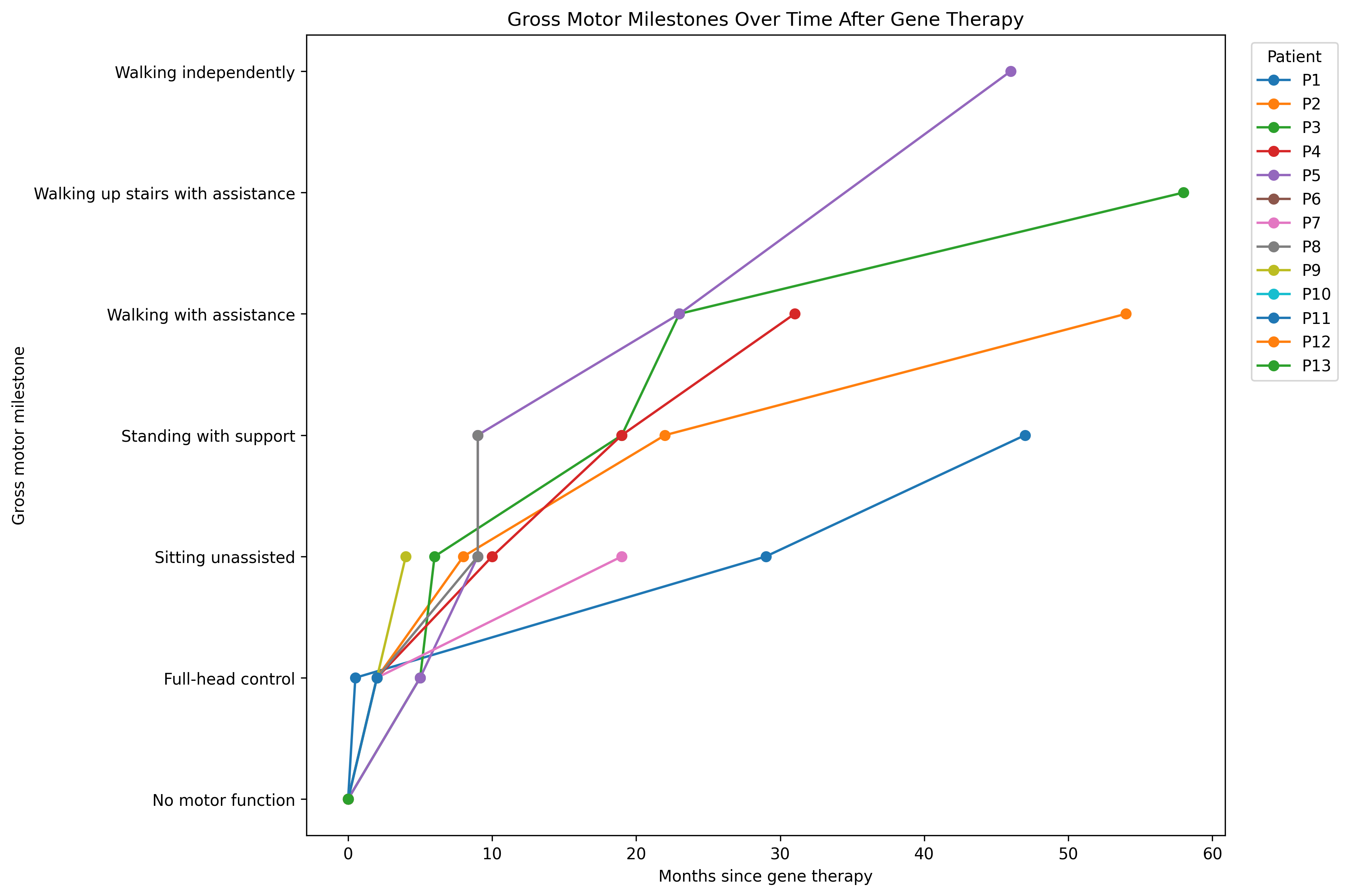
Gross Motor Milestones
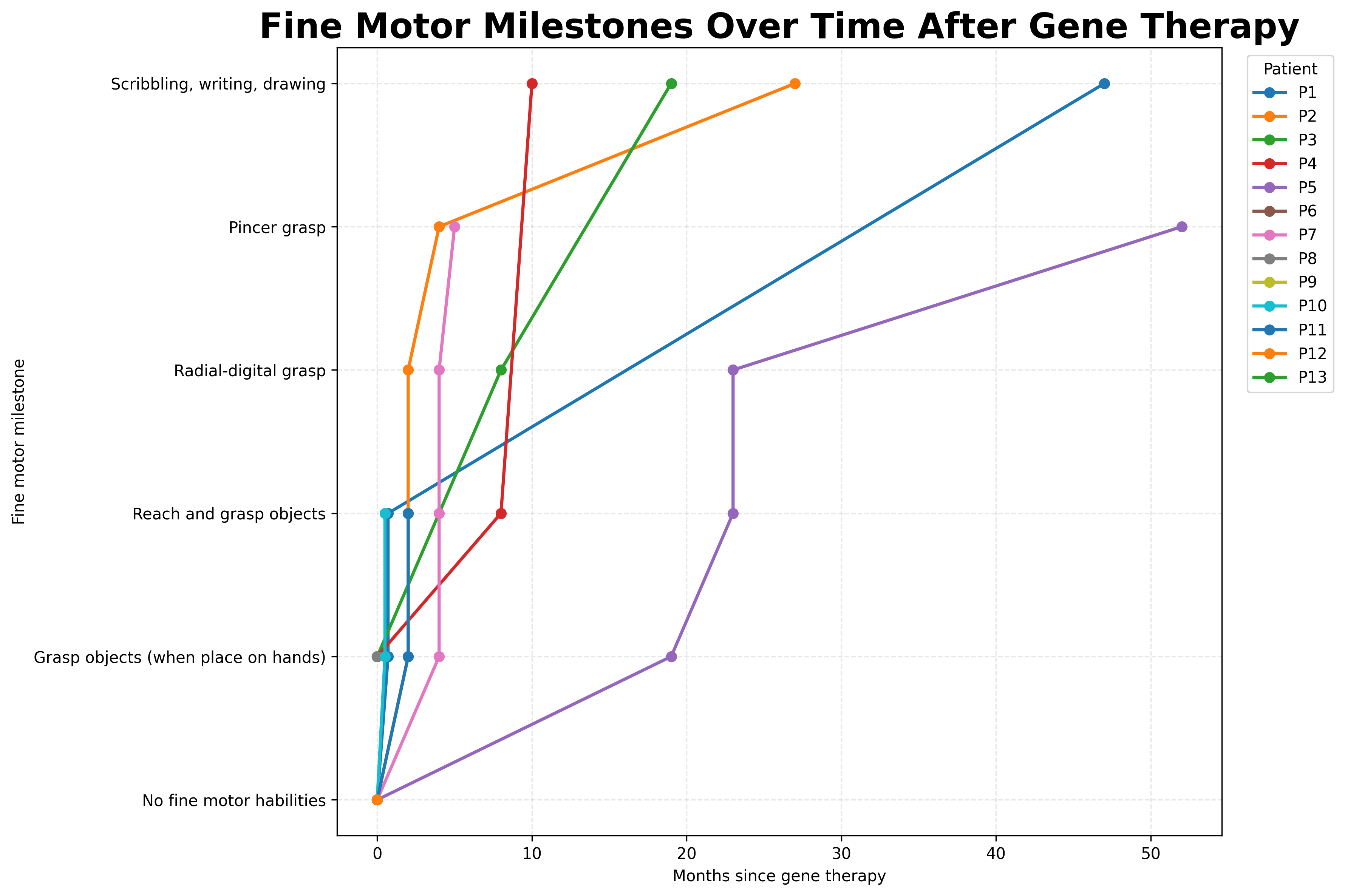
Fine Motor Milestones
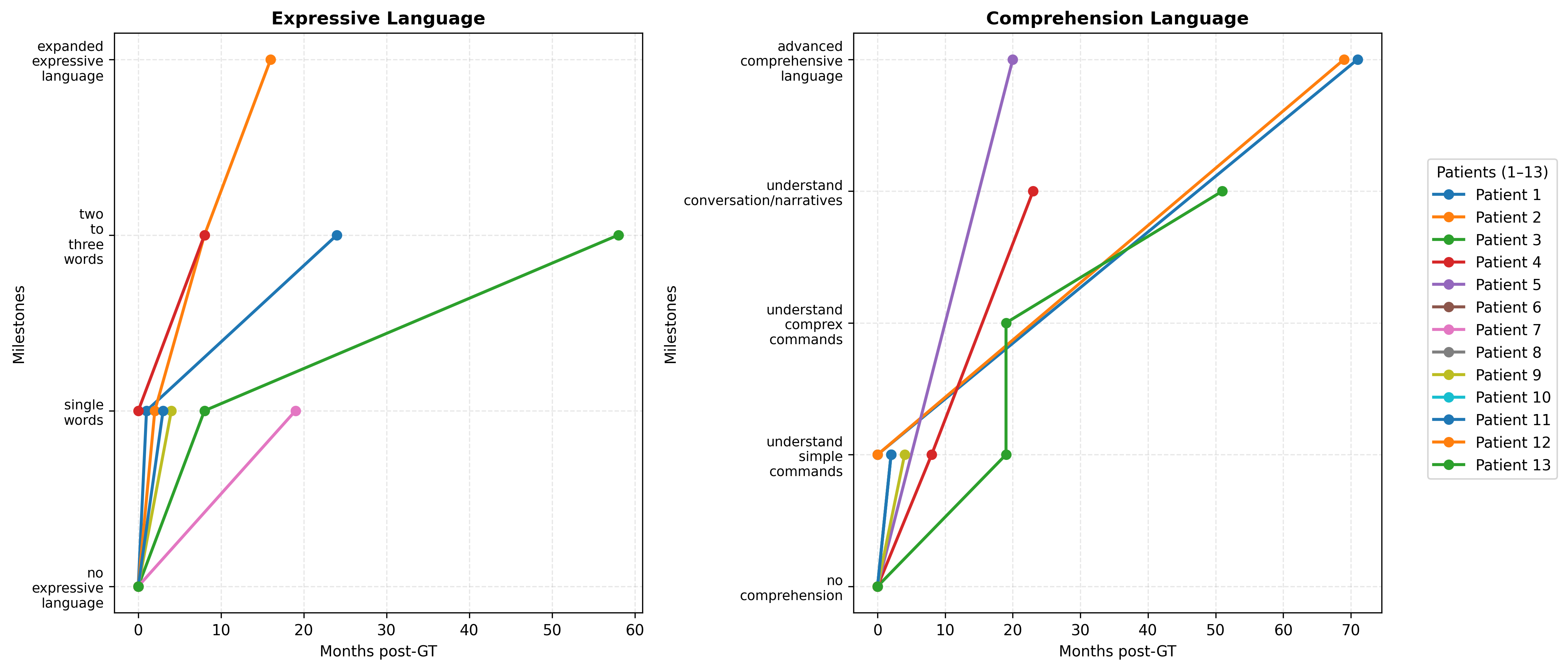
Language and Cognitive progress
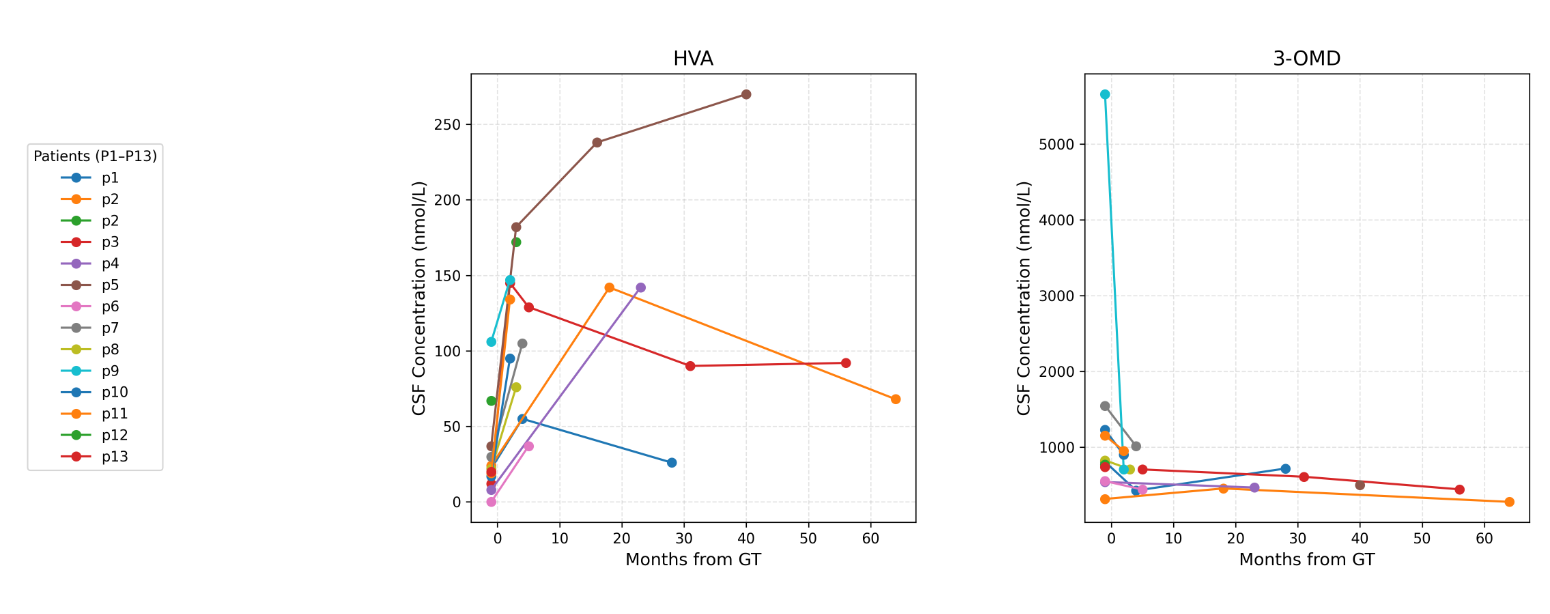
CSF metabolites pre and post GT
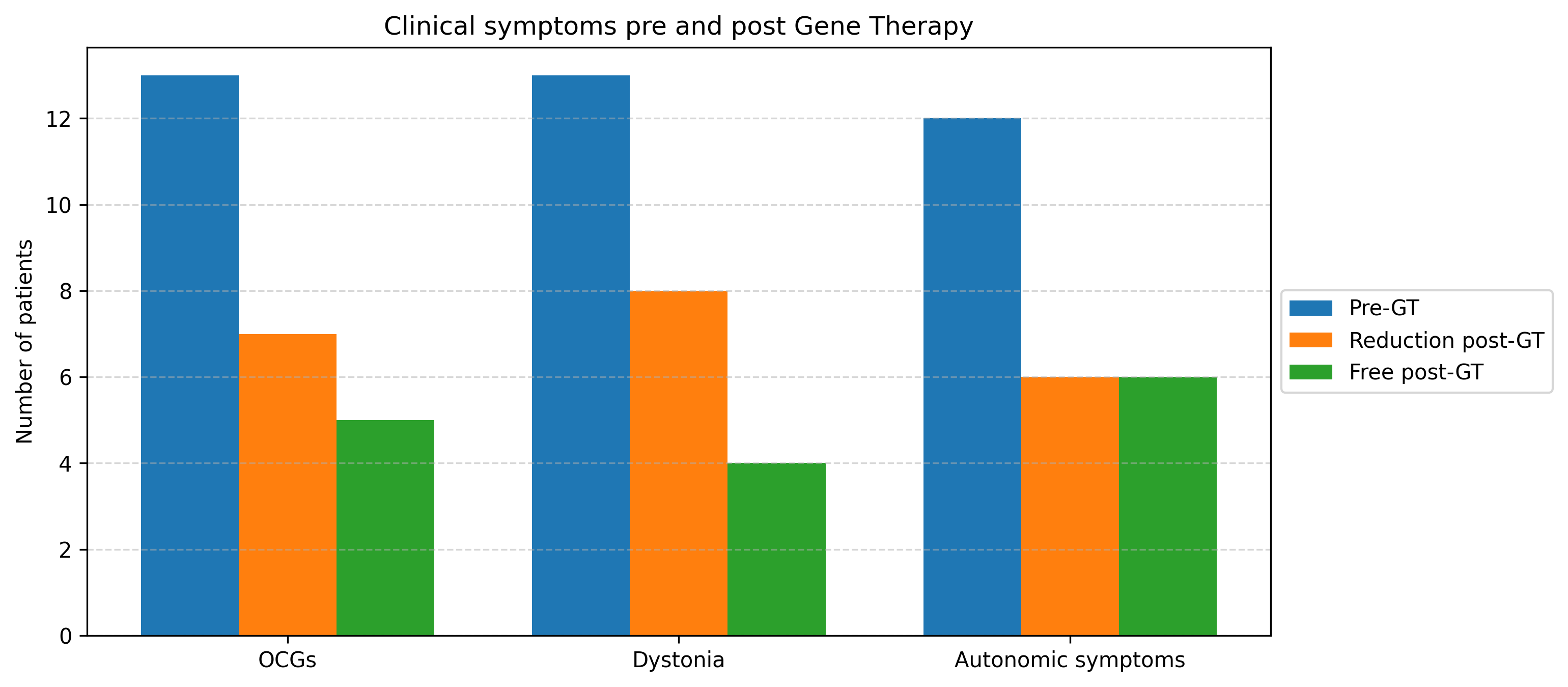
Clinical Symptoms pre and post GT
References: *A previous version of this study with fewer patients and shorter follow-up has been presented by Antonio Spagarino as an oral presentation at the International Neurotransmitter Disorders Conference (INDConf) in London, 7th November 2025
To cite this abstract in AMA style:
A. Spagarino, A. Salazar-Villacorta, R. Spaull, A. Soo, J. Hassell, S. Pope, S. Heales, R. Shihurkar, L. Carr, K. Aquilina, M. Kurian. Precision Gene Therapy Results in Clinical Benefit and Developmental Gains in Aromatic L-Amino Acid Decarboxylase Deficiency (AADCd): The UK Experience [abstract]. Mov Disord. 2026; 41 (suppl 1). https://www.mdsabstracts.org/abstract/precision-gene-therapy-results-in-clinical-benefit-and-developmental-gains-in-aromatic-l-amino-acid-decarboxylase-deficiency-aadcd-the-uk-experience/. Accessed October 1, 2026.« Back to 2026 International Congress
MDS Abstracts - https://www.mdsabstracts.org/abstract/precision-gene-therapy-results-in-clinical-benefit-and-developmental-gains-in-aromatic-l-amino-acid-decarboxylase-deficiency-aadcd-the-uk-experience/