
Category: Parkinson's Disease (Other)
Objective: To determine how α-synuclein (αSyn) pathology extends beyond the neuronal soma in the anterior cingulate cortex (ACC) by mapping early pathological changes within adjacent fiber bundles. This work aims to clarify whether tract-based αSyn propagation contributes to Parkinson’s disease (PD) progression and clinical manifestations.
Background: PD affects the motor cortex and its subcortical white matter output during the prodromal motor stage [1]. The somato-cognitive action network (SCAN) has been highlighted as a promising neuromodulation target [2]. The ACC integrates cognitive and emotional functions and supports SCAN networks, yet early pathological changes in the cingulum bundle and crossing fibers beneath the ACC remain poorly defined. Determining whether αSyn spreads along these tracts may provide direct evidence for early network vulnerability [3-5].
Method: Postmortem ACC tissue from controls (n=5) and pathologically confirmed PD cases (n=7) was obtained from the Sydney Brain Bank (University of Sydney Human Research Ethics Committee, 2017/985). Neighbouring FFPE sections (6 µm) were processed for immunohistochemistry (IHC) or proximity ligation assay (PLA) using the pS129 αSyn antibody to detect Lewy pathology or oligomer/high density pS129 αSyn (< 40nm proximity). Whole section images were acquired on an Olympus VS200 at 20x under consistent settings.
Results: pS129 αSyn-PLA revealed abundant diffuse, punctate, patchy, or solid signals in neuronal soma and processes in PD ACC, including Braak stage 4 cases, with no comparable signal in controls. Dense PLA signals aligned along the cingulum bundle and other crossing fibers, indicating tract-specific vulnerability. In contrast, conventional pS129 IHC detected only sparse neurites in these white matter structures, far fewer than observed with PLA.
Conclusion: These findings show that αSyn oligomer or high density pS129-associated tractopathy is detectable within ACC adjacent fiber tracts in PD, suggesting early network alteration. This provides preliminary evidence for tract-based αSyn propagation and warrants further investigation into its clinicopathological relevance.
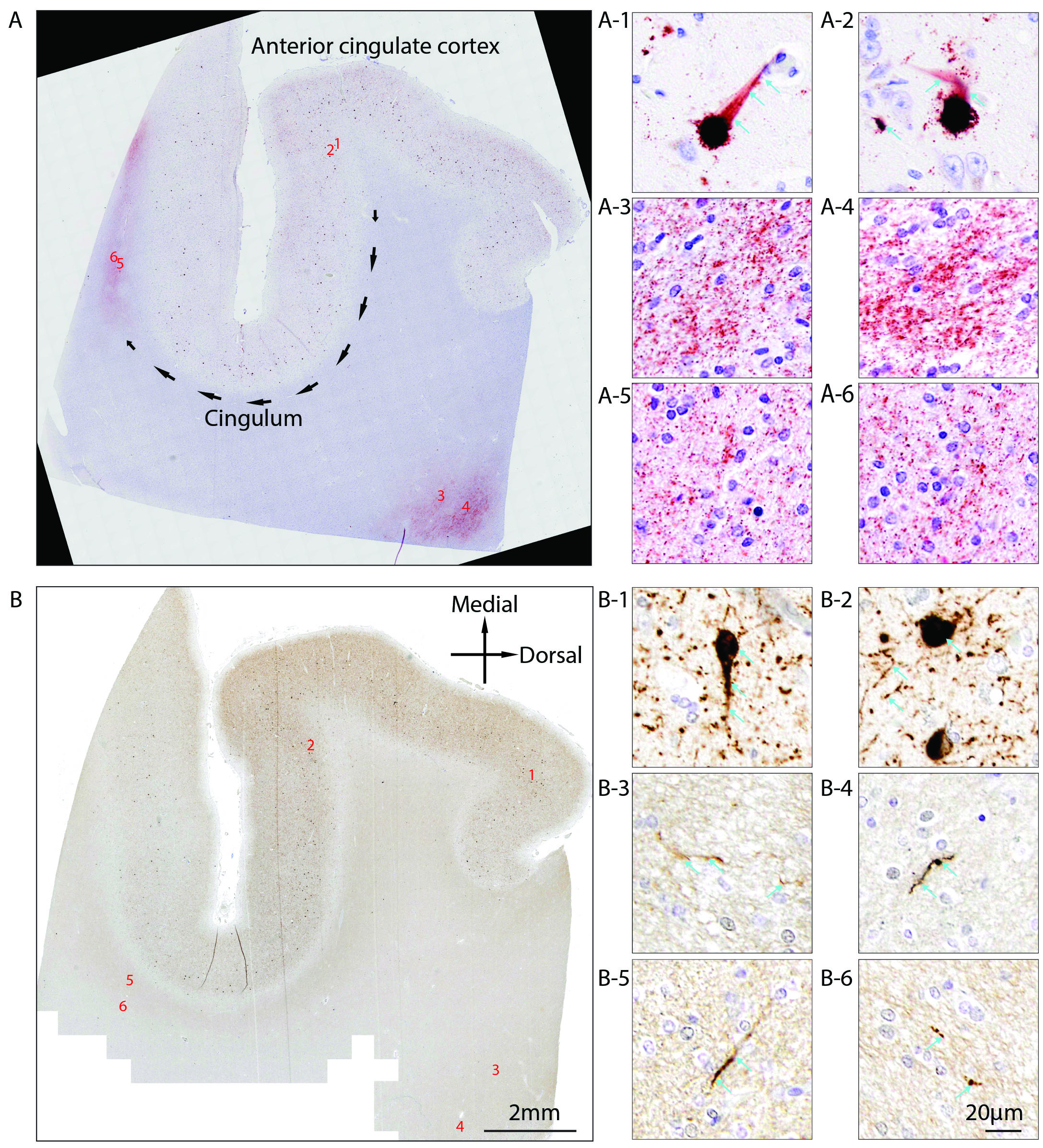
Figure 1. α-Synuclein tractopathy revealed by PLA
References: 1. Fu, Y., et al., Adaptive structural changes in the motor cortex and white matter in Parkinson’s disease. Acta Neuropathol, 2022. 144(5): p. 861-879.
2. Ren, J., et al., Parkinson’s disease as a somato-cognitive action network disorder. Nature, 2026.
3. Ren, P., X. Cui, and X. Liang, Connectome-based biophysical models of pathological protein spreading in neurodegenerative diseases. PLoS Comput Biol, 2025. 21(1): p. e1012743.
4. Raj, A., A. Kuceyeski, and M. Weiner, A network diffusion model of disease progression in dementia. Neuron, 2012. 73(6): p. 1204-15.
5. Su, F., et al., Alpha-Synuclein in Neurodegeneration: From Shared Biology to Disease-Specific Phenotypes. Cells, 2026. 15(5): p. 451.
To cite this abstract in AMA style:
Y. Fu, F. Su, G. Halliday. Proximity Ligation Assay Reveals Early Tractopathy in Parkinson’s Disease [abstract]. Mov Disord. 2026; 41 (suppl 1). https://www.mdsabstracts.org/abstract/proximity-ligation-assay-reveals-early-tractopathy-in-parkinsons-disease/. Accessed October 1, 2026.« Back to 2026 International Congress
MDS Abstracts - https://www.mdsabstracts.org/abstract/proximity-ligation-assay-reveals-early-tractopathy-in-parkinsons-disease/