
Category: Parkinson's Disease: Genetics
Objective: To characterize previously reported regulatory variants at the SNCA locus associated with DNA methylation by integrating methylation quantitative trait locus (mQTL) annotations with genotype-derived allele frequency data in the GP2 European ancestry cohort.
Background: PD is influenced not only by protein-coding genetic variation but also by regulatory mechanisms such as DNA methylation. The SNCA gene, encoding alpha-synuclein, is a central pathogenic driver of PD and is regulated by distal and proximal elements. SNCA mQTLs and methylation changes have been identified across key brain regions, including the midbrain, temporal and frontal cortex, as well as in blood and immune cells. Methylation quantitative trait loci (mQTLs) are genetic variants that influence DNA methylation at specific CpG sites, linking inherited variation with epigenetic regulation.
Method: Candidate SNCA regulatory variants previously reported as mQTLs were compiled and annotated using information on mQTL significance, effect size, CpG position, and genomic location. These annotations were integrated with allele frequency data from the GP2 Release 11 European ancestry genotype dataset. Variants were characterized by mQTL significance, direction of methylation effect, population frequency when available, and distribution across CpG sites within the SNCA regulatory region.
Results: A total of 152 candidate SNCA regulatory variants were characterized, of which 107 had previously reported mQTL associations at p<0.05. Reported effect sizes ranged from β=−37.99 to β=19.76, with the strongest association reaching p=1.17×10⁻²⁶¹. Directional analysis showed 68 variants with negative methylation effects and 39 with positive effects. CpG mapping revealed clustering across the SNCA locus, with the most enriched CpG site, chr4:89828080, harboring 42 associated variants, followed by chr4:89714420 and chr4:89723033 with 17 each. Among variants with European ancestry allele-frequency data, alternative allele frequencies ranged from 0.48 to 0.89, indicating several variants are common.
Conclusion: These findings support a dense regulatory landscape across the SNCA locus and identify CpG-centered mQTL hotspots influencing DNA methylation. Integrating mQTL annotations with GP2 genotype frequency data provides a framework for prioritizing regulatory variants for future functional and phenotype studies in PD.
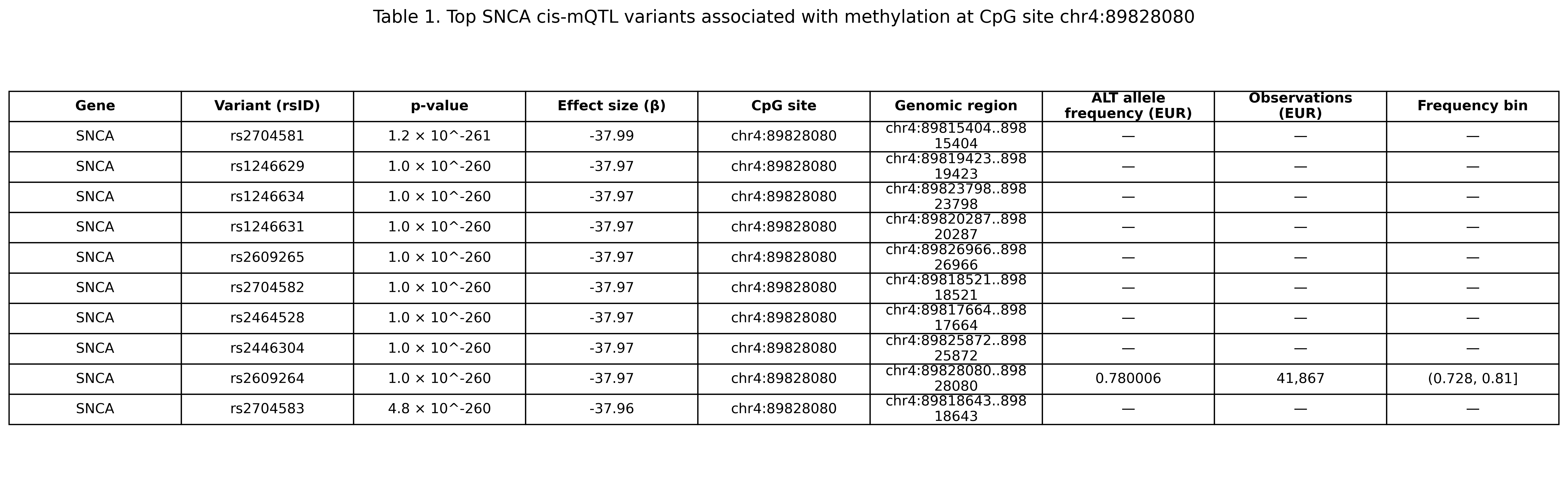
Table 1. Top SNCA cis-mQTL variants
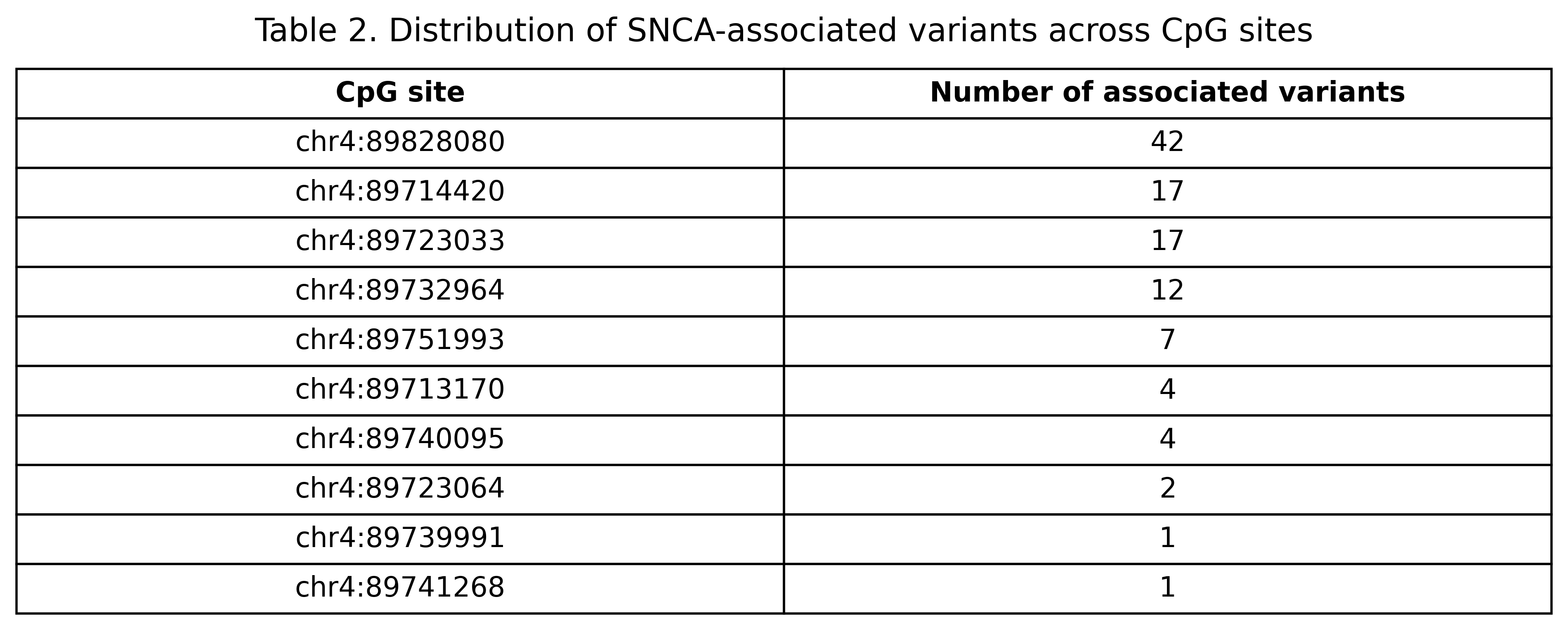
Table 2. Distribution of SNCA
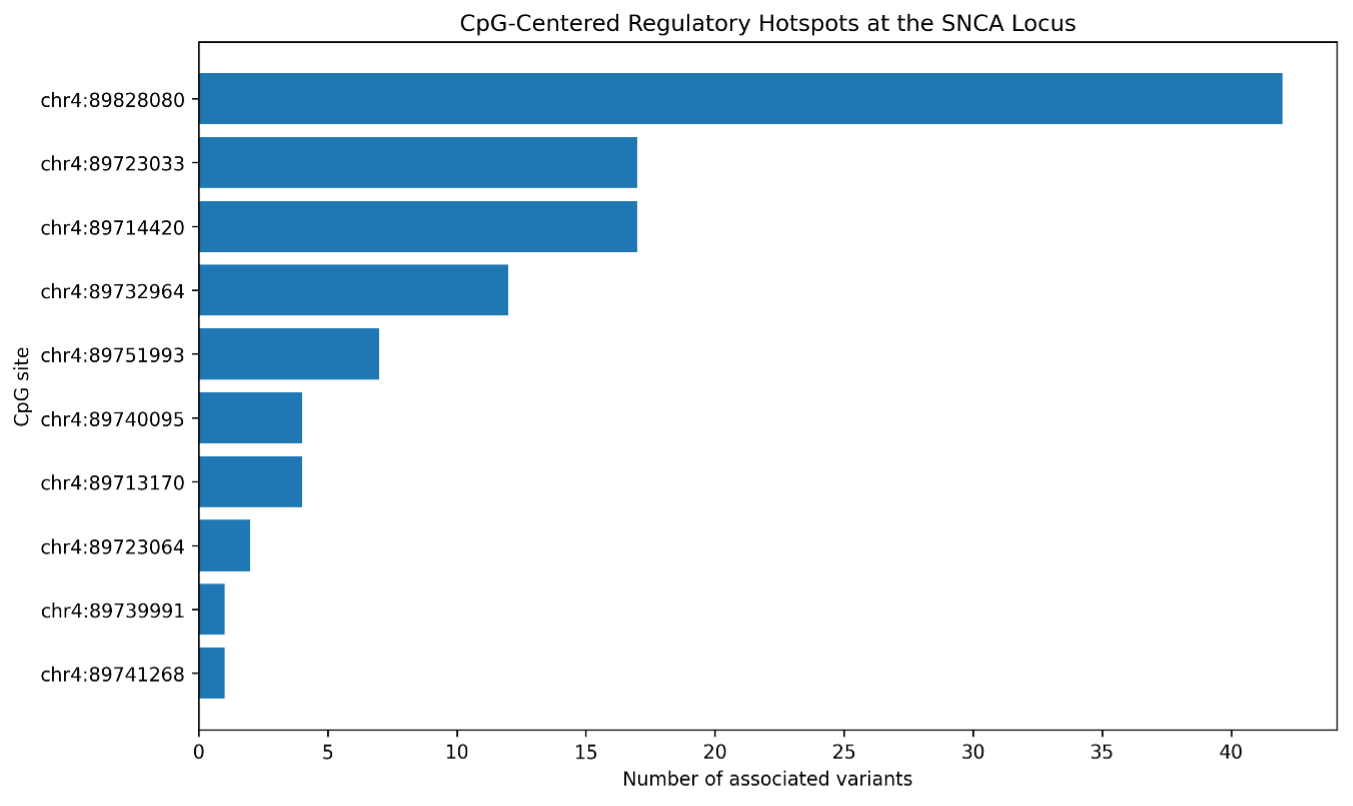
Figure 1. CpG-centered regulatory hotspots
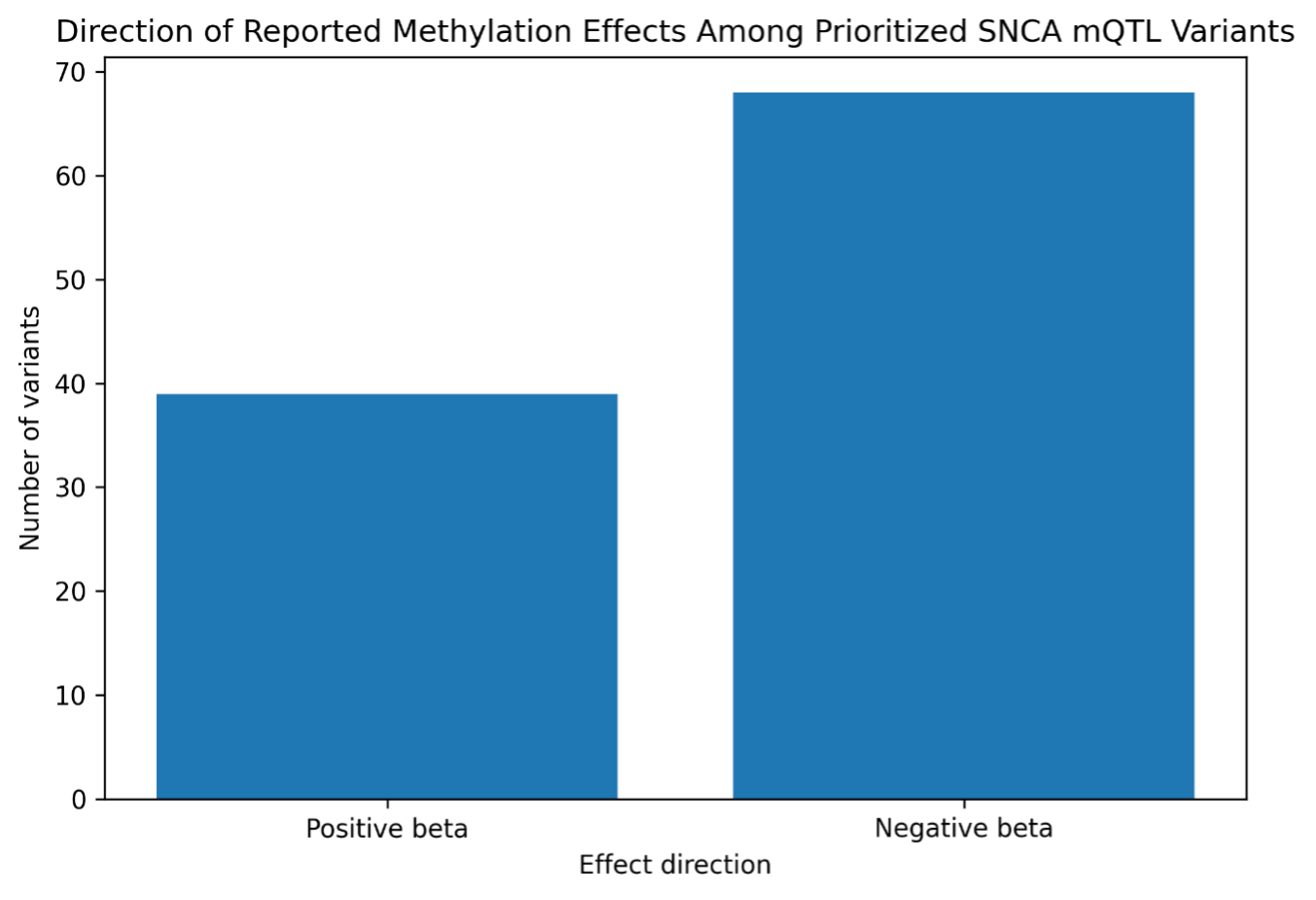
Figure 2. Direction of methylation effects
References: 1. Nalls MA, Blauwendraat C, Vallerga CL, Heilbron K, Bandres-Ciga S, Chang D, et al. Identification of novel risk loci and causal insights for Parkinson’s disease: a meta-analysis of genome-wide association studies. Lancet Neurol. 2019;18(12):1091-1102.
2. Soldner F, Stelzer Y, Shivalila CS, Abraham BJ, Latourelle JC, Barrasa MI, et al. Parkinson-associated risk variant in distal enhancer of α-synuclein modulates target gene expression. Nature. 2016;533:95-99.
3. Pihlstrøm L, Berge V, Rengmark A, Toft M. Parkinson’s disease correlates with promoter methylation in the α-synuclein (SNCA) gene. Mov Disord. 2015;30(4):577-580.
To cite this abstract in AMA style:
D. Náfate Wences, A. Cervantes Arriaga, M. Rodríguez Violante, MT. Periñan Tocino, GP2. Genetics Program. Regulatory architecture of the SNCA locus in Parkinson’s Disease: Characterization of reported functional mQTL variants in GP2 [abstract]. Mov Disord. 2026; 41 (suppl 1). https://www.mdsabstracts.org/abstract/regulatory-architecture-of-the-snca-locus-in-parkinsons-disease-characterization-of-reported-functional-mqtl-variants-in-gp2/. Accessed October 1, 2026.« Back to 2026 International Congress
MDS Abstracts - https://www.mdsabstracts.org/abstract/regulatory-architecture-of-the-snca-locus-in-parkinsons-disease-characterization-of-reported-functional-mqtl-variants-in-gp2/