
Objective: To evaluate the cross-sectional associations of remotely administered reaction time (RT) in PSP.
Background: PSP causes cognitive dysfunction, with severe deficits in psychomotor speed, attention and working memory (1). Existing cognitive assessments lack sufficient sensitivity to change to be used as clinical outcome measures. RT slowing has been shown to be sensitive to PSP in cross-sectional studies, but the relative contributions of cognitive and motor function on results remains unclear (2).
Method: We recruited 12 participants aged 68.8 years (IQR 62.7, 76.2) 27% women, fulfilling diagnostic criteria for PSP [table1] (3). Each participant remotely completed simple RT (SRT), choice RT (CRT) and N-back (OBK) tasks [table2]. Clinical measures included the PSP rating scale (PSPRS), frontal assessment battery (FAB) and Montreal Cognitive Assessment (MoCA). Structural MRI included 3D T1-weighted MPRAGE (1 mm isotropic voxels) processed using FreeSurfer (v7.4.1)(4)(5) to derive regional brain volumes for frontal lobe white matter (WM), midbrain and estimated total intracranial volume (eTIV). Spearman correlation coefficients examined associations between RT measures and clinical and radiological measures [figure1]. Mixed-effects models (restricted maximum likelihood) with random intercepts for participants were fit for each RT task as the dependent variable, in a clinical model including age, PSPRS and the FAB, and a radiological model with frontal WM and eTIV.
Results: RT tasks demonstrated strong negative correlations with the FAB (|r| > 0.65 & p<0.05, all), while SRT was additionally correlated with MoCA score, and OBK with frontal WM [figure1]. In the models adjusted for age and PSPRS, FAB performance was significantly associated with both SRT (ß -79.28, 95% CI -130.42, -28.14, p=0.02) and CRT (ß -55.38, 95% CI -97.49, -13.27, p=0.03) [table3]. Frontal WM volume was significantly associated with SRT (ß -42.21, 95% CI -66.83, -17.59, p=0.01) and CRT (ß -31.49, 95% CI -56.86, -6.12, p=0.04) after controlling for eTIV [table4].
Conclusion: RT slowing in PSP was associated with executive dysfunction and frontal white matter atrophy. Associations with executive dysfunction persisted after accounting for motor impairment on the PSPRS, suggesting that RT captures cognitive performance beyond motor execution. Computerized RT warrants further evaluation as a potential cognitive biomarker in PSP.
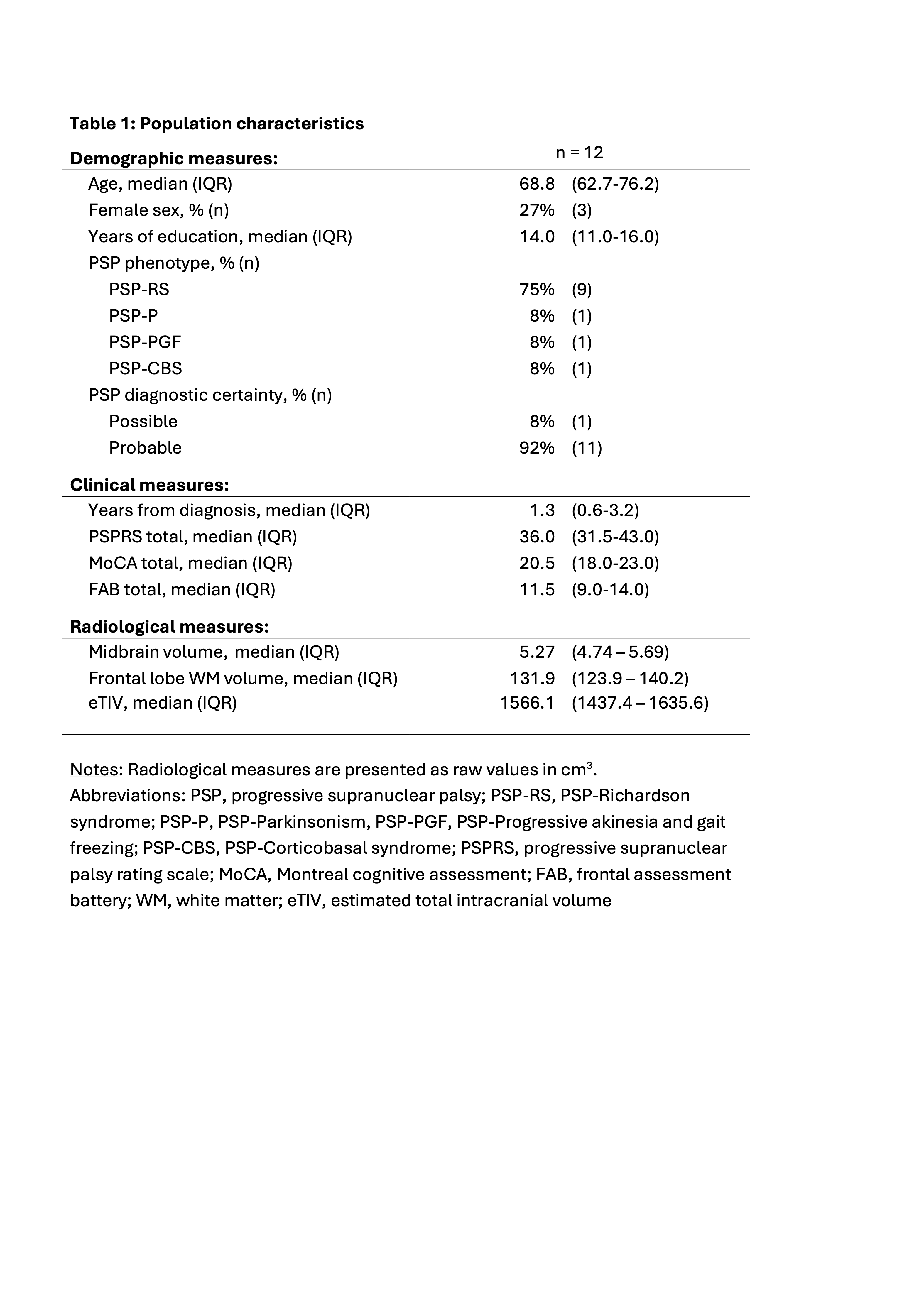
Table 1
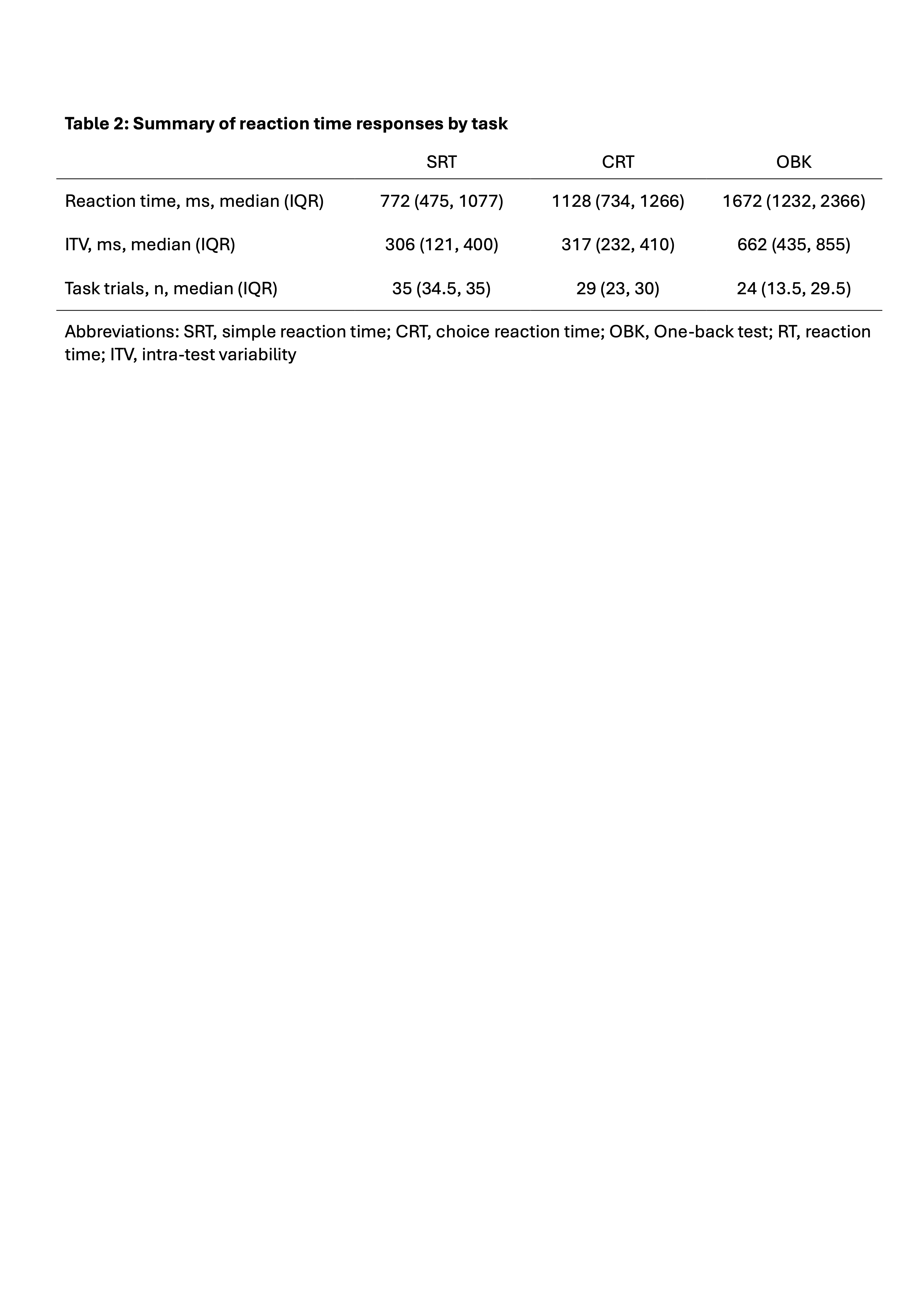
Table 2
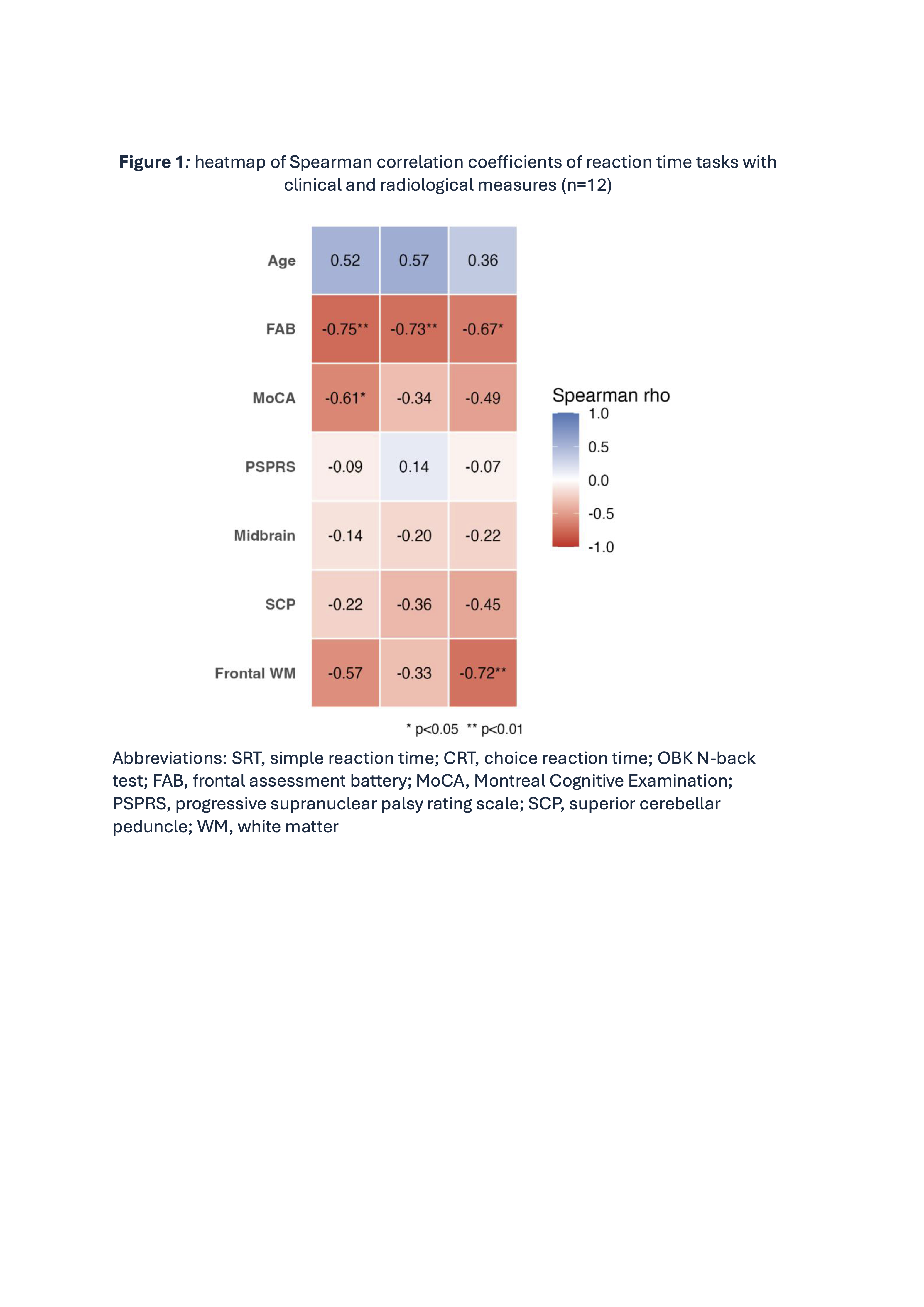
Figure 1
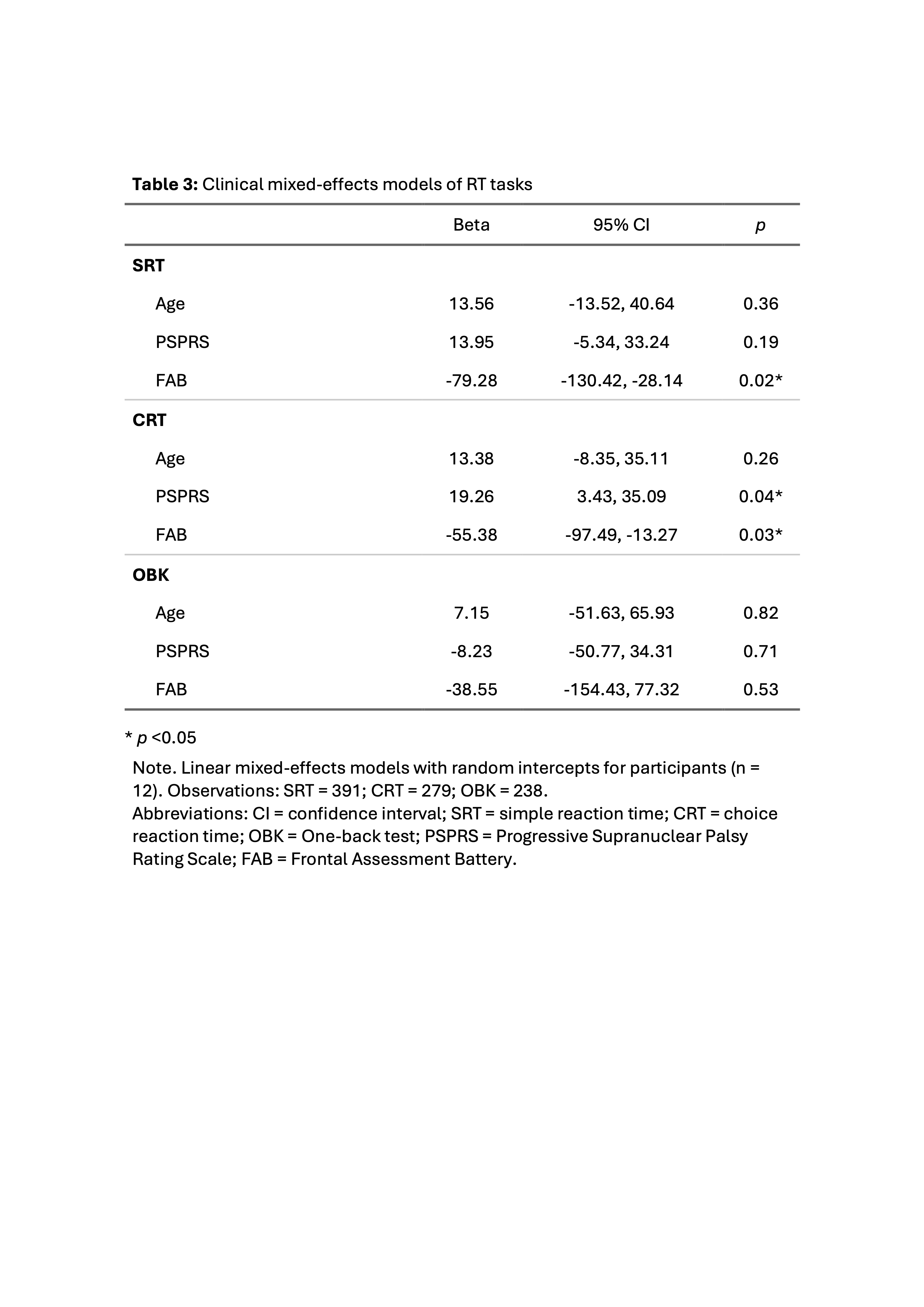
Table 3
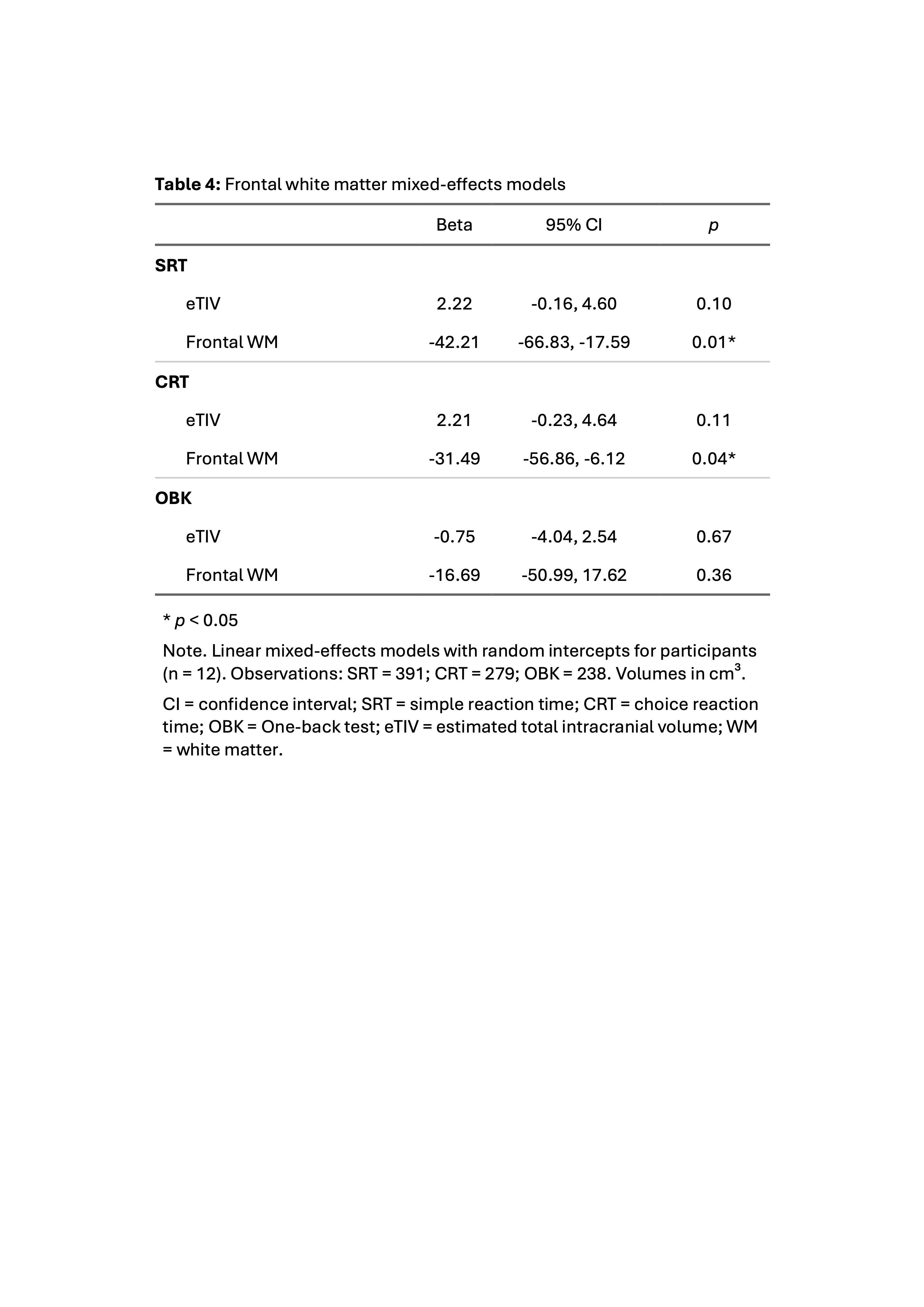
Table 4
References: 1. Gerstenecker A, Mast B, Duff K, Ferman TJ, Litvan I, Group E-PS. Executive dysfunction is the primary cognitive impairment in progressive supranuclear palsy. Arch Clin Neuropsychol. 2013;28(2):104-13.
2. Manuel AL, Foxe D, Bradshaw N, Cordato NJ, Hodges JR, Burrell JR, et al. Sustained attention failures on a 3-min reaction time task is a sensitive marker of dementia. J Neurol. 2019;266(6):1323-31.
3. Hoglinger GU, Respondek G, Stamelou M, Kurz C, Josephs KA, Lang AE, et al. Clinical diagnosis of progressive supranuclear palsy: The movement disorder society criteria. Mov Disord. 2017;32(6):853-64.
4. Fischl B. FreeSurfer. Neuroimage. 2012;62(2):774-81.
5. Iglesias JE, Van Leemput K, Bhatt P, Casillas C, Dutt S, Schuff N, et al. Bayesian segmentation of brainstem structures in MRI. Neuroimage. 2015;113:184-95.
To cite this abstract in AMA style:
T. Siejka, K. Bertram, H. Butzkueven, D. Darby, A. Brodtmann. Remotely Administered Reaction Time Correlates in Progressive Supranuclear Palsy [abstract]. Mov Disord. 2026; 41 (suppl 1). https://www.mdsabstracts.org/abstract/remotely-administered-reaction-time-correlates-in-progressive-supranuclear-palsy/. Accessed October 1, 2026.« Back to 2026 International Congress
MDS Abstracts - https://www.mdsabstracts.org/abstract/remotely-administered-reaction-time-correlates-in-progressive-supranuclear-palsy/