
Objective: To evaluate the effectiveness and safety of DaxibotulinumtoxinA (DAXI) in patients diagnosed with cervical dystonia (CD).
Background: Botulinum toxins (BoNTs) are the first-line therapy for the management of CD, a chronic condition characterized by involuntary neck muscle contractions. DAXI is a new custom-engineered, peptide-formulated BoTN that offers a significant duration advantage over currently available BoNTs.
Method: A comprehensive search was conducted up to 2 March 2026 across four databases (PubMed, Scopus, Web of Science, and Cochrane CENTRAL). Clinical trials and observational studies evaluating the effectiveness and safety of DAXI in patients with CD were included. A random-effects model was used to estimate pooled proportions for categorical variables and mean differences (MD) for continuous outcomes, each with corresponding 95% confidence intervals (CIs). Subgroup analysis was performed based on dosage.
Results: Three studies (572 patients) were included in the analysis. Overall, 80% of patients were responders, with a response rate of 82% in the 100-240 U dose subgroup and a slightly lower response rate of 77 % in the >240 U dose subgroup; however, no statistically significant difference was observed between the two subgroups (p = 0.079). A significant improvement in Toronto Western Spasmodic Torticollis Rating Scale (TWSTRS) total score was observed (MD: -16.19 points; 95% CI: -21.65 to -10.37) compared to baseline, and similarly, no significant difference was found between the 100-240 U dose (MD: -17.1 points) and >240 U dose (MD: -15.59 points) subgroups (p = 0.8333). Regarding the safety profile, dysphagia and muscle weakness were each reported in 3% of treated patients, while injection site pain occurred in 5%. The incidence of adverse events was comparable between the subgroups, with no statistically significant differences observed.
Conclusion: DAXI was found to be effective and demonstrated a favorable safety profile in patients with CD regardless of the dose used. However, additional studies with larger sample sizes are needed to further confirm these findings.
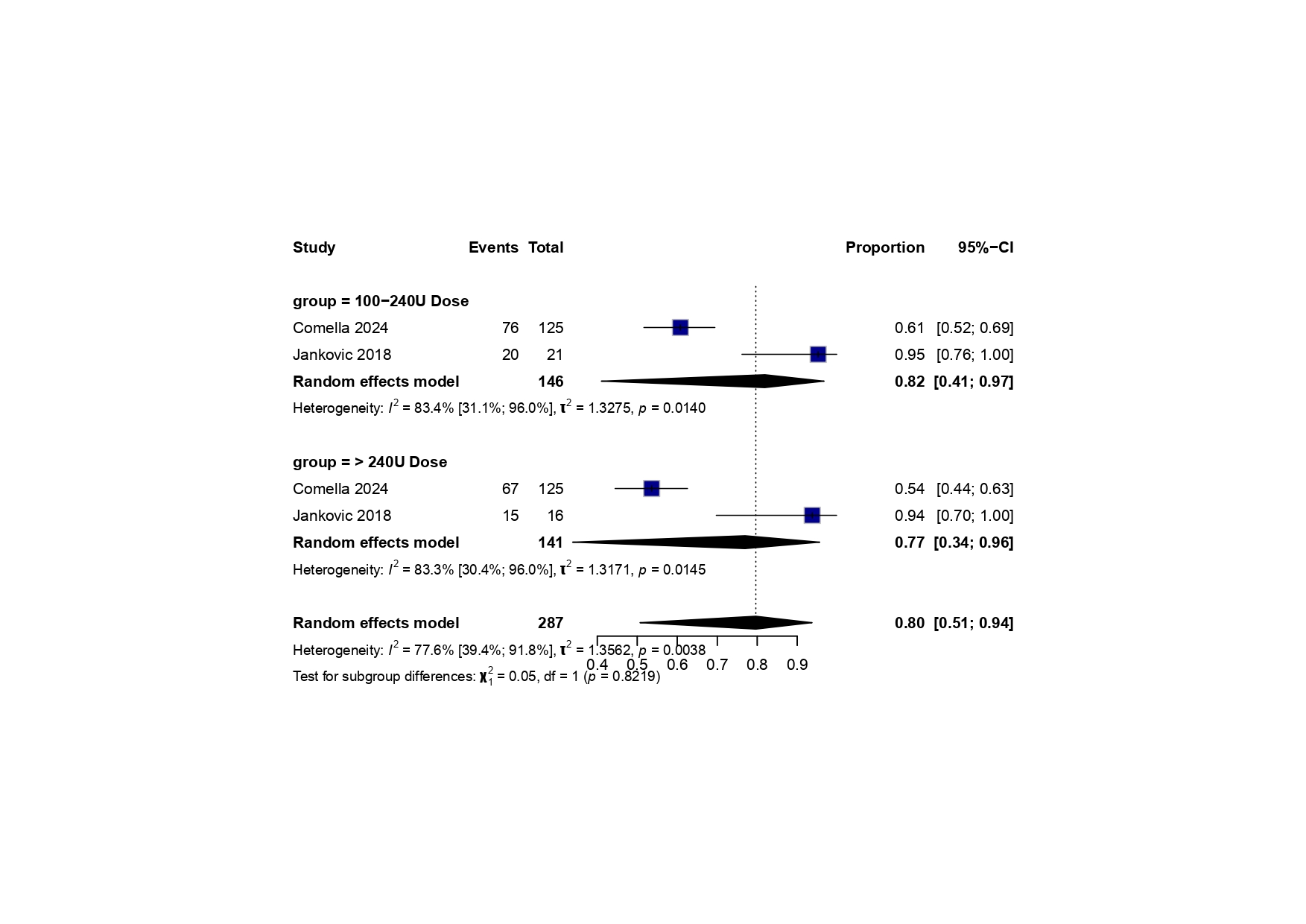
Response Rate
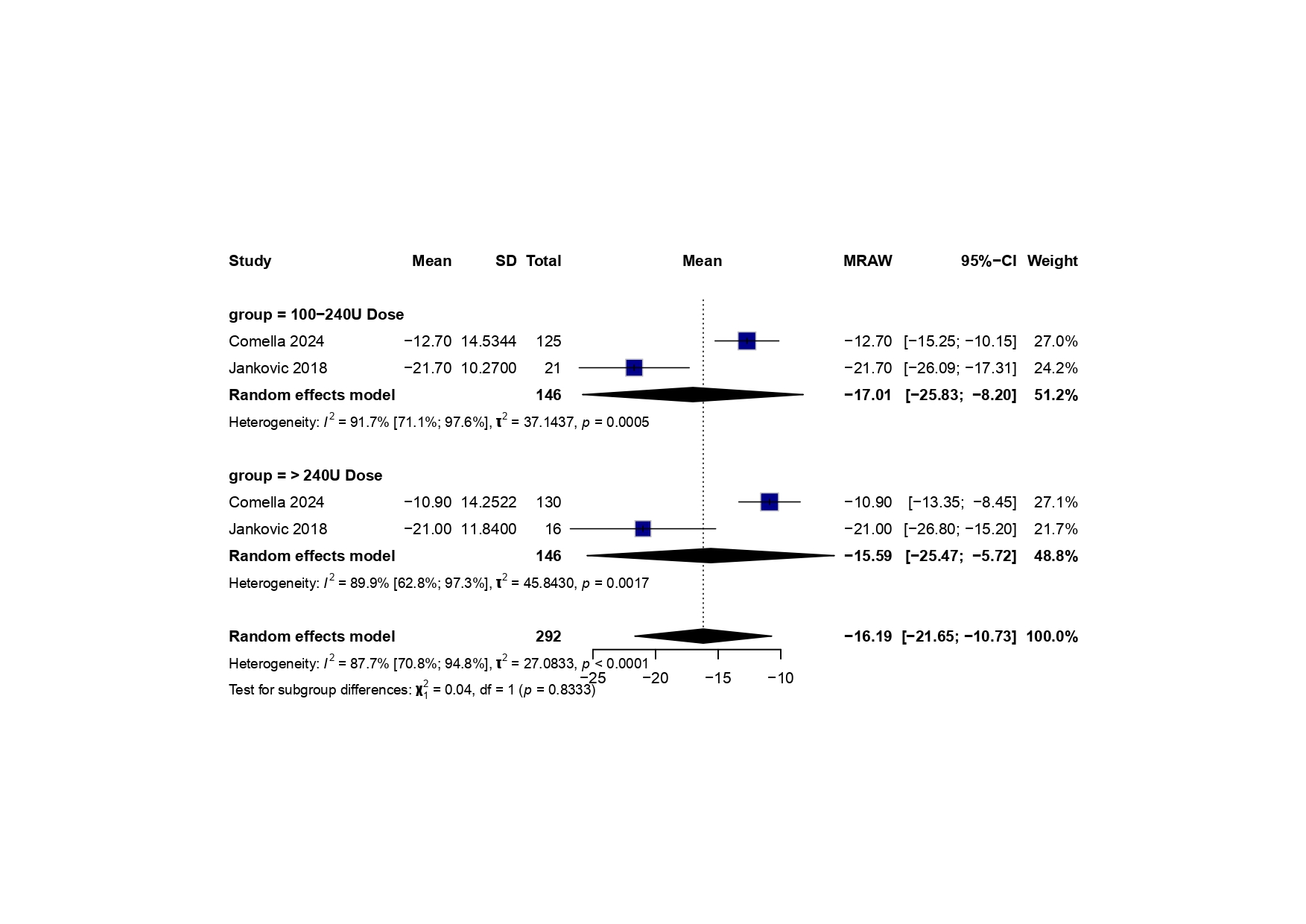
Total TWSTRS Score
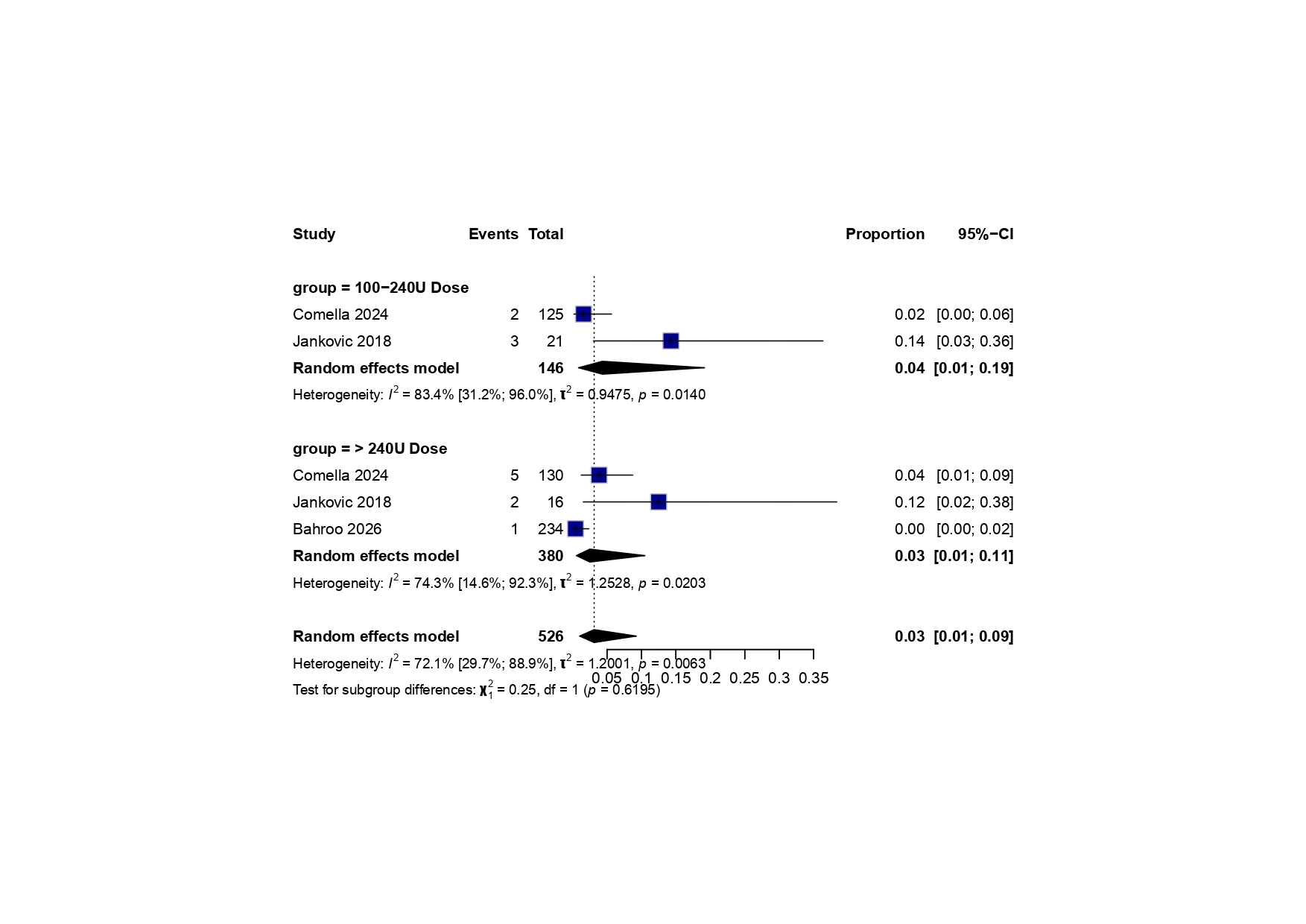
Dysphagia Incidence
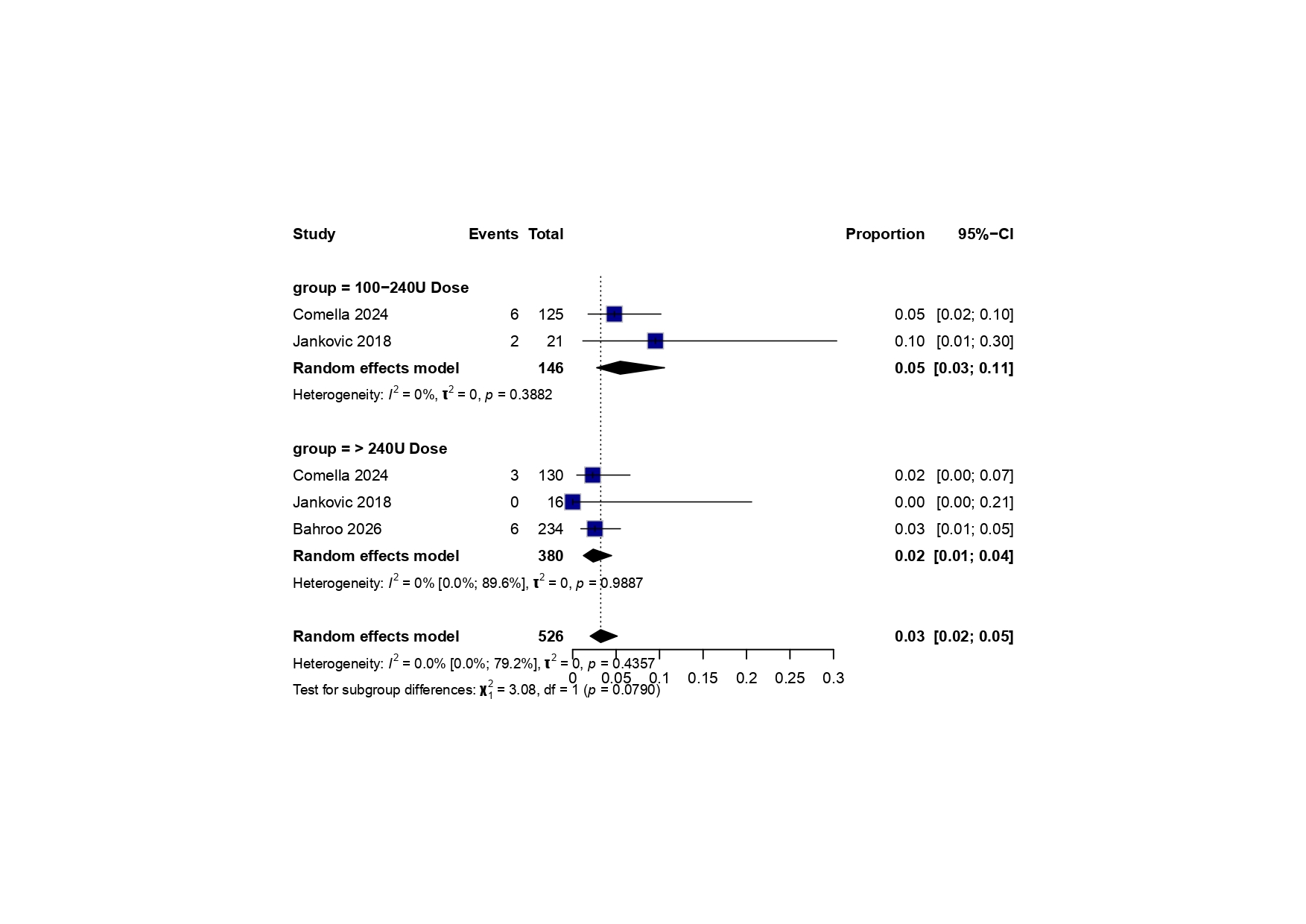
Muscle Weakness Incidence
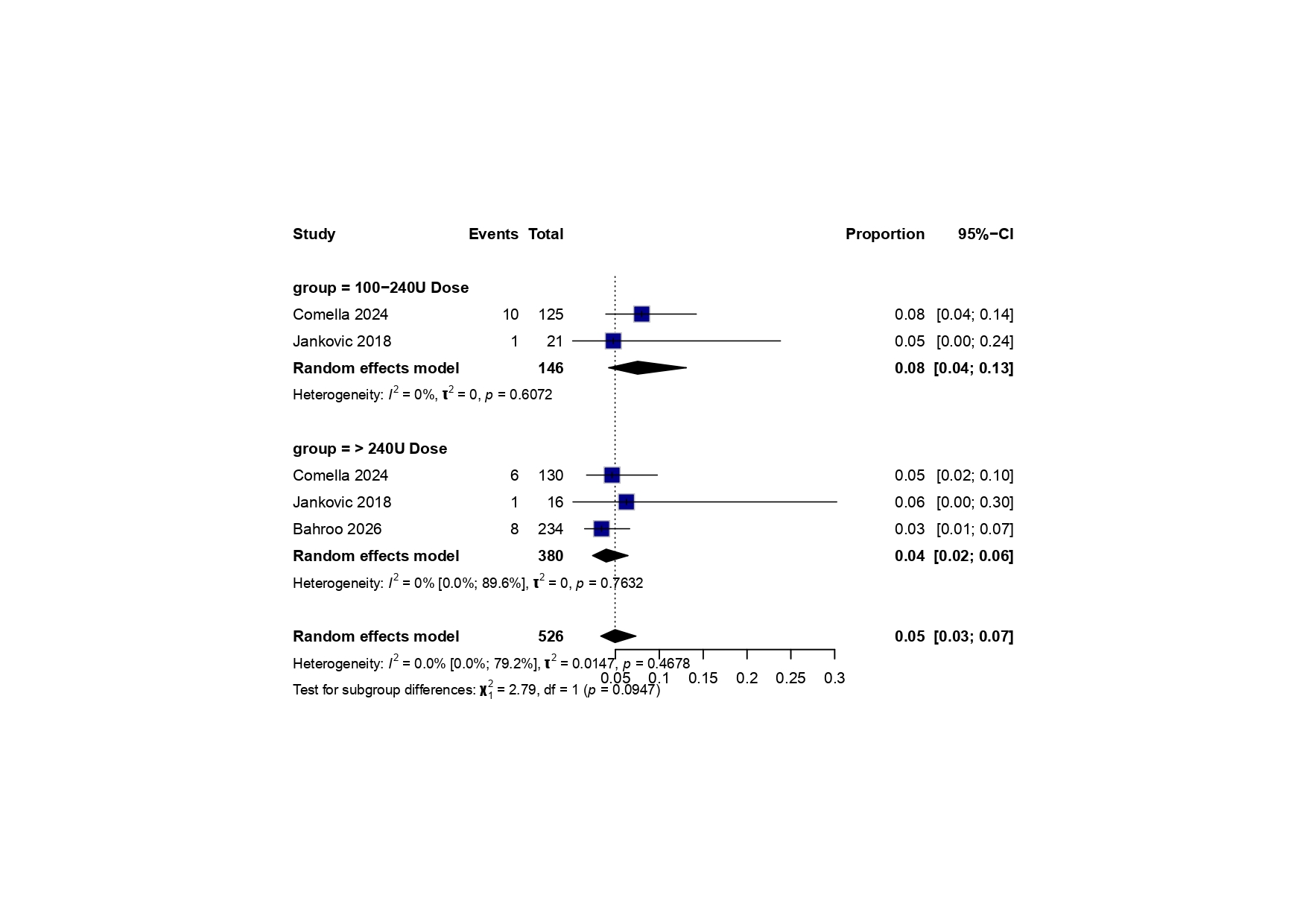
Injection Site Pain Incidene
To cite this abstract in AMA style:
H. Sabet, M. Aziz, M. Zanaty. Safety and Effectiveness of DaxibotulinumtoxinA in Cervical Dystonia: A Systematic Review and Meta-Analysis of Different Doses [abstract]. Mov Disord. 2026; 41 (suppl 1). https://www.mdsabstracts.org/abstract/safety-and-effectiveness-of-daxibotulinumtoxina-in-cervical-dystonia-a-systematic-review-and-meta-analysis-of-different-doses/. Accessed October 1, 2026.« Back to 2026 International Congress
MDS Abstracts - https://www.mdsabstracts.org/abstract/safety-and-effectiveness-of-daxibotulinumtoxina-in-cervical-dystonia-a-systematic-review-and-meta-analysis-of-different-doses/