
Objective: To assess sex-related differences in motor and non-motor symptoms at diagnosis, disease evolution, treatment response, and quality-of-life impact in patients with Parkinson’s disease.
Background: Parkinson’s disease (PD) is a heterogeneous neurodegenerative disorder with variable motor and non-motor manifestations and a substantial impact on quality of life. Emerging evidence suggests sex-related differences in clinical phenotype and disease evolution; however, findings remain inconsistent, and data from Latin American populations are scarce.
Method: We conducted a cross-sectional study of patients with Parkinson’s disease followed at a tertiary care center. An ad hoc questionnaire collected demographic and clinical data, including sex, age, disease duration, symptoms at diagnosis, perceived disease evolution, treatment response, and quality-of-life impact.
Results: A total of 35 patients with Parkinson’s disease were included (18 women, 17 men). Mean age was 72.6 ± 11.4 years in women and 69.6 ± 9.8 years in men (p = 0.43). No significant differences were found in disease duration, educational level, or baseline clinical characteristics.
Motor symptoms at diagnosis were reported by 83.3% of women and 94.1% of men (p = 0.64), with no significant differences in resting tremor, rigidity, bradykinesia, or postural instability.
Non-motor symptoms were highly prevalent in both groups (94.4% in women vs 94.1% in men, p = 0.99). Sexual dysfunction was significantly more frequent in men (29.4% vs 0%, p = 0.02), while other symptoms showed no differences.
Women more frequently reported clinical improvement during disease evolution (38.9% vs 5.9%, p = 0.04), whereas men more often described a stable course (70.6% vs 33.3%, p = 0.03). Perceived treatment response was similar.
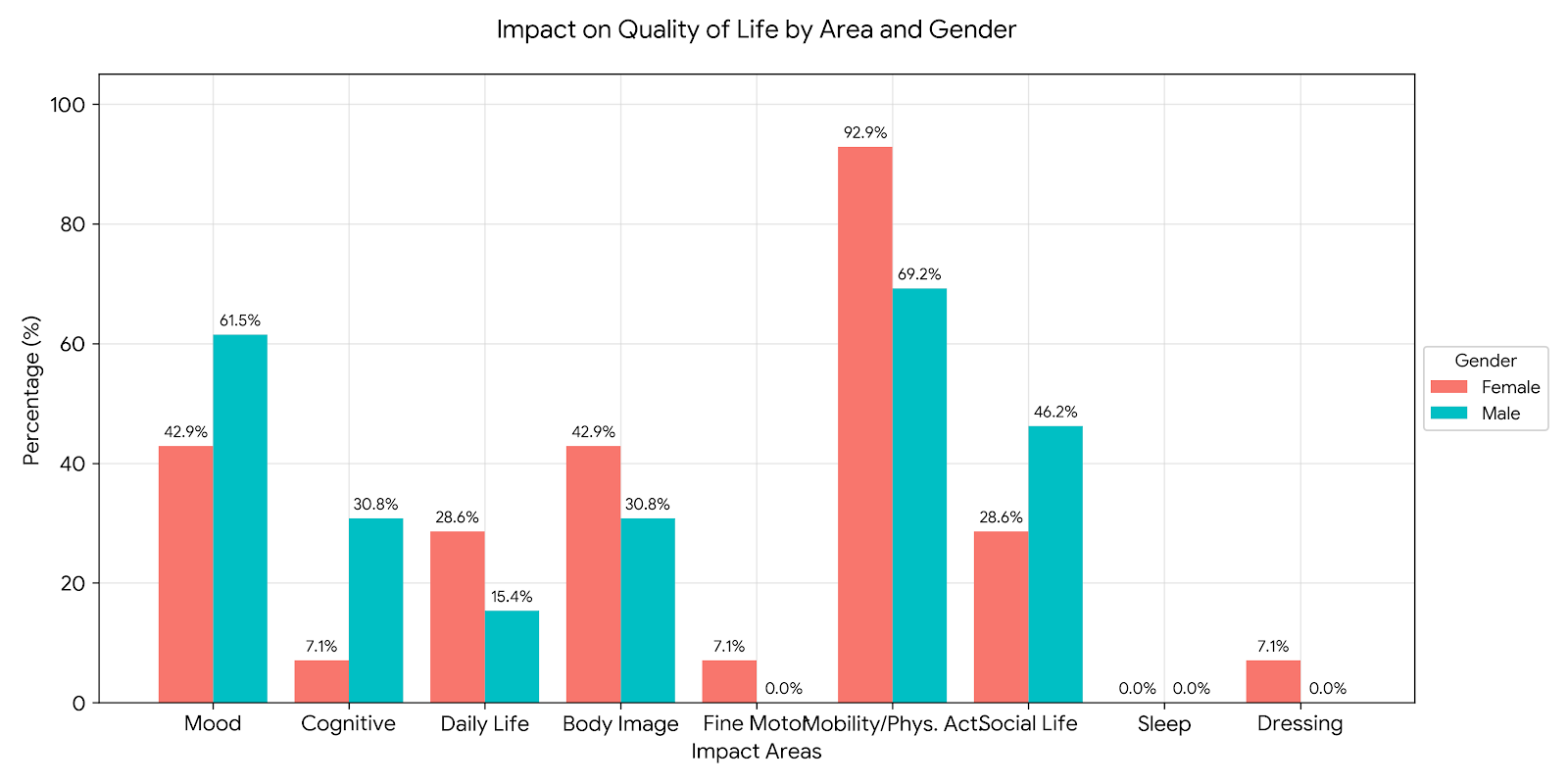
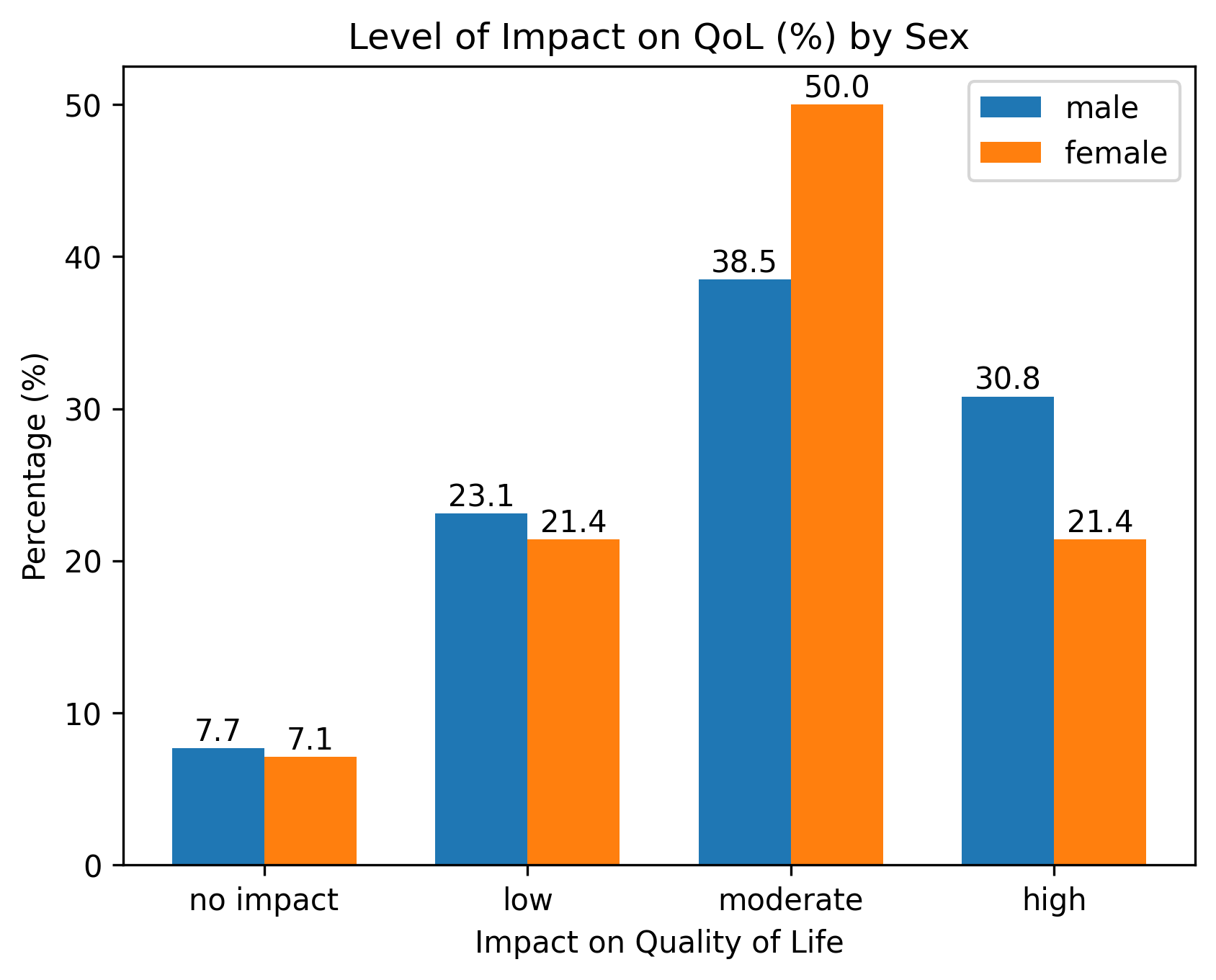
Overall, 77.1% of patients reported an impact on quality of life, with no significant sex differences in frequency, severity, or affected domains.
Conclusion: In patients with Parkinson’s disease, no significant sex differences were observed in age at diagnosis, motor symptom progression, or treatment response. However, men reported a higher frequency of sexual dysfunction, while women perceived a more favorable clinical evolution. Most patients of both sexes experienced a negative impact on quality of life, highlighting the need for more individualized and sex-informed approaches to PD management.
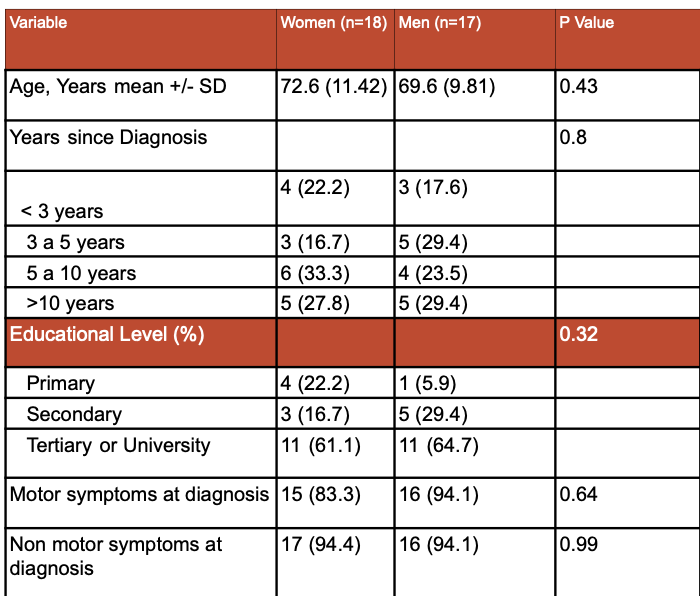
Table 2
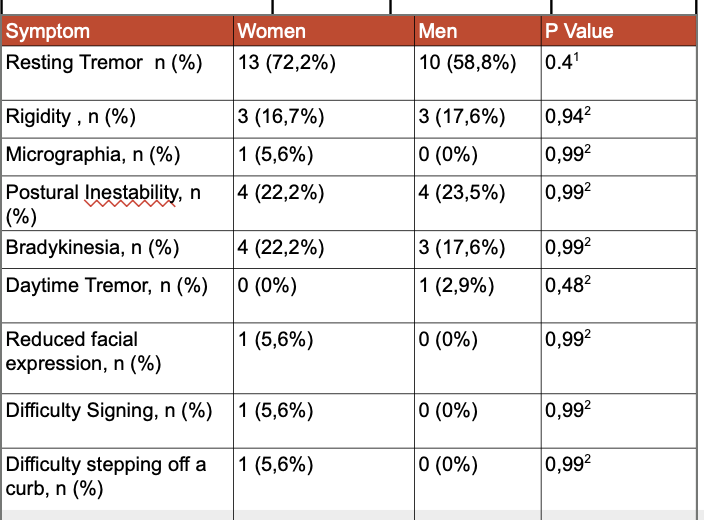
Table 1
Graph 1
Graph 2
References: 1) Raheel K, Deegan G, Di Giulio I, Cash D, Ilic K, Gnoni V, et al. Sex differences in alpha-synucleinopathies: a systematic review. Front Neurol. 2023;14:1204104. doi:10.3389/fneur.2023
2) Maas BR, Göttgens I, Tijsse Klasen HPS, Kapelle WM, Radder DLM, Bloem BR, et al. Age and gender differences in non-motor symptoms in people with Parkinson’s disease. Front Neurol. 2024;15:
3) Göttgens I, Darweesh SKL, Bloem BR, Oertelt-Prigione S. The impact of multiple gender dimensions on health-related quality of life in persons with Parkinson’s disease: an exploratory study. J Neurol. 2022;269(11):5963–72
To cite this abstract in AMA style:
R. Sanjinez, J. Bestoso. Sex Related Differences in Parkinsons Disease Motor and Non Motor Features Treatment Response and Quality of Life [abstract]. Mov Disord. 2026; 41 (suppl 1). https://www.mdsabstracts.org/abstract/sex-related-differences-in-parkinsons-disease-motor-and-non-motor-features-treatment-response-and-quality-of-life/. Accessed October 1, 2026.« Back to 2026 International Congress
MDS Abstracts - https://www.mdsabstracts.org/abstract/sex-related-differences-in-parkinsons-disease-motor-and-non-motor-features-treatment-response-and-quality-of-life/