
Objective: We aimed to investigate social cognition in patients with Parkinson’s disease (PD) using facial affect tasks of the Florida Affect Battery (FAB).
Background: Patients with PD often have masked faces that impair social communication. They also frequently experience emotional-processing impairments. Some research suggests that pain empathy deficits in PD. However, the preservation of social cognition in PD patients and its relationship with other cognitive domains remain unclear.
Method: Patients with PD who underwent the Seoul Neuropsychological Screening Battery II (SNSB-II) within the past year were enrolled. They were assessed with the Korean version of the FAB, a tool designed to evaluate the ability to recognize and interpret emotions in others, especially through nonverbal signals. The study focused on facial affect tasks, which include five subtests: facial identity discrimination, facial affect discrimination, facial affect naming, facial affect selection, and facial affect matching.
Results: A total of sixteen patients were enrolled: cognitively preserved (N=4), with mild cognitive impairment (MCI) (N=10), and with dementia (N=2). The mean (SD) age was 69.06 (7.13) years, the disease duration was 3.79 (2.27) years, and the education period was 9.63 (5.25) years. Patients with PD generally showed impairments in facial affect tasks, with facial affect matching being the most affected. Those with PD dementia exhibited particularly severe deficits in facial affect naming, selection, and matching. Errors were more frequent in negative emotions, especially sadness (n=19) and anger (n=11), in facial affect naming. Similarly, in facial affect matching, sadness (n=24) and anger (n=20) were also more impaired.
Conclusion: Patients with PD show impairments in facial affect recognition even in normal or MCI stages. Although this study involved a small sample, it highlights the presence of social cognition deficits in PD and underscores the need for further research in this area.
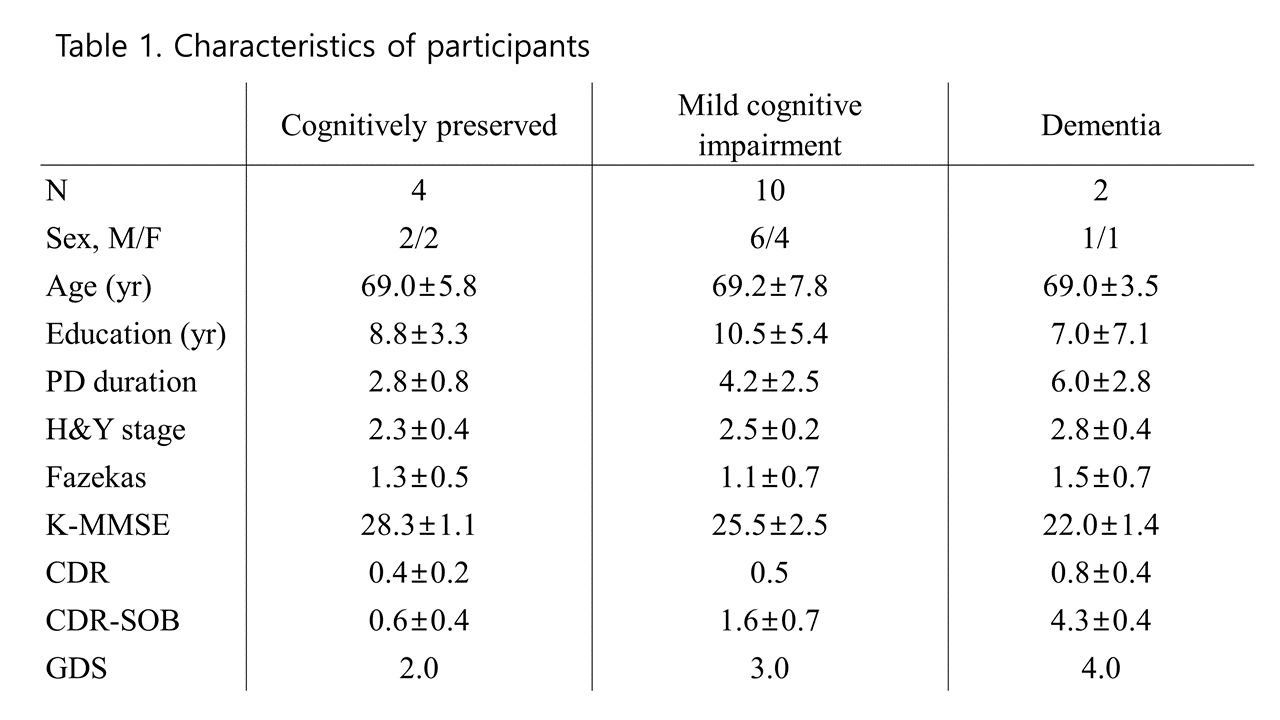
Table 1. Characteristics of participants
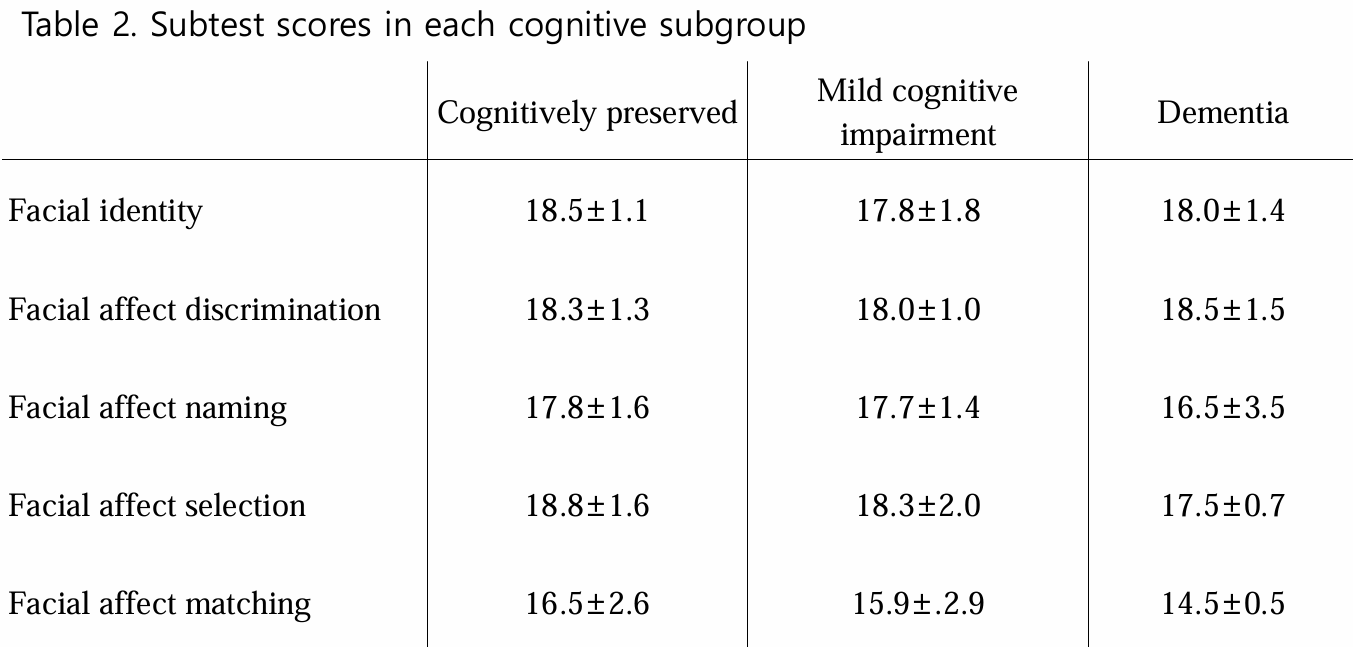
Table 2. Subset scores in each cognitive subgroup
To cite this abstract in AMA style:
A. Kim, M. Kim. Social Cognition in Patients with Parkinson’s Disease [abstract]. Mov Disord. 2026; 41 (suppl 1). https://www.mdsabstracts.org/abstract/social-cognition-in-patients-with-parkinsons-disease/. Accessed October 1, 2026.« Back to 2026 International Congress
MDS Abstracts - https://www.mdsabstracts.org/abstract/social-cognition-in-patients-with-parkinsons-disease/