
Category: Myoclonus/Tics/Stereotypies
Objective: To characterize brain network abnormalities and gene-imaging associations in genetically confirmed FCMTE1 (SAMD12) patients using multimodal MRI.
Background: Familial cortical myoclonic tremor with epilepsy type 1 (FCMTE1) is caused by intronic pentanucleotide repeat expansion in SAMD12. Beyond cortical hyperexcitability, the network mechanism underlying tremor and photosensitivity remains poorly defined.
Method: Thirty-seven genetically confirmed FCMTE1 patients and 50 matched healthy controls underwent 3T multimodal MRI (T1-weighted, resting-state fMRI, diffusion tensor imaging). Surface-based morphometry quantified cortical thickness. Fractional amplitude of low-frequency fluctuations (fALFF) assessed regional activity. Thalamic seed-based functional connectivity (FC) and network-based statistic (NBS) analysis examined circuit and whole-brain network alterations. SAMD12 total repeat expansion length was determined via long-range PCR and PacBio long-read sequencing.
Results: Patients showed significant cortical thinning in left precentral gyrus, negatively correlated with tremor duration (r=-0.31, p=0.048)[figure1]. fALFF was increased in left thalamus and calcarine cortex[figure2]. Thalamic seed-based FC revealed a characteristic input-output decoupling pattern: enhanced connectivity with cerebellum Crus I and occipital pole, but reduced connectivity with bilateral precentral gyri[figure2]. NBS identified two hyperconnected subnetworks: Network 1 (cerebellum-thalamus-cortical network) correlated with tremor severity (r=0.42, p=0.004); Network 2 (visual-cerebellar-sensorimotor) correlated with photoparoxysmal response grade (r=0.38, p=0.011)[figure 3]. Critically, SAMD12 total repeat expansion length was negatively correlated with thalamo-precentral FC strength (r=-0.45, p=0.006).
Conclusion: These findings support FCMTE1 as a thalamus-centered network disorder rather than a purely cortical hyperexcitability syndrome. The dose-dependent association between SAMD12 repeat length and thalamo-motor connectivity provides the first direct link between genetic burden and circuit dysfunction in FCMTE1.
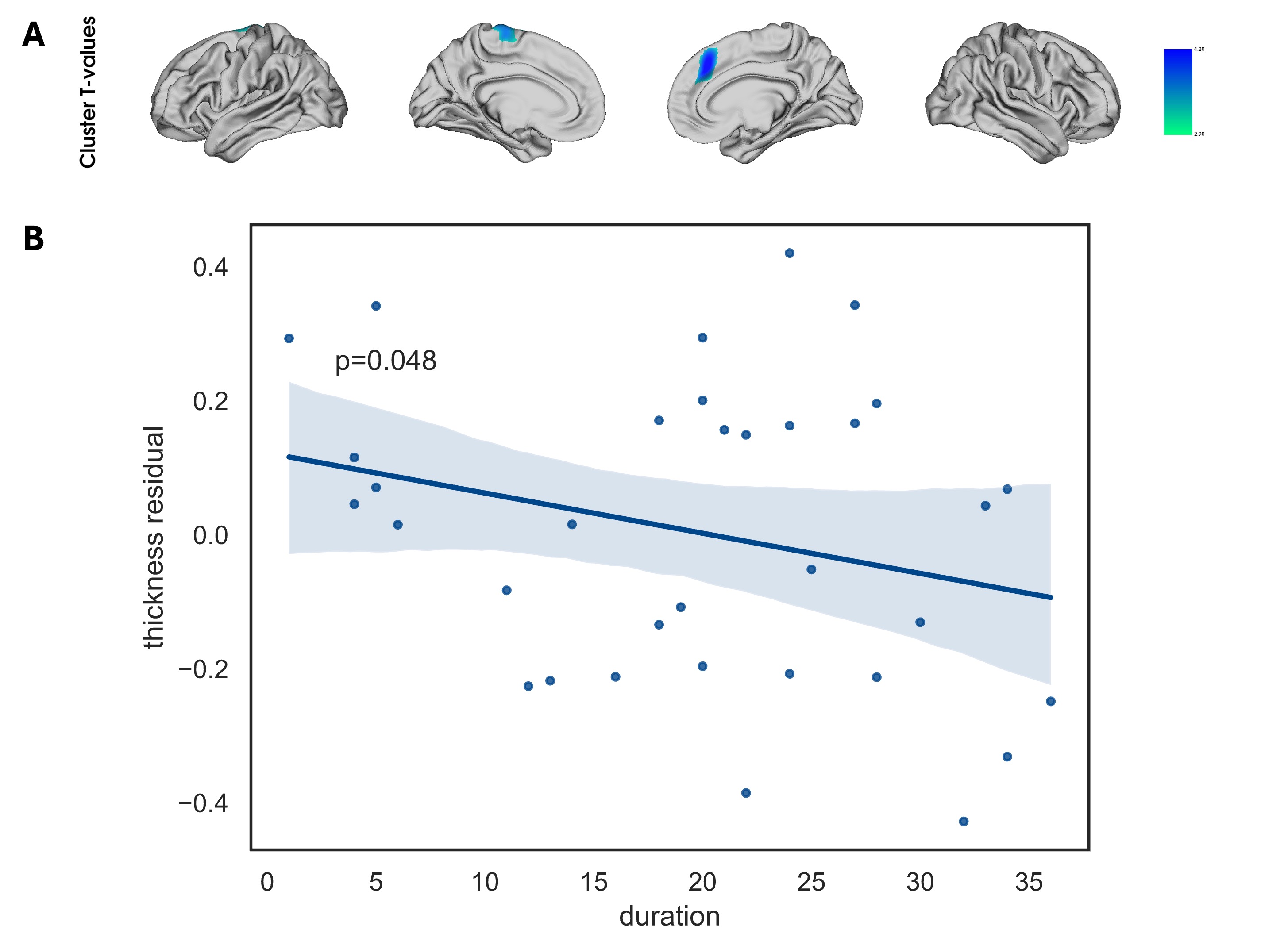
figure1
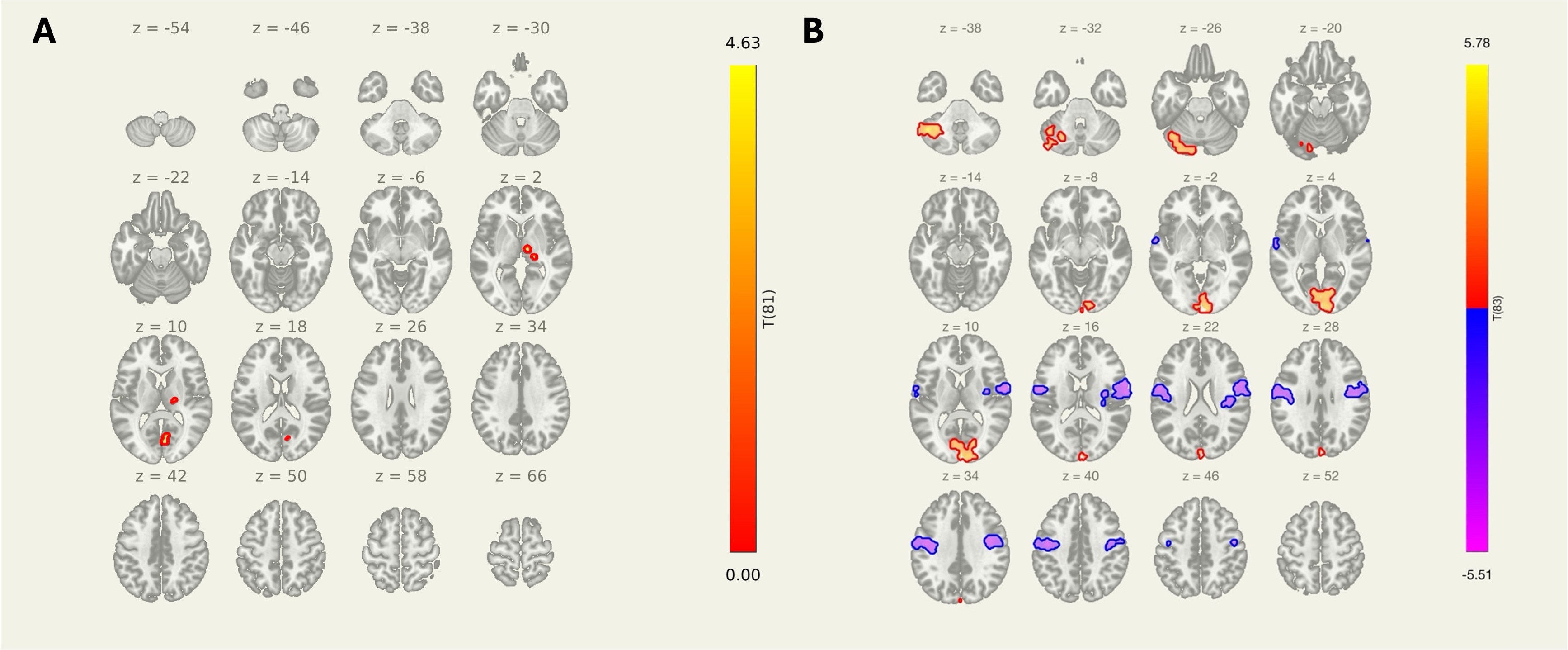
figure2
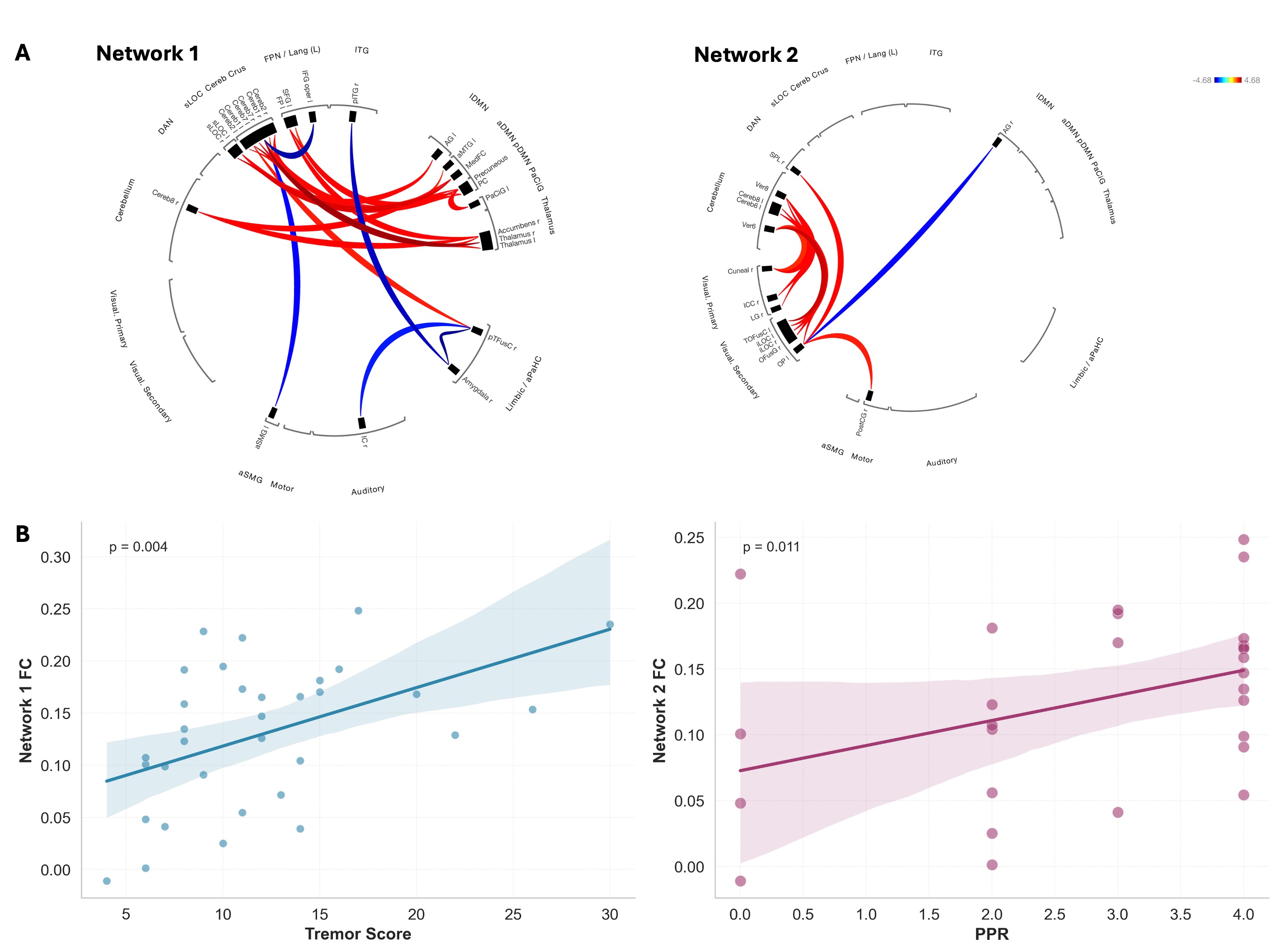
figure3
To cite this abstract in AMA style:
JX. Li, HT. Wang, B. Wang, W. Luo. Thalamic Hub Dysregulation in FCMTE1: Multimodal MRI and Gene-Imaging Evidence [abstract]. Mov Disord. 2026; 41 (suppl 1). https://www.mdsabstracts.org/abstract/thalamic-hub-dysregulation-in-fcmte1-multimodal-mri-and-gene-imaging-evidence/. Accessed October 1, 2026.« Back to 2026 International Congress
MDS Abstracts - https://www.mdsabstracts.org/abstract/thalamic-hub-dysregulation-in-fcmte1-multimodal-mri-and-gene-imaging-evidence/