
Objective: To explore the effects of bright light therapy (BLT) on improving sleep disorders in Parkinson‘s disease (PD).
Background: Sleep disorders are common clinical symptoms in PD patients. Current therapeutic options are limited, primarily relying on pharmacological interventions with side effects or insufficient efficacy. BLT has been reported to ameliorate sleep disturbances in PD, but the underlying mechanisms remain unclear.
Method: (1) The PD mouse model was established by stereotaxic unilateral injection of 6-OHDA (9 μg/μL, 0.5 μL) into the medial forebrain bundle.
(2) At 1, 2, and 3 weeks post-injection, 24-hour continuous EEG/EMG monitoring was performed to analyze sleep characteristics, including durations of Wake, NREM, and REM sleep, sleep structure, and power spectra.
(3) PD mice then received 2-week BLT (3000 lux, 2 h/day), and changes in sleep-wake behavior were analyzed.
Results: (1) Sleep monitoring revealed that 6-OHDA mice exhibited increased Wake duration and decreased NREM sleep duration during the inactive phase (light period) at 1-3 weeks post-lesion, particularly concentrated during 8:00-10:00 AM, compared to controls. The 6-OHDA group also showed significantly increased NREM-Wake transition numbers during the inactive phase, increased number of short Wake bouts, and decreased mean NREM bout duration, indicating significant sleep fragmentation (Figure 1-2).
(2) Daily 2-hour (8:00-10:00 AM) BLT at 3000 lux for 2 weeks significantly ameliorated these sleep-wake disturbances. After BLT, 6-OHDA mice showed reduced Wake duration and increased NREM sleep during the inactive phase, significantly decreased NREM-Wake transition numbers, reduced short Wake bouts, and increased mean NREM bout duration, indicating significant amelioration of sleep fragmentation (Figure 3-4).
Conclusion: 6-OHDA-induced PD mice exhibit significant NREM sleep disturbances and sleep fragmentation. Two-week BLT significantly ameliorates these disturbances, supporting its potential as a non-invasive therapy.
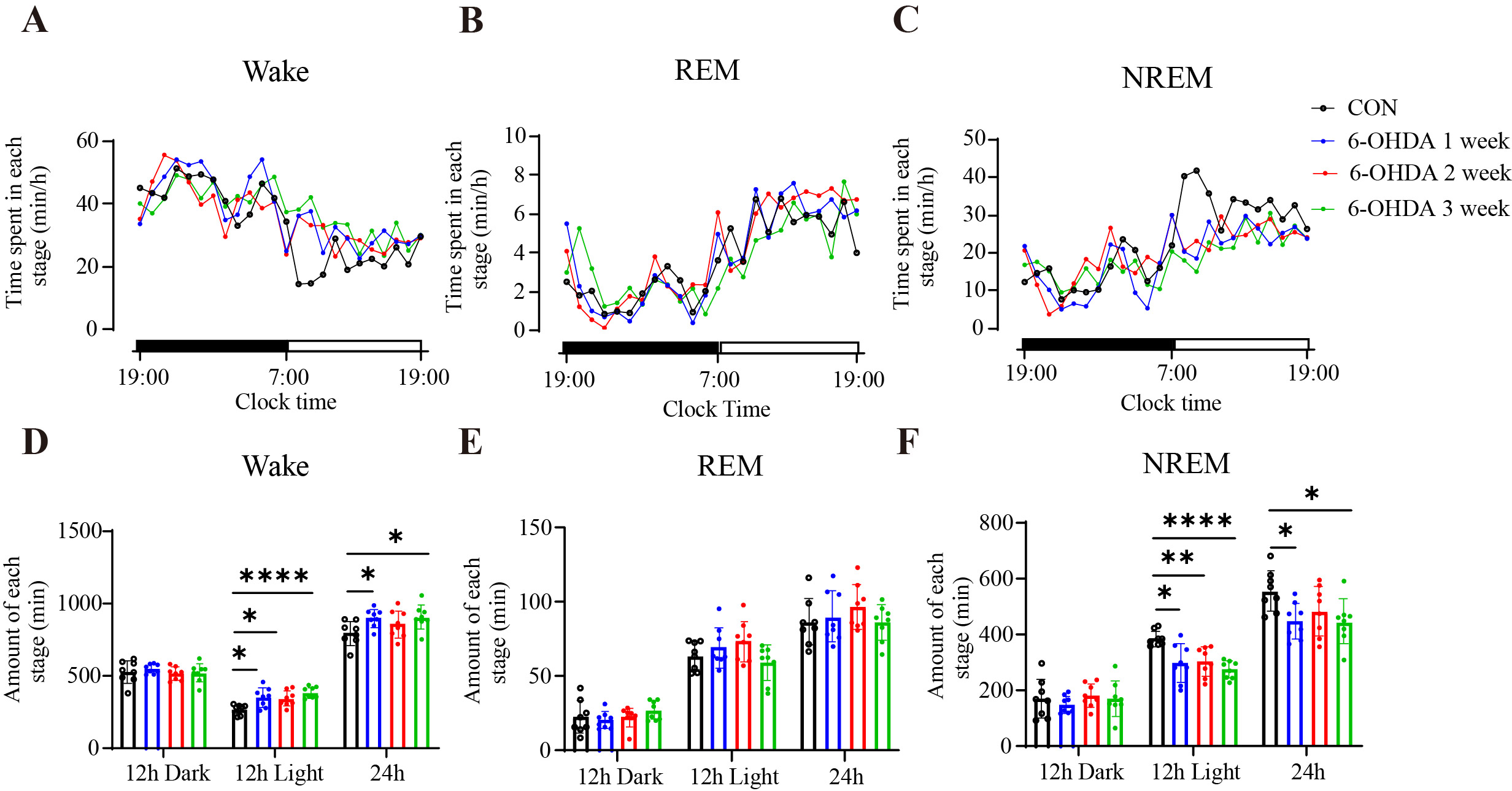
Figure1
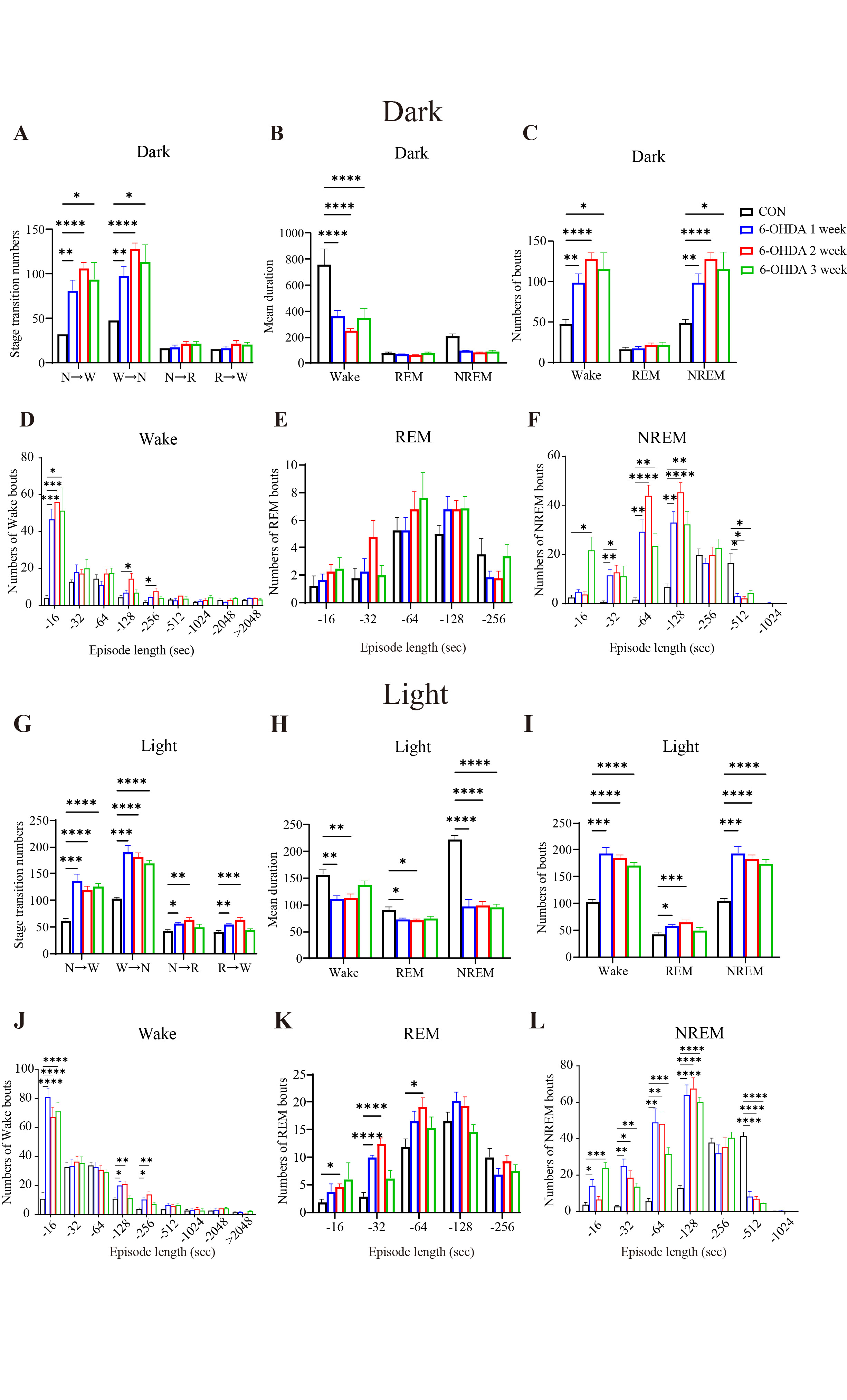
Figure2
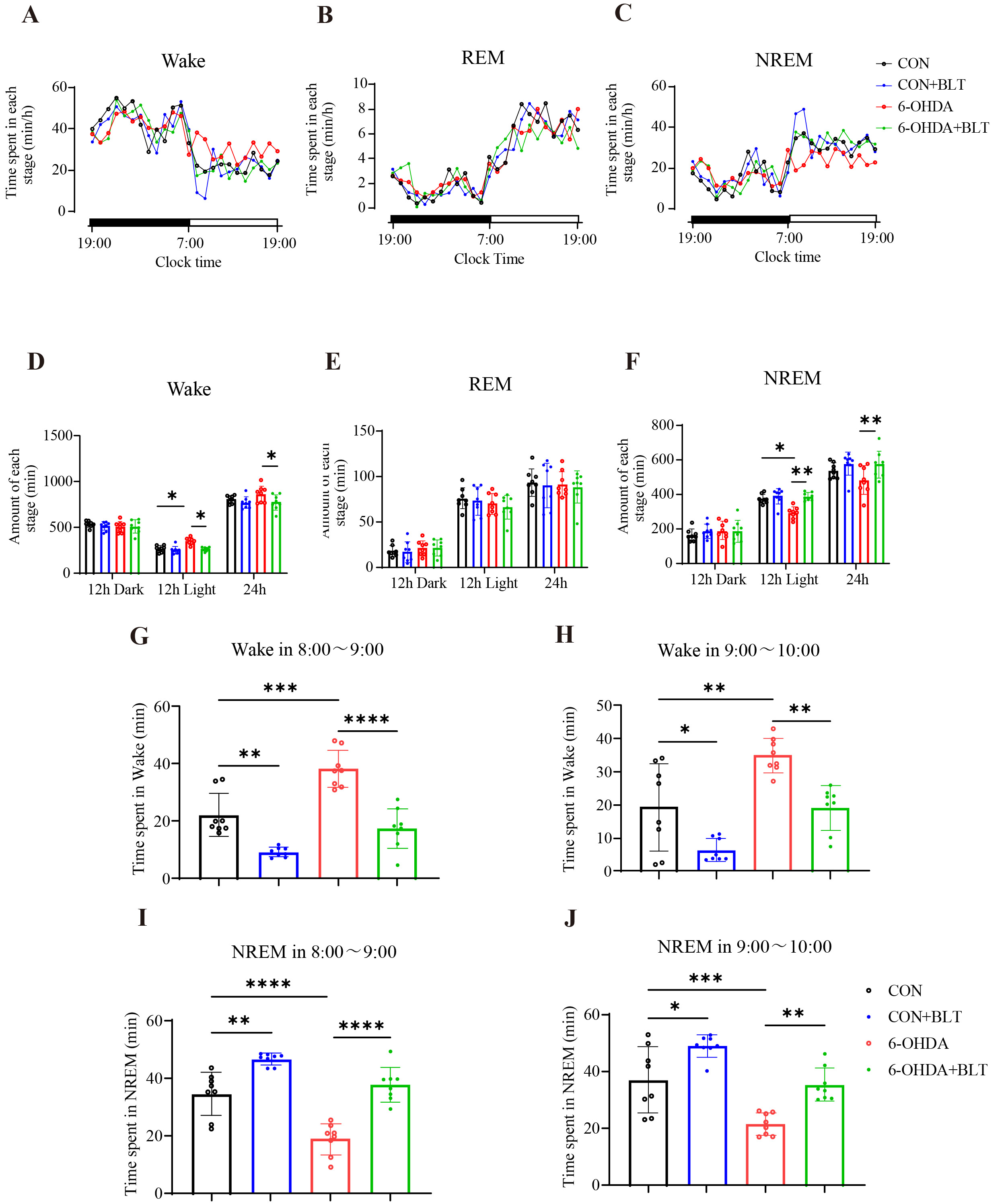
Figure3
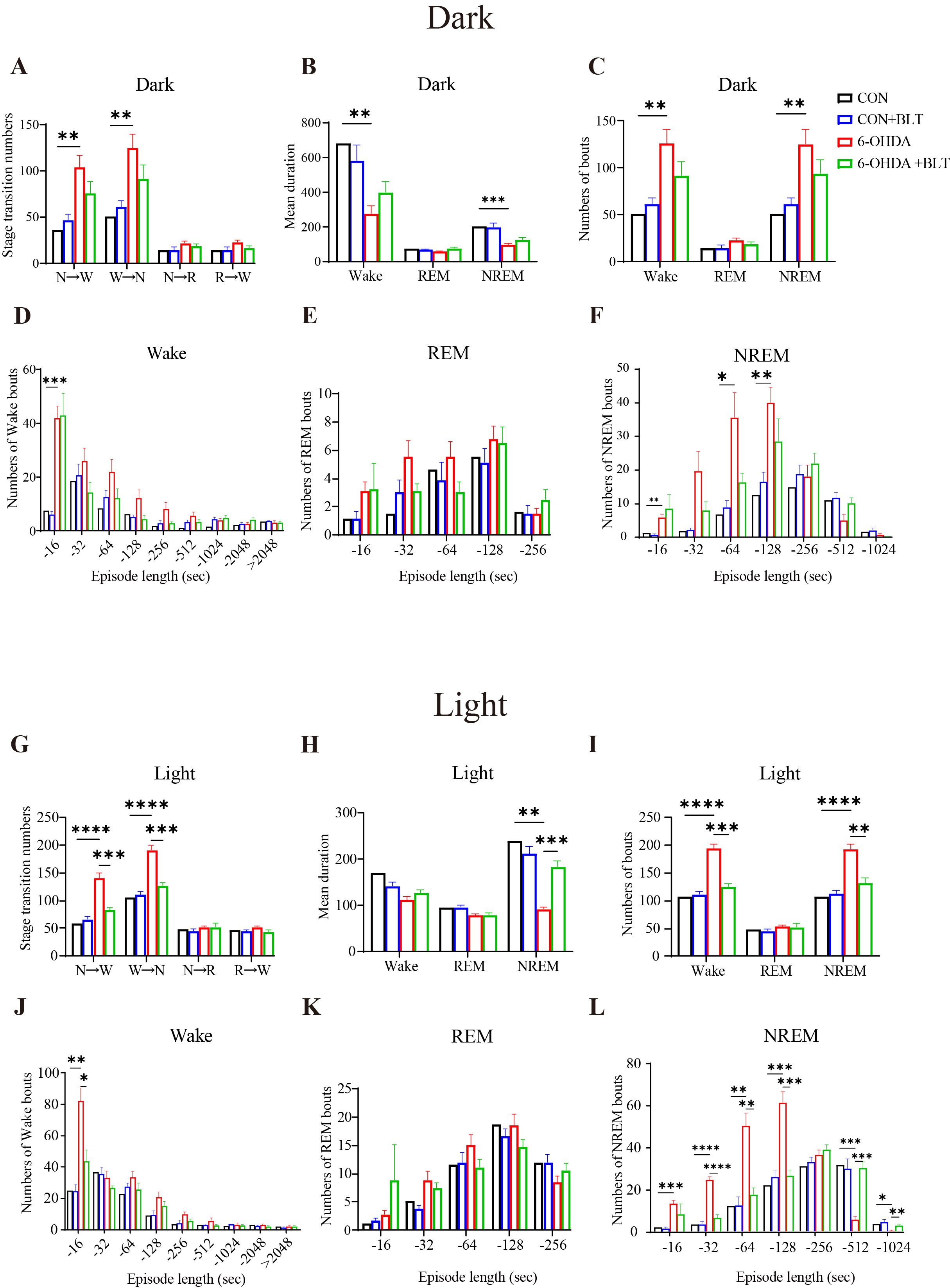
Figure4
To cite this abstract in AMA style:
WY. Xie, JM. Duan, WX. Duan, Y. Chen, F. Wang, Y. Shen, CF. Liu. The Effects of Bright Light Therapy on Improving Sleep Disorders in Parkinson’s Disease [abstract]. Mov Disord. 2026; 41 (suppl 1). https://www.mdsabstracts.org/abstract/the-effects-of-bright-light-therapy-on-improving-sleep-disorders-in-parkinsons-disease/. Accessed October 1, 2026.« Back to 2026 International Congress
MDS Abstracts - https://www.mdsabstracts.org/abstract/the-effects-of-bright-light-therapy-on-improving-sleep-disorders-in-parkinsons-disease/