
Objective: To investigate the toxicological and epidemiologic perspective on pesticide exposure in Parkinson’s Disease in an exceptional region.
Background: In most lower income countries (LIC) such as in Sub Saharan Africa (SSA), agriculture is the mainstay of survival. A majority of subsistence farmers have made a living working the fields since childhood. On the African continent pesticides have been promoted as a means of acquiring economic independence through autarky and local trade. Coupled with aging, it may mean a cohort of rural people with PD (PWP) have potentially been exposed to pesticides by ingestion, inhalation and dermal contact for almost a lifetime.
Method: A door-to-door prevalence study on PD was carried out in Hai District on the slopes of Mt. Kilimanjaro, Northern Tanzania . PWP’s professions during their working years were recorded and a selection was made of farmer versus other professions. In-depth and intimate qualitative interviews were conducted in Swahili by a senior clinical neurologist together with a state toxicologist specialising in pesticide exposure. Characteristics of patients and selected narrative vignettes were constructed.
Results: The survey [area depicted in Figure 1] yielded 43 patients most of whom (almost 80%) were newly diagnosed. Demographic and clinical characteristics are mentioned in Table 1. Farmers were the majority of patients (86%) and other main professions were businessperson and driver. Ten patients underwent in-depth interviews (6 farmers and 4 non-farmers). Almost all patients identified themselves as mkulima (farmer) even alongside possible other breadwinning activities. A history of pesticide exposure since childhood was reported by 70% of patients who tended to underestimate the extent of exposure mostly due to lack of education on pesticide hazards. Representative narrative vignettes are collated in Figure 2.
Conclusion: Most identified PWP in our study were newly diagnosed, and under report a lifelong exposure to pesticides. A majority of ageing individuals in SSA have likely been exposed to pesticides since youth, possibly predisposing them to PD. Although naturally a rural region will harbour more farmers than non-farmers, most have been exposed to pesticides for several decades which makes it difficult to classify pesticide exposure in the present.
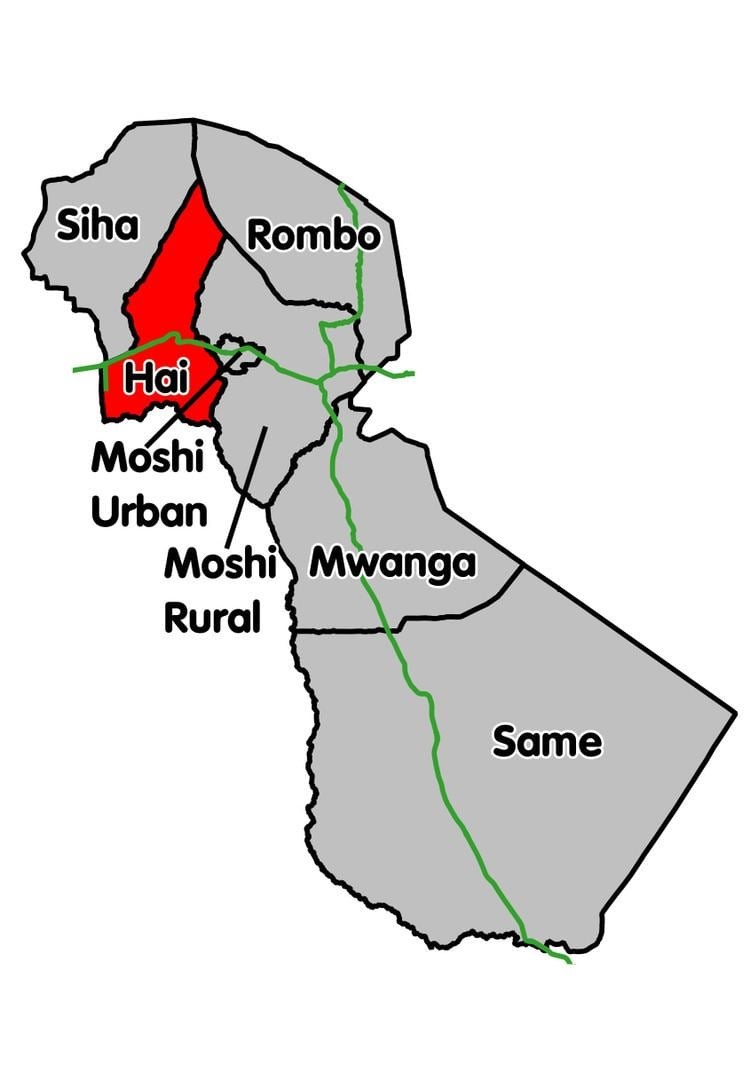
Figure 1: Hai District map
To cite this abstract in AMA style:
S. Urasa, R. Mwezi, M. Dekker. Toxic narratives: Farmers with Parkinson’s Disease in the foothills of Kilimanjaro [abstract]. Mov Disord. 2026; 41 (suppl 1). https://www.mdsabstracts.org/abstract/toxic-narratives-farmers-with-parkinsons-disease-in-the-foothills-of-kilimanjaro/. Accessed October 1, 2026.« Back to 2026 International Congress
MDS Abstracts - https://www.mdsabstracts.org/abstract/toxic-narratives-farmers-with-parkinsons-disease-in-the-foothills-of-kilimanjaro/