
Objective: To characterize treatment patterns and access to antiparkinsonian medications among patients with Parkinson’s disease (PD) in Kyrgyzstan.
Background: Access to treatment for PD remains limited in many low- and middle-income countries. Data describing treatment patterns and medication availability in Central Asia are scarce.
Method: We conducted a cross-sectional analysis of clinical records of 300 patients with clinically diagnosed PD enrolled in the Kyrgyz PD database between January 2024 and December 2025. Patients were categorized as urban (Bishkek and Osh) or rural (other regions). Medication use at the initial visit was extracted from clinical records. Levodopa equivalent daily dose (LEDD) was calculated using established conversion formulas. Baseline clinical characteristics and medication use are summarized in Tables 1 and 2.
Results: Mean age of patients was 64.7 ± 9.7 years, and mean age at onset was 58.5 ± 10.6 years; 59.3% lived in rural regions. The mean LEDD was 451.5 ± 324.0 mg/day, increasing with disease duration (Figure 1). Levodopa was the most commonly used therapy (73.7%). Notably, 79 of 300 patients (26.3%) were levodopa-naïve at the time of the initial visit (Table 3). Pramipexole was the most frequently used dopamine agonist (23.3%). Anticholinergic medications were used in 20.7% of patients and were more common in rural regions. The distribution of therapies and medication availability is shown in Figure 2.
Conclusion: Although levodopa remains the cornerstone of PD therapy in Kyrgyzstan, more than one quarter of patients were levodopa-naïve at presentation, anticholinergic use remained common, and access to advanced PD therapies appears limited.
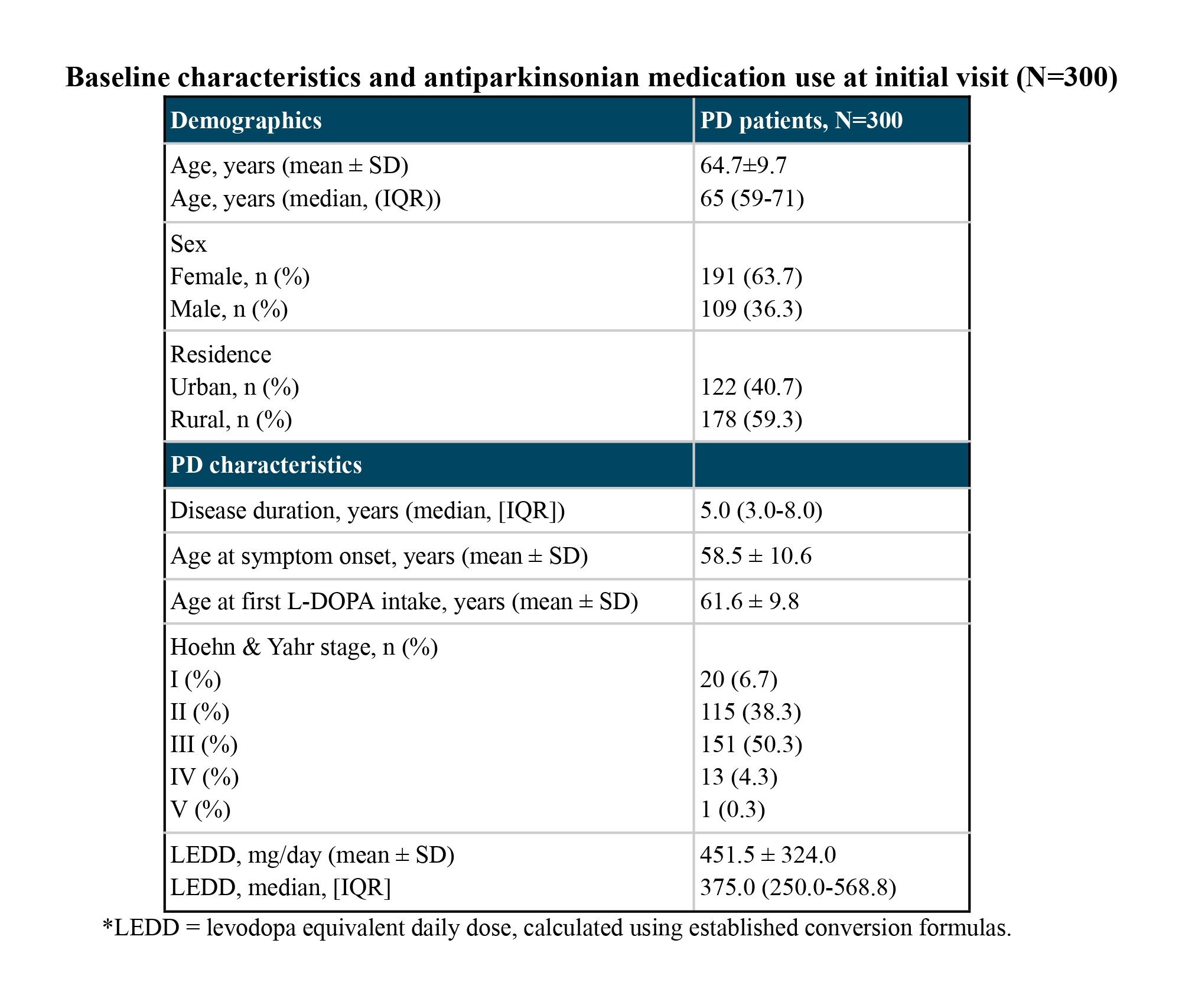
Table 1
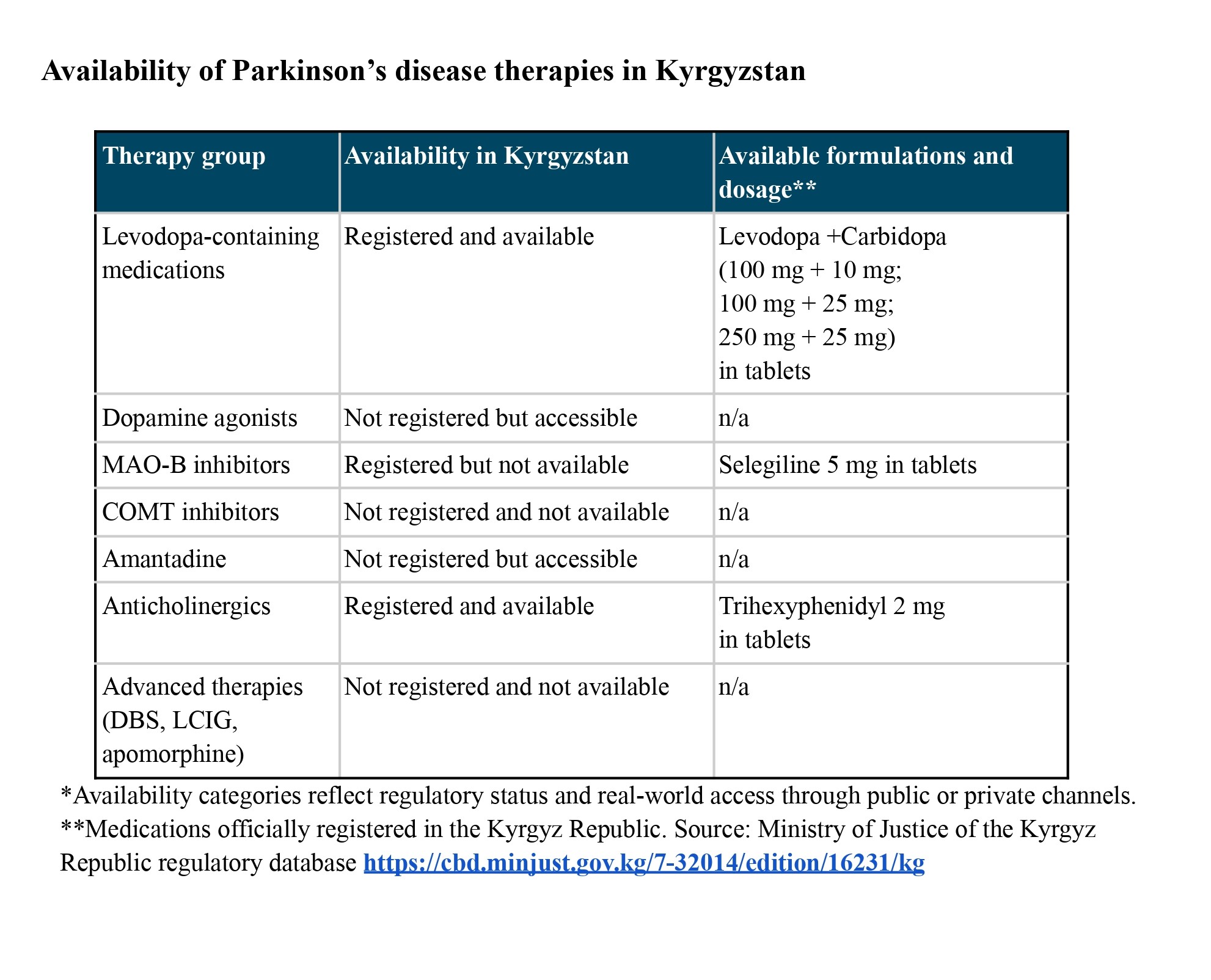
Table 2.
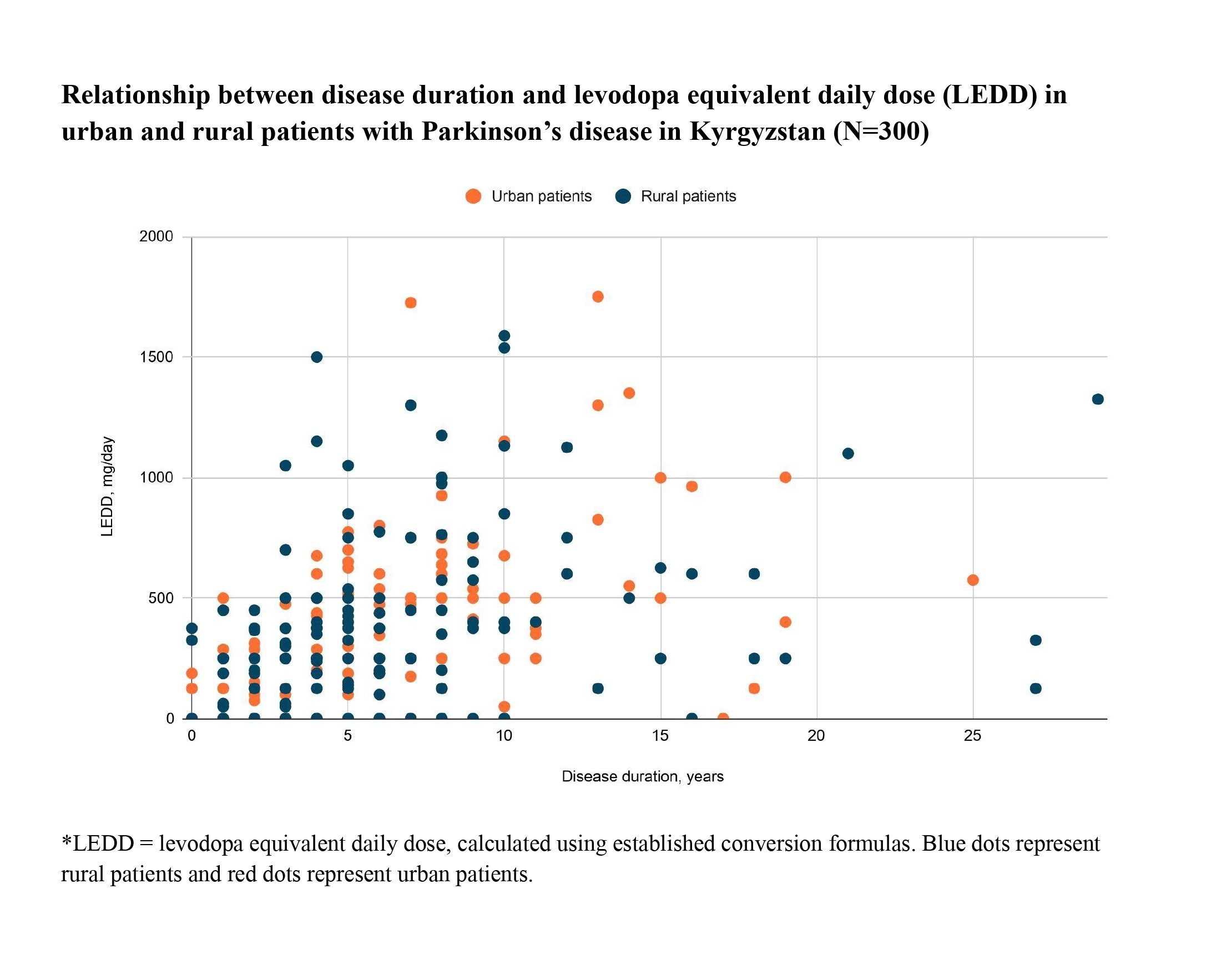
Figure 1.
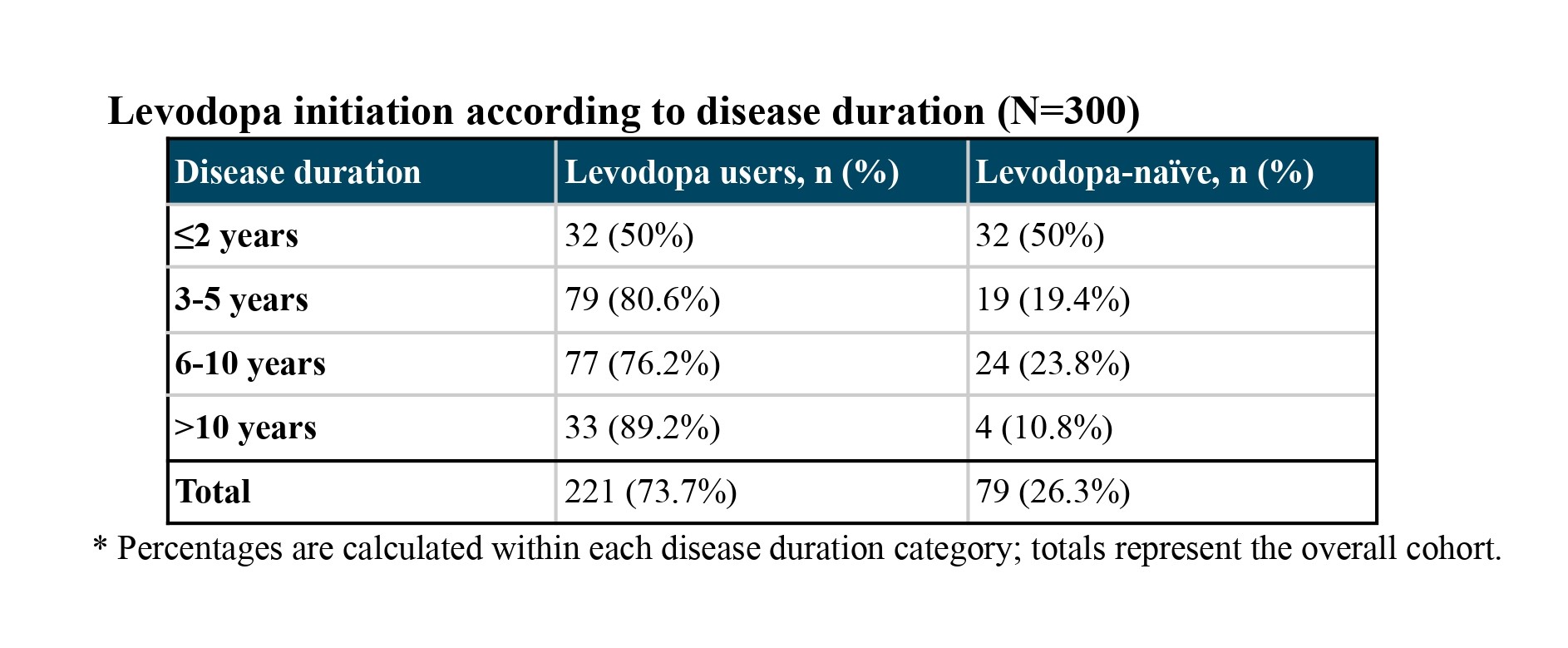
Table 3.
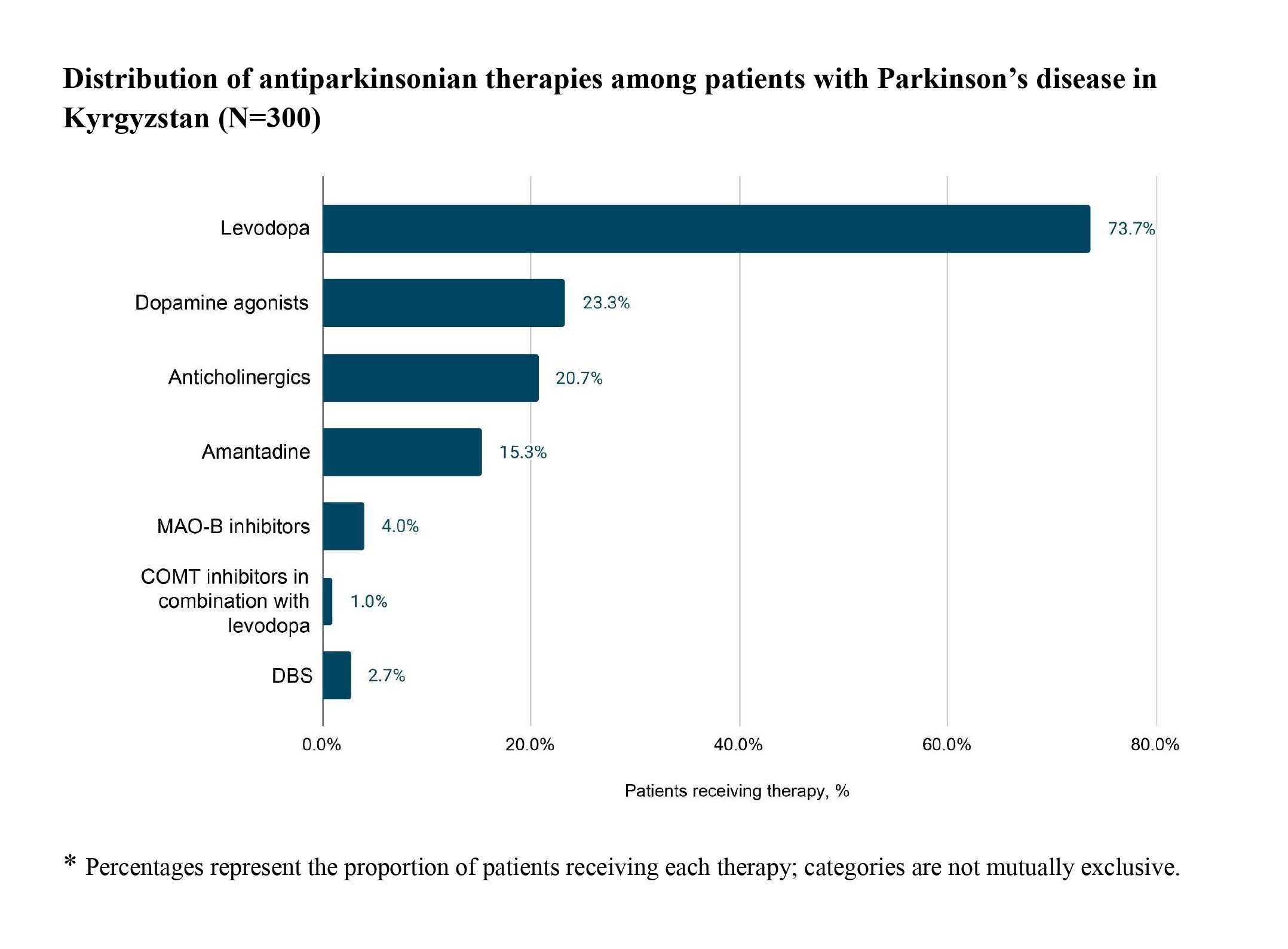
Figure 2.
To cite this abstract in AMA style:
E. Zhunusova, S. Kyialbekova, C. Shambetova. Treatment Patterns in Parkinson’s Disease in Kyrgyzstan: Evidence from a Kyrgyz PD Cohort [abstract]. Mov Disord. 2026; 41 (suppl 1). https://www.mdsabstracts.org/abstract/treatment-patterns-in-parkinsons-disease-in-kyrgyzstan-evidence-from-a-kyrgyz-pd-cohort/. Accessed October 1, 2026.« Back to 2026 International Congress
MDS Abstracts - https://www.mdsabstracts.org/abstract/treatment-patterns-in-parkinsons-disease-in-kyrgyzstan-evidence-from-a-kyrgyz-pd-cohort/