
Category: Dystonia: Genetics
Objective: To identify genomic alterations that are over-represented in the Indian dystonia cohort using gene burden analysis of rare variants.
Background: Dystonia is a complex movement disorder with heterogeneous genetic causes. Traditional single-variant analysis may miss the cumulative contribution of rare variants. Gene burden analysis that evaluates the cumulative effect of rare, potentially pathogenic variants may be of utility in uncovering the missing heritability in dystonic syndromes.
Method: A case–control study used WES data from dystonia patients recruited through the Indian Movement Disorder Registry and Biobank(n=242) and IndiGenomes controls(n=1029).(1) Rare variants (MAF<0.0005;REVEL>0.5,indels≤50bp,LoF)were analyzed using TRAPD across ~16,630 genes(p≤3×10⁻⁶).Cohorts were stratified into all, WES-positive(n=39) and WES-negative(n=203). Additional analysis included pathway enrichment, protein-protein interaction(PPI) network analysis and gene expression assessment using the Genotype-Tissue Expression(GTEx) database.
Results: Mean age was 34.4±16.3 years,mean age at onset was 27.2±17.7 years and disease duration was 8.2±8.0 years.42.1% had early onset,67.1% were isolated,22.5% were generalised and 36.8% had positive family history.Gene burden testing identified multiple genes with significant rare variant enrichment in dystonia cases compared to the controls.(Figure1:a-c) The genes identified across the three groups showed both shared and unique patterns.Among WES negative patients WDR89(p value=3.7×10⁻5),SMC6(p value<1×10⁻16) and RBBP8(p value=1.84×10⁻9) were highly over-represented in dystonia cases compared to controls and no gene was common across all three groups.(Figure2) Pathway analysis linked TDG, SMC6, RBBP8 and ZMPSTE24 to DNA repair and genome stability.(Figure3) PPI analysis showed clusters of DNA damage response proteins,the SMC5/6 complex and relaxin/insulin signaling pathways.(Figure4) GTEx data showed expression of all eight genes in brain regions with higher expression for ZMPSTE24,RHPN2 and SMC6.(Figure5)
Conclusion: Gene burden analysis detected eight genes enriched for rare variants in dystonia cohort. There is no single uniform pathway or interaction between all the eight genes that were enriched. These genes were involved in diverse neurological and cellular processes. Further validation through functional studies to better understand their roles in dystonia.
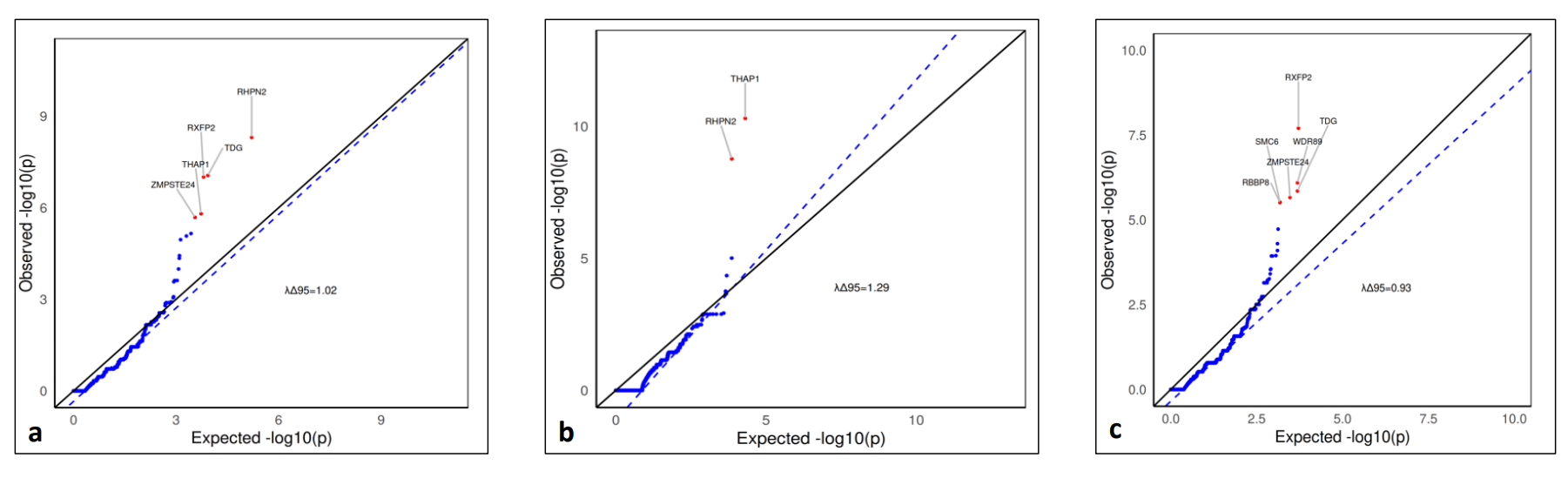
QQ plots of dystonia vs controls
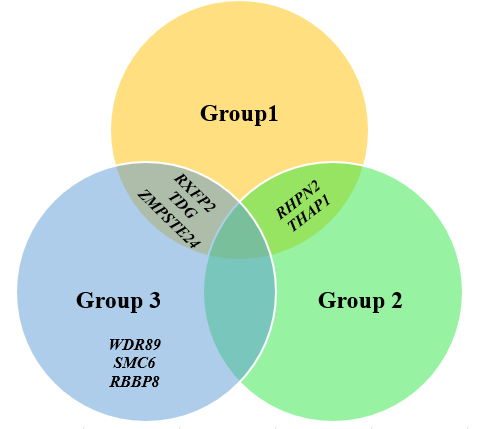
Venn diagram for Gene distribution
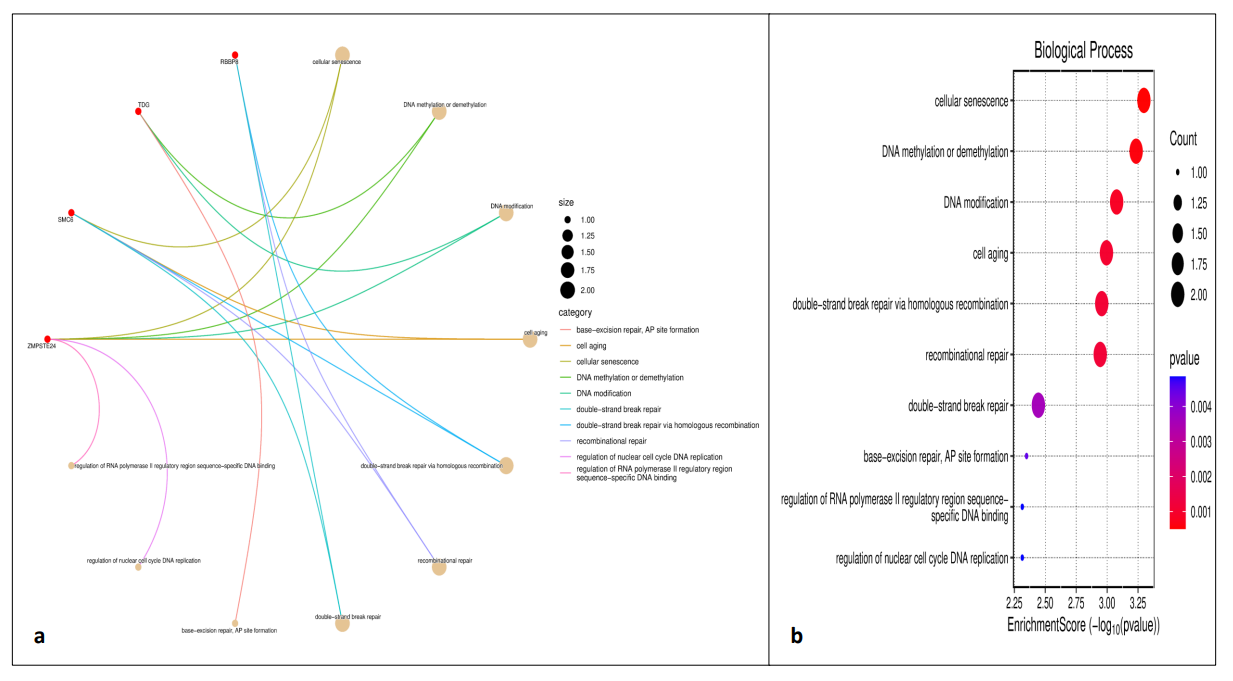
Pathway enrichment analysis: cnet and dot plots.
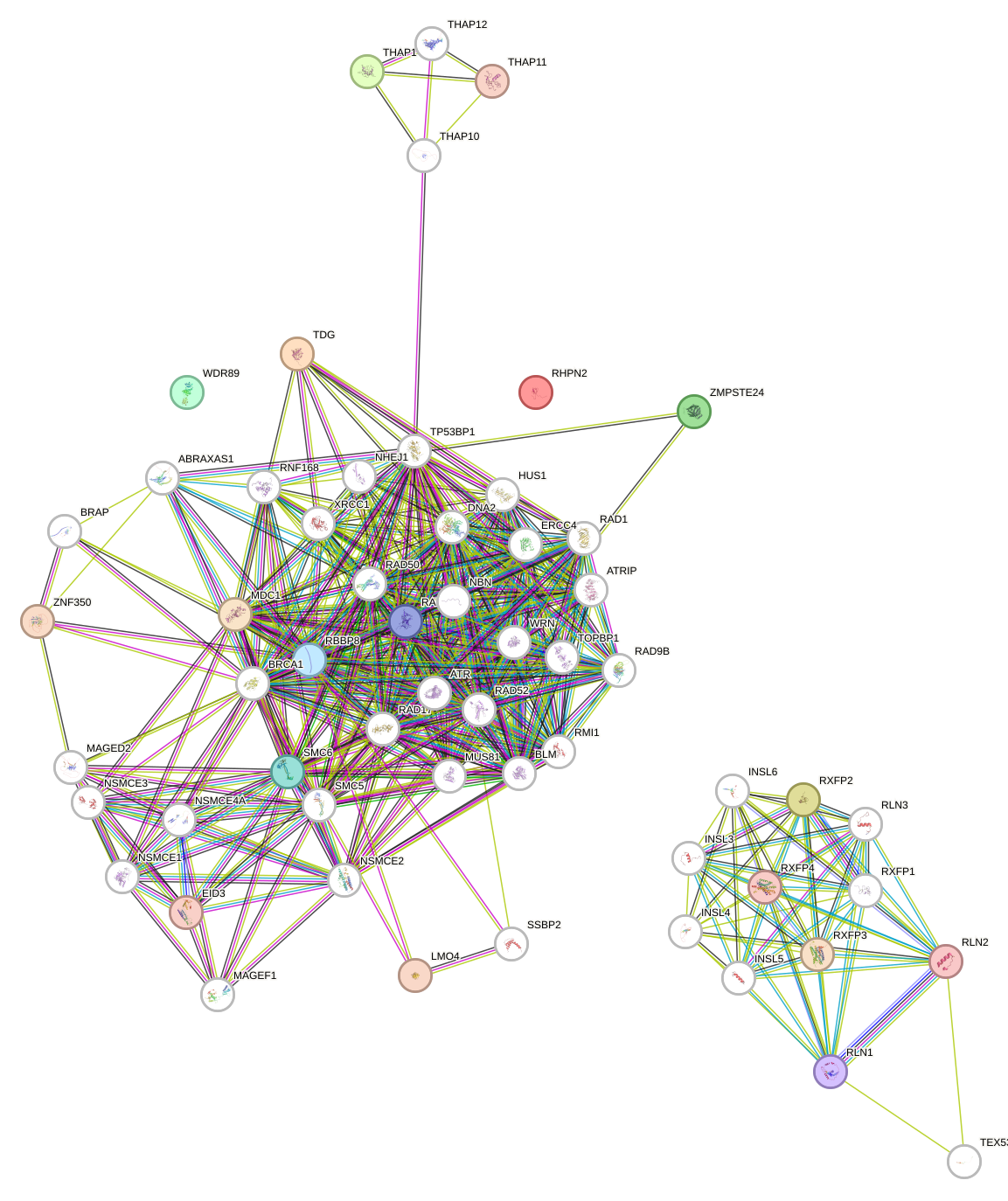
PPI network of enriched dystonia genes.
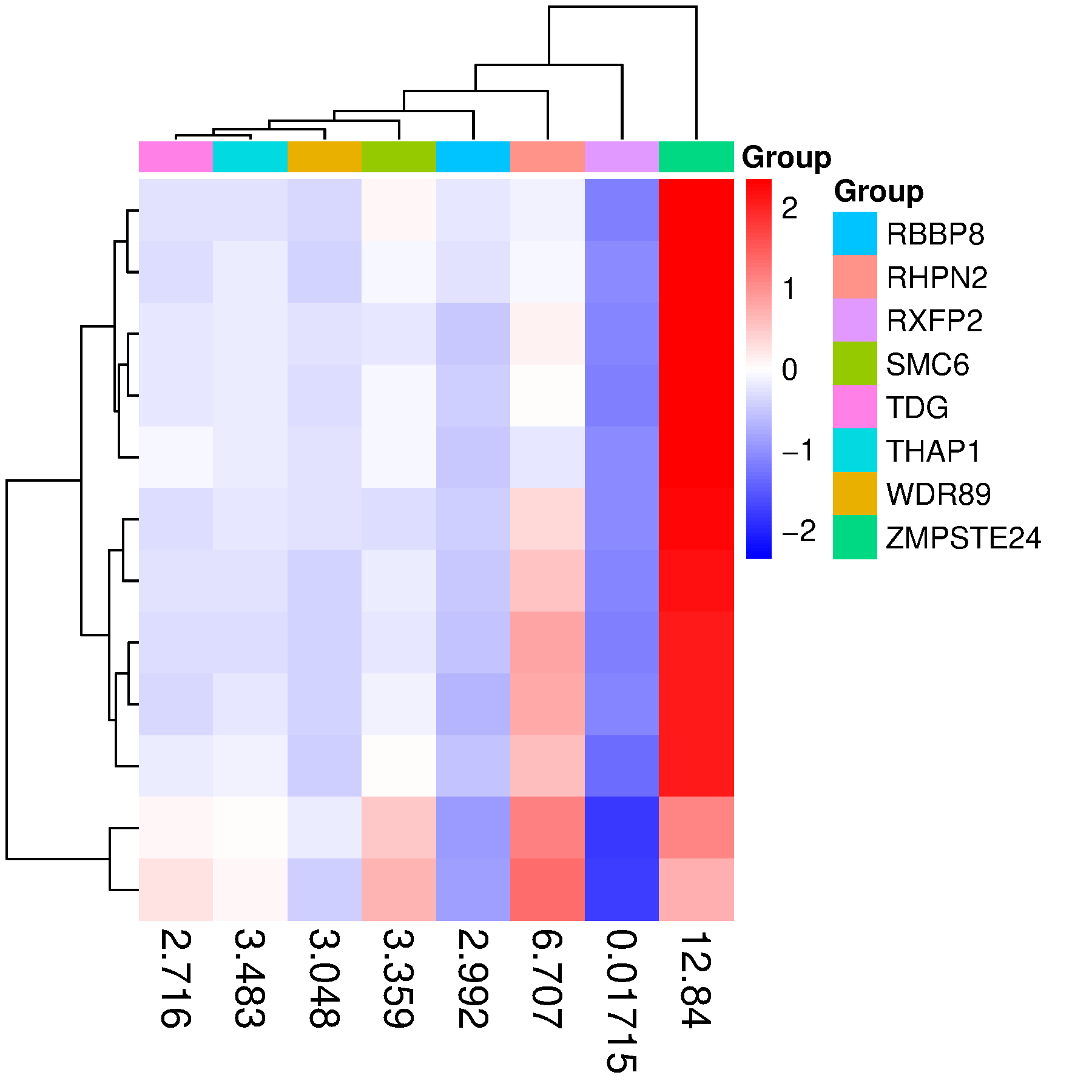
Heatmap showing TPM of candidate genes in brain.
References: 1. Jain A, Bhoyar RC, Pandhare K, Mishra A, Sharma D, Imran M, et al. IndiGenomes: a comprehensive resource of genetic variants from over 1000 Indian genomes. Nucleic Acids Res. 2021 Jan 8;49(D1):D1225–32. doi:10.1093/nar/gkaa923
Funding Source: Department of Biotechnology of India (Reference No.: BT/PR26428/MED/12/783/2017) as a part of the project title “The Indian Movement Disorder Registry and Biobank: Clinical and Genetic Evaluation of Movement Disorders in Indian Patients”.
To cite this abstract in AMA style:
A. Saini, M. Kumar, S. Sandeep, I. Singh, V. Chouhan, D. Radhakrishnan, A. Agarwal, D. Garg, A. Gupta, V. Vishnu, M. Singh, R. Bhatia, M. Faruq, A. Srivastava, B. Krishnamma, R. Rajan. Uncovering novel genomic alterations in dystonia using gene burden analysis [abstract]. Mov Disord. 2026; 41 (suppl 1). https://www.mdsabstracts.org/abstract/uncovering-novel-genomic-alterations-in-dystonia-using-gene-burden-analysis/. Accessed October 1, 2026.« Back to 2026 International Congress
MDS Abstracts - https://www.mdsabstracts.org/abstract/uncovering-novel-genomic-alterations-in-dystonia-using-gene-burden-analysis/