
Objective: To quantify parkinsonian hypomimia beyond movement amplitude using a smartphone-based facial blendshape system incorporating interaction and asymmetry features.
Background: Hypomimia is an early motor hallmark of Parkinson’s disease (PD), yet clinical assessment via MDS-UPDRS III item 3.2 remains coarse and subjective. [1][2] Existing computer vision approaches predominantly capture movement amplitude, neglecting inter-regional facial coordination and lateralized motor asymmetry.
Method: Thirty-five PD patients (mean age 61.3±8.4 years; disease duration 6.4±5.1 years) and 36 healthy controls (HC) (mean age 64.17±14.9 years) performed 52 standardized volutional facial movements using ExpressionTracker, a smartphone application enabling automated blendshape extraction. [table1] We derived 261 features across six domains: neutral, activated, delta (movement amplitude), aggregation, pairwise interaction, and asymmetry. Clinical correlations were computed against MDS-UPDRS III and Item 3.2 (Facial Expression), Hoehn&Yahr (H&Y) stage and levodopa-equivalent dose (LED). Machine learning (ML) classification used Boruta feature selection with leave-one-out cross-validation across eight algorithms for three tasks: hypomimia severity grading, H&Y staging, and PD vs. HC diagnosis.
Results: Six features robustly differentiated PD from HC: lower lip depression was reduced (delta: r_rb=−0.72; activated: r_rb=−0.57), bilateral resting brow elevation paradoxically increased (r_rb=+0.57), oro-ocular coordination was markedly disrupted (eyeWideRight × mouthLowerDownRight interaction term in delta condition: d=−0.95), and leftward perioral asymmetry was elevated (d=+0.85). [figure1] Eight features correlated with clinical severity; three interaction terms correlated with MDS-UPDRS III Facial Expression (r=−0.52 to −0.65, all p≤0.002), and brow depression correlated with H&Y stage (r=−0.56, p<0.001). [figure2] ML classification achieved AUC=0.977 (hypomimia grading), AUC=0.910 (H&Y staging), and AUC=0.814 (PD vs. HC) using ≤6 features per model. [figure3]
Conclusion: PD hypomimia encompasses disrupted oro-ocular coordination, increased facial asymmetry, and paradoxical resting brow elevation — dimensions invisible to amplitude-only approaches. Interaction and asymmetry features proved most discriminative, positioning ExpressionTracker as a sensitive, scalable digital biomarker warranting prospective validation.
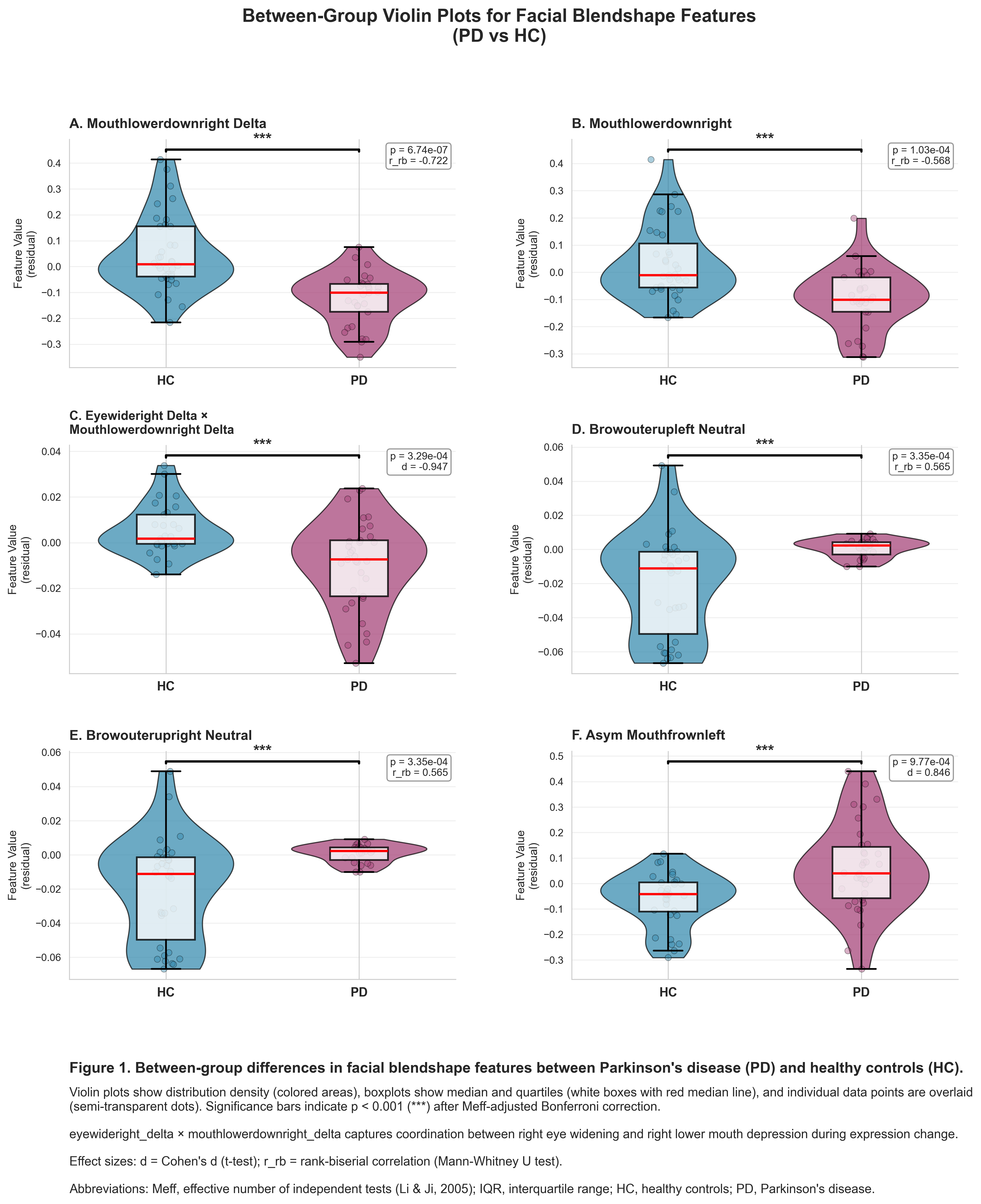
Figure 1. PD vs. HC blendshape feature differences
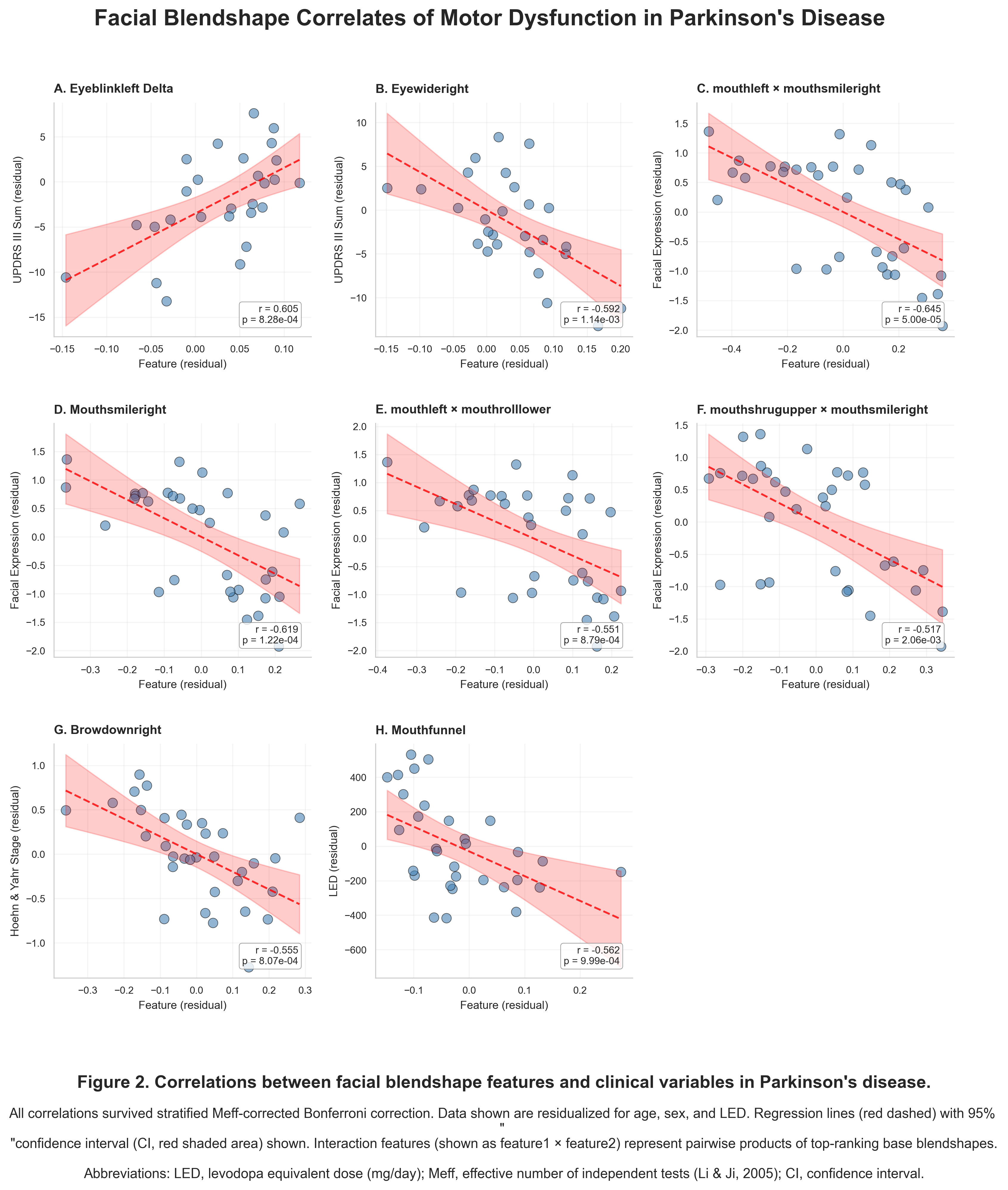
Figure 2. Blendshape-clinical correlations in PD

Figure 3. ML Classification Performance
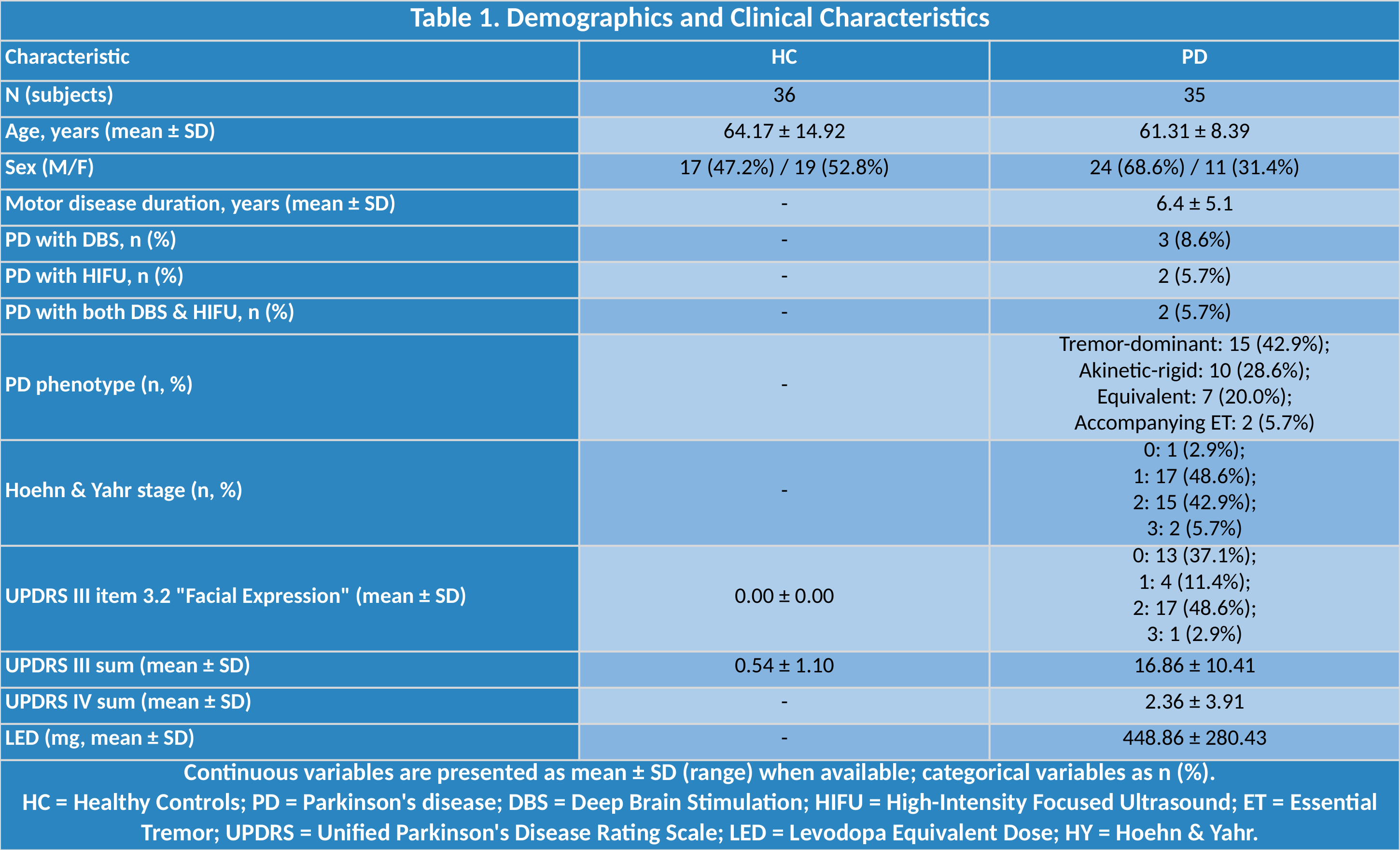
Table 1. Demographics and Clinical Characteristics
References: 1. Postuma, R.B., et al., How does parkinsonism start? Prodromal parkinsonism motor changes in idiopathic REM sleep behaviour disorder. Brain, 2012/06/01. 135(6).
2. FitzGerald, J.J., et al., Frontiers | Quantifying Motor Impairment in Movement Disorders. Frontiers in Neuroscience, 2018/04/11. 12.
To cite this abstract in AMA style:
B. Koyak, T. Menzel, A. Spottke, J. Faber, M. Reuter, U. Wüllner, M. Botsch, A. Aziz. Beyond Movement Amplitude: Interaction‑ and Asymmetry‑Aware Facial Blendshape Analysis in Parkinsonian Hypomimia [abstract]. Mov Disord. 2026; 41 (suppl 1). https://www.mdsabstracts.org/abstract/beyond-movement-amplitude-interaction-and-asymmetry-aware-facial-blendshape-analysis-in-parkinsonian-hypomimia/. Accessed October 1, 2026.« Back to 2026 International Congress
MDS Abstracts - https://www.mdsabstracts.org/abstract/beyond-movement-amplitude-interaction-and-asymmetry-aware-facial-blendshape-analysis-in-parkinsonian-hypomimia/