
Objective: To examine the frequency of RBD in PSP and its associations with other non-motor symptoms.
Background: RBD once considered rare in PSP, is now increasingly recognised with reported prevalences of 20–30%.¹–³ It remains unclear whether RBD in PSP represents a true non-motor symptom of PSP or reflects co-existing α-synuclein pathology.⁴
Method: Patients diagnosed with PSP according to the MDS-PSP criteria⁵, were consecutively recruited from the Movement Disorders Clinic of our centre from September 2024 to September 2025. Age- and gender-matched controls were also recruited after screening with Tanner’s questionnaire for parkinsonism. All PSP cases underwent assessment using the PSP Rating Scale(PSPRS), RBD Screening Questionnaire (RBDSQ), Non-Motor Symptoms Scale (NMSS),MoCA, Frontal Assessment Battery(FAB), Beck Depression Inventory(BDI), Parkinson’s Disease Sleep Scale(PDSS), Parkinson’s Disease Questionnaire-39(PDQ-39), and a hyposmia rating scale. Controls completed the RBDSQ. Data were analysed using descriptive statistics, t-tests, chi-square tests, and multiple linear regression to identify predictors of RBD.
Results: A total of 150 PSP cases (101 males, 49 females) and 150 controls (95 males, 55 females) were recruited. The mean age at first clinic visit was 69.1±7.5 years, and mean disease duration was 3.61±2.1 years. Clinically probable RBD was present in 28 PSP cases (18.6%) and in none of the controls. RBD occurred in 11 individuals (39.3%) with PSP-RS and 14 individuals (50%) with PSP-P. RBD was associated with higher NMSS scores (29.71±21.35 vs 15.14± 2.72; p = 0.002) and worse PDQ-39 scores (38.54±16.30 vs 32.62±13.00; p = 0.041). PSPRS scores did not differ significantly between those with and without RBD (31.57±15.24 vs 29.11±14.97; p = 0.43)(Table1). The attention/memory and gastrointestinal domains of the NMSS were significantly higher in the RBD group and showed significant positive associations with RBD (β = 0.205, p = 0.011; β = 0.250, p = 0.003, respectively).
Conclusion: RBD occurred in 18.7% of PSP cases in our study and was observed in both PSP-RS and PSP-P subtypes, consistent with previous reports.⁶,⁷ Reported RBD frequencies in PSP are substantially higher than the prevalence of idiopathic RBD in the general population (0.6–1%).⁸ These findings support the concept that RBD in PSP may represent genuine PSP‑related phenomenon rather than a coincidental comorbidity.
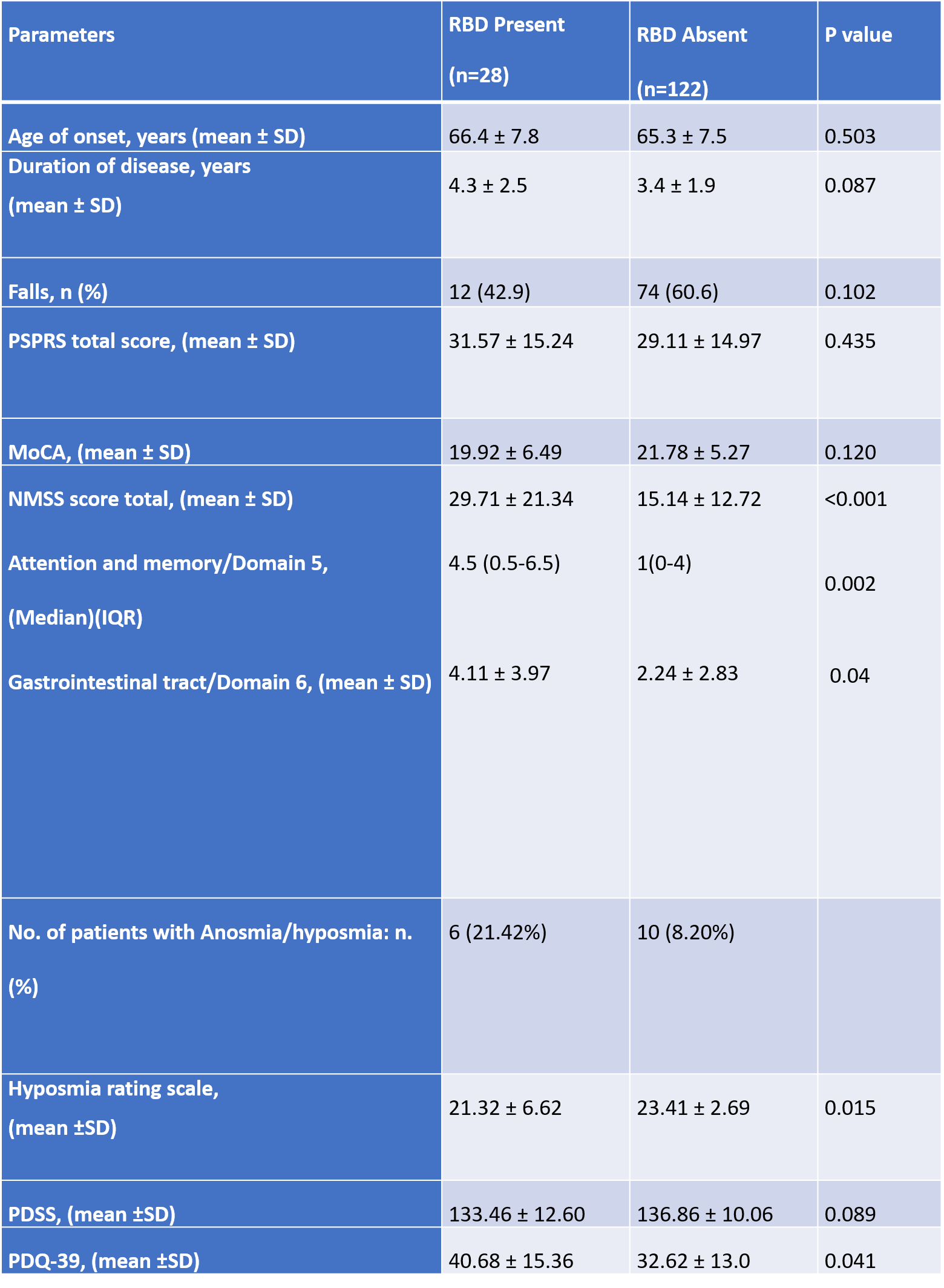
Table 1: PSP patients with and without RBD
References: 1. Sixel-Döring F, Schweitzer M, Mollenhauer B, Trenkwalder C. Polysomnographic findings, video-based sleep analysis and sleep perception in progressive supranuclear palsy. Sleep Med. 2009 Apr;10(4):407-15.
2. Nomura T, Inoue Y, Takigawa H, Nakashima K. Comparison of REM sleep behaviour disorder variables between patients with progressive supranuclear palsy and those with Parkinson’s disease. Parkinsonism Relat Disord. 2012 May;18(4):394-6.
3. Keir LHM, Breen DP. REM sleep behaviour disorder in patients without synucleinopathy. J Neurol Neurosurg Psychiatry. 2020 Nov;91(11):1239-1240.
4. Uchikado H, DelleDonne A, Ahmed Z, Dickson DW. Lewy bodies in progressive supranuclear palsy represent an independent disease process. J Neuropathol Exp Neurol. 2006 Apr;65(4):387-95.
5. Höglinger GU, Respondek G, Stamelou M, Kurz C, Josephs KA, Lang AE, et al. Movement Disorder Society-endorsed PSP Study Group. Clinical diagnosis of progressive supranuclear palsy: The movement disorder society criteria. Mov Disord. 2017 Jun;32(6):853-864.
6. Li XY, Tang G, Lu J, Zhao Y, Lin H, Zhang Q, et al. Progressive Supranuclear Palsy Neuroimage Initiative (PSPNI). Self-Reported REM Sleep Behavior Disorder in Patients With Progressive Supranuclear Palsy: Clinical and 18F-Florzolotau PET Imaging Findings. Neurology. 2025 Mar 11;104(5):e213376.
7. Lu H, Ren J, Liu H, Xie D, Zhao Q, Huang H, et al. Prevalence and correlated factors of REM sleep behavior disorder in patients with progressive supranuclear palsy. Sleep Med. 2025 Nov;135:106767.
8. Haba-Rubio J, Frauscher B, Marques-Vidal P, Toriel J, Tobback N, Andries D et al. Prevalence and determinants of rapid eye movement sleep behavior disorder in the general population. Sleep. 2018 Feb 1;41(2):zsx197.
To cite this abstract in AMA style:
N. Balaini, P. Borse, M. Girija, A. Hynse, R. Paul, A. Kishore. REM Sleep Behaviour Disorder (RBD) and its relation to Non-motor Symptoms in Progressive Supranuclear Palsy(PSP). [abstract]. Mov Disord. 2026; 41 (suppl 1). https://www.mdsabstracts.org/abstract/rem-sleep-behaviour-disorder-rbd-and-its-relation-to-non-motor-symptoms-in-progressive-supranuclear-palsypsp/. Accessed October 1, 2026.« Back to 2026 International Congress
MDS Abstracts - https://www.mdsabstracts.org/abstract/rem-sleep-behaviour-disorder-rbd-and-its-relation-to-non-motor-symptoms-in-progressive-supranuclear-palsypsp/