
Category: Parkinson's Disease (Other)
Objective: To develop and validate a machine learning model integrating quantitative gait parameters and clinical features to enhance the diagnostic accuracy of Parkinson’s disease (PD) and atypical parkinsonism (APD).
Background: Clinical diagnosis of PD relies heavily on subjective clinical characteristics [1], with accuracy limited by clinician expertise [2]. Objective, accessible biomarkers are urgently needed to improve diagnostic precision and differentiate PD from APD.
Method: We enrolled 170 participants: 90 PD, 40 APD, and 40 healthy controls (HC). Assessments included: (1) Gait paradigms: Timed Up-and-Go, cognitive dual-task, narrow-path walking, sway test, turning-in-place, five-times sit-to-stand, tandem gait; (2) Clinical scales: All participants completed 5 scales (AHRS, Wexner, FSS, RBDSQ, PSQI). PD/APD patients completed additional 10 scales (UPDRS I-IV, AIMS, SDSS, WOQ-9, FOGQ, CGI, QUIP-RS); (3) Autonomic tests: Orthostatic blood pressure and post-void residual bladder volume (PVR). Five algorithms (Support Vector Machine [SVM], K-Nearest Neighbors [KNN], Decision Tree [DT], Logistic Regression [LR], and Random Forest [RF]) were used for classification and feature-importance analysis.
Results: For patients (PD+APD) vs. HC classification, unimodal gait or scale models showed variable performance (AUC: 0.800–0.976), while multimodal fusion achieved consistent high accuracy (AUC: 0.957–0.966), with SVM and LR showing the greatest improvement [figure1]. For PD vs. APD differentiation, LR demonstrated optimal robustness with gait alone (AUC=0.870) and fused data (AUC=0.858), while RF excelled in scales + autonomic model (AUC=0.873) [figure2]. Key discriminative features included maximum turning angular velocity and lumbar range of motion during dual-task/tandem gait. Clinical variables (FSS, PVR, orthostatic systolic BP) further refined diagnostic precision.
Conclusion: Multimodal integration of gait and clinical data outperforms unimodal approaches in PD diagnosis and PD/APD differentiation. This framework provides a robust auxiliary diagnostic tool, with identified high-yield features informing optimized clinical evaluation protocols.
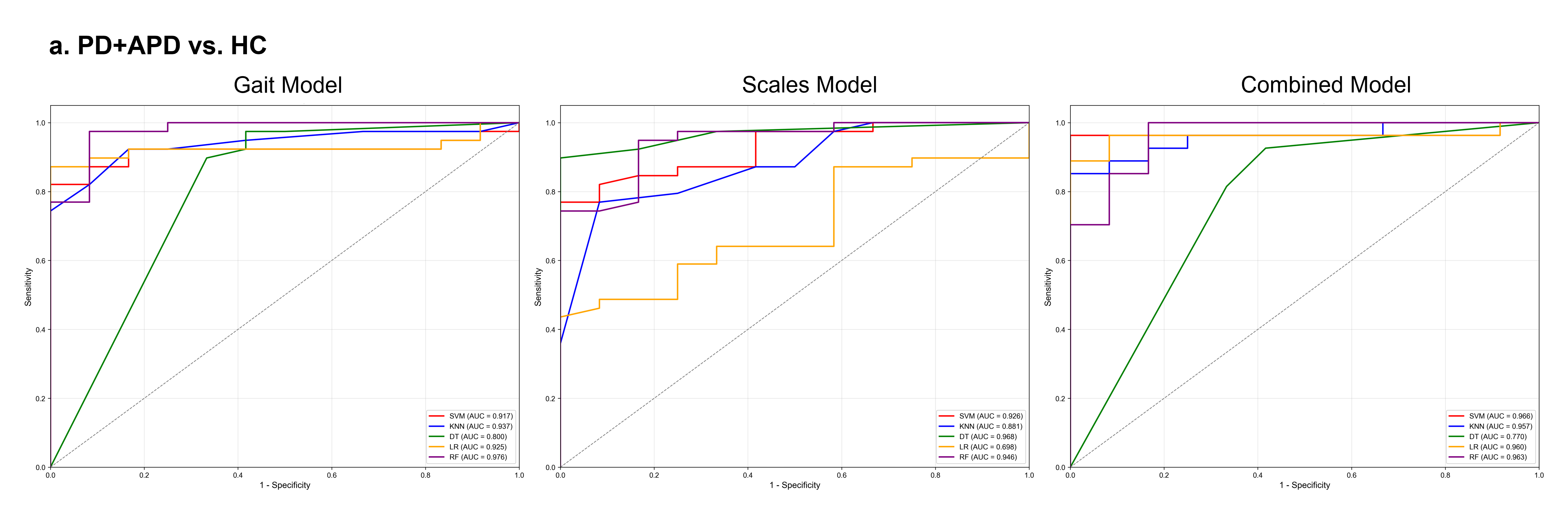
figure1.ROC Curves of models for PD+APD vs. HC
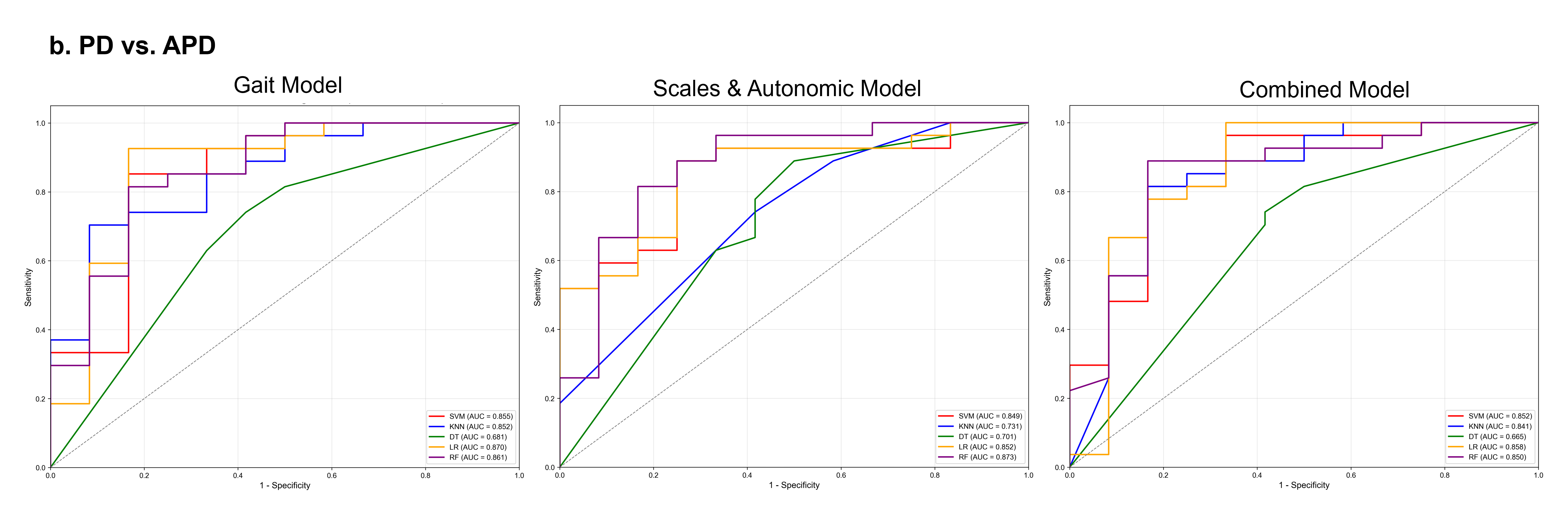
figure2.ROC Curves of models for PD vs. APD
References: 1.Postuma, R.B., et al., MDS clinical diagnostic criteria for Parkinson’s disease. Mov Disord, 2015. 30(12): p. 1591-601.
2. Rizzo, G., et al., Accuracy of clinical diagnosis of Parkinson disease: A systematic review and meta-analysis. Neurology, 2016. 86(6): p. 566-76.
To cite this abstract in AMA style:
XR. Bai, J. Xu, XY. Liu, HM. Cao. Multimodal Deep Learning for Parkinson’s Disease Screening: Fusing Quantitative Gait Analysis and Clinical Features [abstract]. Mov Disord. 2026; 41 (suppl 1). https://www.mdsabstracts.org/abstract/multimodal-deep-learning-for-parkinsons-disease-screening-fusing-quantitative-gait-analysis-and-clinical-features/. Accessed October 1, 2026.« Back to 2026 International Congress
MDS Abstracts - https://www.mdsabstracts.org/abstract/multimodal-deep-learning-for-parkinsons-disease-screening-fusing-quantitative-gait-analysis-and-clinical-features/