
Category: Technology
Objective: To evaluate early adoption and real-world usage patterns of a digital toolkit designed for movement disorders clinicians
Background: Movement disorders clinicians rely on multiple rating scales, medication calculations, and bedside diagnostic tests. These tools are often scattered across literature, websites, or a clinician’s memory. Utilization of a centralized toolkit may allow for greater and improved time with the patient, thereby enhancing the clinical experience.
Method: A progressive web application was developed to consolidate commonly used tools and resources in movement disorders clinics. The application contains three sections: Tools, Guides and Troubleshooting, and Resources.
The “Tools” section includes a tremor analyzer, optokinetic reflex tool, levodopa dose converter, rating scales, a metronome for tremor entrainment, and a gait counter. The “Guides and Troubleshooting” section includes a botulinum neurotoxin (BoNT) guide, deep-brain stimulation troubleshooting guides, medication references, and a phenomenology guide to filter movements based on descriptive features. The “Resources” section contains a question bank and curated links.
The application was launched free of cost on December 21, 2025, via a WhatsApp group of 55 movement disorders fellows in the United States and peer-to-peer dissemination.
Demographic data collected from users include age, gender, country, institution, and clinician type. Due to differences in browsers, privacy settings, and device types, app usage data was only available for a subset of users.
Results: From December 21, 2025 through March 6, 2026, 86 users (age 25-57) registered from 11 countries, representing 55 institutions. Within the United States, nearly half of the states were represented. Of those who reported demographic data (n=62), 39% were residents, 34% fellows, 17% attendings, 5% medical students, and 5% other.
Usage analytics were available for 25 users. Among these users, tools were accessed 642 times. The most frequently used tools were the tremor analyzer (24.9%), BoNT guide (19.5%), and rating scales (12.3%). Median number of tools used per user was 8.
Conclusion: This digital toolkit demonstrated rapid early adoption across multiple institutions without formal promotion. Bedside diagnostic tools appeared to be used more frequently than educational resources. Limitations include incomplete analytics tracking. Further work will evaluate user experience and integration into clinical workflow.
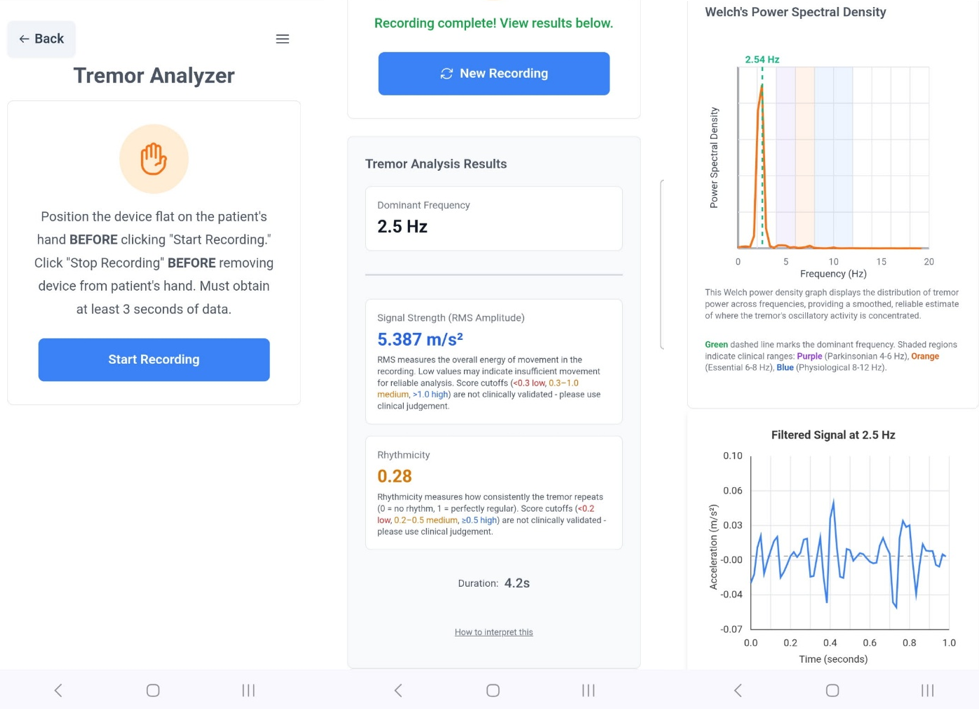
Screenshots of Tremor Analyzer
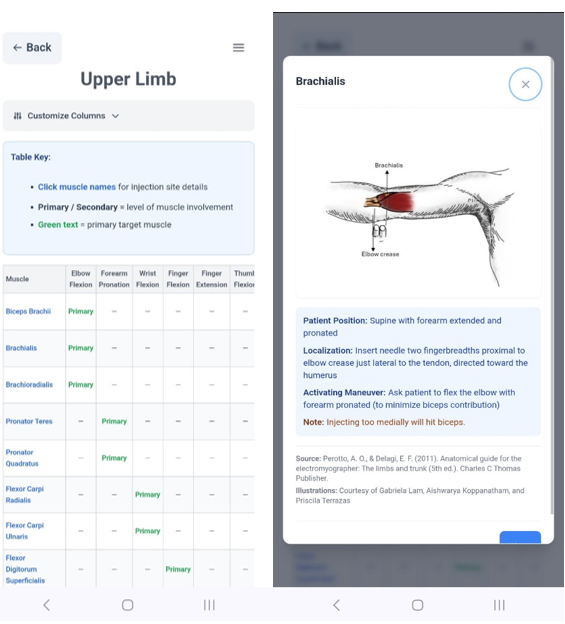
Screenshots of Botulinum Neurotoxin Guide
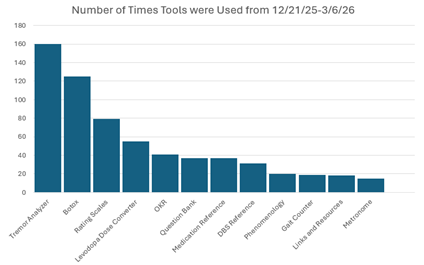
Number of Times Tools were Used (12/21/25-3/6/26)
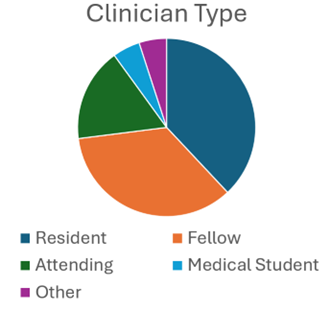
Percentage of Users from each Clinician Type
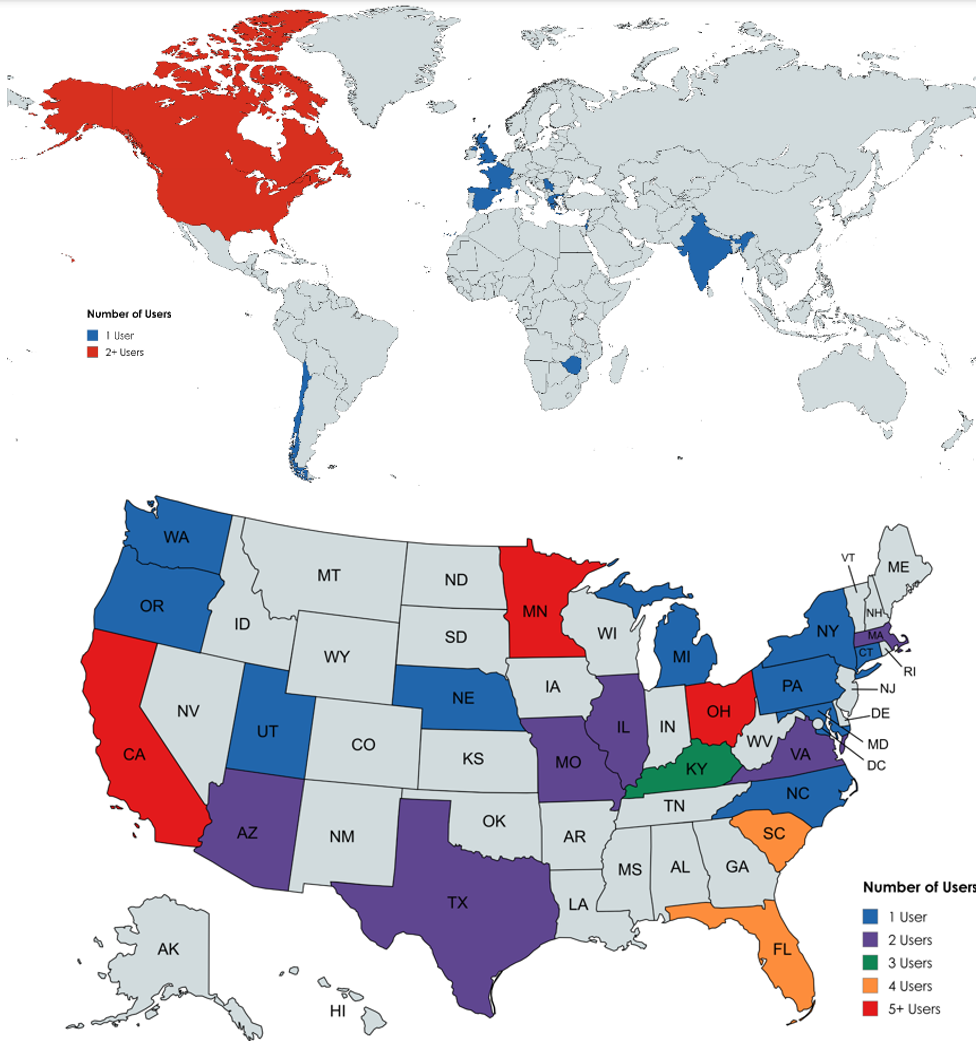
Geographical Location of Users
To cite this abstract in AMA style:
A. Lin, J. Patino, B. Talavera, Z. Yu, G. Brawerman, A. Koppanatham, C. Terrazas-Gamboa, A. Mahajan. A Digital Toolkit for Movement Disorders Clinicians [abstract]. Mov Disord. 2026; 41 (suppl 1). https://www.mdsabstracts.org/abstract/a-digital-toolkit-for-movement-disorders-clinicians/. Accessed October 1, 2026.« Back to 2026 International Congress
MDS Abstracts - https://www.mdsabstracts.org/abstract/a-digital-toolkit-for-movement-disorders-clinicians/