
Objective: To identify plasma protein biomarkers associated with MSA and investigate their potential causal relationships using integrative proteomic and genetic approaches.
Background: Multiple System Atrophy (MSA) is a rare and rapidly progressive neurodegenerative disorder. Currently, reliable fluid biomarkers for early diagnosis and risk prediction remain insufficient. Advances in large-scale proteomics and genomic datasets provide new opportunities to identify disease-related proteins and explore their causal relationships with MSA.
Method: Genome-wide association study (GWAS) summary statistics for MSA were obtained from a multi-center study including 888 MSA patients and 7,128 controls of European ancestry. Plasma proteomic data were derived from three large population cohorts: the UK Biobank Pharma Proteomics Project (UKB-PPP, n = 54,219; 2,923 proteins), the deCODE study (n = 35,559; 4,719 proteins), and the Fenland cohort (n = 10,674; 1,859 proteins). Proteome-wide association study (PWAS) analysis was conducted using FUSION with plasma protein weights from the ARIC cohort (7,213 participants). Two-sample Mendelian randomization (MR) analyses using cis-pQTLs were performed to assess causal associations between plasma proteins and MSA risk. Significant findings were further validated across independent cohorts and evaluated using colocalization analysis.
Results: PWAS identified β-glucuronidase (GUSB) as the only plasma protein significantly associated with MSA (FDR q = 0.0014). MR analysis demonstrated that increased plasma GUSB levels were causally associated with elevated MSA risk in the discovery cohort (UKB-PPP: OR = 88.121, FDR q < 0.0001). This association was consistently replicated in the deCODE cohort (OR = 53.172, FDR q < 0.0001) and the Fenland cohort (OR = 22.063, FDR q = 0.016). Colocalization analysis further revealed strong evidence that GUSB protein levels and MSA share a common causal variant (rs34356500) in both UKB-PPP (pH4 = 0.9412) and deCODE (pH4 = 0.9534).
Conclusion: Our multi-omics analysis identifies plasma GUSB as a potential biomarker and causal risk factor for MSA. These findings provide new insights into the molecular mechanisms underlying MSA and suggest that GUSB may represent a promising target for future diagnostic and therapeutic research.
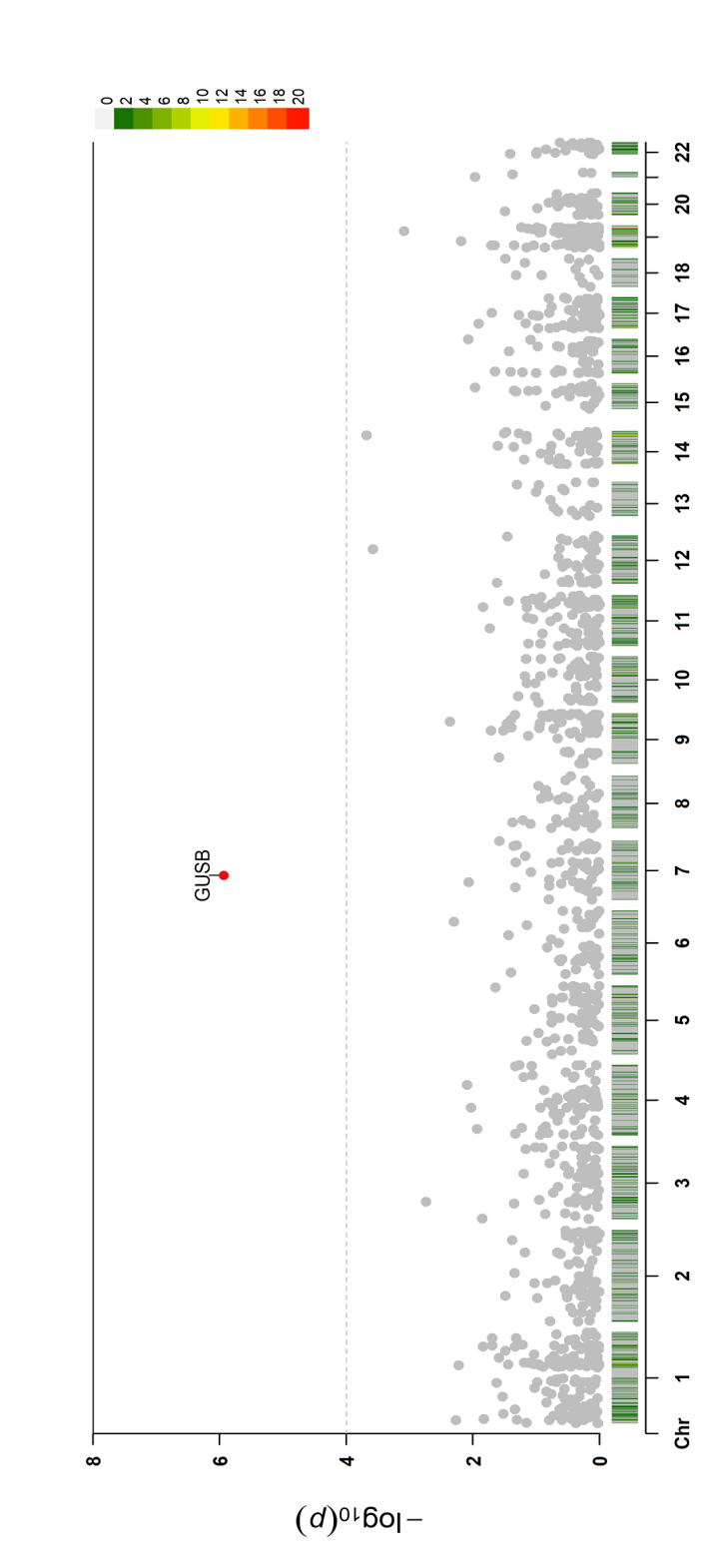
PWAS Identifies Plasma GUSB Associated With MSA
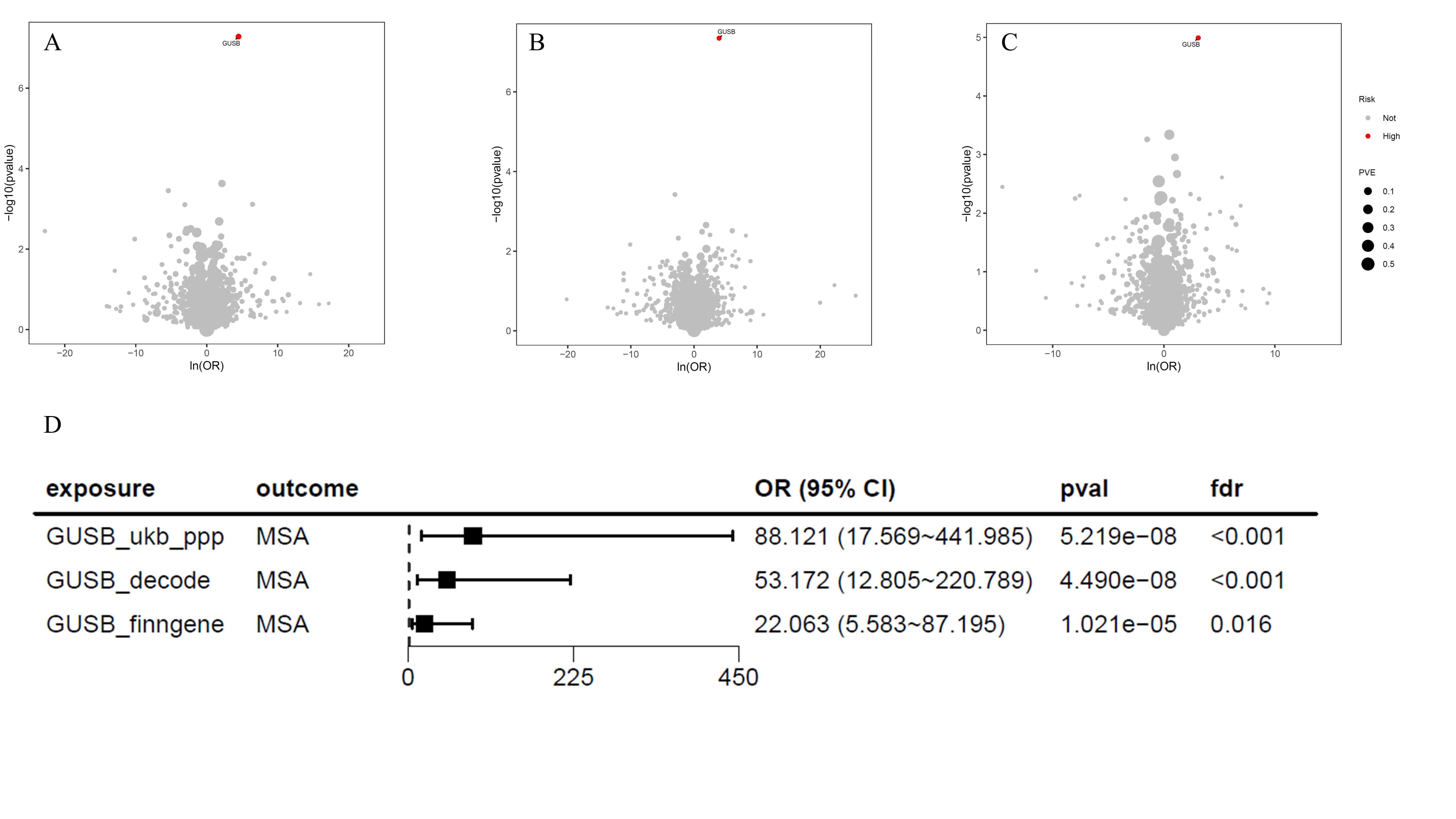
MR Analysis of Plasma GUSB and MSA Risk
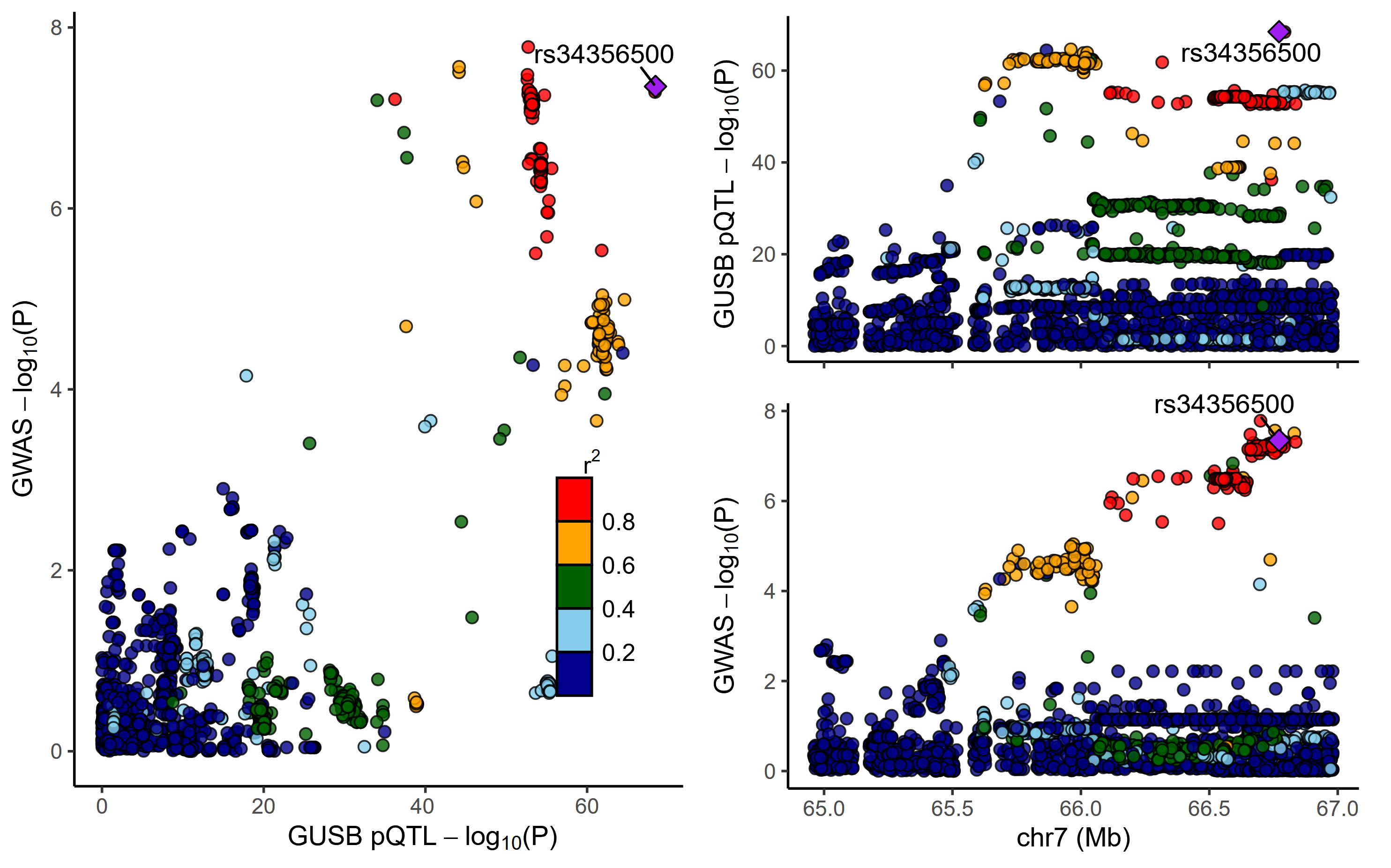
Colocalization of GUSB pQTL and MSA in UKB-PPP
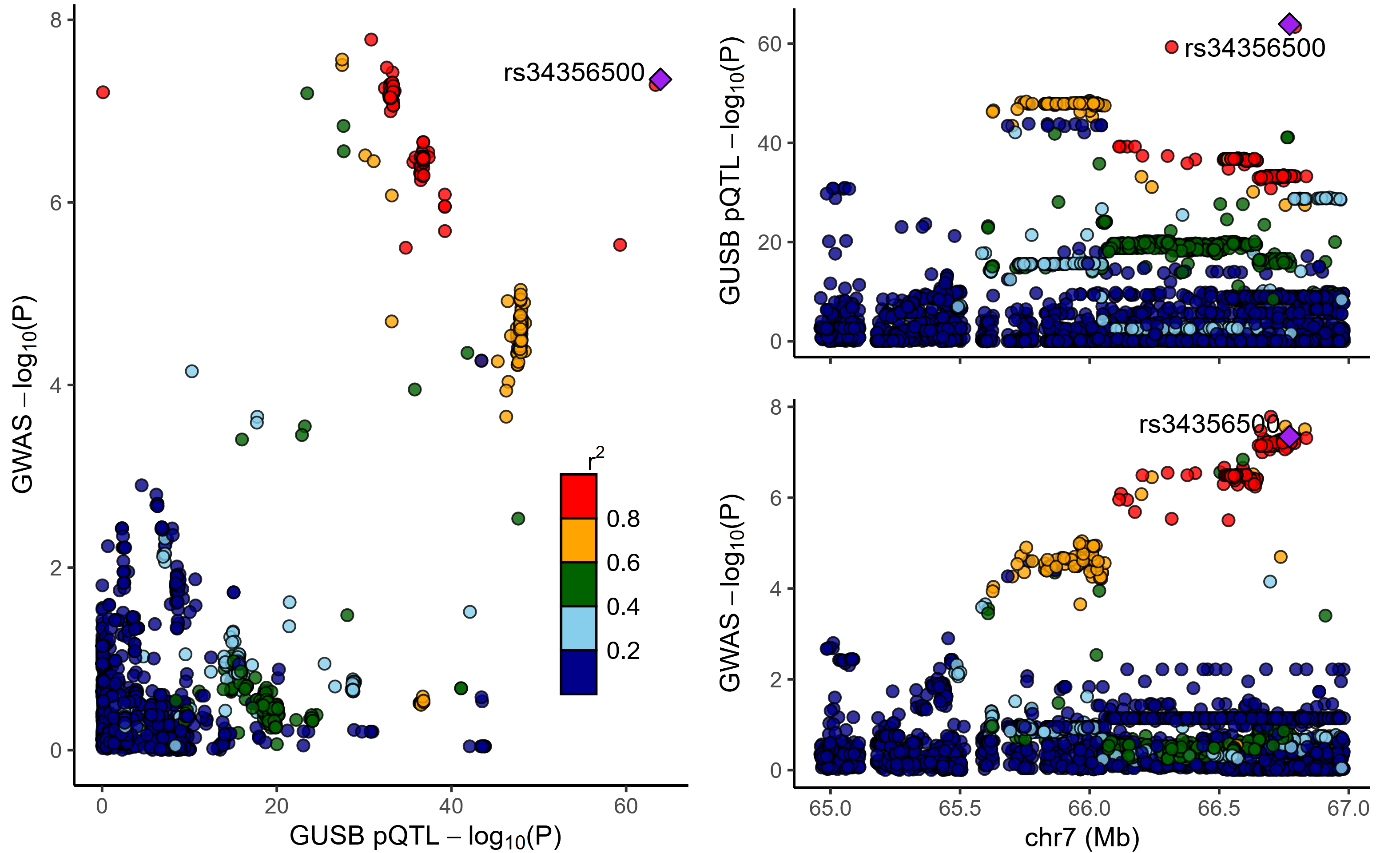
Colocalization of GUSB pQTL and MSA in deCODE
To cite this abstract in AMA style:
X. Wang, X. Chen, W. Luo. Proteome-Wide Association and Mendelian Randomization Analyses Identify Plasma GUSB as a Potential Biomarker for Multiple System Atrophy [abstract]. Mov Disord. 2026; 41 (suppl 1). https://www.mdsabstracts.org/abstract/proteome-wide-association-and-mendelian-randomization-analyses-identify-plasma-gusb-as-a-potential-biomarker-for-multiple-system-atrophy/. Accessed October 1, 2026.« Back to 2026 International Congress
MDS Abstracts - https://www.mdsabstracts.org/abstract/proteome-wide-association-and-mendelian-randomization-analyses-identify-plasma-gusb-as-a-potential-biomarker-for-multiple-system-atrophy/