
Category: Rare Neurometabolic Movement Disorders
Objective: To describe an unusual phenotype in Glutaric Acidemia Type 1 (GA1) characterized by a hyperkinetic movement disorder, cerebellar syndrome, and subependymal nodules, expanding the clinical and neuroimaging spectrum associated with compound heterozygous variants in the GCDH gene.
Background: Glutaric Acidemia Type 1 (GA1) is an autosomal recessive metabolic disorder caused by GCDH deficiency, leading to accumulation of glutaric and 3-hydroxyglutaric acids and selective striatal vulnerability [1]. Clinically, macrocephaly, hypotonia, and developmental delay are common, and movement disorders are predominantly dystonic (up to 95%), whereas chorea, myoclonus, and ataxia are uncommon [1]. MRI typically shows striatal involvement, widening of the Sylvian fissures, anterior temporal hypoplasia, and variable leukoencephalopathy [1,4]. Subependymal nodules have only exceptionally been reported [2,5].
Method: Comprehensive clinical evaluation including metabolic profiling, whole-exome sequencing, brain MRI/MRS and volumetric analysis, and neurophysiological studies with movement analysis.
Results: A 19-year-old man of Mexican ancestry presented with neonatal hypotonia and developmental delay. At 4 months of age he developed a dystonic crisis, and newborn metabolic screening revealed glutaryl-CoA dehydrogenase deficiency. Exome sequencing identified compound heterozygous variants in GCDH (c.700C>T; p.Arg234Trp and c.1173_1174insT; p.Asn392*). Neurological examination showed macrocephaly, hypotonia, generalized dystonia, distal chorea in all four limbs, positive myoclonus, ataxic dysarthria, and dysdiadochokinesia (Figure/Video 1). Metabolic profiling demonstrated elevated C5DC. Neurophysiological studies revealed multifocal agonist–antagonist co-contraction with brief bursts compatible with myoclonus, supporting a mixed hyperkinetic phenotype (dystonia–chorea–myoclonus). Brain MRI/MRS showed tipical and atpical findings. (Figure 2). Quantitative volumetry was performed (Figure 3).
Conclusion: This case expands the clinical and neuroradiological spectrum of GA1 by describing a hyperkinetic–cerebellar phenotype associated with subependymal nodules, findings rarely reported in the literature. The coexistence of a mixed hyperkinetic movement disorder, cerebellar syndrome, and atypical neuroimaging features suggests a broader phenotypic heterogeneity of GA1.

QR code linking to a video
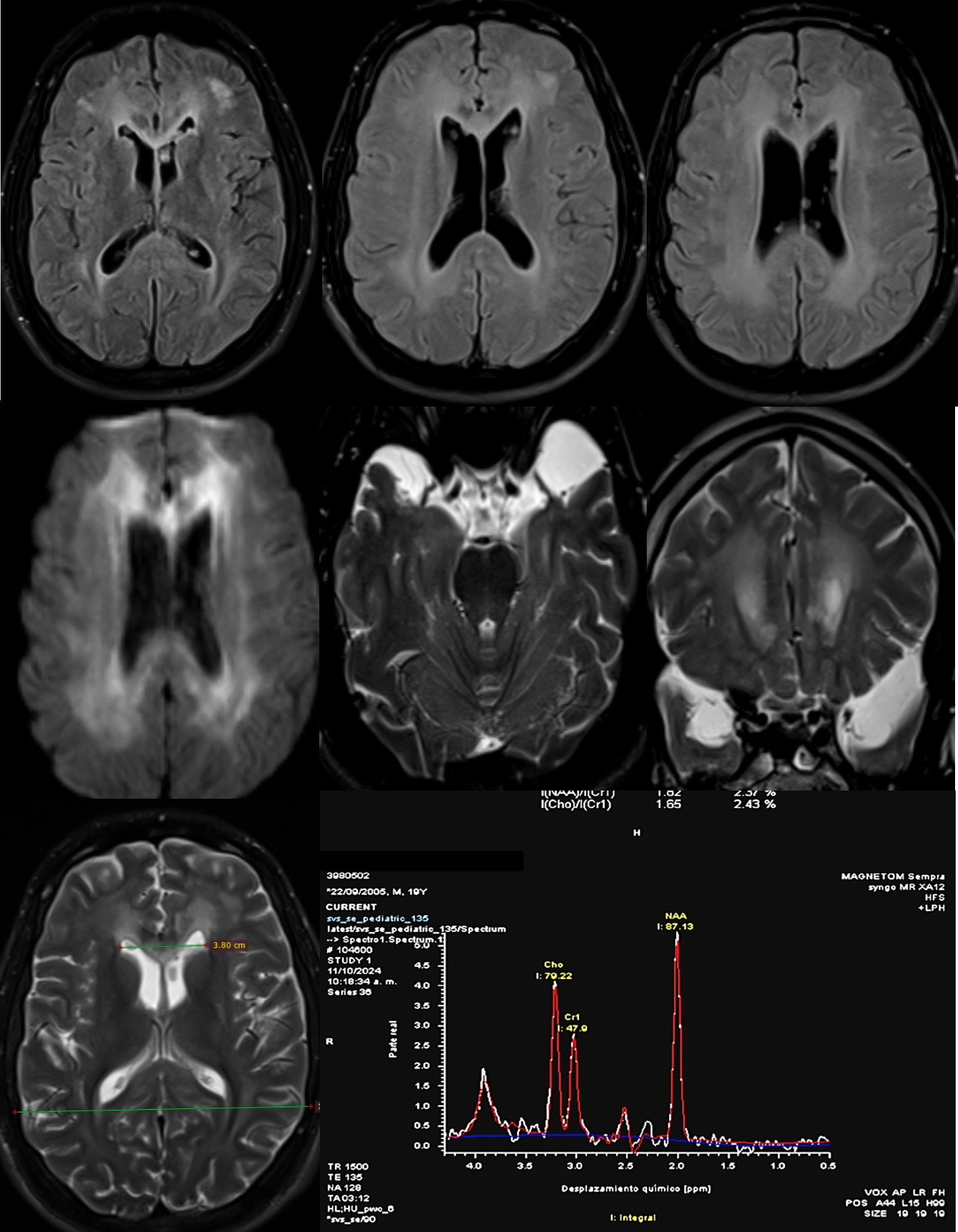
Brain MRI /MRS
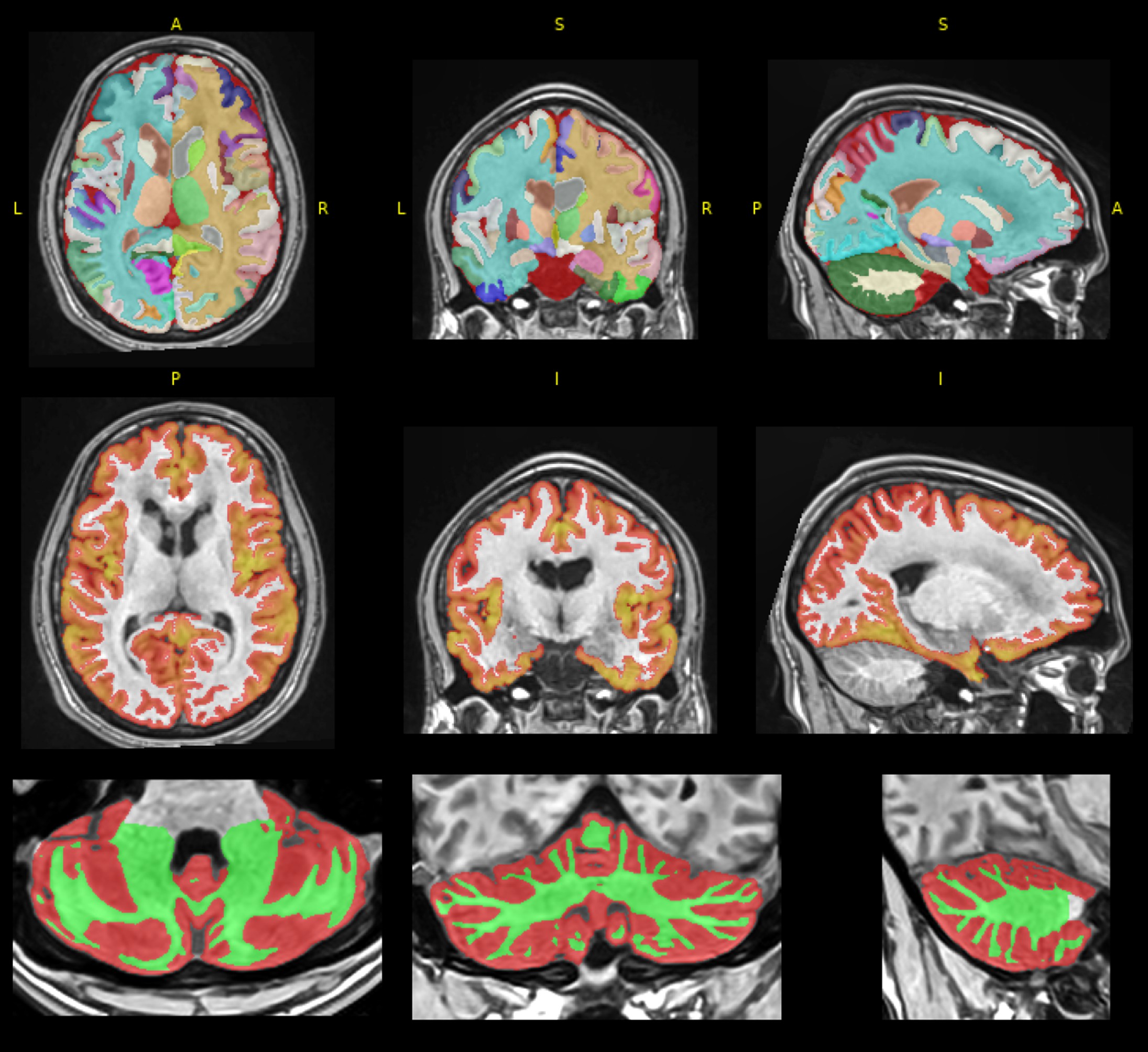
Brain volumetry performed using volBrain
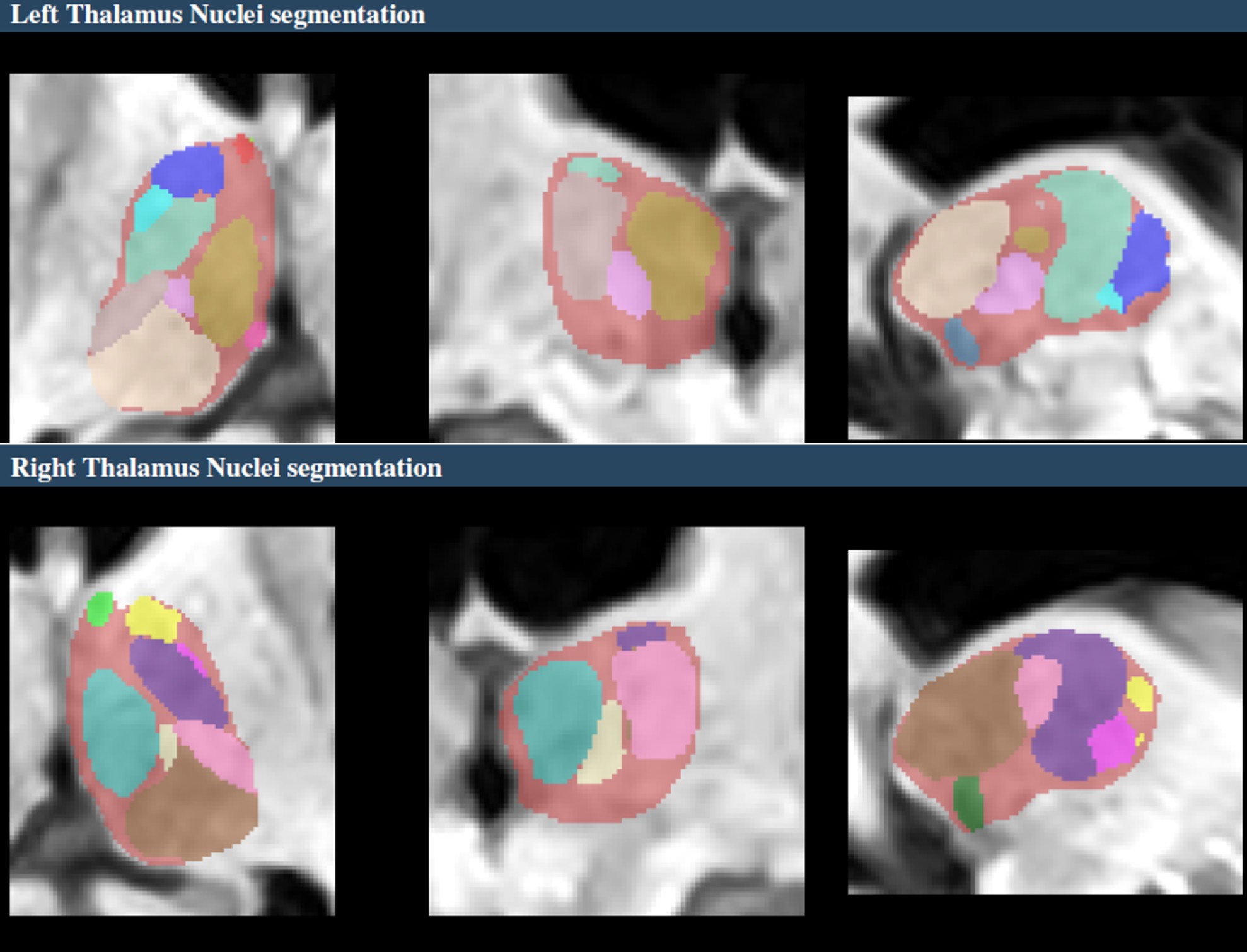
Thalamus nuclei segmentation
References: 1.-Boy N, Mühlhausen C, Maier EM, et al. Recommendations for diagnosing and managing individuals with glutaric aciduria type 1: Third eporto . J Inherit Metab Dis. 2023; 46(3):482‐519.
2.- Moreno-Graciano CM, Rodas A, Herrera-Perez LDA, Zenteno JC. Characterization of novel GCDH pathogenic variants causing glutaric aciduria type 1 in the southeast of Mexico. Mol Genet Metab Rep. 2019 Nov 13;21:100533.
3.- Desai NK, et al. Magnetic resonance imaging of the brain in glutaric acidemia type I: a review of the literature and a report of four new cases with attention to the basal ganglia and imaging technique. Invest Radiol. 2003 Aug;38(8):489-96.
4.- Pierson, T.M., Nezhad, M., Tremblay, M.A. et al. Adult-onset glutaric aciduria type I presenting with white matter abnormalities and subependymal nodules. Neurogenetics 16, 325–328 (2015).
5.- Patel B, et al. Early Diagnosed and Treated Glutaric Acidemia Type 1 Female Presenting with Subependymal Nodules in Adulthood. JIMD Rep. 2018;40:85-90.
To cite this abstract in AMA style:
D. Avecilla-Bonilla, K. Salinas-Barboza, D. Ramírez álvarez, L. Salinas-Yañez, J. Altamirano. A Novel Hyperkinetic–Cerebellar Phenotype with Subependymal Nodules in Glutaric Acidemia Type 1 [abstract]. Mov Disord. 2026; 41 (suppl 1). https://www.mdsabstracts.org/abstract/a-novel-hyperkinetic-cerebellar-phenotype-with-subependymal-nodules-in-glutaric-acidemia-type-1/. Accessed October 1, 2026.« Back to 2026 International Congress
MDS Abstracts - https://www.mdsabstracts.org/abstract/a-novel-hyperkinetic-cerebellar-phenotype-with-subependymal-nodules-in-glutaric-acidemia-type-1/