
Category: Parkinson's disease: Neuroimaging
Objective: To elucidate hippocampal (HP) volume trajectories in Parkinson disease (PD) and across the neurodegenerative disease (NDD) spectrum.
Background: HP volume is a critical neuroimaging phenotype across NDD continuums (i.e., Parkinson’s-Lewy body disease, Alzheimer’s disease [AD], and frontotemporal dementia-amyotrophic lateral sclerosis [FTD-ALS]). Given that HP is sensitive to mixed pathologies (e.g., amyloid-b, tau, a-synuclein, TDP-43, and cerebrovascular disease can all co-occur in PD leading to cognitive decline), we sought to elucidate longitudinal HP trajectories across NDDs to identify shared patterns.
Method: Structural 3T MRIs were processed from the ONDRI cohort. The volume of HP was quantified in FreeSurfer using improved segmentation masks. The left and right HP volumes were averaged and corrected for head-size. Latent class mixed models were applied to identify distinct HP volume trajectories, analyzing both linear and quadratic patterns while adjusting for age and sex. Baseline plasma biomarkers and white matter (WM) disease burden were compared between trajectories. Linear mixed models were used to investigate the longitudinal association of HP atrophy with verbal learning performance across classes (HP x class x time), adjusting for age, sex and education.
Results: We included 505 patients (age, 68.7±7.7; 66.9% M) across the NDD spectrum, including 139 PD (cognitively normal PD=61; PD-MCI=52; PDD=26) [table1]. Three linear HP volume trajectories of decline emerged: “preserved” (N=143), “intermediate” (N=281) and “severe” (N=81) [figure1]. AD/MCI and FTD/ALS cases were overrepresented in the severe class, featuring a greater burden of periventricular WM hyperintensities, higher GFAP, NFL, phosphorylated tau 181 and 217 levels, and lower amyloid-b 42/40 ratios. PD cases were more frequent in the other two classes. A greater proportion of PD cases exhibited cognitive deficits (60.6%) in the intermediate class (vs. 46% in preserved), aligning with moderate levels of plasma biomarker abnormalities and WM disease (potentially suggesting mixed disease). Verbal learning performance was associated with HP volumes, regardless of class membership [figure2].
Conclusion: Transdiagnostic HP trajectories may reflect shared pathways across NDDs. HP atrophy and cognitive decline in PD can stem not only from Lewy body pathology, but also from additional shared pathologies.
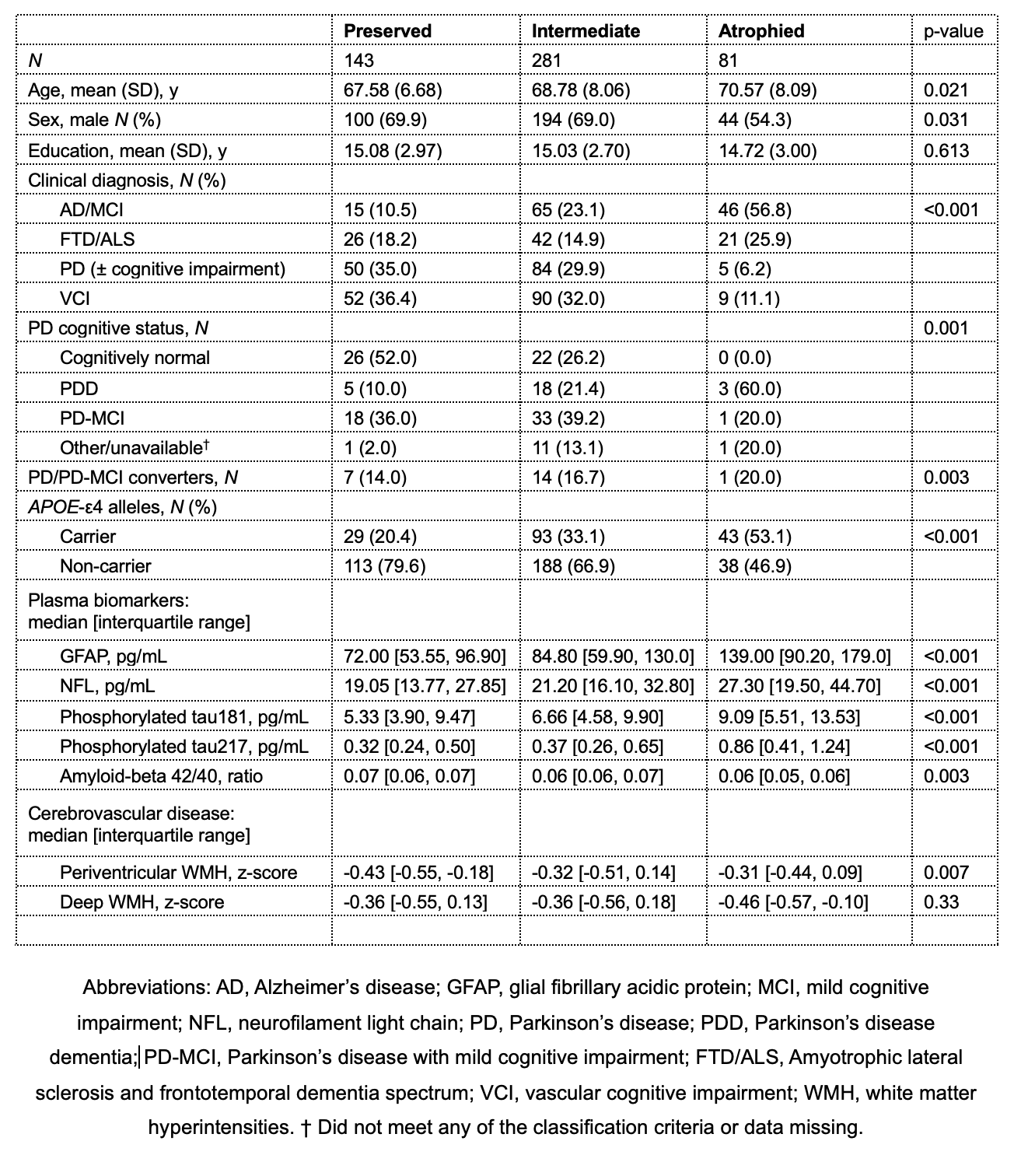
Baseline characteristics by HP trajectory classes
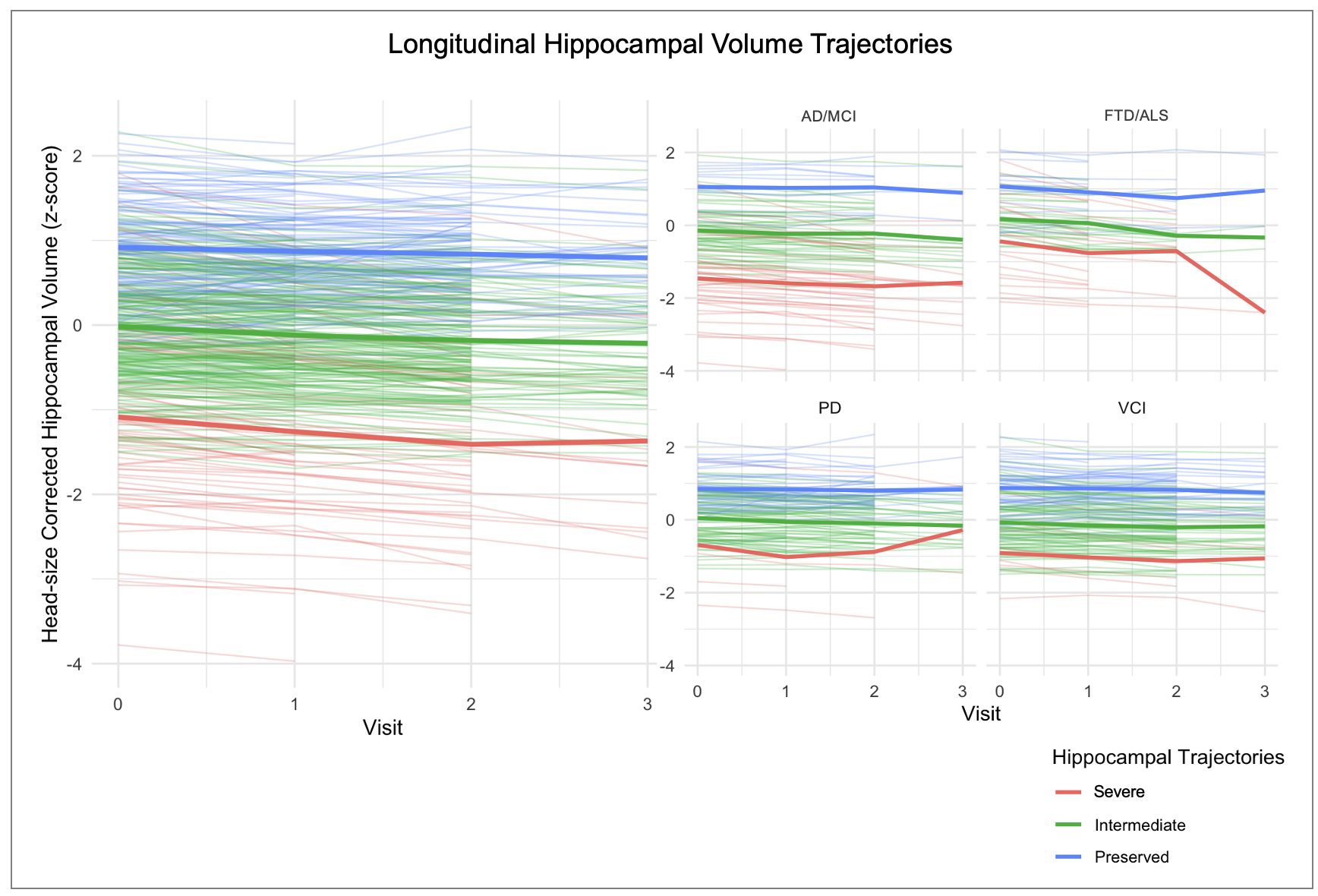
HP trajectories in overall sample and by diagnosis
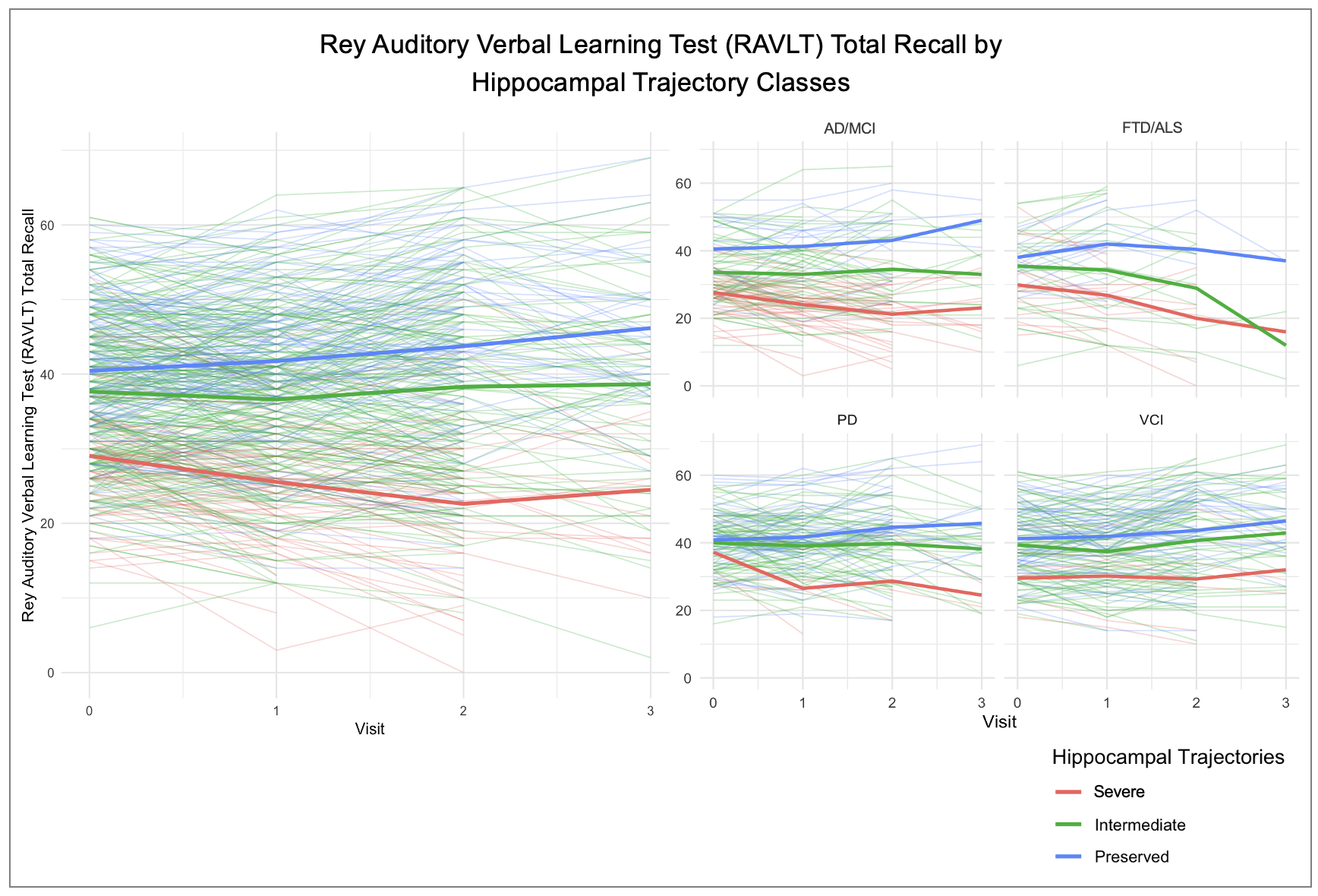
Total recall in overall sample and by diagnosis
To cite this abstract in AMA style:
U. Saeed, S. E Black, C. Marras, M. A Binns, D. P Breen, K. N Fishman, D. A Grimes, B. Levine, P. M Mclaughlin, A. K Troyer, R. Bartha, H. Zetterberg, A. E Lang, M. Masellis. Data-driven Longitudinal Trajectories of Hippocampal Volume in Parkinson’s Disease and Across the Neurodegenerative Disease Spectrum [abstract]. Mov Disord. 2026; 41 (suppl 1). https://www.mdsabstracts.org/abstract/data-driven-longitudinal-trajectories-of-hippocampal-volume-in-parkinsons-disease-and-across-the-neurodegenerative-disease-spectrum/. Accessed October 1, 2026.« Back to 2026 International Congress
MDS Abstracts - https://www.mdsabstracts.org/abstract/data-driven-longitudinal-trajectories-of-hippocampal-volume-in-parkinsons-disease-and-across-the-neurodegenerative-disease-spectrum/