
Category: Parkinson's Disease (Other)
Objective: To assess telehealth patterns on socioeconomic and geographic factors and time to surgery in patients with Parkinson’s Disease (PD) evaluated for deep brain stimulation (DBS) or high-intensity focused ultrasound (HIFU) at the West Virginia University (WVU) Medicine’s Multidisciplinary Movement Disorders Clinic (MDMC) (2017–2023).
Background: Conditions such as PD often require in-person evaluations for accurate diagnosis. During COVID-19, providers rapidly adopted telehealth to maintain care. In Appalachia, over half of residents live >60 miles from a specialist, suggesting telehealth could reduce travel burden and costs.
Method: We retrospectively reviewed patients with PD who underwent DBS or HIFU between January 1, 2017, and December 31, 2023. Demographics, appointment type (in-person vs telehealth), and travel costs (mileage rates) were recorded. Heat maps visualized spatial patterns; correlations assessed social determinants of health (SDOH) and time to surgery.
Results: From 01/01/2017 – 12/31/2023, 229 PD patients had 3,945 MDMC visits: 141 (3.6%) were via telehealth, while 3,183 (96.4%) were in person. Nineteen patients had ≥1 telehealth visit before surgery (29 total; mean 1.52/patient). On average, in-person visits cost $94.10 with 2.67 travel hours. Telehealth appointments saved $122.29 and 3.44 hours per visit (Table 1). Patients lived <60 miles (n=98), 60–180 miles (n=112), or >180 miles (n=19) from the clinic, with unique populations clustering in the southern part of the state for the telemedicine group (Figure 1). Time to surgery did not differ by distance (log-rank p=0.98) (Figure 2), and distance was not associated with telehealth use (χ²=2.43, p=0.487). Mean time to surgery was 1,101 days for telehealth patients vs. 759 days for non-telehealth (t=1.81, p=0.078). Higher education correlated with in-person visits, while higher unemployment correlated with telehealth use.
Conclusion: Reduced travel time and costs associated with telehealth visits, without delaying the time to surgery, represents a clinically meaningful advantage to telemedicine. Expanding access to underserved populations may improve equity in PD surgical care.
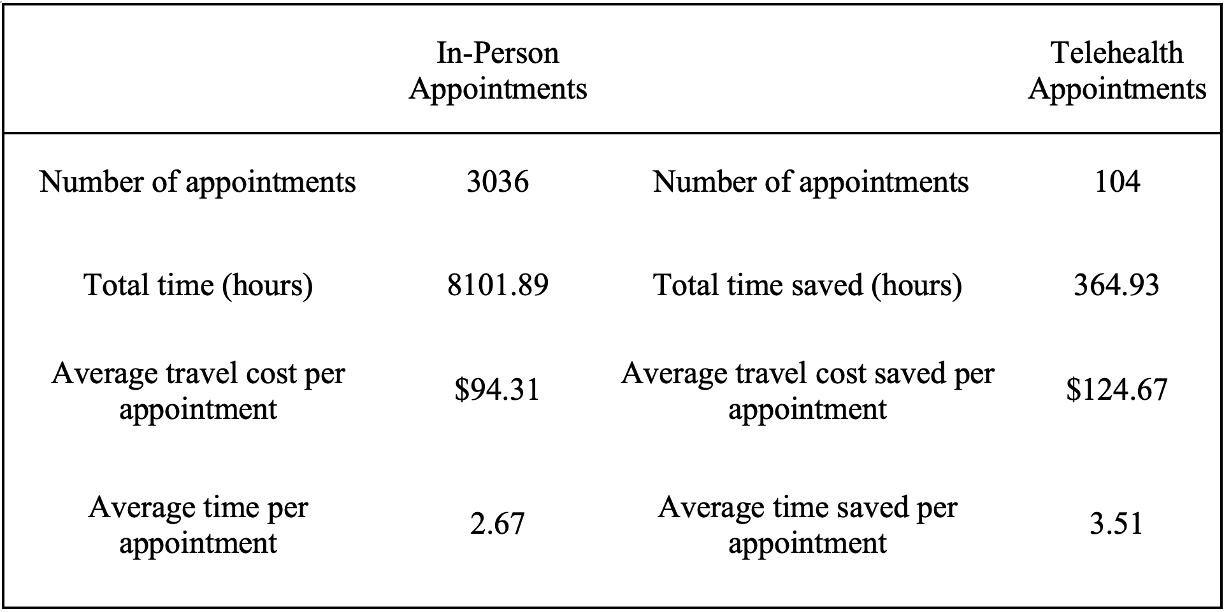
Table 1.
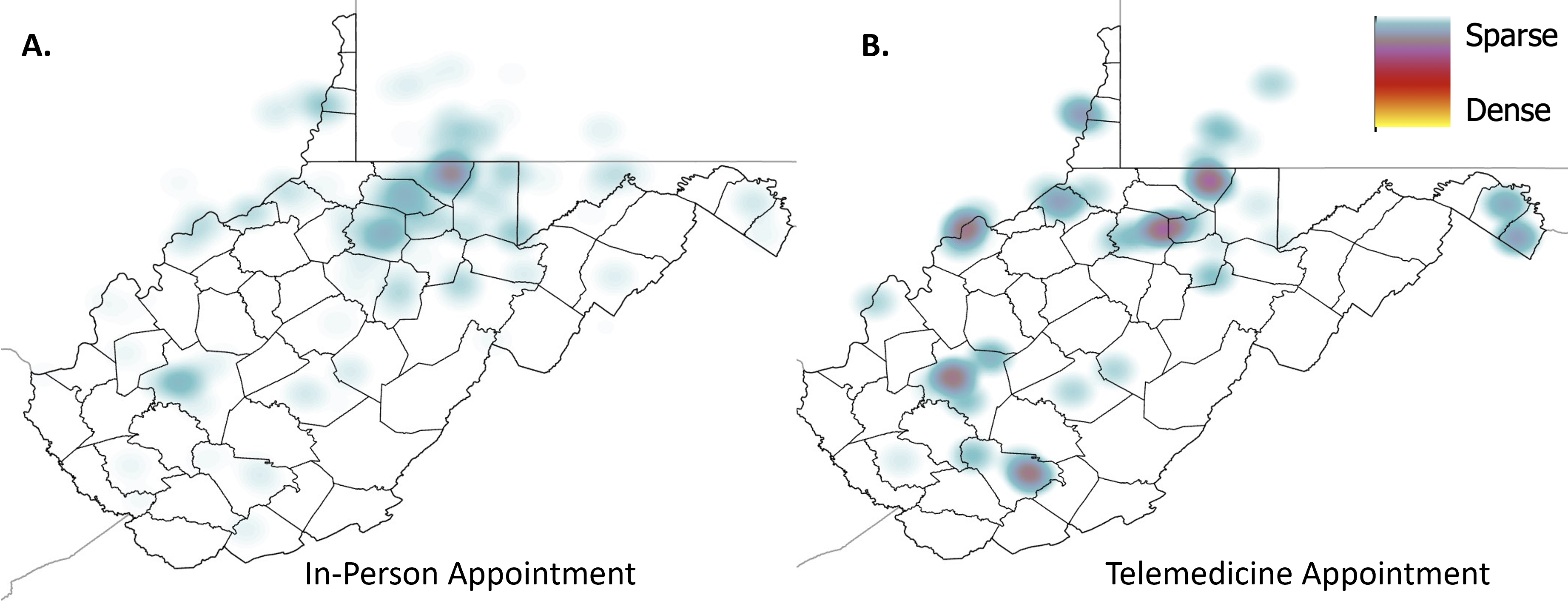
Figure 1. Heat map
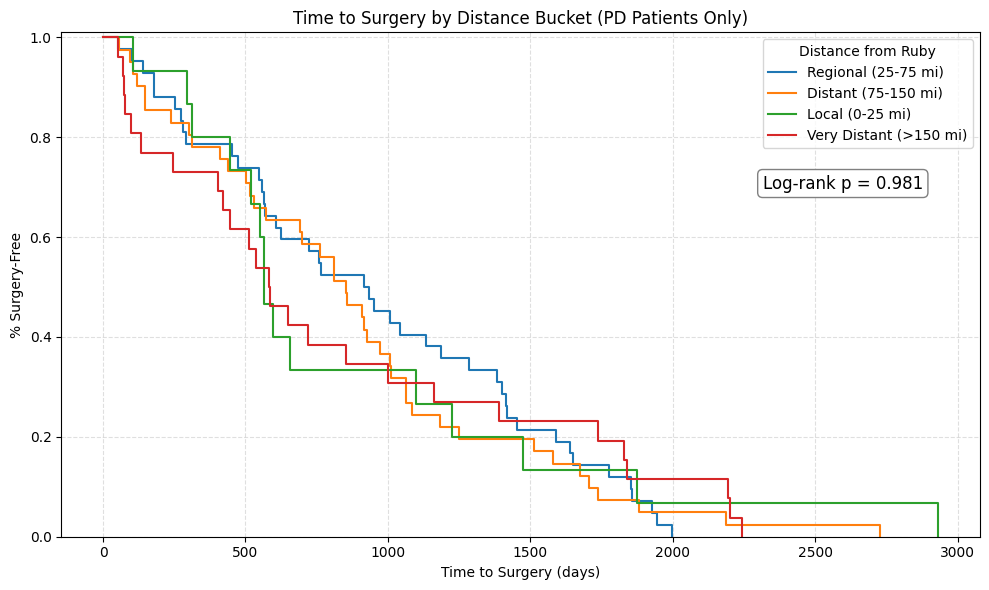
Figure 2. Kaplan Meier survival analysis
To cite this abstract in AMA style:
S. Rashid, D. Fletcher, J. Frey. Benefit of Telemedicine Usage in Parkinson’s Disease Patients in Appalachia [abstract]. Mov Disord. 2026; 41 (suppl 1). https://www.mdsabstracts.org/abstract/benefit-of-telemedicine-usage-in-parkinsons-disease-patients-in-appalachia/. Accessed October 1, 2026.« Back to 2026 International Congress
MDS Abstracts - https://www.mdsabstracts.org/abstract/benefit-of-telemedicine-usage-in-parkinsons-disease-patients-in-appalachia/