
Objective: To review evidence linking cardiovascular autonomic dysfunction with cognitive impairment in Parkinson’s disease (PD).
Background: Cognitive impairment is a frequent non-motor complication of PD and contributes substantially to disability and reduced quality of life. Cardiovascular autonomic dysfunction including orthostatic hypotension (OH), abnormal nocturnal blood pressure regulation, blood pressure variability, and reduced heart-rate variability is also common in PD. These abnormalities may cause cerebral hypoperfusion and impaired neurovascular regulation, potentially accelerating cognitive decline. However, findings across studies remain heterogeneous and have not been consistently synthesized.
Method: A structured review of PubMed-indexed studies was conducted to identify observational studies evaluating cardiovascular autonomic measures in adults with PD in relation to cognitive outcomes. Eligible studies assessed orthostatic hypotension, neurogenic orthostatic hypotension, nocturnal blood pressure profiles, blood pressure variability, or heart-rate variability and reported associations with global cognition, mild cognitive impairment, or domain-specific deficits. Due to heterogeneity in study design and outcomes, findings were synthesized qualitatively.
Results: Several studies demonstrate associations between orthostatic hypotension and cognitive impairment in PD. PD patients with OH show poorer attention and memory performance compared with those without OH. Posture-related cognitive worsening associated with OH suggests transient cerebral hypoperfusion as a potential mechanism. Neurogenic OH has also been linked with higher prevalence of executive dysfunction. Longitudinal studies suggest autonomic instability may influence cognitive trajectories. Additional evidence indicates that abnormal nocturnal blood pressure patterns, increased blood pressure variability, and reduced heart-rate variability may contribute to cognitive decline.
Conclusion: Cardiovascular autonomic dysfunction, particularly orthostatic hypotension, is associated with adverse cognitive outcomes in PD. Abnormal blood pressure regulation and variability may represent markers of cognitive vulnerability. Routine autonomic evaluation may help identify patients at risk for cognitive decline.
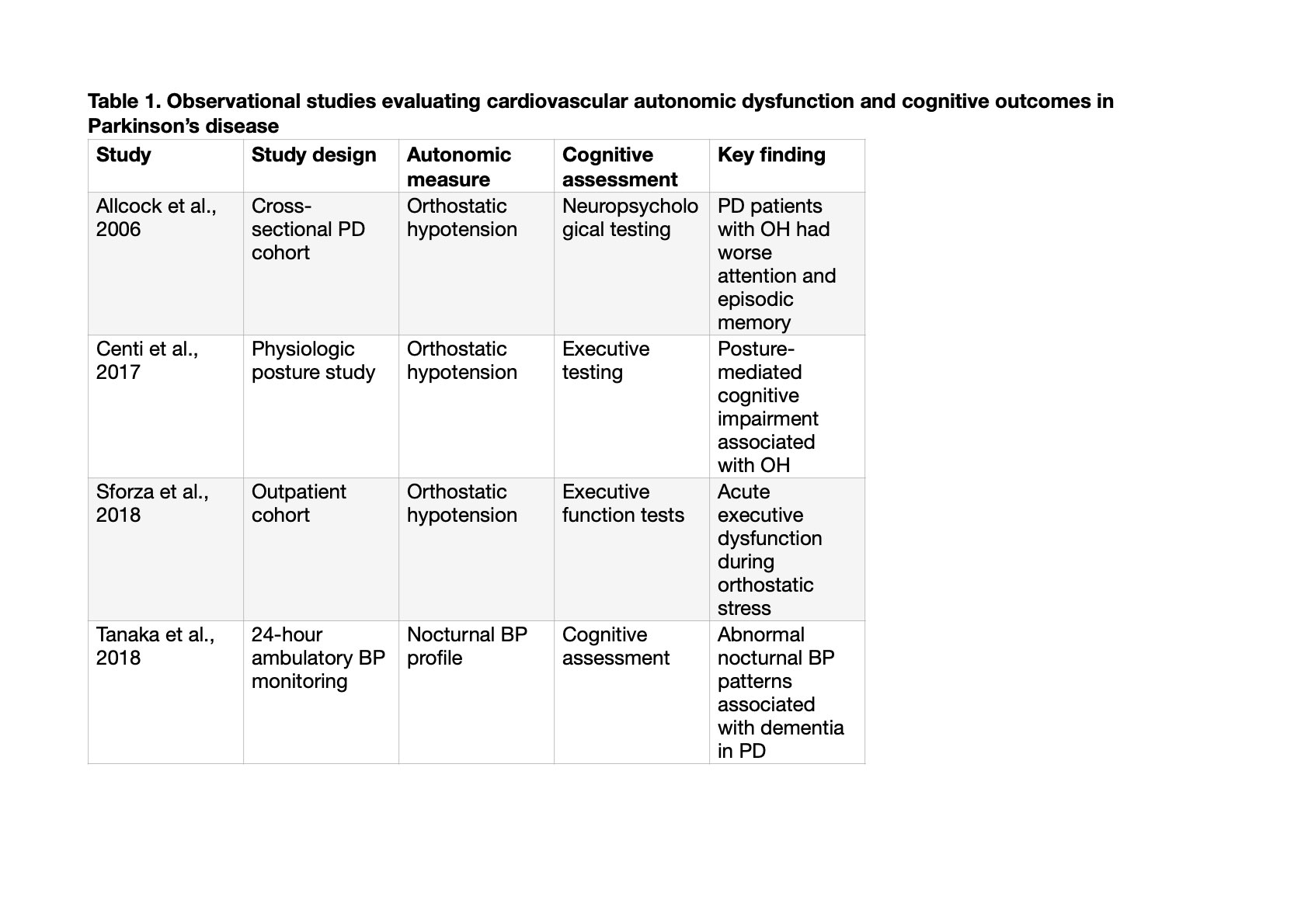
Obervational studies
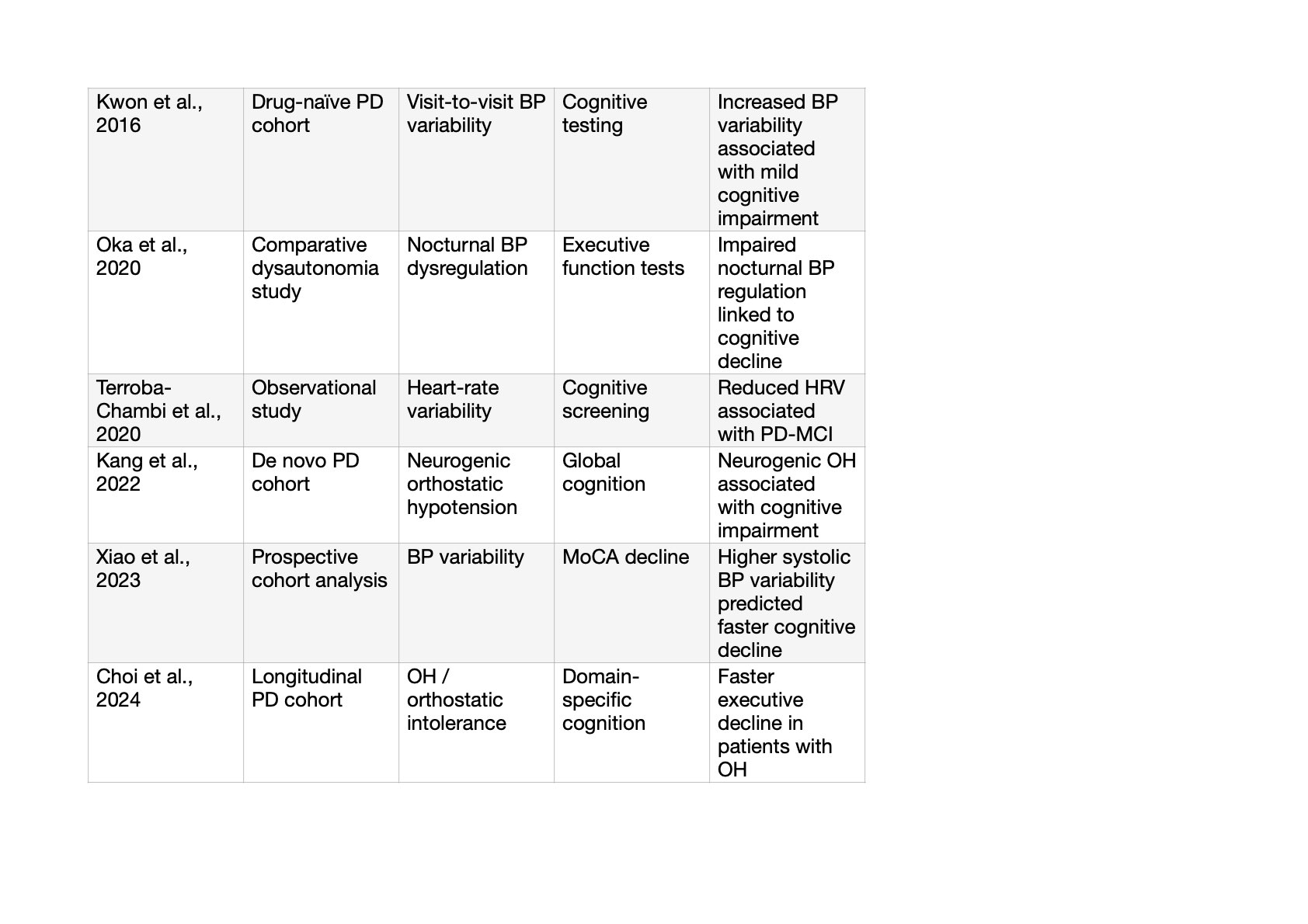
observational; studies
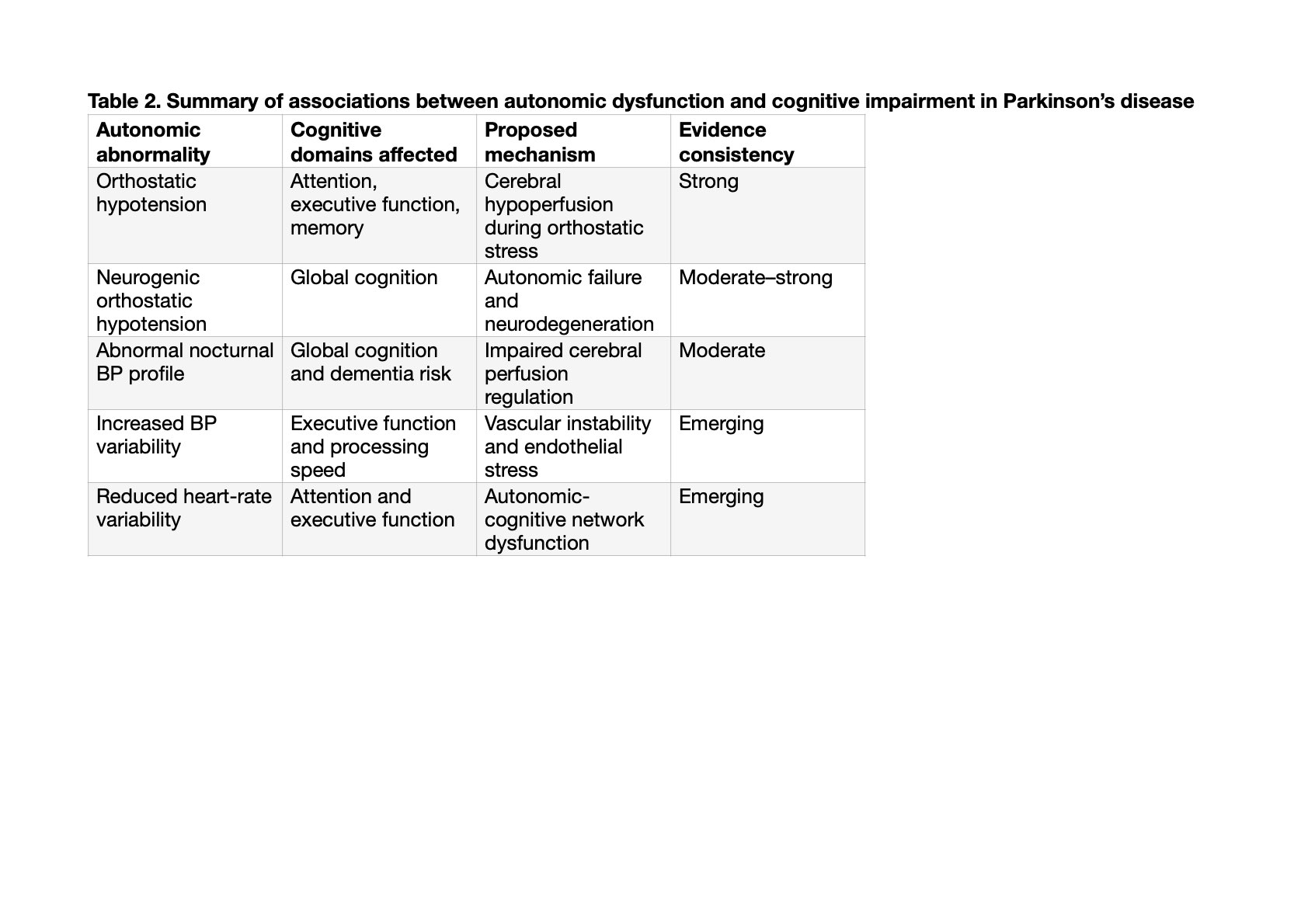
Summary
To cite this abstract in AMA style:
M. Kakde, S. Kakde, S. Kakade. Cardiovascular Autonomic Dysfunction and Cognitive Impairment in Parkinson’s Disease: A Systematic Review [abstract]. Mov Disord. 2026; 41 (suppl 1). https://www.mdsabstracts.org/abstract/cardiovascular-autonomic-dysfunction-and-cognitive-impairment-in-parkinsons-disease-a-systematic-review/. Accessed October 1, 2026.« Back to 2026 International Congress
MDS Abstracts - https://www.mdsabstracts.org/abstract/cardiovascular-autonomic-dysfunction-and-cognitive-impairment-in-parkinsons-disease-a-systematic-review/