
Objective: To evaluate the effects of nicotine versus placebo in Parkinson’s disease (PD).
Background: Nicotine may influence dopaminergic and non‑dopaminergic pathways relevant to PD. While preclinical data suggest neuroprotective benefits, clinical trial results have been inconsistent.
Method: A meta‑analysis was conducted using PubMed‑indexed randomized controlled trials (RCTs) comparing nicotine (oral, transdermal patch, dietary) with placebo in PD. Outcomes included motor severity (MDS UPDRS‑III or equivalent), MDS UPDRS‑II, PDQ‑39/PDQ‑8, LEDD (levodopa equivalent daily dose), and adverse events. Subgroup analyses considered treatment duration (<12 weeks, 12–40 weeks, >40 weeks) and dose. Continuous outcomes were pooled using SMD and MD as appropriate. Random‑effects models with REML were used.
Results: Six studies, including 389 participants (active=203 experimental, control=186), were analyzed. Nicotine did not significantly improve motor outcomes (SMD −0.16; 95% CI −0.76 to 0.43; I² = 85%) [Figure 1] or functional disability (MD −0.65; 95% CI −1.77 to 0.47; I² = 0%). Quality‑of‑life measures showed a small but significant benefit favoring nicotine (SMD −0.26; 95% CI −0.44 to −0.07; I² = 0%) [Figure 2]. LEDD changes were nonsignificant (MD −114.40 mg; 95% CI −258.82 to 30.02; I² = 73%) [Figure 3]. Serious adverse events did not differ significantly (RR 1.97; 95% CI 0.97–4.01; I² = 0%), but total adverse events were more common with nicotine (RR 1.51; 95% CI 1.21–1.88). Nicotine increased risks of nausea (RR 3.40; 95% CI 1.81–6.39) and dizziness (RR 1.80; 95% CI 1.06–3.05), while headache, dry mouth, and palpitations showed nonsignificant associations.
Conclusion: Nicotine did not improve motor symptoms, disability, or LEDD, though it provided a small quality‑of‑life benefit. Adverse events, particularly nausea and dizziness, were more frequent. Current evidence does not support nicotine as a symptomatic therapy for PD.
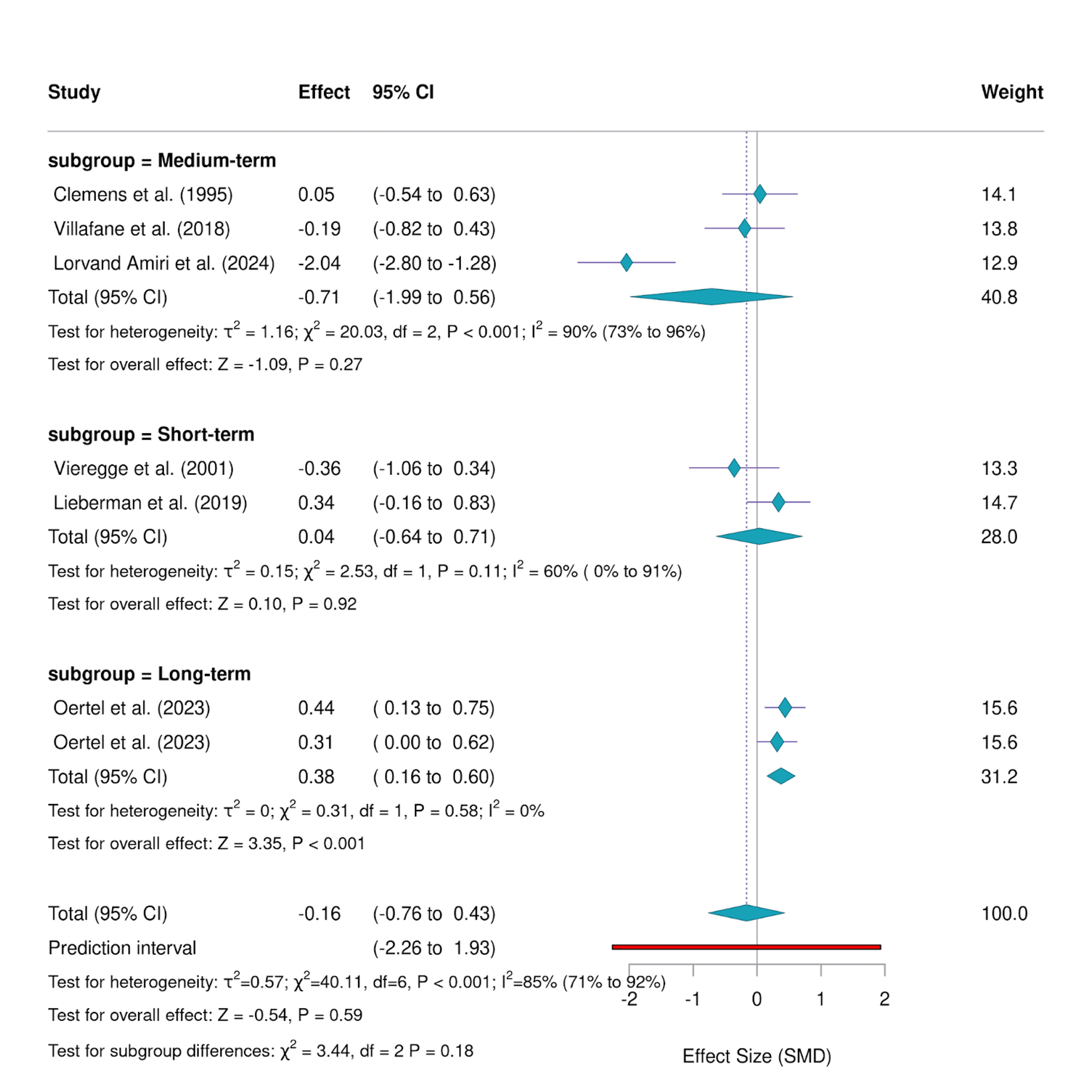
Figure 1. Pooled SMD of motor outcomes.
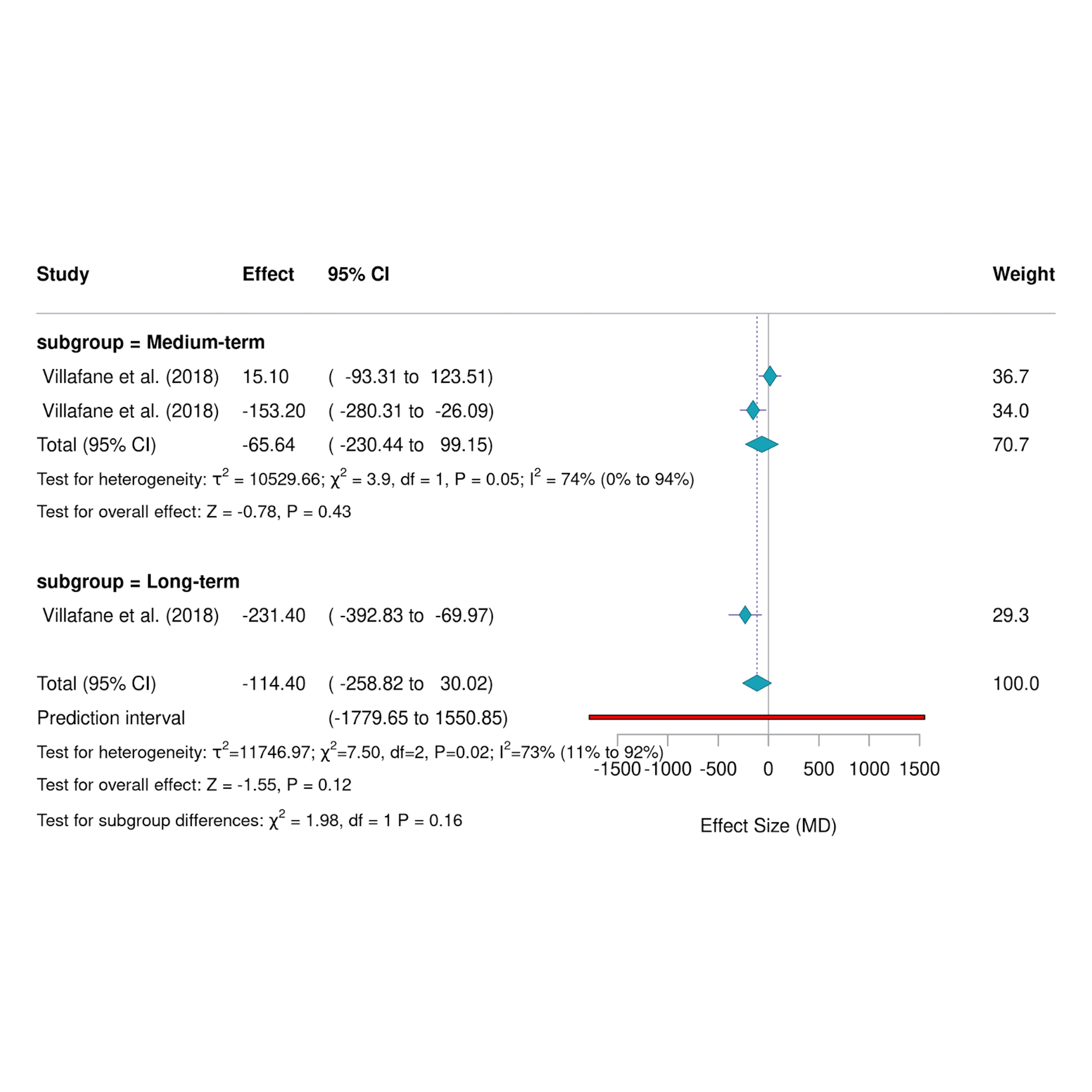
Figure 2. Pooled SMD of QoL.
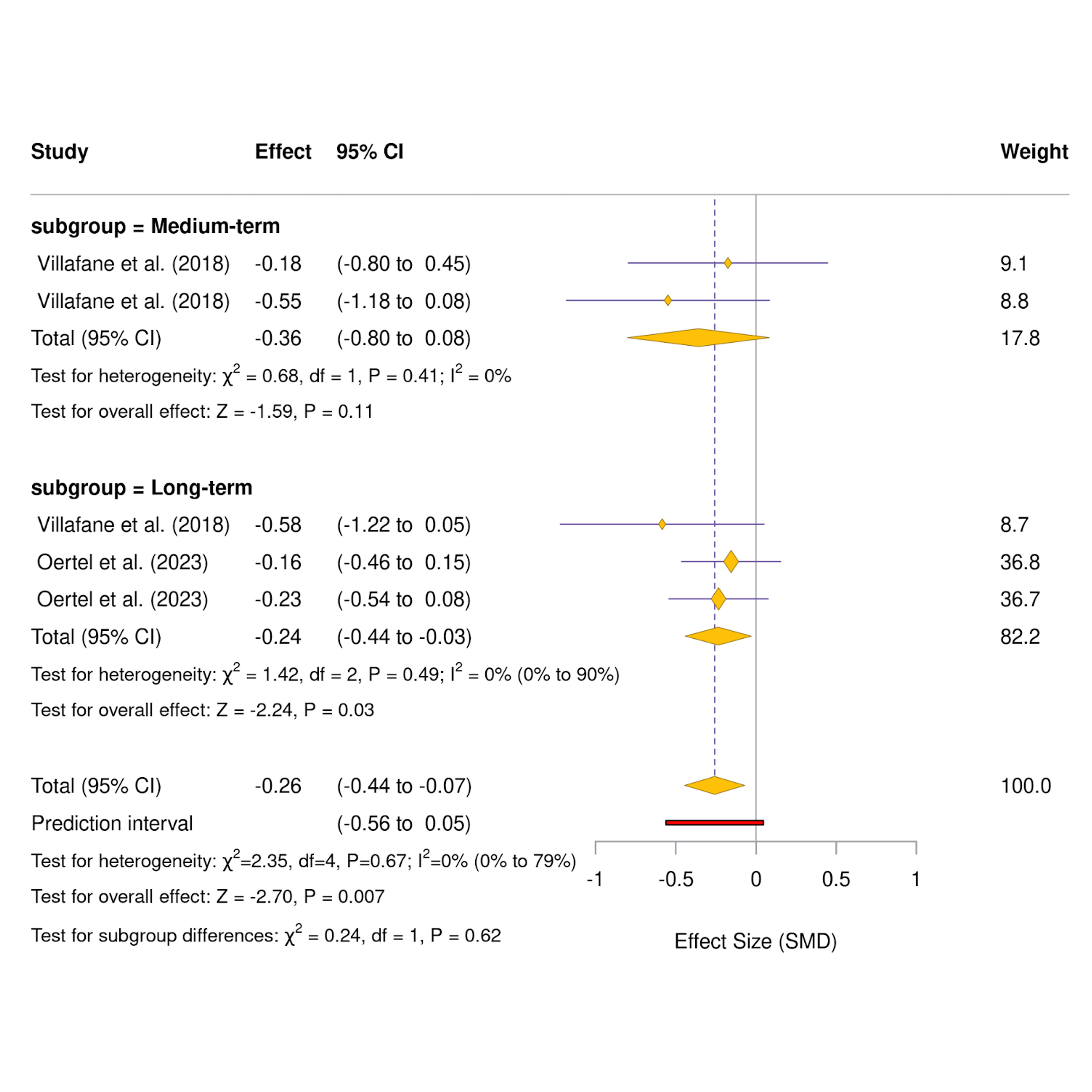
Figure 3. Pooled MD of LEDD.
To cite this abstract in AMA style:
J. Pitton Rissardo, J. Patino, A. Fornari Caprara, A. Mcgarry, I. Walker. Clinical Impact of Nicotine in Parkinson’s Disease: Evidence from Randomized Controlled Studies [abstract]. Mov Disord. 2026; 41 (suppl 1). https://www.mdsabstracts.org/abstract/clinical-impact-of-nicotine-in-parkinsons-disease-evidence-from-randomized-controlled-studies/. Accessed October 1, 2026.« Back to 2026 International Congress
MDS Abstracts - https://www.mdsabstracts.org/abstract/clinical-impact-of-nicotine-in-parkinsons-disease-evidence-from-randomized-controlled-studies/