
Category: MSA, PSP, CBS: Etiology
Objective: We aimed to (1) define the yield and spectrum of genetic findings in an unselected Atypical Parkinsonism (AP) series and (2) identify clinical markers associated with pathogenic/likely pathogenic (LP/P) variants and overall variant-positive results.We aimed to (1) define the yield and spectrum of genetic findings in an unselected AP series and (2) identify clinical markers associated with pathogenic/likely pathogenic (LP/P) variants and overall variant-positive results.
Background: AP comprises heterogeneous neurodegenerative syndromes with overlapping clinical features. Increasing reports describe monogenic neurological disorders that mimic AP, but evidence from systematic series is scarce, leaving uncertainty about when genetic testing is most informative in clinical practice.
Method: We conducted a single-centre study of 150 patients with clinically diagnosed AP, including multiple system atrophy, progressive supranuclear palsy, corticobasal syndrome, dementia with Lewy bodies, frontotemporal dementia, and vascular parkinsonism. All patients underwent genetic testing using next-generation sequencing. Genetic findings were classified according to ACMG/AMP criteria. We examined clinical variables—including age at onset, disease duration, family history, and the presence of a suspected overlapping diagnosis—for their association with LP/P variants and overall variant-positive status using multivariable logistic regression.
Results: Total 40% (60/150) AP patients were detected with positive variants, with highest rate in frontotemporal dementia (4/5, 80.00%) (fig 1). In adjusted models, younger age at onset (OR 0.94, 95% CI 0.89-0.996), family history (OR 6.54, 95% CI 1.32-38.28), and suspected overlapping diagnosis (OR 10.21, 95% CI 3.53-33.27) independently predicted LP/P variants; family history (OR 4.15, 95% CI 1.30-15.30) and suspected overlapping diagnosis (OR 3.69, 95% CI 1.70-8.27) predicted variant-positive status (fig 2). In subgroups, suspected overlapping diagnosis was also predictive for the detection of LP/P variants in both multiple system atrophy and progressive supranuclear palsy patients (fig 3).
Conclusion: The presence of overlapping diagnostic features is a powerful indicator of an underlying genetic aetiology. Systematic recognition of suspected overlapping diagnoses may help clinicians better identify patients who are most likely to benefit from genetic testing in routine practice.
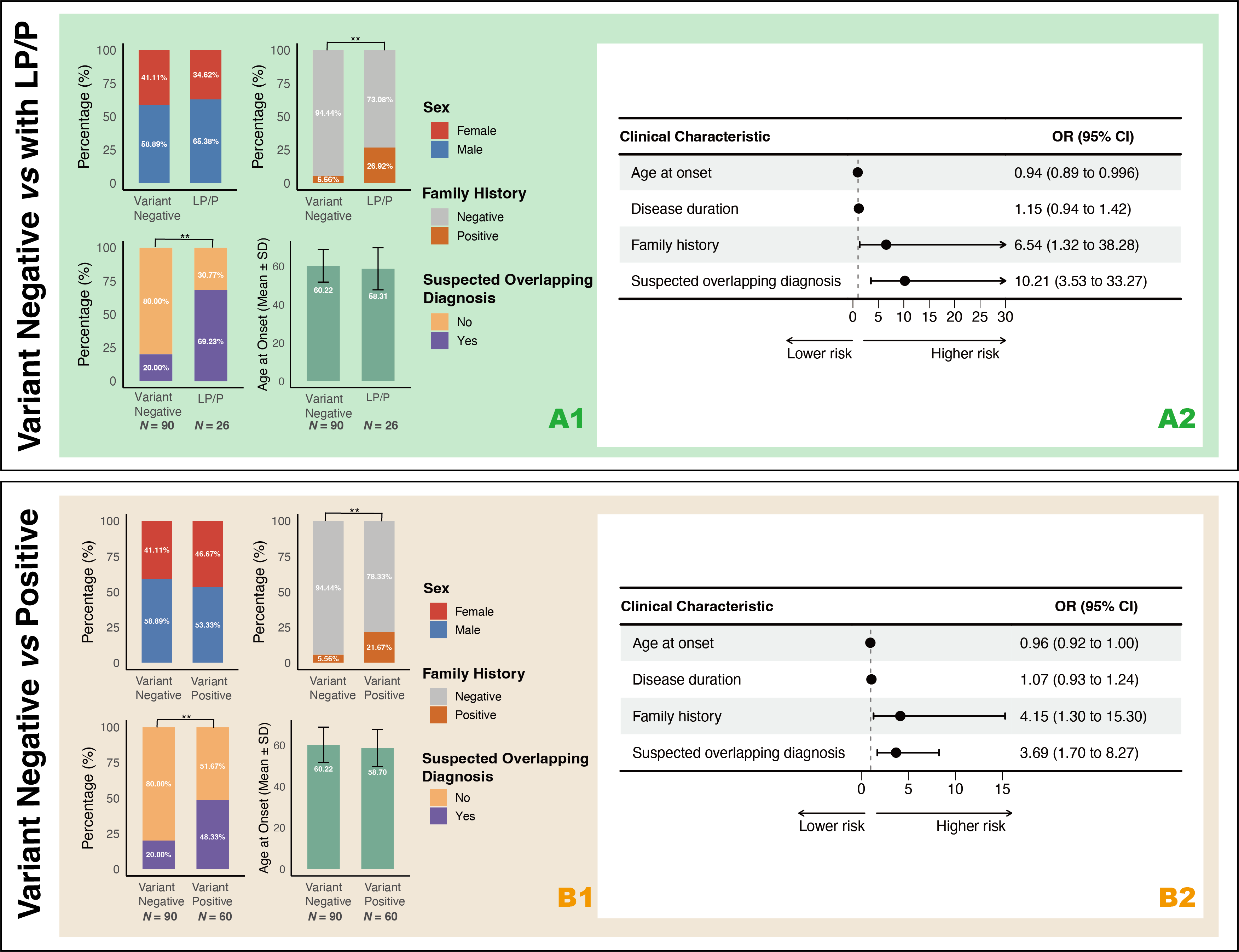
Fig 2
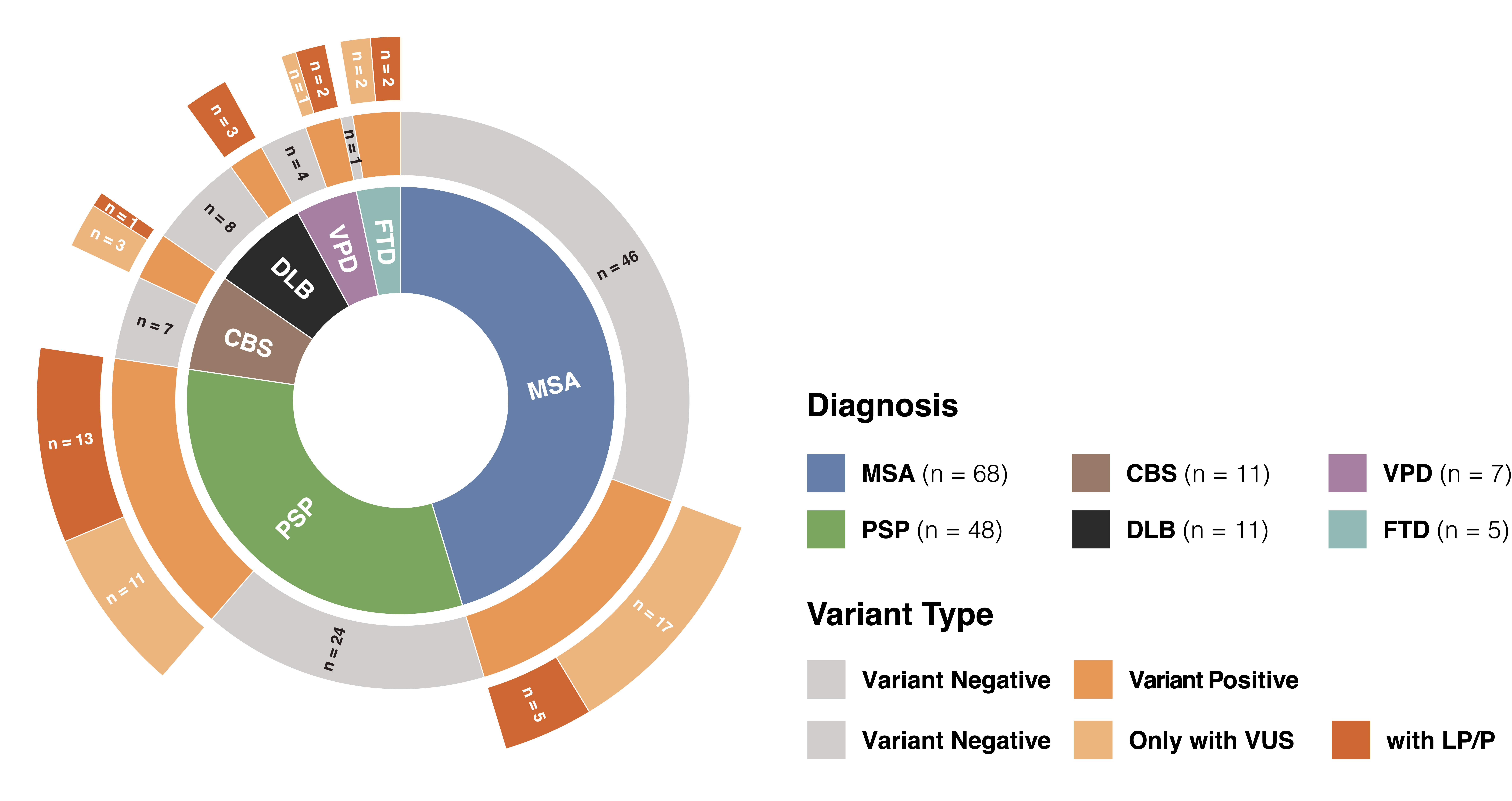
Fig 1
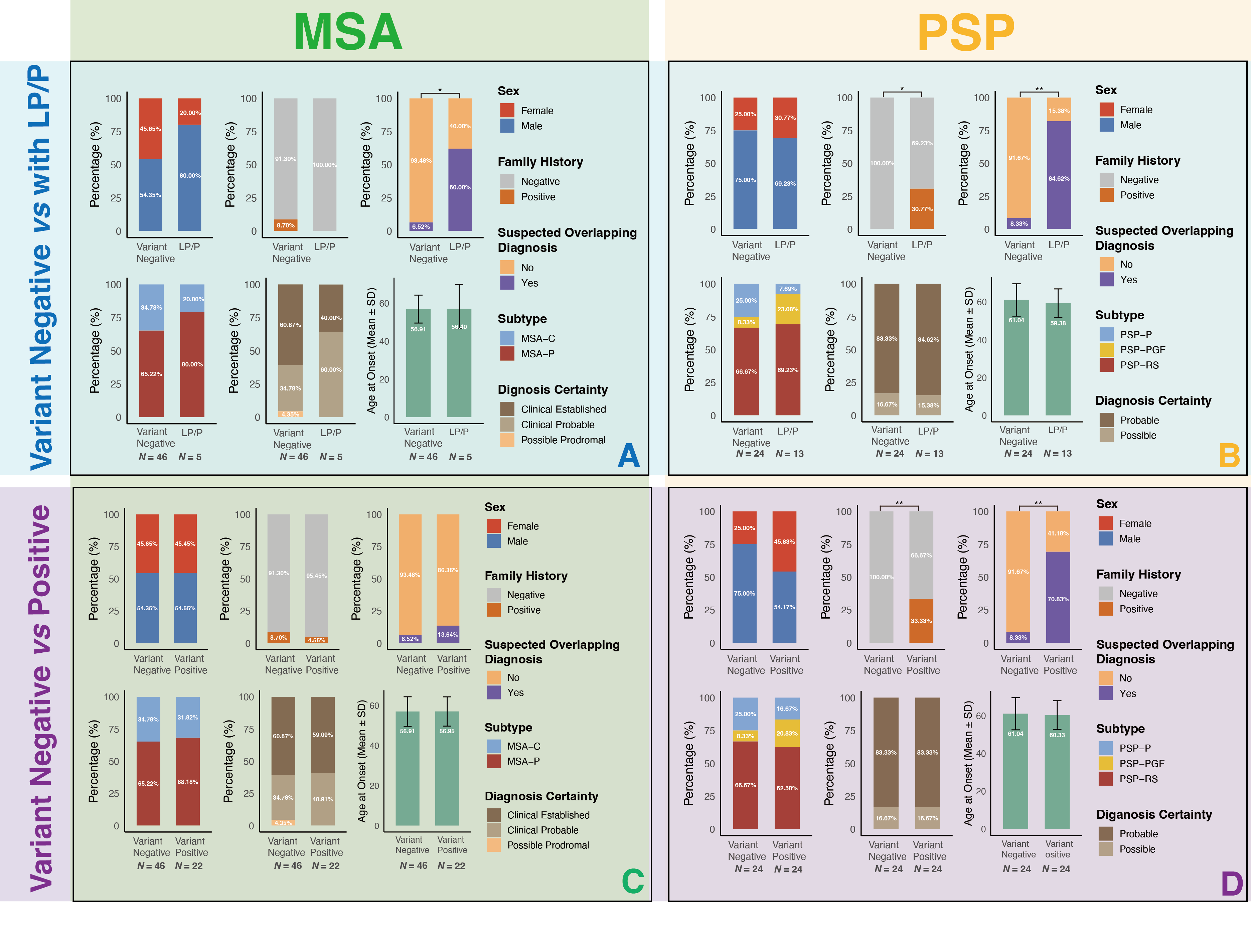
Fig 3
References: 1. Stamelou M, Quinn NP, Bhatia KP. “Atypical” atypical parkinsonism: New genetic conditions presenting with features of progressive supranuclear palsy, corticobasal degeneration, or multiple system atrophy—A diagnostic guide. Movement Disorders. 2013;28:1184–1199.
2. Suppa A, Asci F, Kamble N, et al. Neurophysiology of atypical parkinsonian syndromes: A study group position paper. Mov Disord. 2025;40:1451–1510.
3. Malaquias MJ, Igreja L, Nogueira C, et al. Diagnosis across a cohort of “atypical” atypical and complex parkinsonism. Parkinsonism & Related Disorders. 2023;111:105408.
4. Calikusu FZ, Akkus S, Kochan Kizilkilic E, et al. Atypical findings: Atypical parkinsonian syndromes or Atypical parkinsonian syndromes look-alikes. Clinical Neurology and Neurosurgery. 2023;233:107975.
To cite this abstract in AMA style:
ZD. Cen, YX. Kang, XH. Chen, B. Wang, W. Luo. Clinical Markers of Monogenic Mimics in Atypical Parkinsonism: Findings From a 150-Patient Series [abstract]. Mov Disord. 2026; 41 (suppl 1). https://www.mdsabstracts.org/abstract/clinical-markers-of-monogenic-mimics-in-atypical-parkinsonism-findings-from-a-150-patient-series/. Accessed October 1, 2026.« Back to 2026 International Congress
MDS Abstracts - https://www.mdsabstracts.org/abstract/clinical-markers-of-monogenic-mimics-in-atypical-parkinsonism-findings-from-a-150-patient-series/