
Objective: To compare the severity of motor and nonmotor manifestations of Parkinson’s disease (PD) in Indian patients with and without comorbid Type 2 Diabetes Mellitus (T2DM).
Background: T2DM is now known to be a risk factor for PD and its more rapid progression. [1-3] The sinister association between the two diseases is particularly important for India, with an aging population and a rapidly increasing number of diabetic patients.
Method: We recruited consecutive patients with PD from our Movement Disorders clinic and compared the motor and non-motor manifestations in those with comorbid T2DM with those without. We used the Movement Disorder Society-sponsored revision of the Unified Parkinson’s Disease Rating Scale (MDS-UPDRS) and the Nonmotor Symptoms Scale (NMSS) after obtaining the necessary permissions to assess the severity of motor and nonmotor dysfunction in patients.
Results: Among 100 consecutive patients with PD attending our movement disorders clinic, 39 had diabetes. Those with diabetes did not differ from those without diabetes with regard to age (62.7±7.3 Vs 61.2±7.1 years; p=0.312), duration of PD (7.1 ± 4.6 Vs 7.0 ± 5.9 years; p=0.951)or gender (Male: Female- 25:14 Vs 36:25; p=0.611). The Levodopa equivalent daily doses did not differ significantly between the two groups. The total NMSS scores (52.8±33.1 vs 40.3 ±28.2; p=0.065) tended to be worse in the diabetic group (Table 1), while the UPDRS I scores were significantly higher (10.4 ±5.3 vs 7.7±5.0; p=0.020)(Table 2). Among the various nonmotor symptom domains, the sleep-fatigue and attention-memory domains showed worse scores in the diabetic group. The UPDRS II and III total scores did not show any significant difference; however, certain components like speech (p=0.046), facial expression (0.008), rigidity (0.019), freezing of gait (0.047), posture (p=0.001), and kinetic tremor (0.020) were significantly worse in the diabetic group (Tables 3 and 4). Motor fluctuations were more severe in the diabetic group (0.028) (Table 5).
Conclusion: Patients with PD having comorbid T2DM have more severe nonmotor and axial motor dysfunction and more severe motor fluctuations compared to their non-diabetic counterparts. Our study supports the recent observations that T2DM may be associated with a more rapid progression of PD [4].
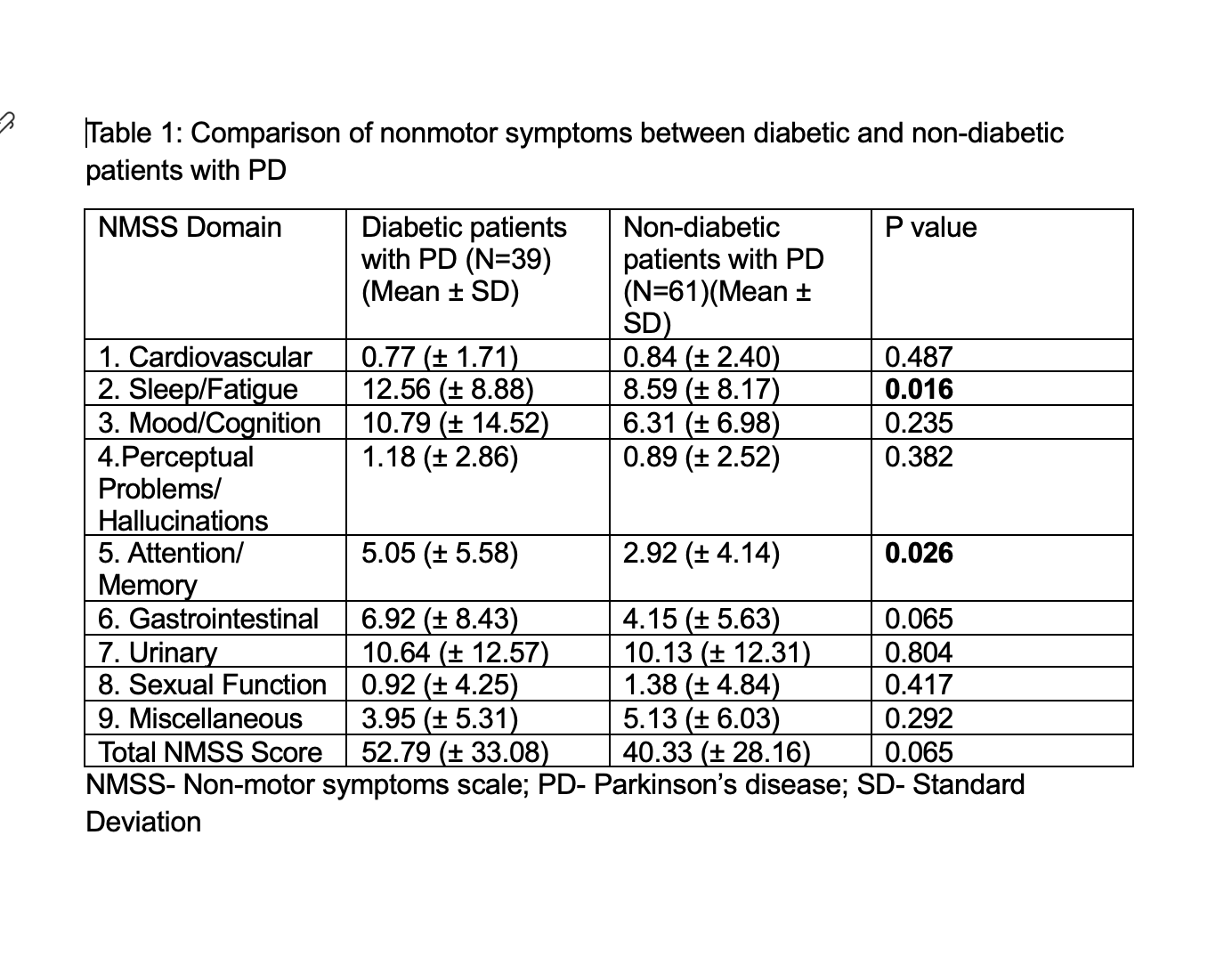
Table 1
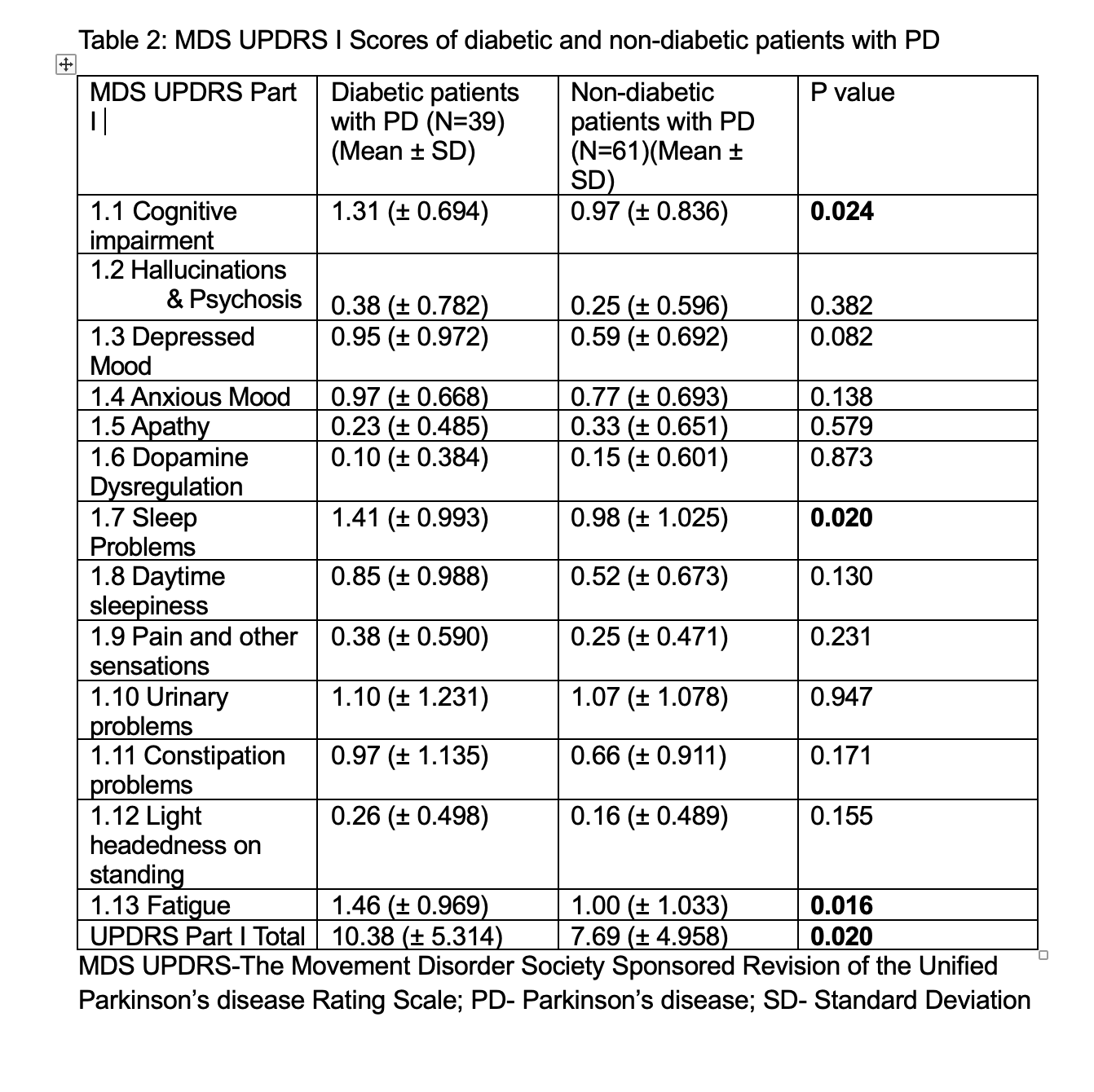
Table 2
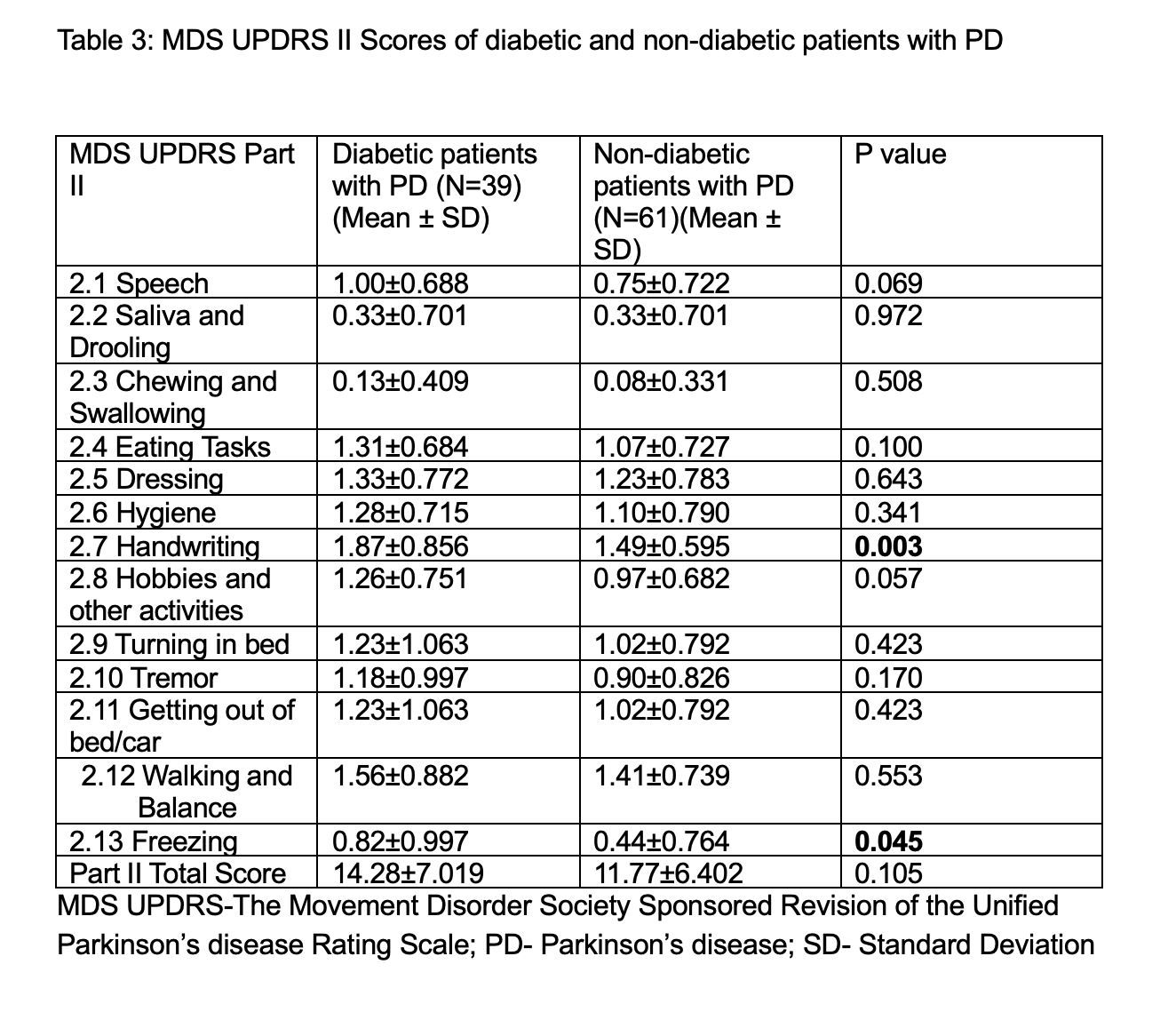
Table 3
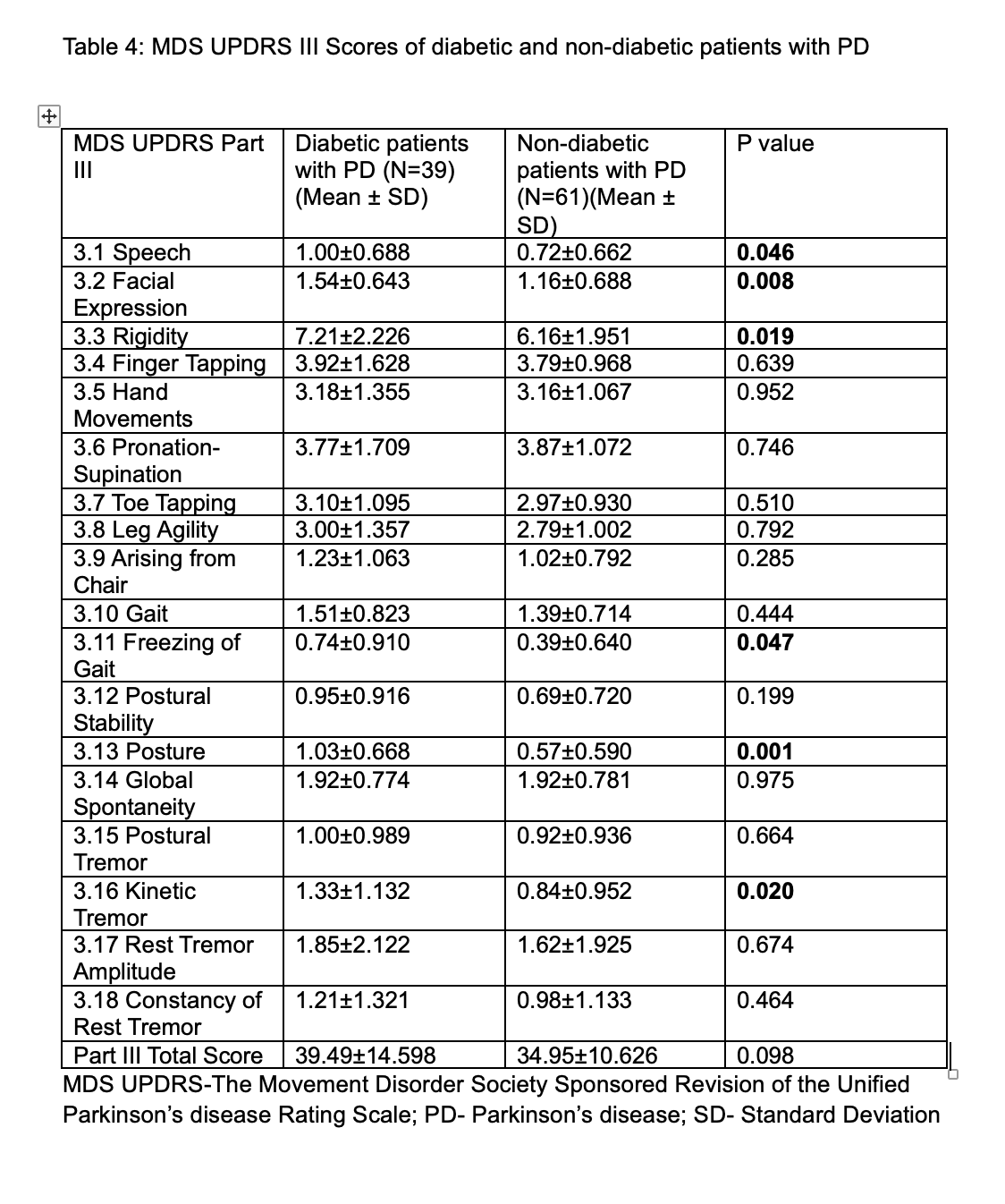
Table 4
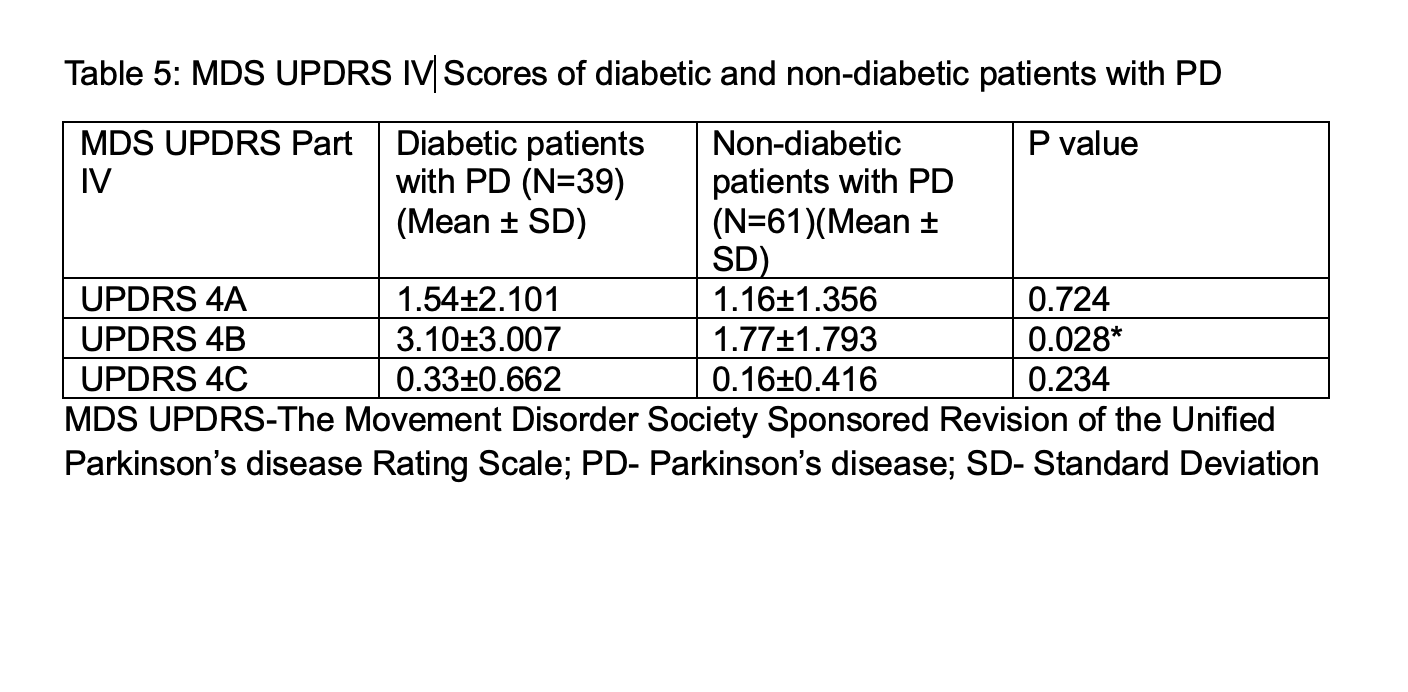
Table 5
References: 1. Chohan H, Senkevich K, Patel RK, et al. Type 2 diabetes as a determinant of Parkinson’s disease risk and progression. Mov Disord 2021;36:1420–1429.
2. Kotagal V, Albin RL, Müller MLTM, Koeppe RA, Frey KA, Bohnen NI. Diabetes is associated with postural instability and gait difficulty in Parkinson disease. Parkinsonism Relat Disord 2013;19:522–526
3. Mohamed Ibrahim N, Ramli R, Koya Kutty S, Shah SA. Earlier onset of motor complications in Parkinson’s patients with comorbid diabetes mellitus. Mov Disord 2018;33:1967–1968.
4. Cullinane PW, de Pablo Fernandez E, König A, Outeiro TF, Jaunmuktane Z, Warner TT. Type 2 Diabetes and Parkinson’s Disease: A Focused Review of Current Concepts. Mov Disord. 2023;38(2):162-177.
To cite this abstract in AMA style:
S. Krishnan, S. Veena, A. Vijayaraghavan, S. Sachithanandan, D. Puthenveedu. Comorbid Diabetes Exacerbates Motor and Nonmotor Dysfunction in Parkinson’s disease- a Cross-sectional Study [abstract]. Mov Disord. 2026; 41 (suppl 1). https://www.mdsabstracts.org/abstract/comorbid-diabetes-exacerbates-motor-and-nonmotor-dysfunction-in-parkinsons-disease-a-cross-sectional-study/. Accessed October 1, 2026.« Back to 2026 International Congress
MDS Abstracts - https://www.mdsabstracts.org/abstract/comorbid-diabetes-exacerbates-motor-and-nonmotor-dysfunction-in-parkinsons-disease-a-cross-sectional-study/