
Category: Choreas (Non-Huntington's Disease)
Objective: To report a case of cryptococcal meningitis in a person living with Human immunodeficiency virus (HIV) presented with lower body parkinsonism and subsequent generalized chorea.
Background: Chorea is a continuous, flowing and unpredictable movement disorder. In people living with HIV, several conditions may cause chorea. This case report describes cryptococcal meningitis, a common opportunistic infection, presented with an unusual movement disorder.
Method: A 60-year-old man with type 2 diabetes presented with a 3-month history of non-resolving pneumonia. Over the ensuing month, the patient developed progressive gait instability consistent with lower body parkinsonism and urinary incontinence. Initial contrast-enhanced brain CT showed non-obstructive hydrocephalus and leptomeningeal enhancement at right occipital area as shown in Figure 1. CSF analysis revealed elevated opening pressure of 25 cmH2O with otherwise unremarkable CSF profile. The patient experienced transient improvement in gait following three serial therapeutic CSF drainages. Subsequently, the patient developed altered mental status and acute generalized chorea.
Results: Further investigation revealed reactive HIV with severely reduced CD4+ count of 26 cells/µL. Metabolic profiles were unremarkable, including blood glucose and thyroid function test. Brain MRI did not demonstrate any parenchymal abnormalities, including basal ganglia region. Repeat CSF analysis showed WBC count of 3 cells/µL, elevated protein of 95 mg/dL and low CSF/serum glucose ratio of 0.38 (CSF glucose 60 mg/dL; serum glucose 159 mg/dL). Both CSF and serum cryptococcal antigen tests were positive. CSF studies for Mycobacterium tuberculosis were negative. Regarding the pneumonia, chest CT revealed a cavitary lesion in the right lung, but no causative pathogen was identified. The patient was diagnosed with cryptococcal meningitis with non-obstructive hydrocephalus. Amphotericin B and flucytosine were initiated and haloperidol was given for symptomatic control of generalized chorea. The abnormal movements improved significantly in a following week. However, the patient later succumbed to nosocomial sepsis.
Conclusion: Cryptococcal meningitis should be considered in people living with HIV with a new onset lower body parkinsonism and generalized chorea. Prompt initiation of antifungal therapy may mitigate movement disorder.
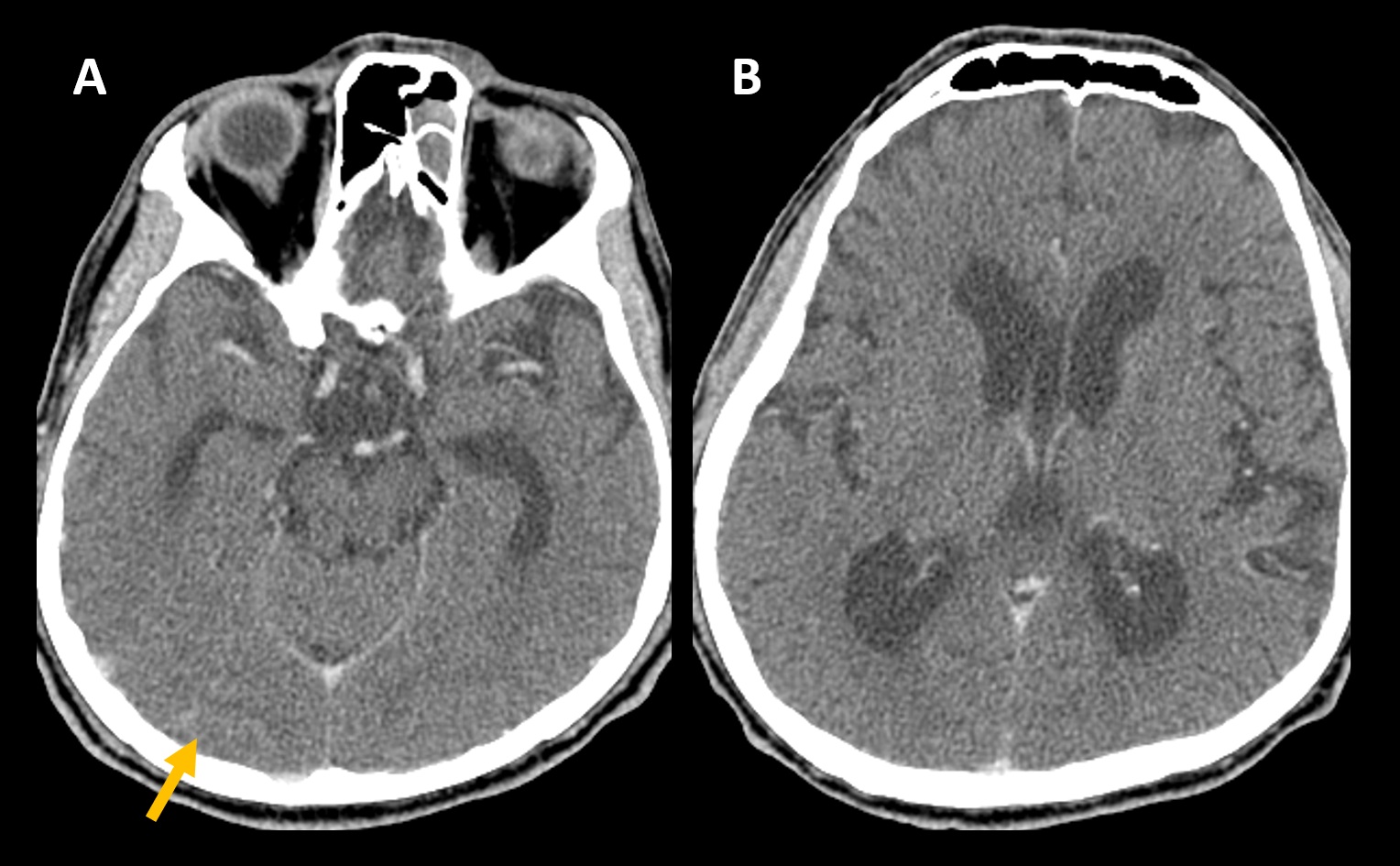
Figure 1.
To cite this abstract in AMA style:
S. Songwisit, P. Boonumnuay, Y. Pitakpatapee, W. Saengphatrachai. Cryptococcal Meningitis Presenting with Lower Body Parkinsonism and Generalized Chorea: A Case Report [abstract]. Mov Disord. 2026; 41 (suppl 1). https://www.mdsabstracts.org/abstract/cryptococcal-meningitis-presenting-with-lower-body-parkinsonism-and-generalized-chorea-a-case-report/. Accessed October 1, 2026.« Back to 2026 International Congress
MDS Abstracts - https://www.mdsabstracts.org/abstract/cryptococcal-meningitis-presenting-with-lower-body-parkinsonism-and-generalized-chorea-a-case-report/