
Objective: This study investigates the clinical characteristics and phenomenological differences between patients with FTM and those with organic tics (OT).
Background: Functional tic-like movements (FTM) are relatively rare among functional movement disorders and pose a diagnostic challenge to the clinician.
Method: A total of 6 patients diagnosed with FTM and 18 patients with OT were analysed, focusing on the demographic factors, onset, severity, and nature of their movements.
Results: FTM were more common in adolescent females, while OT predominantly affected younger males (<10 years). FTM had a more abrupt onset, precipitation by life stressors, occurred later in life (compared to a mean age of 6 years for OT), and demonstrated a higher prevalence of complex movements compared to the more stereotyped and simple movements in OT. Dominant upper limb involvement, lack of premonitory urge and suppressibility, and pain involving the extremity affected by FTM were other features differentiating it from OT. Associated anxiety and depression were more common in FTM while attention deficit hyperactivity disorder and obsessive-compulsive disorder featured in OT. Family history of tics was absent in FTM while it was present in one third of patients with OT.
Conclusion: Later age of presentation, abrupt onset with complex movements, lack of urge, dominant upper extremity affliction and associated pain are features of FTM whereas simple movements with cranio-caudal distribution are more characteristic of OT. These findings will aid clinicians in differentiating between these conditions for better management strategies.
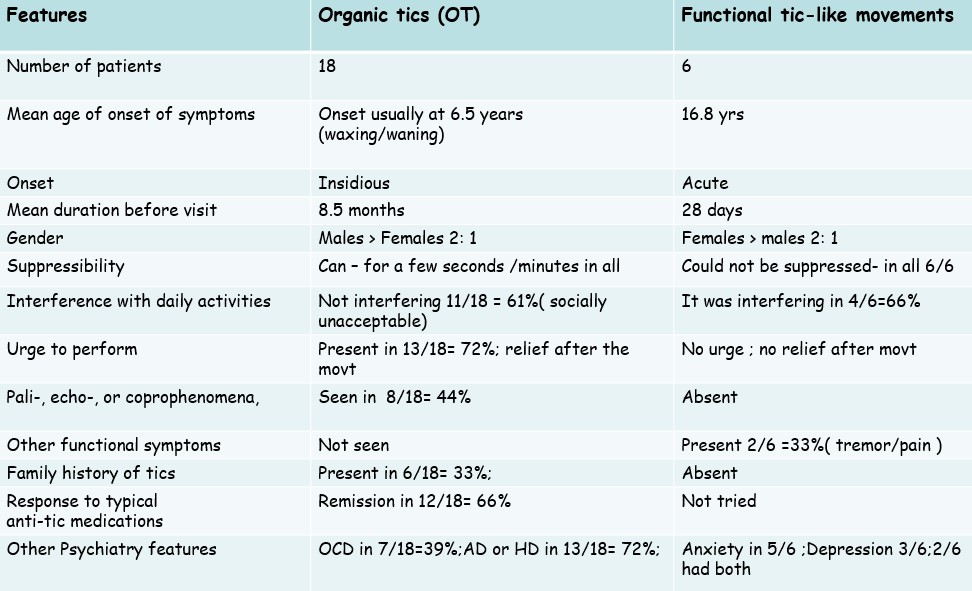
Figure 1: Comparison of FTM and Organic tics
References: 1.Ganos, C., Martino, D., Espay, A. J., Lang, A. E., Bhatia, K. P., & Edwards, M. J. (2019). Tics and functional tic-like movements: Can we tell them apart? Neurology, 93(17), 750–758. https://doi.org/10.1212/WNL.0000000000008372
To cite this abstract in AMA style:
A. Cherian, D. Kalikavil Puthanveedu. Differentiating Functional Tic-like Movements from Organic Tics-Mind the Gap [abstract]. Mov Disord. 2025; 40 (suppl 1). https://www.mdsabstracts.org/abstract/differentiating-functional-tic-like-movements-from-organic-tics-mind-the-gap/. Accessed October 15, 2026.« Back to 2025 International Congress
MDS Abstracts - https://www.mdsabstracts.org/abstract/differentiating-functional-tic-like-movements-from-organic-tics-mind-the-gap/