
Category: Disparities
Objective: The objective of this study is to better characterize the disparities for DBS access using a mixed-methods approach to quantify and understand demographic differences in access to DBS among patients with tremor and dystonia.
Background: Deep brain stimulation (DBS) is an established therapeutic intervention for tremor and dystonia in appropriately selected patients. However, disparities in access to DBS exist, particularly among women and racialized populations, and are less studied compared with Parkinson’s disease. While barriers and biases influencing DBS utilization in these groups remain underexplored, identifying disparities is essential to ensuring equitable healthcare access.
Method: A sequential explanatory mixed methods design was used. A retrospective chart review and telephone survey were conducted with patients treated at two Canadian centers. Quantitative data was analyzed using inferential statistics. Semi-structured qualitative interviews were then conducted with purposively sampled participants and analyzed using thematic analysis.
Results: One hundred and fifty-two patients participated in the retrospective chart review. Despite a higher proportion of women at the referral stage, a greater number of men ultimately underwent DBS implantation. The vast majority (>85%) of both referred and implanted patients were White, Canadian-born with English as native language. Implanted patients were more commonly referred by subspecialist neurologists. Levels of education, marital status, rural resident, and household income did not associate with DBS access. Sixteen tremor and dystonia patients participated in the qualitative interviews, which three key themes were identified: (1) ‘Just a Shaky Gal’ – A Gendered Lens to DBS Decision-Making, (2) Pushing for More – Self-Advocacy in the Community and the Role of Community Providers in Facilitating DBS Access, and (3) Hidden Layers – Ethnicity, Cultural and Other Demographic Considerations for DBS.
Conclusion: The DBS referral and implantation for tremor and dystonia was characterized by ethnicity, gender, and referral-based disparities. These findings highlight the need for targeted efforts to improve equitable access to DBS for women and racialized populations, as well as information to providers in the community.
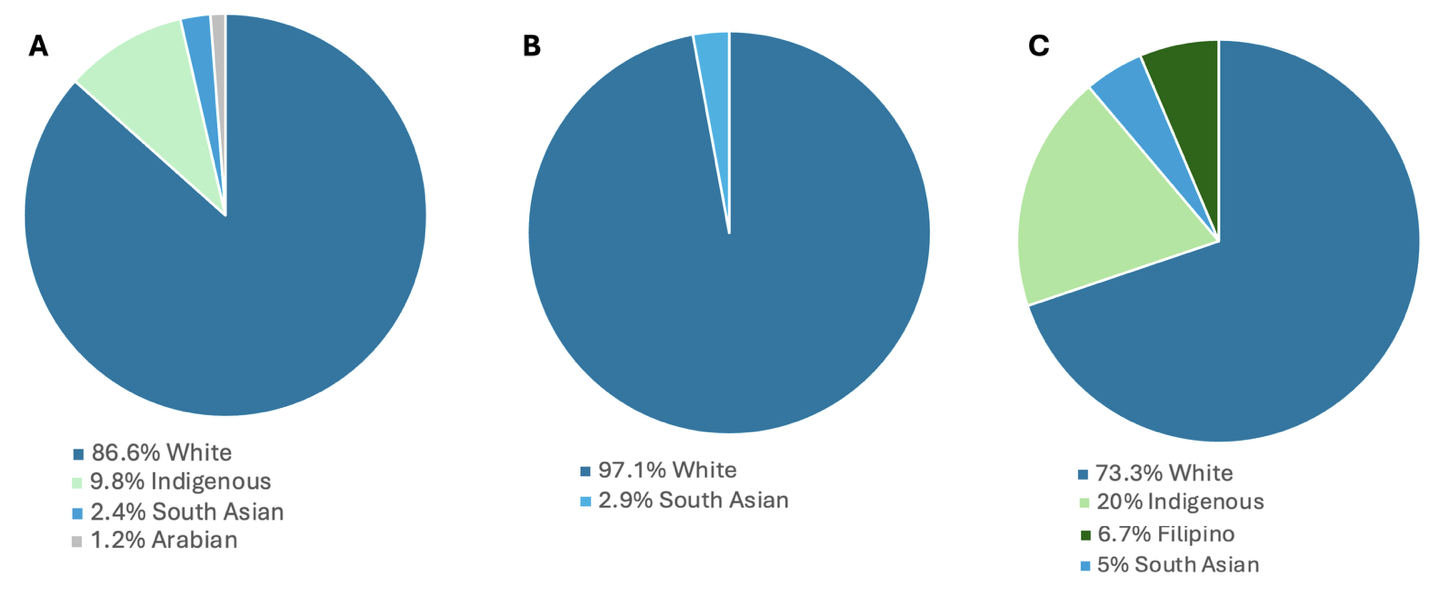
Ethnicity distribution by cohort
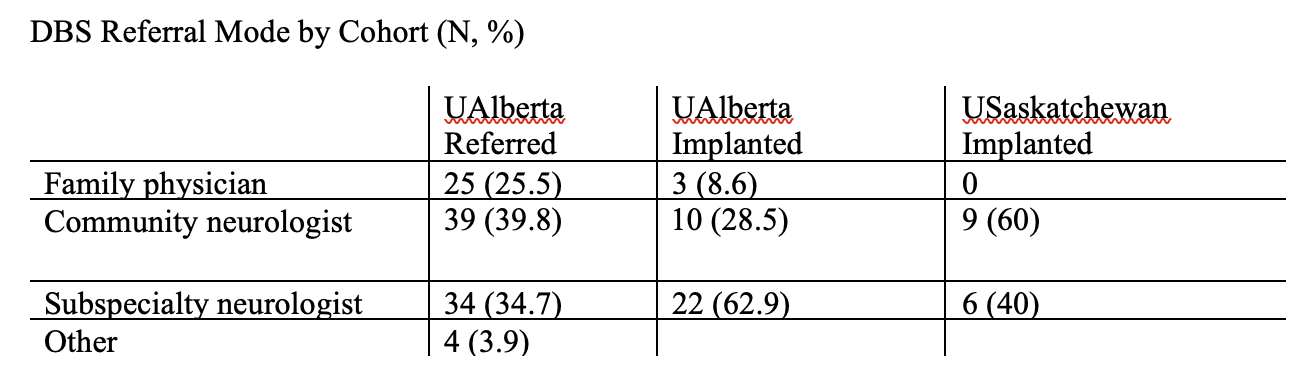
DBS referral mode by cohort (N, %)
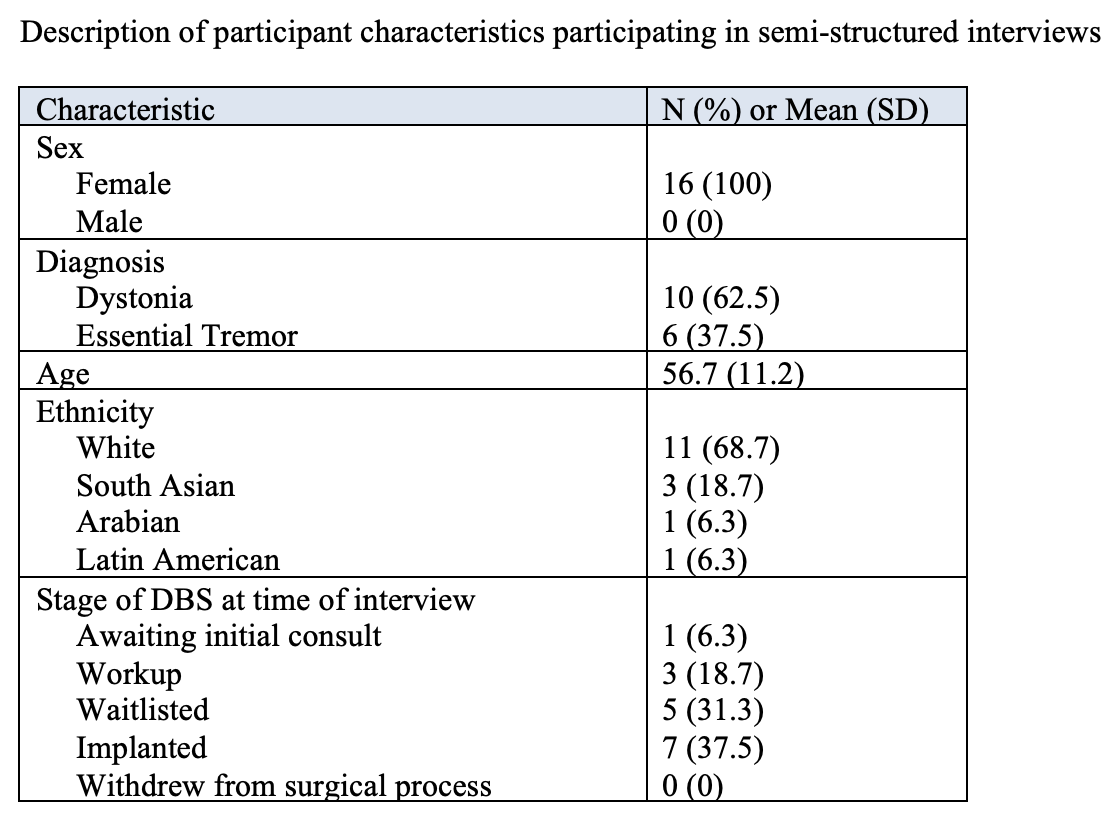
Description of participants interviewed
To cite this abstract in AMA style:
S. Corrick, J. Miyasaki, A. Hyde, S. Poonja, B. Duad Shah, E. Noyes, P. Torabi, K. Yen, G. Dimapilis, T. Sankar, A. Rajput, A. Vitali, B. Oladunni Salami, F. Ba. Disparities for Tremor and Dystonia Patients Accessing Deep Brain Stimulation: An Explanatory Sequential Mixed Methods Study [abstract]. Mov Disord. 2026; 41 (suppl 1). https://www.mdsabstracts.org/abstract/disparities-for-tremor-and-dystonia-patients-accessing-deep-brain-stimulation-an-explanatory-sequential-mixed-methods-study/. Accessed October 1, 2026.« Back to 2026 International Congress
MDS Abstracts - https://www.mdsabstracts.org/abstract/disparities-for-tremor-and-dystonia-patients-accessing-deep-brain-stimulation-an-explanatory-sequential-mixed-methods-study/