
Category: MSA, PSP, CBS: Clinical Trials
Objective: To investigate the characteristics and mechanism of dysphagia in patients with Progressive Supranuclear Palsy(PSP).
Background: Up to 79% of patients with PSP suffer from dysphagia, which is the primary risk factor for poor prognosis[1]. However, its underlying pathophysiological mechanisms have not been fully elucidated. Notably, we observed oropharyngeal freezing (OPF) in several PSP patients in clinical practice, which has been reported in PD but was rarely reported or studied in PSP[2].
Method: Videofluoroscopic swallowing study (VFSS) was performed to examine the swallowing function. Key VFSS parameters included the Videofluoroscopic Dysphagia Scale (VDS), Penetration-Aspiration Scale and OPF. Meanwhile, functional Near-Infrared Spectroscopy (fNIRS) was used to assess cortical activation during swallowing tasks and resting state in PSP patients, with beta values as the primary measure of activation intensity. Statistical analyses were performed to explore the associations between clinical parameters and VFSS parameters, and further conducted Spearman correlation analysis to examine the correlation between fNIRS-derived cortical activation beta values and VFSS parameters.
Results: Sixty-two PSP patients were enrolled (Table 1). Forty-one (66.1%) of them exhibited penetration or aspiration. The mean VDS score was 31.9±16.1. Disease duration, MDS-UPDRS III score, Hoehn-Yahr stage (HY) and orthostatic hypotension were significantly correlated with VDS scores (Table 2). OPF was observed in 6 patients (9.7%), which was significantly associated with longer disease duration and higher HY stage (Fig 1). A total of 8 patients completed the fNIRS examination, among whom only 1 patient presented with OPF. For this fNIRS sub-cohort, resting-state fNIRS analysis showed that the patient with OPF exhibited higher overall cortical activation levels than the remaining 7 patients without OPF (Fig 1). Furthermore, task-state fNIRS analysis revealed that the activation levels of Brodmann areas 17, 27 and 37 were significantly correlated with higher VDS scores (P<0.05) (Table 3).
Conclusion: Our study demonstrated a high prevalence of dysphagia in PSP patients, with longer disease duration, higher disease severity, higher motor dysfunction and orthostatic hypotension being the related factors. Furthermore, we supplemented the dysphagia phenotype of OPF in PSP, and preliminarily revealed the cortical neural correlates of dysphagia in PSP.
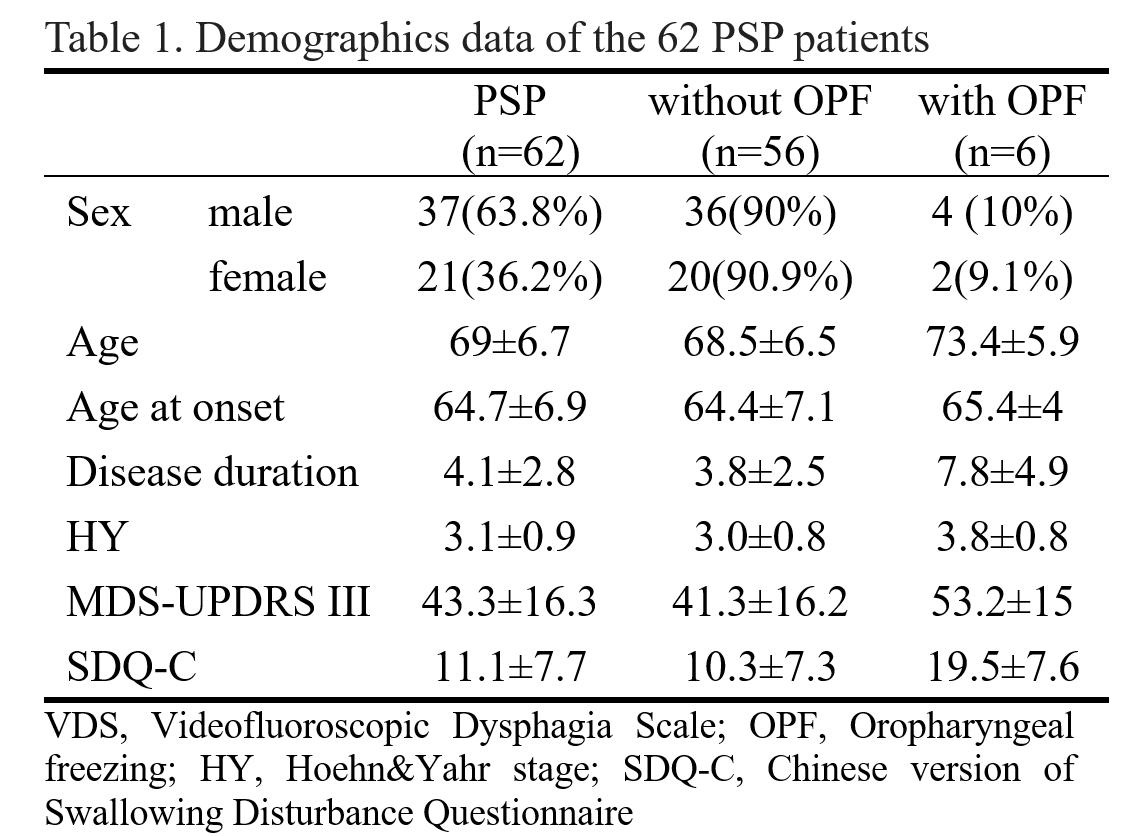
Table 1. Demographics data of the 62 PSP patients
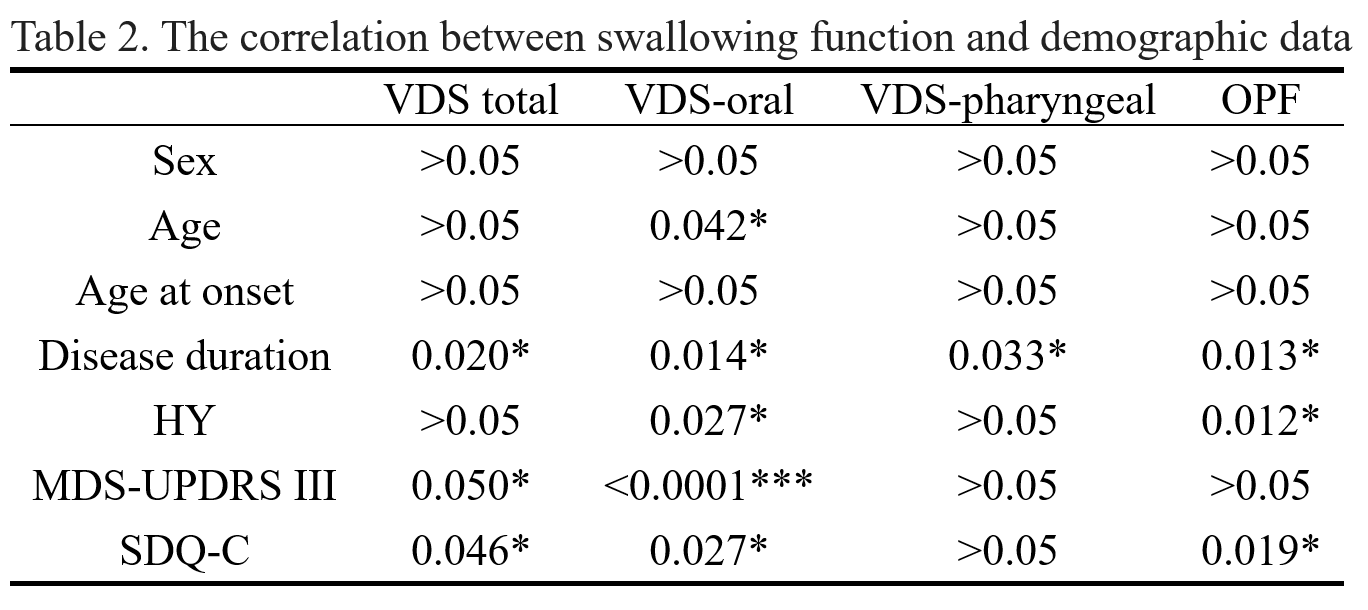
Table 2
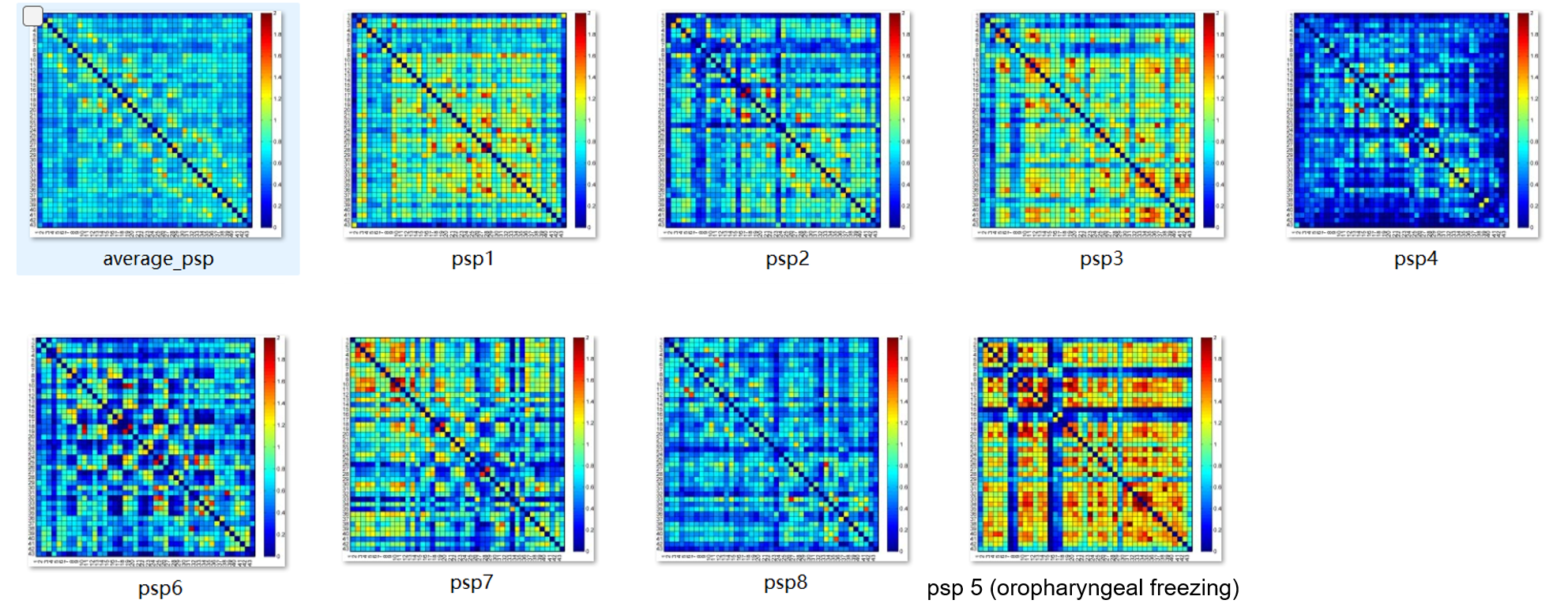
Figure 1
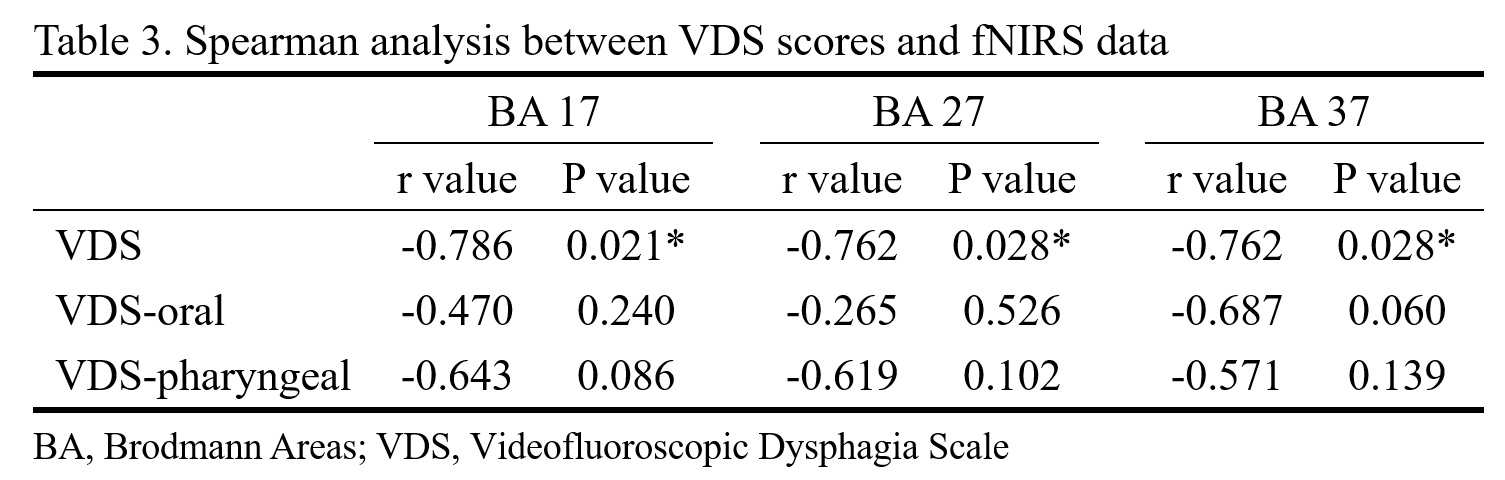
Table 3
References: [1] Glinzer J, Flynn É, Tampoukari E, et al. Dysphagia Prevalence in Progressive Supranuclear Palsy: A Systematic Review and Meta-Analysis. Dysphagia. 2024, 39(6):1052-1064.
[2] Labeit B, Claus I, Muhle P, et al. Oropharyngeal freezing and its relation to dysphagia – An analogy to freezing of gait. Parkinsonism Relat Disord. 2020: 75:1-6.
To cite this abstract in AMA style:
P. Wang, Y. Xia, B. Wang, W. Luo, B. Xiong, W. Luo. Dysphagia and Oropharyngeal Freezing in Progressive Supranuclear Palsy [abstract]. Mov Disord. 2026; 41 (suppl 1). https://www.mdsabstracts.org/abstract/dysphagia-and-oropharyngeal-freezing-in-progressive-supranuclear-palsy/. Accessed October 1, 2026.« Back to 2026 International Congress
MDS Abstracts - https://www.mdsabstracts.org/abstract/dysphagia-and-oropharyngeal-freezing-in-progressive-supranuclear-palsy/