
Objective: To characterize the frequency of early-onset Parkinson’s disease and the use of deep brain stimulation among Parkinson’s disease patients evaluated in a tertiary movement disorders clinic.
Background: Early-onset Parkinson’s disease (EOPD) represents a distinct clinical subgroup often associated with longer disease duration and increased likelihood of advanced therapies such as deep brain stimulation (DBS). However, real-world data describing DBS utilization among EOPD patients in tertiary referral centers remain limited.
Method: We conducted a retrospective analysis of a clinical database including 1631 consultations performed in a tertiary movement disorders clinic between 2025 and 2026. Patients with a diagnosis of Parkinson’s disease were identified. Early-onset Parkinson’s disease was defined as age <50 years. DBS status was determined from clinical records. Differences in DBS utilization between early-onset and late-onset Parkinson’s disease were analyzed using Fisher’s exact test.
Results: A total of 862 patients with Parkinson’s disease were identified (mean age 63.2 ± 12.2 years). Among them, 87 patients (10.1%) had early-onset Parkinson’s disease. Overall, 167 patients (19.4%) had undergone deep brain stimulation. DBS utilization was significantly higher among EOPD patients (39.1%) compared with late-onset Parkinson’s disease (17.2%). Early-onset patients were three times more likely to undergo DBS than late-onset patients (OR 3.10, p < 0.001). Genetic forms of Parkinson’s disease were identified in approximately 1.0% of the overall cohort and 3.5% of early-onset cases.
Conclusion: In this tertiary movement disorders clinic, early-onset Parkinson’s disease accounted for approximately 10% of Parkinson’s disease cases. Genetic forms were identified in a minority of patients; however, these findings should be interpreted cautiously because not all patients underwent comprehensive genetic testing and several represent clinical suspicion rather than molecular confirmation. DBS utilization was high overall and significantly more frequent in early-onset patients, highlighting the concentration of advanced and complex cases in specialized referral centers.
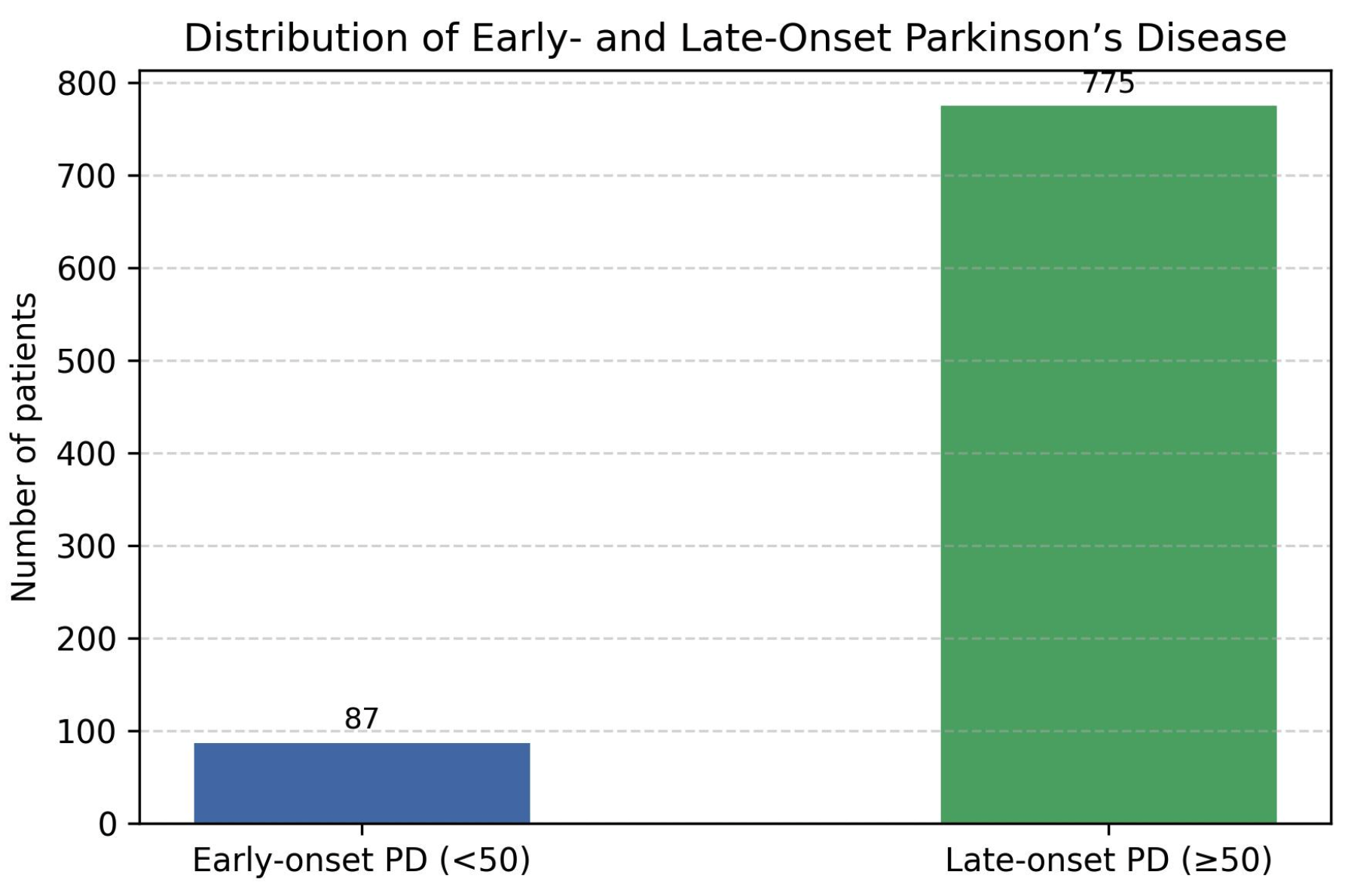
Distribution of EOPD and LOPD
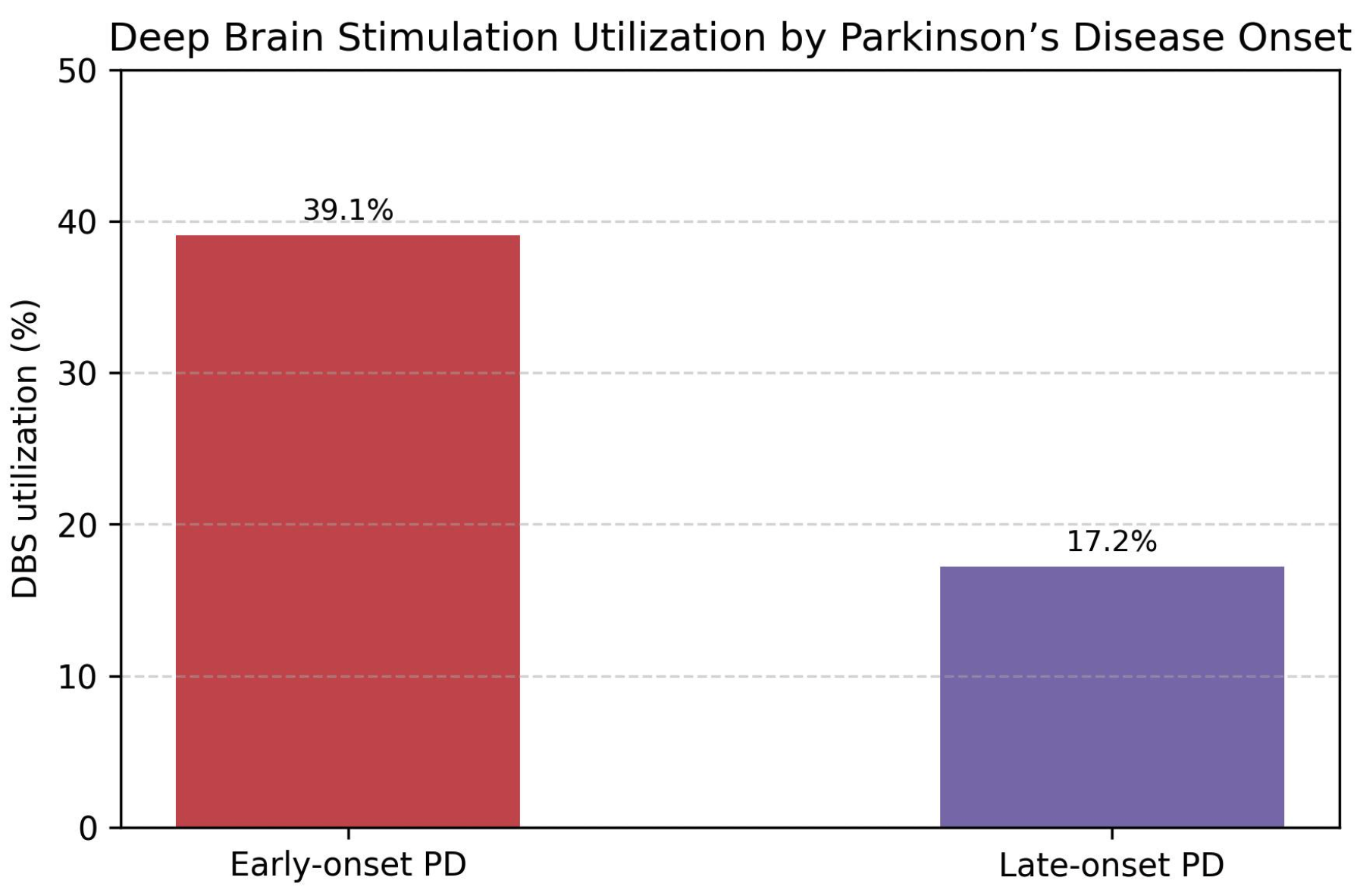
DBS Utilization by Parkinson’s Disease Onset
References: 1. Krause P, Reimer J, Kaplan J, et al. Deep brain stimulation in Early Onset Parkinson’s disease. Front Neurol. 2022;13:1041449. Published 2022 Nov 17. doi:10.3389/fneur.2022.1041449
2. Deng H, Wang P, Jankovic J. The genetics of Parkinson disease. Ageing Res Rev. 2018 Mar;42:72-85. doi: 10.1016/j.arr.2017.12.007.
To cite this abstract in AMA style:
M. Arbeu Reyes, M. Rodríguez Violante, A. Cervantes Arriaga. Early-Onset Parkinson’s Disease Is Associated With Higher Utilization of Deep Brain Stimulation: Real-World Data From a Tertiary Movement Disorders Clinic [abstract]. Mov Disord. 2026; 41 (suppl 1). https://www.mdsabstracts.org/abstract/early-onset-parkinsons-disease-is-associated-with-higher-utilization-of-deep-brain-stimulation-real-world-data-from-a-tertiary-movement-disorders-clinic/. Accessed October 1, 2026.« Back to 2026 International Congress
MDS Abstracts - https://www.mdsabstracts.org/abstract/early-onset-parkinsons-disease-is-associated-with-higher-utilization-of-deep-brain-stimulation-real-world-data-from-a-tertiary-movement-disorders-clinic/