
Category: Parkinsonism (Other)
Objective: The coexistence of Parkinson’s disease (PD) and ALS is uncommon. This overlap syndrome, characterized by levodopa-responsive parkinsonism in the context of ALS, has been described as Brait–Fahn–Schwartz (BFS) disease and is considered distinct from extrapyramidal features that may occur as part of ALS. We present the clinical, radiological, and genetic findings of a patient with BFS disease found to carry a pathogenic variant in FUS, representing the first reported association of FUS mutation with this overlap phenotype.
Background: A 33-year-old Malay man initially presented with a three-month history of right upper limb postural tremor in 2023 and was diagnosed with essential tremor with symptomatic improvement on propranolol. Two years later he developed worsening resting and postural tremor, right-sided rigidity and bradykinesia, together with new bilateral hand weakness and dysarthria. Examination revealed hypomimia, asymmetric parkinsonism, tongue atrophy with fasciculations, and mixed upper and lower motor neuron signs. Cognitive screening was normal. Electromyography demonstrated acute and chronic denervation across cervical, thoracic, lumbosacral and bulbar segments consistent with ALS. Dopamine transporter imaging showed markedly reduced bilateral striatal uptake, indicating severe presynaptic dopaminergic deficit. (Image) Genetic testing identified a pathogenic FUS variant, c.1561C>A (p.Arg521Ser). MRI brain and spine and extensive laboratory investigations were unremarkable. The patient was treated with levodopa/benserazide with excellent levodopa response to his parkinson’s motor symptoms. Despite this, motor weakness progressed rapidly with respiratory involvement and the patient died six months after diagnosis due to pneumonia and respiratory failure.
Method: NA
Results: NA
Conclusion: This case expands the phenotypic spectrum of FUS-associated disease and represents the first reported association of a pathogenic FUS variant with a BFS disease. FUS mutations lead to abnormal cytoplasmic aggregation of the FUS protein and neuronal toxicity and some neuropathological studies demonstrate FUS inclusions in extramotor brain regions. Involvement of basal ganglia and dopaminergic pathways may therefore contribute to parkinsonism in addition to motor neuron degeneration, suggesting that FUS-related neurodegeneration may extend beyond the corticospinal system.
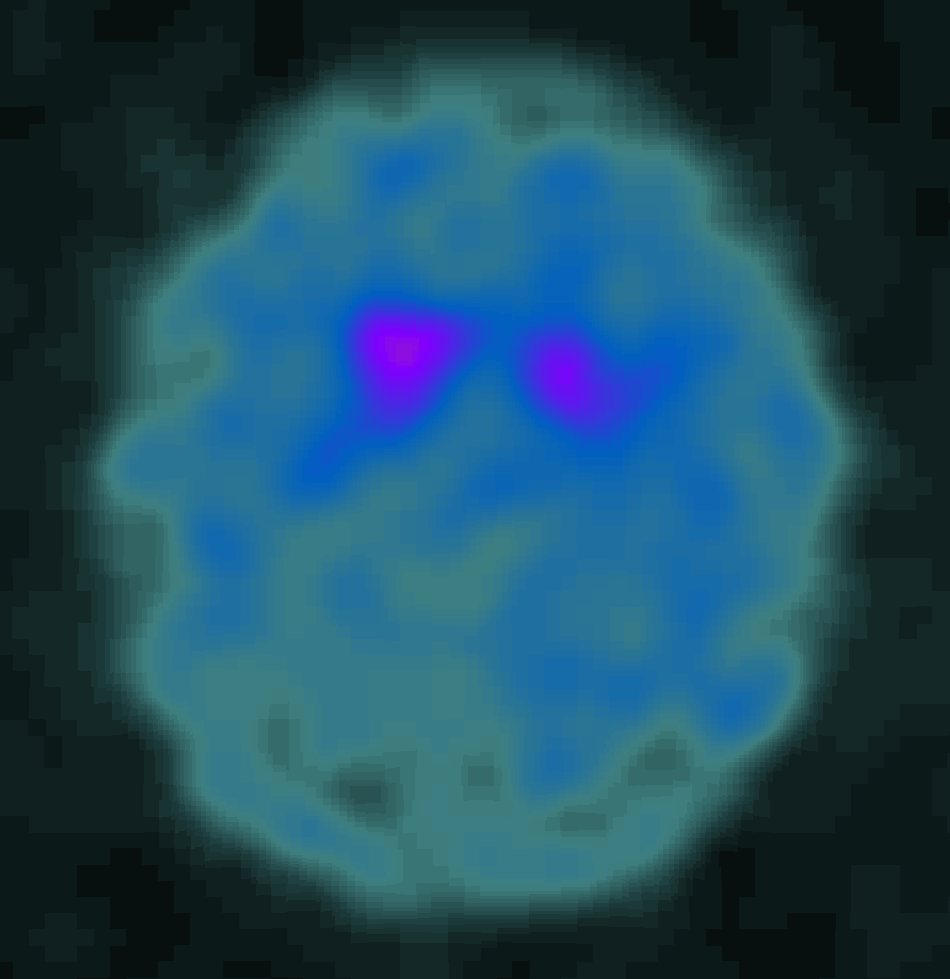
DAT scan
To cite this abstract in AMA style:
R. Peh, EK. Tan, P. Kumar, MH. Yong, K. Narasimhalu. FUS R521S mutation causing levodopa responsive amyotrophic lateral sclerosis-Parkinson’s disease (ALS-PD). [abstract]. Mov Disord. 2026; 41 (suppl 1). https://www.mdsabstracts.org/abstract/fus-r521s-mutation-causing-levodopa-responsive-amyotrophic-lateral-sclerosis-parkinsons-disease-als-pd/. Accessed October 1, 2026.« Back to 2026 International Congress
MDS Abstracts - https://www.mdsabstracts.org/abstract/fus-r521s-mutation-causing-levodopa-responsive-amyotrophic-lateral-sclerosis-parkinsons-disease-als-pd/